

Lovely performance from an unlikely source
German actor taps sweet melancholy to bring drama back to earth

Advertisement
Read this article for free:
or
Already have an account? Log in here »
To continue reading, please subscribe:
Monthly Digital Subscription
$1 per week for 24 weeks*
- Enjoy unlimited reading on winnipegfreepress.com
- Read the E-Edition, our digital replica newspaper
- Access News Break, our award-winning app
- Play interactive puzzles
*Billed as $4.00 plus GST every four weeks. After 24 weeks, price increases to the regular rate of $19.95 plus GST every four weeks. Offer available to new and qualified returning subscribers only. Cancel any time.
Monthly Digital Subscription
$4.99/week*
- Enjoy unlimited reading on winnipegfreepress.com
- Read the E-Edition, our digital replica newspaper
- Access News Break, our award-winning app
- Play interactive puzzles
*Billed as $19.95 plus GST every four weeks. Cancel any time.
To continue reading, please subscribe:
Add Free Press access to your Brandon Sun subscription for only an additional
$1 for the first 4 weeks*
*Your next subscription payment will increase by $1.00 and you will be charged $16.99 plus GST for four weeks. After four weeks, your payment will increase to $23.99 plus GST every four weeks.
Read unlimited articles for free today:
or
Already have an account? Log in here »
Hey there, time traveller!
This article was published 14/08/2021 (1715 days ago), so information in it may no longer be current.
Udo Kier is currently 76 years old and remains an impossibly busy actor, parsing out his singular presence in everything from American studio movies (Downsizing) to tawdry low-budget horror (Puppet Master: The Littlest Reich) to Brazilian action/art films (Bacurau) to Guy Maddin-directed dreamscapes (The Forbidden Room).
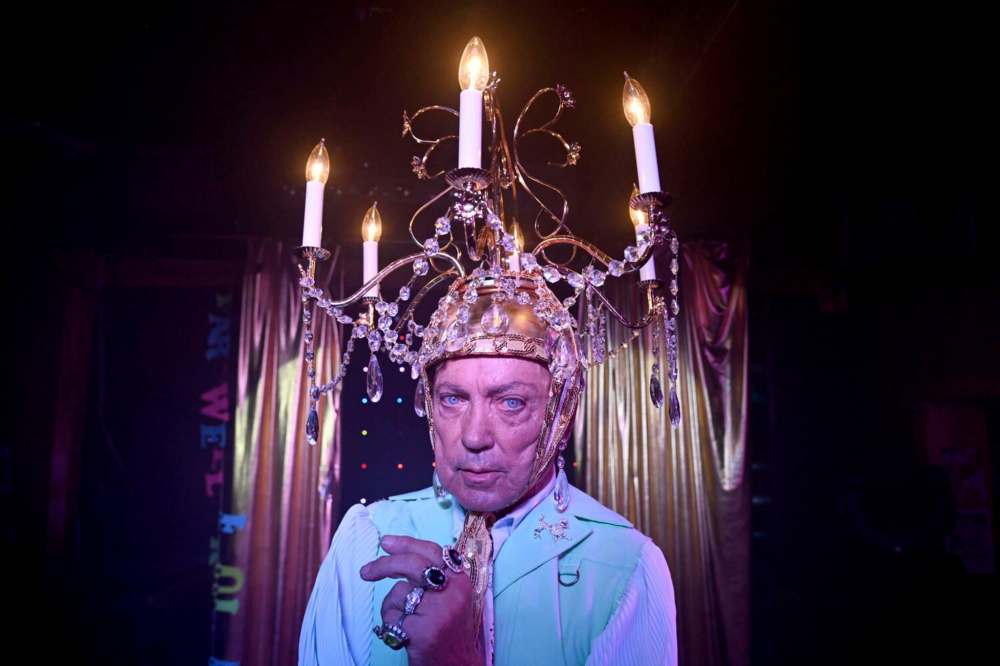
Taking a rare lead role as an elderly gay man confronting his past in Swan Song, the German actor comes perhaps as close as he ever has to, if you will, straight drama. Ever since he first made waves in some ’70s-era shockers such as The Mark of the Devil or Flesh for Frankenstein, or The Story of O, filmmakers have not been able to resist casting Kier in roles that suggest an epic perversity behind those supernaturally pale grey eyes.
Writer-director Todd Stephens (Edge of Seventeen, Gypsy 83) evidently saw a sweet melancholy in Kier, and he allows the actor to explore that side in this tale, “inspired by a true icon,” as an opening title says.
We find Kier’s Pat Pitsenbarger, a retired hairdresser, living out some sad final days in a retirement home outside Sandusky, Ohio. Pat sneaks “More” brand cigarettes when out of sight from the nursing staff.
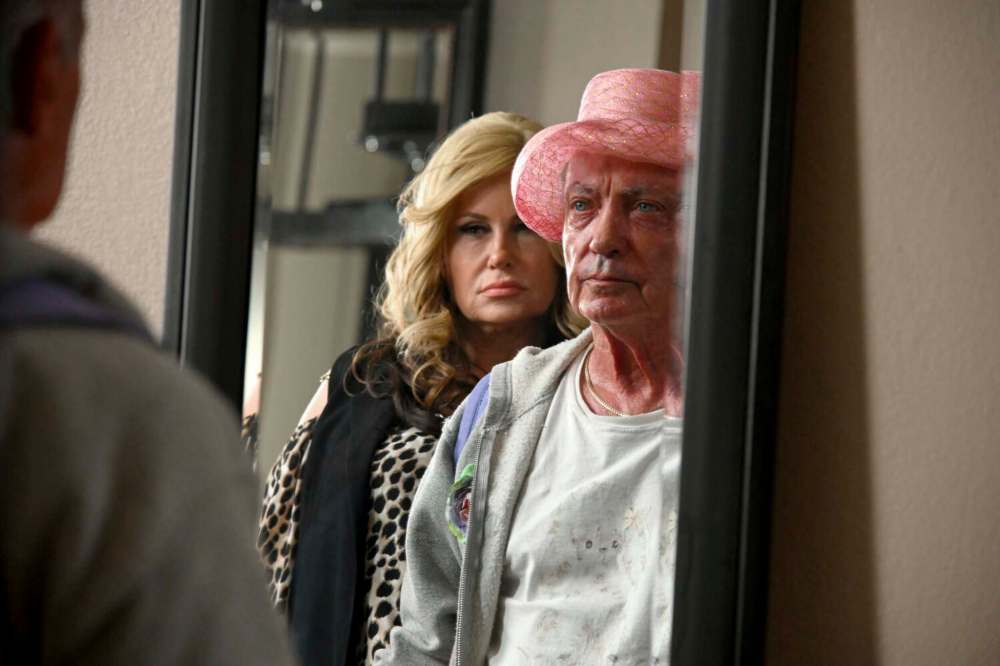
A lawyer shows up with an offer. Rita Parker Sloan (Linda Evans), a revered Sandusky socialite, has died, and left a bequest for Pat of $25,000 if he will do her hair. The offer comes too late to assuage Pat’s long-simmering hurt when Mrs. Sloan abandoned his business to take up with Pat’s former apprentice Dee Dee (Jennifer Coolidge), evidently in a bid to distance herself from Pat’s flamboyant sexuality, and the political inconvenience of Pat’s partner, who died of AIDS.
“Bury her with bad hair,” Pat bitterly tells the lawyer.
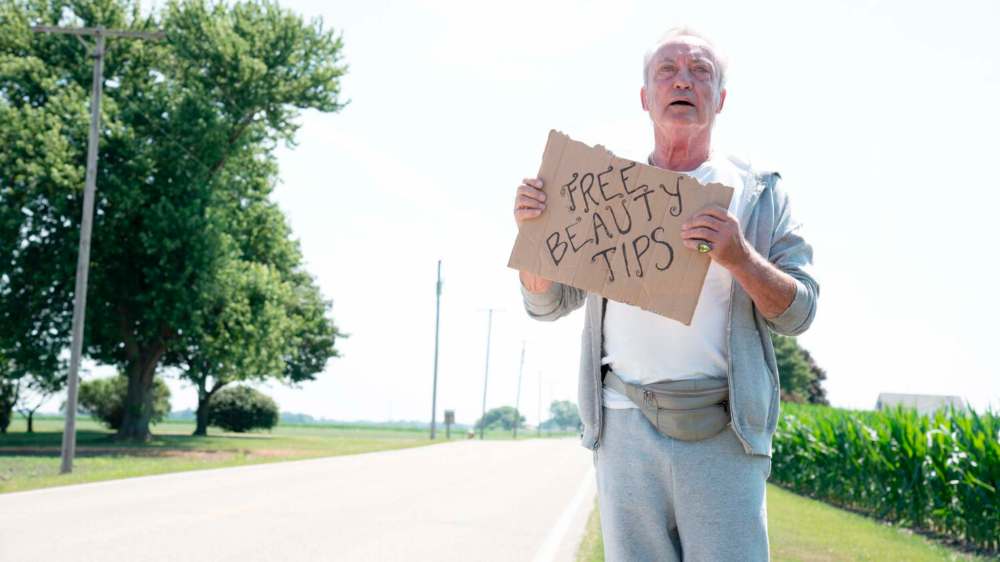
But Pat cannot bring himself to stick to that plan, and sneaks out of the retirement home the next day with a plan to acquire some supplies and make his way to the funeral home for a posthumous confrontation with the woman he once treasured as a friend.
What follows is a road movie, of sorts, that sees Pat visiting his old haunts in Sandusky, including a second-hand shop where he trades in his sweatsuit for a lime sorbet-coloured pantsuit and a plum-coloured hat (a sweet scene), as well as the torn-down house he once shared with his lover.
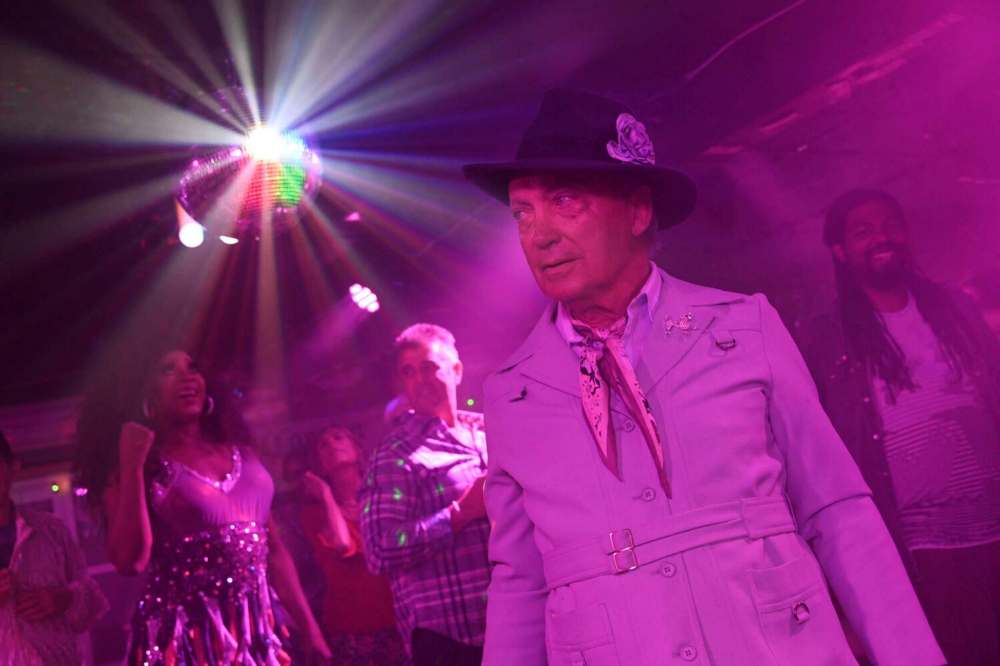
“I wouldn’t even know how to be gay anymore,” Pat tells his old hustler friend “Eunice” (Ira Hawkins) as they watch a pair of gay dads playing on the beach with their two children. (“Tell that to your pantsuit,” is Eunice’s superb rejoinder.) Soon, Pat makes his way to the gay bar where he once ruled as a performer, the night it is scheduled to close forever, to be replaced by a chic gastropub open to all.
While the film functions as a portrait of a sexual rebel in his twilight years, it is of course a homage to what one might call the Greatest Gay Generation, the people who fought for marriage equality (among other things) and bore the brunt in the fight for a larger acceptance of the LGBTTQ+ populace.
The film is perhaps a touch too fervent in its statement-making purpose. That makes it all the stranger that Kier, of all people, should bring it back to earth with a lovely performance that finds the humanity in its hero, not in the big broad gestures (Pat literally stops traffic travelling in a purloined electric wheelchair), but in the tiny touches, such as an early scene that sees him fixing the hair of a catatonic old lady in a wheelchair to keep his hairdresser hands, and to bring a flicker of pleasure into the life of a forgotten woman.
Udo Kier grounds a movie to the real world. Who thought that would ever happen?
randall.king@freepress.mb.ca
Twitter: @FreepKing

Our newsroom depends on a growing audience of readers to power our journalism. If you are not a paid reader, please consider becoming a subscriber.
Our newsroom depends on its audience of readers to power our journalism. Thank you for your support.
MOVIE REVIEW
Swan Song
Starring Udo Kier
● New on VOD
● 105 minutes
★★★ out of five
Our newsroom depends on a growing audience of readers to power our journalism. If you are not a paid reader, please consider becoming a subscriber.
Our newsroom depends on its audience of readers to power our journalism. Thank you for your support.
Advertisement Advertise With Us
Advertisement Advertise With Us