Drawing a clean, beautiful line on Winnipeg
From the WAG to fine, unpretentious houses, architect left cowboy boot-sized footprint

Advertisement
Read this article for free:
or
Already have an account? Log in here »
To continue reading, please subscribe:

Digital Subscription
One year of digital access for only $205*
- Enjoy unlimited reading on winnipegfreepress.com
- Read the E-Edition, our digital replica newspaper
- Access News Break, our award-winning app
- Play interactive puzzles
*First annual payment billed as $205.00 + GST for one year. This annual subscription will automatically renew at $233.00 + GST every 52 weeks (10% off the regular annual price of $259.35). Offer available to new and qualified returning subscribers only. Cancel any time.
To continue reading, please subscribe:
Add Free Press access to your Brandon Sun subscription for only an additional
$1 for the first 4 weeks*
- Enjoy unlimited reading on winnipegfreepress.com
- Read the E-Edition, our digital replica newspaper
- Access News Break, our award-winning app
- Play interactive puzzles
*Your next Brandon Sun subscription payment will increase by $1.00 and you will be charged $17.95 plus GST for four weeks. After four weeks, your payment will increase to $24.95 plus GST every four weeks.
Read unlimited articles for free today:
or
Already have an account? Log in here »
Hey there, time traveller!
This article was published 28/05/2022 (1559 days ago), so information in it may no longer be current.
Winnipeggers will know Gustavo da Roza as the architect who designed the Winnipeg Art Gallery, the triangular landmark on Memorial Boulevard that after 51 years remains one of Canada’s most distinctive buildings.
His friends will remember his roots to Hong Kong and Macao, his pride in his Portuguese heritage and his penchant for cowboy boots.
Da Roza was 89 when he died April 24 in Surrey, B.C., but it was in Winnipeg and the University of Manitoba’s faculty of architecture where he would do the bulk of his architectural work and teaching.
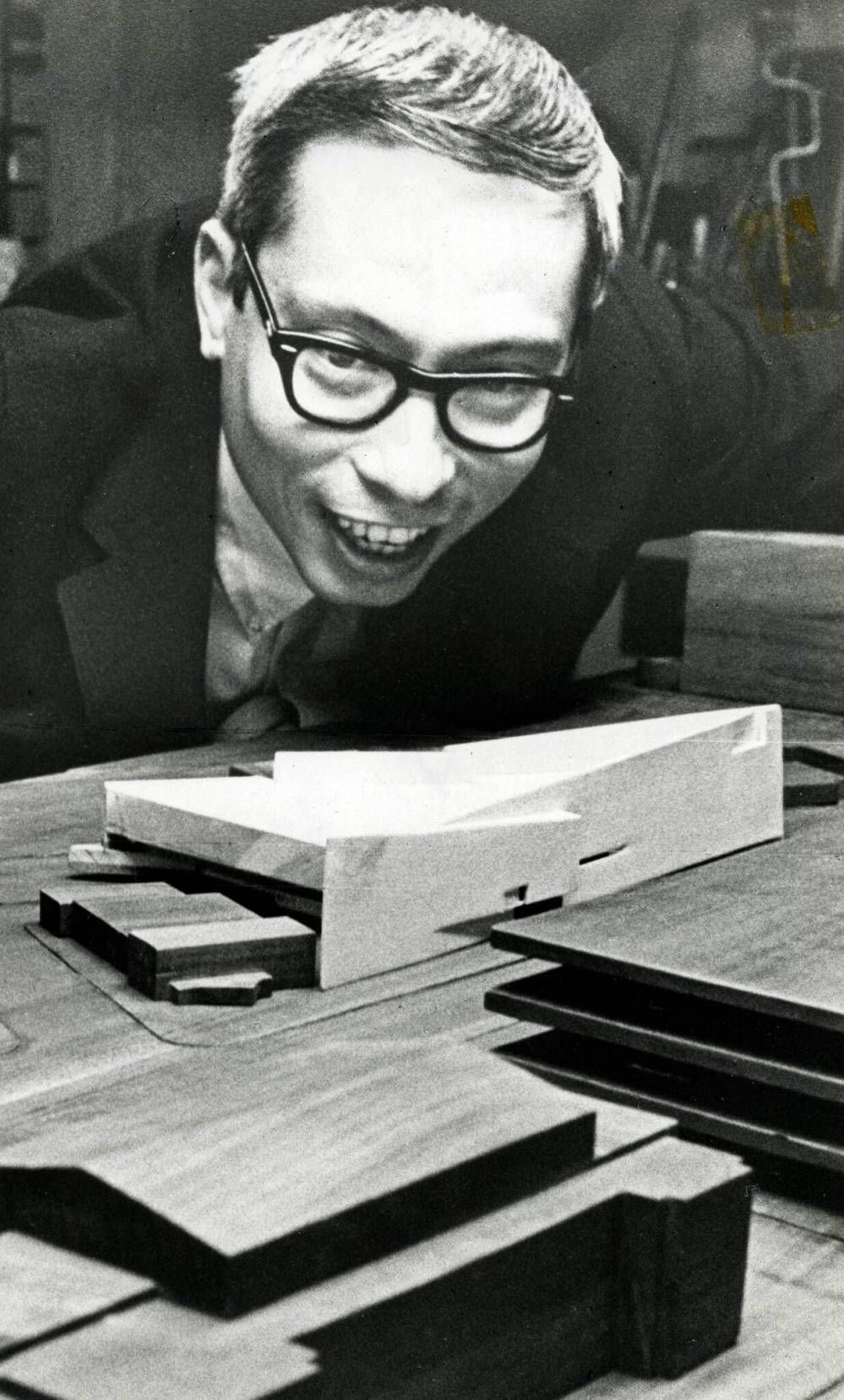
“Gus was larger than life. People who know him know he wore cowboy boots all the time so he’s probably the only Portuguese-Macanese-Hong Konger who (wore) cowboy boots regularly and that was part of his persona,” says Trevor Boddy, a Vancouver architectural critic who da Roza hired for the U of M’s architecture faculty in 1987. The two remained friends ever since.
He could also be bracingly direct with students and their designs — “He was always accurate, perceptive and fair even though his criticism was loud and to the point,” Boddy says — but behind those harsh lessons was a charismatic man who drew people, especially other architects, to him.
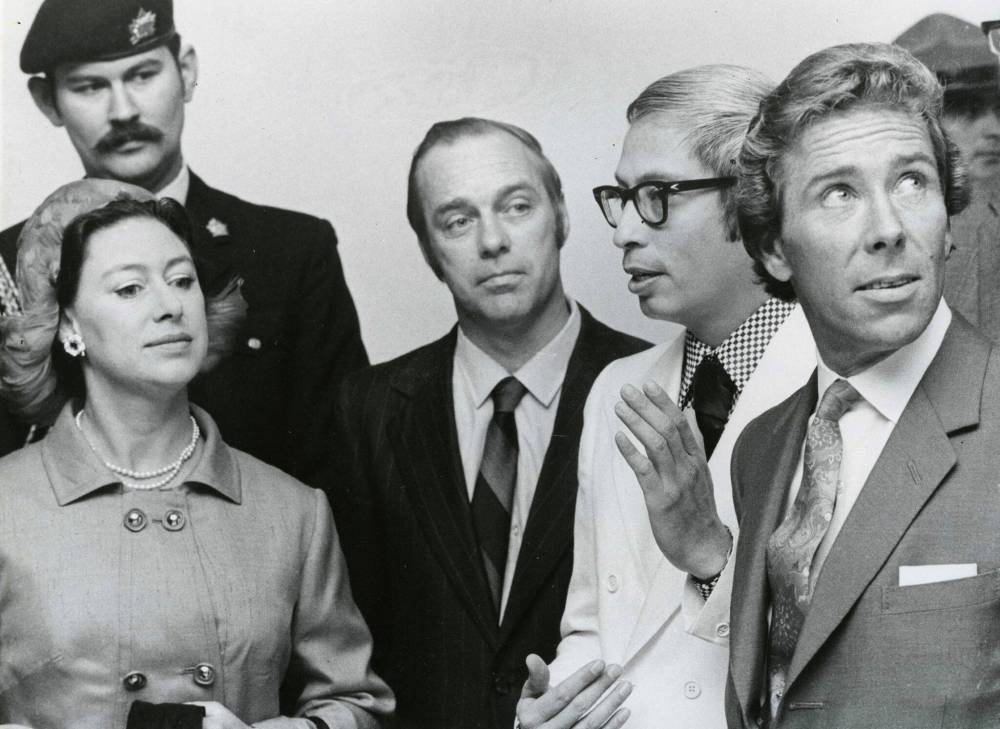
“This is a guy who danced with Princess Margaret at the opening of the WAG but he also hung out with Barbra Streisand. He had this charm,” says Terri Fuglem, an architecture professor at the U of M and another longtime friend of da Roza and his family.
While da Roza spent most of his adult life in Winnipeg, he lived all over the world. He was born in Hong Kong but also lived with his family in Macau, a city on the southern shore of China that was a Portuguese colony from the 16th century until 1999.
He earned an architecture degree from the University of Hong Kong in 1955 and afterward he helped design government buildings for private firms while Hong Kong boomed in the 1950s.
He moved to the United States in 1959 to lecture but eventually settled in Winnipeg a year later to teach at the University of Manitoba, where he also set up a private architectural practice and eventually change the city’s urban landscape.
He gained some fame for winning an architectural contest, a wood-framed home that became part of the Man and His Home pavilion at Expo 67 in Montreal.
That same year, da Roza won another competition when his design was chosen for the new home for the Winnipeg Art Gallery on Memorial Boulevard. The $4.5-million project is described by Stephen Borys, the gallery’s director and chief executive officer, as a late-modernist masterpiece.
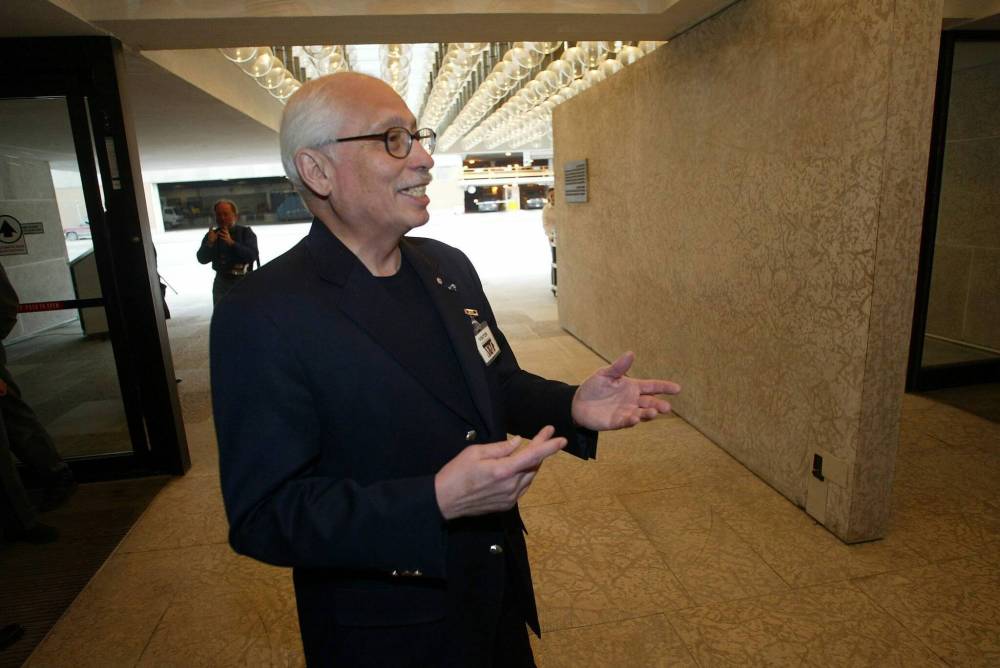
Da Roza helped give Princess Margaret a grand tour of the Tyndall-stone clad building she would officially open in September 1971. Fifty years later his family was on hand for a gala to celebrate Qaumajuq, a Michael Maltzan-designed conjoined counterpart that focuses on Inuit artists and their works.
While new ground-floor windows were added in 2020 to provide passersby a view of the gallery’s gift shop, the building remains mostly as it was in 1971.
“Gus kept an eye on it for years, and the Winnipeg Art Gallery would invite him in to get advice on renovations. It was a labour of love for half a century for Gus,” Boddy says.
“It’s one thing to build a building, another thing to maintain it over the decades, so good on Gus for doing that and that’s very unusual for Winnipeg, which like my hometown of Edmonton has a throwaway attitude to buildings.”
Da Roza’s architectural practice provided real-world instruction to U of M students that can be hard to find at universities, says Neil Minuk, who like da Roza, is a practising architect and U of M architecture prof.
“Generally, architecture schools aren’t really places for practitioners,” Minuk says. “He was a guy who would talk about project budgets and build-ability of projects, which is kind of an unusual thing today. Schools tend to be more theoretical.”
While da Roza is most known for the WAG, his designs seemingly pop out of nowhere across the city and throughout the province. For instance, in 1977 da Roza designed a modernist hotel and cabins nestled among the trees on Hecla Island’s Gull Harbour. As Lakeview Hecla Resort, it continues to offer views of Lake Winnipeg and a rustic spot for vacationers.
“It was such a different project than the art gallery,” Boddy says. “Gus was every bit as good in designing a wood-framed resort as he was in a downtown art gallery, and that’s often a test of a top-drawer architect, is their ability to work in different contexts.
“If Gus had wanted to, he could have done resort hotels or millionaires’ houses but he was very dedicated to teaching.”
Da Roza also designed two places where his fellow Portuguese-Canadians in Winnipeg would gather: the Portuguese Association of Manitoba building on Notre Dame Avenue and the Immaculate Conception Roman Catholic Church on Austin Street North in Point Roberts.
He was a leader in the city’s Portuguese community, becoming a member of Portugal’s consular corps. He was named honorary consul general of Portugal in Winnipeg and in 1985, the country’s president named him Comendador of the Order of Prince Henry for his architectural work and service to the Portuguese community.
Three years later, he would be named an Officer of the Order of Canada.
Da Roza’s footprint on Winnipeg doesn’t end there. He also designed homes all around the city, including one on Shaftesbury Boulevard where he and his wife Gloria raised their family.
Unlike the cookie-cutter houses folk singer Malvina Reynolds would scoff at in her 1962 song Little Boxes, which “all look just the same,” the couple dozen or so houses da Roza designed in Winnipeg were all unique, Fuglem says.

She should know. Besides being an architecture professor and having written a chapter about da Roza’s designs in the book Winnipeg Modern, Fuglem has been calling a house da Roza built in 1968 as her home for the past 21 years.

“He always tried to beat the developers, to show he could build a house at the same price as a developer but make it beautiful and use design properly,” she says.
“It’s not extravagant; it’s very carefully thought out, and I think that’s what makes it beautiful. It’s all about making the spaces beautiful, giving them character as opposed to nice finishes or expensive bathroom fixtures.”
Alan.Small@winnipegfreepress.com
Twitter: @AlanDSmall
Alan Small
Reporter
Alan Small was a journalist at the Free Press for more than 22 years in a variety of roles, the last being a reporter in the Arts and Life section.
Our newsroom depends on a growing audience of readers to power our journalism. If you are not a paid reader, please consider becoming a subscriber.
Our newsroom depends on its audience of readers to power our journalism. Thank you for your support.
Alan Small
Reporter
Alan Small was a journalist at the Free Press for more than 22 years in a variety of roles, the last being a reporter in the Arts and Life section.
Our newsroom depends on a growing audience of readers to power our journalism. If you are not a paid reader, please consider becoming a subscriber.
Our newsroom depends on its audience of readers to power our journalism. Thank you for your support.
Advertisement Advertise With Us
Advertisement Advertise With Us