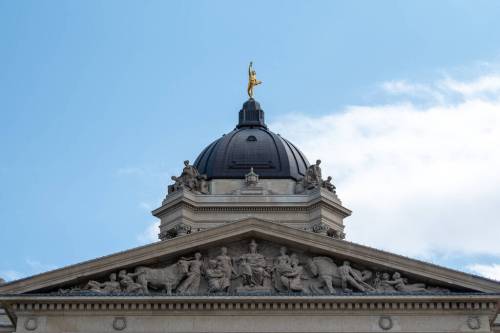
Phoenix of the Prairies
St. Boniface Cathedral’s creative revitalization pays homage to building’s 200-year history

Advertisement
Read this article for free:
or
Already have an account? Log in here »
To continue reading, please subscribe:

Digital Subscription
One year of digital access for only $205*
- Enjoy unlimited reading on winnipegfreepress.com
- Read the E-Edition, our digital replica newspaper
- Access News Break, our award-winning app
- Play interactive puzzles
*First annual payment billed as $205.00 + GST for one year. This annual subscription will automatically renew at $233.00 + GST every 52 weeks (10% off the regular annual price of $259.35). Offer available to new and qualified returning subscribers only. Cancel any time.
To continue reading, please subscribe:
Add Free Press access to your Brandon Sun subscription for only an additional
$1 for the first 4 weeks*
- Enjoy unlimited reading on winnipegfreepress.com
- Read the E-Edition, our digital replica newspaper
- Access News Break, our award-winning app
- Play interactive puzzles
*Your next Brandon Sun subscription payment will increase by $1.00 and you will be charged $17.95 plus GST for four weeks. After four weeks, your payment will increase to $24.95 plus GST every four weeks.
Read unlimited articles for free today:
or
Already have an account? Log in here »
Hey there, time traveller!
This article was published 05/12/2022 (1387 days ago), so information in it may no longer be current.
The St. Boniface Cathedral, designed by Étienne Gaboury from 1969 to 1972, is partly sheltered within the remains of the 1906 cathedral, much of which was lost to a catastrophic fire in 1968. Within the narthex of Gaboury’s church is a wooden maquette depicting that earlier structure.
A church within a church within a church. This layering suggests loss: When the 1906 cathedral was consumed by flames, reportedly caused by a stray cigarette, people who witnessed the fire wept and prayed. But it also suggests the history and deep continuity of this site, which goes back to the time of the Red River Settlement.
The 1906 cathedral, a majestic limestone structure built in a revival style that included Romanesque and Byzantine elements, had itself replaced an 1862 cathedral. That building had replaced an 1832 church, which had replaced a modest 1818 log chapel that was the first church in Western Canada, according to the Winnipeg Architecture Foundation website.
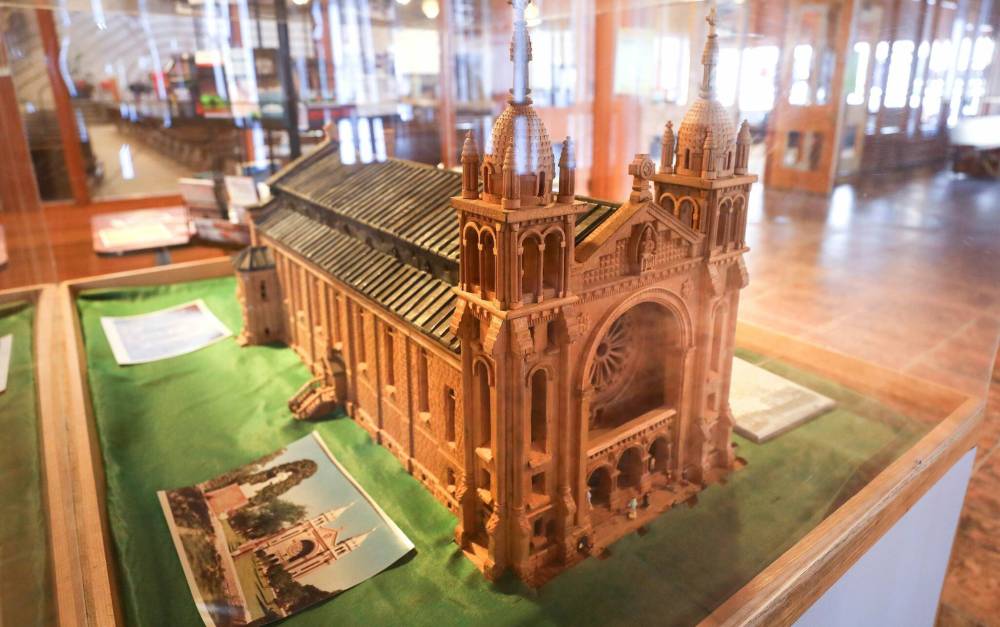
RUTH BONNEVILLE / WINNIPEG FREE PRESS
A wooden maquette of the 1906 structure sits in the narthex of St. Boniface Cathedral.
RUTH BONNEVILLE / WINNIPEG FREE PRESS local - St. Boniface Cathedral Outside photos of St. Boniface Cathedral, designed by Etienne Gaboury from 1969 to 1972, behind original ruins. A selection of photos of some of the design elements to illustrate Gilmore’s story. See Alison Gilmore’s story. Dec 1st, 2022
The current basilica, then, is part of a building and rebuilding process that stretches back more than two centuries.
Still, making changes to a beloved place of worship can raise difficult questions. Take Paris’s Notre-Dame, which was ravaged by fire in 2019. Many French citizens hoped to recreate the historic cathedral as precisely as possible, while others wanted to go in a new direction that would reflect our current period.
For the revitalization of St. Boniface Cathedral, Gaboury found a creative solution that combined both approaches. Gaboury’s design takes his distinctive organic and expressive modernism and melds it with some of the stone walls that survived the fire.
He foregrounds the iconic historic facade, with the rose window that once contained stained glass and is now open, with such evocative effect, to the Prairie sky. This is perhaps the best-known view of the cathedral complex, and the image that most often appears on postcards and tourism websites and wedding photos.
According to Winnipeg-based architectural historian Jeffrey Thorsteinson, “There’s a real artistry to working with the ruin and leaving it as a ruin.”
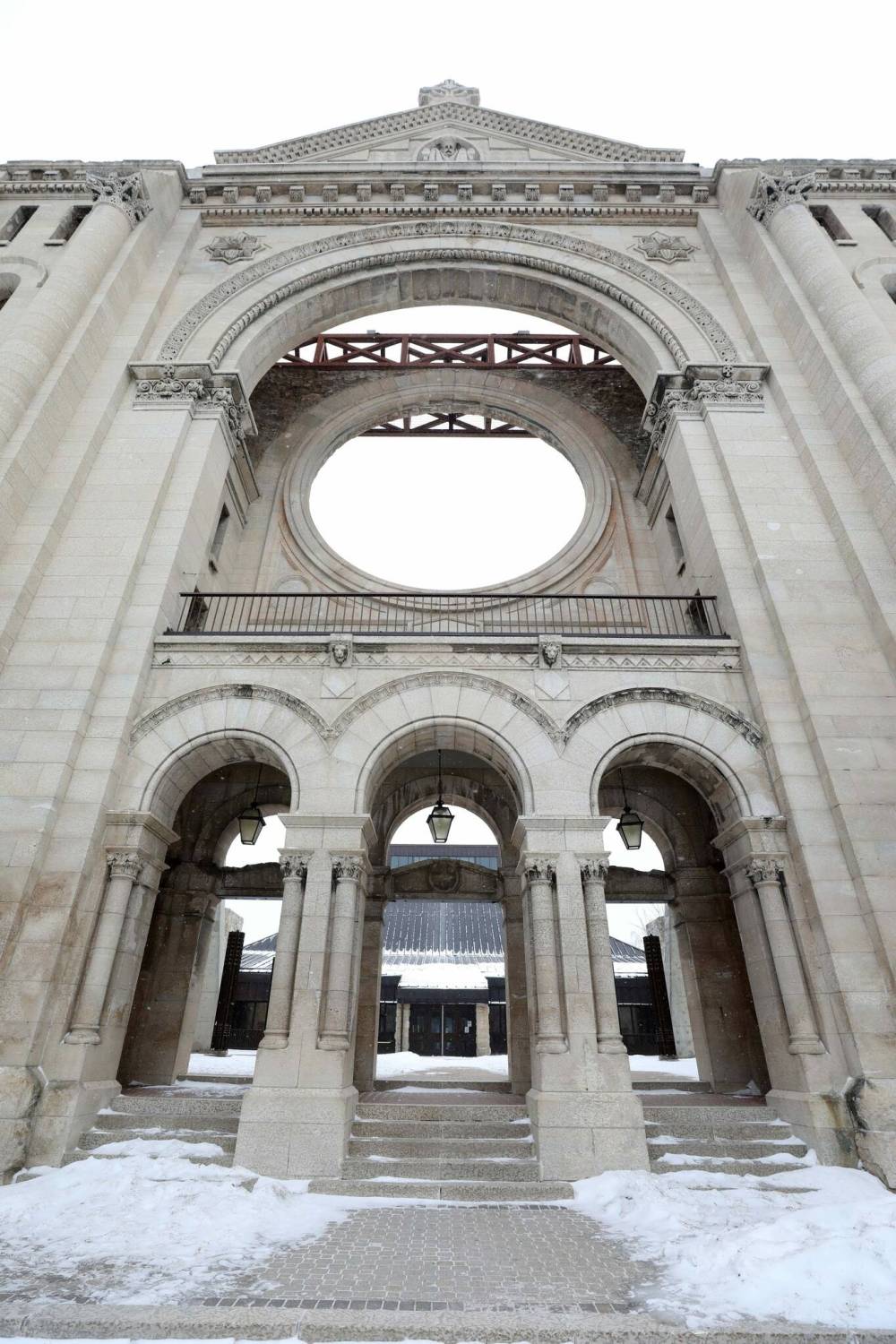
There’s a modesty, too, Thorsteinson suggests. Born in the small Franco-Manitoban community of Bruxelles, Gaboury, who died this October at the age of 92, has been called the province’s greatest architect and described as “the father of landmarks” for his work on projects such as the Esplanade Riel and Pont Provencher Bridge, the Royal Canadian Mint and Precious Blood Church. But he doesn’t need to impose his vision on this site.
“When you’re looking at (the cathedral) from Taché, you don’t even see much of his work, which is something a lot of people might not have done,” Thorsteinson says. “He doesn’t leave a big fingerprint on it. If he’d been a self-centred starchitect, he might have acted more aggressively, but in fact, it’s kind of gentle and quiet.”
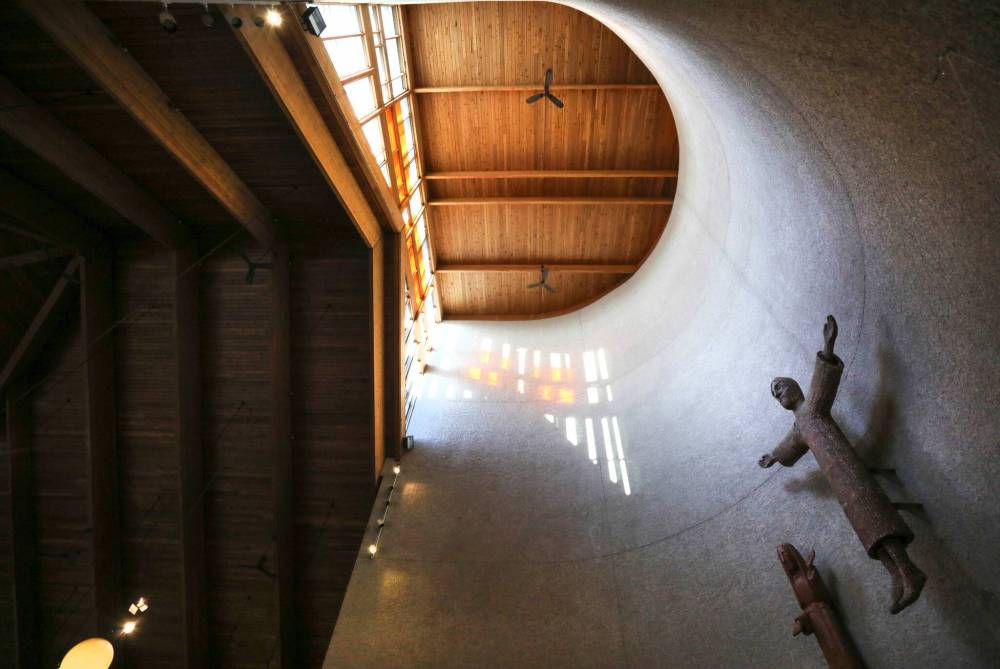
Gaboury’s design for the new sanctuary is smaller than its predecessor, which was built to house 2,000 worshippers. The 1970s structure feels both intimate and open. Warm wood rises into an angled ceiling that contrasts with a curving stuccoed apse where light flows in from a hidden source.
There are hanging globe lamps that glow with golden light, but on a recent Sunday morning, much of the illumination came from the low winter sun shining through expanses of glass near ground level, along the walls of the nave.
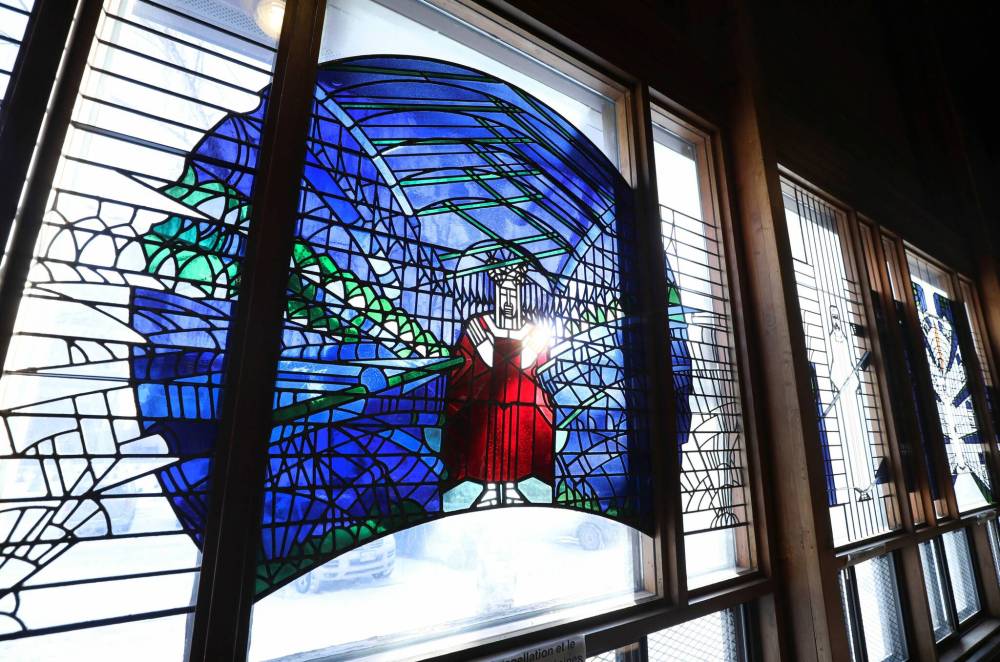
This light also passes through the abstracted modernist version of the Stations of Cross — which was created by Gaboury himself — and intensifies the colours of the stained glass.
RUTH BONNEVILLE / WINNIPEG FREE PRESS local - St. Boniface Cathedral The St. Boniface Cathedral, designed by Etienne Gaboury from 1969 to 1972 A selection of photos of some of the design elements to illustrate Gilmore’s story. Characteristics of the cathedral: warm wood that rises into an angled ceiling that contrasts with a curving stuccoed apse where light flows in from a hidden source. Hipped roof with the interplay of square and circle forms emphasizing the importance of light. Hanging globe lamps that glow with golden light, with much of the illumination in the cathedral coming from the low winter sun shining through expanses of glass near ground level, along the south walls of the nave.This light also passes through the abstracted modernist version of the Stations of Cross — which was created by Gaboury himself — and intensifies the colours of the stained glass. In the narthex of Gaboury’s church is a wooden maquette depicting the earlier 1906 cathedral. See Alison Gilmore’s story. Dec 1st, 2022
According to Thorsteinson, “He’s deliberately echoing not exactly what had been there but some of the traditional aspects of church design — the hipped roof, the interplay of square and circle forms, and the importance of light.
“He was an architect who was very much an expert in International Style modernism, but also within his own career, looking at the span of architecture across the world and especially in Canada, he represented someone who was looking to bring back into architecture things that had been locked out of the early phase of modernism, including a sense of the poetic.”
As Thorsteinson relates, an important moment for Gaboury was going as a young man to Ronchamp, to the Chapelle Notre Dame du Haut designed by modernist architect Le Corbusier, where he saw “a new poetic approach within modernism.”
In particular, Thorsteinson suggests, Le Corbusier’s chapel has interesting windows and a complex play of light. Gaboury took this European influence and integrated it into his own strong regionalist and spiritual approach.
“Gaboury talks a lot about light as being the centre of Prairie architecture but also as being spiritual,” Thorsteinson explains. “He talks about how light is matter spiritualized, which is an interesting and esoteric way of thinking about it.”
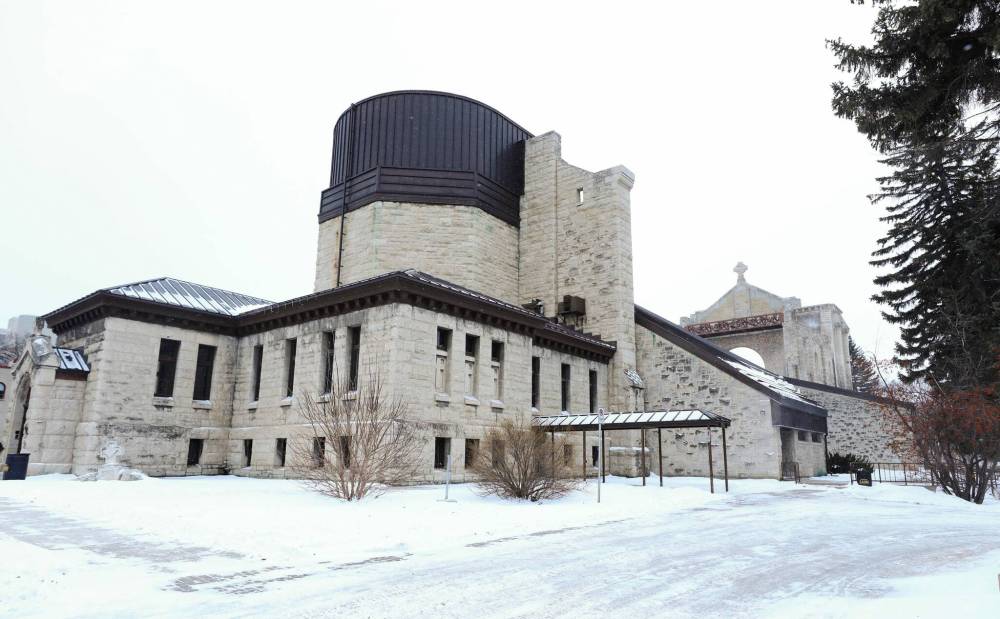
RUTH BONNEVILLE / WINNIPEG FREE PRESS
St. Boniface Cathedral was designed by Étienne Gaboury from 1969 to 1972.
That sense of light as spiritual, which also animated the great cathedrals of the Gothic era, allows Gaboury to use the elements of modernism to craft a new kind of sacred space.
In the 1970s structure, there is newness in form but also in function. The design, which draws the seating in closer to the altar, responds to changes in Catholic Church practice that came in after the reforms of the second Vatican Council, which was conducted from to 1962 to 1965.
Vatican II attempted to connect the liturgy more closely with the congregants, with the priest facing the congregation and conducting mass in the language of the parishioners rather than in Latin. This movement also allowed for more latitude in church architecture.
Gaboury’s connection to the site runs deep, Thorsteinson points out, with some of his ancestors, including Jean-Baptiste Lagimodiere and Marie-Anne Gaboury, buried in the nearby cemetery. (Louis Riel is also a distant relative.)
His imprint on present-day St. Boniface, and its Franco-Manitoban and Métis history, is also significant, with his work on the St. Boniface Civic Complex, the St. Boniface Clinic, the Centre culturel franco-manitobain, the Residence des Soeurs de la Sainte Famille, the Louis Riel Monument (with Marcien Lemay), and several smaller churches, among other projects.
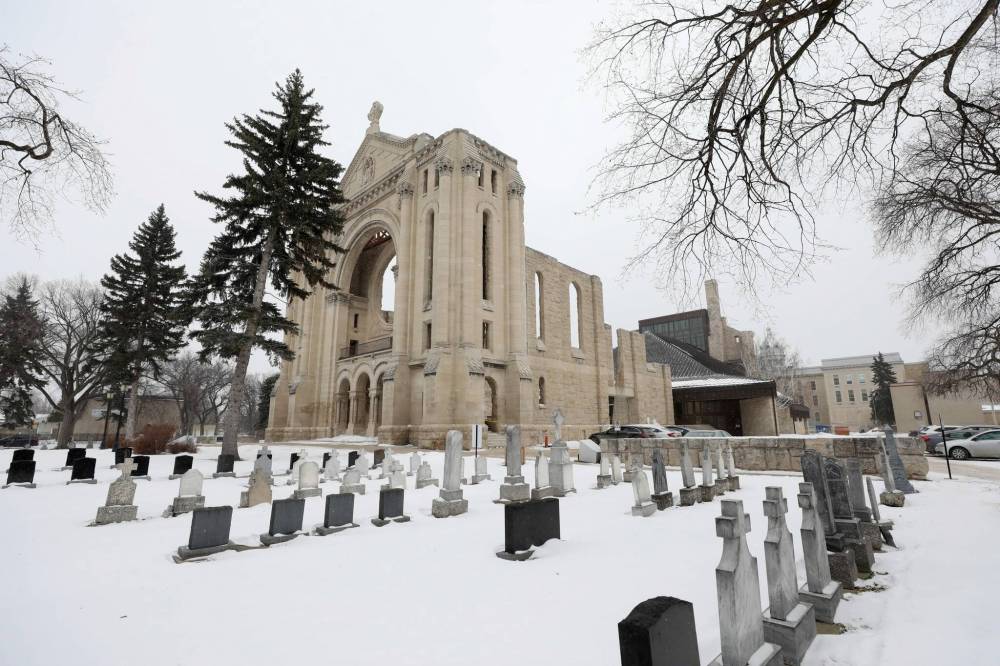
RUTH BONNEVILLE / WINNIPEG FREE PRESS
The current modernist St. Boniface Cathedral, designed by Étienne Gaboury, sits behind the ruins of the 1906 building.
That fusion of past and present comes together powerfully in the St. Boniface Cathedral revitalization. It is, as Thorsteinson explains, “a building that remarkably encapsulates both the history and continuity of Franco-Manitoba life, spirituality and creativity, and their fusion in the hands of an architect who rooted his modernism in a deep appreciation of the significance of his regional context, creating something profoundly cosmopolitan and truly local.”
alison.gillmor@winnipegfreepress.com
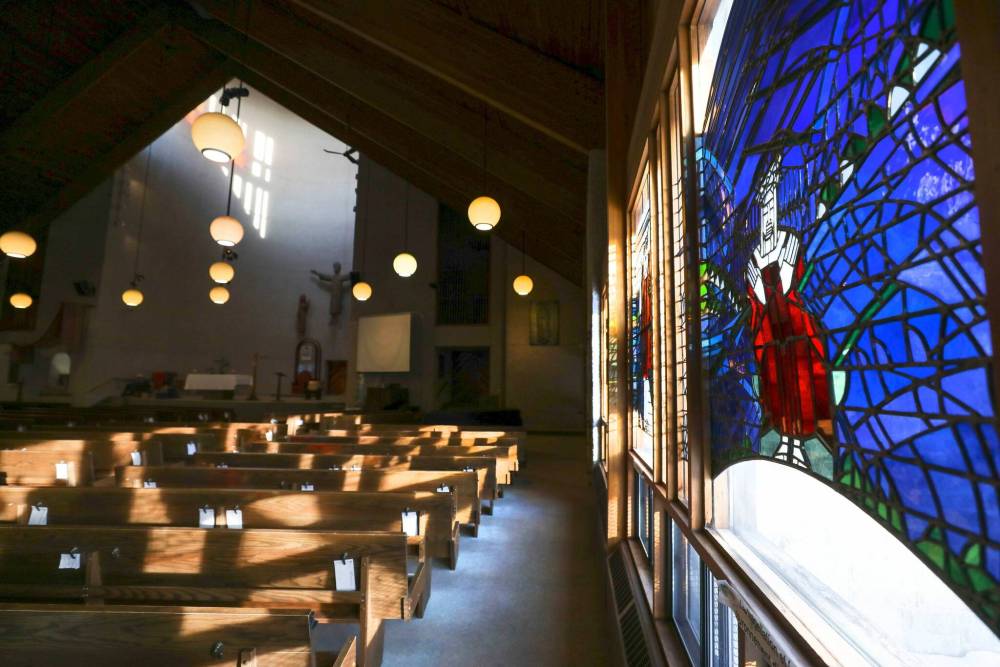
RUTH BONNEVILLE / WINNIPEG FREE PRESS
Light passes through an abstracted modernist version of the Stations of Cross, created by Gaboury.
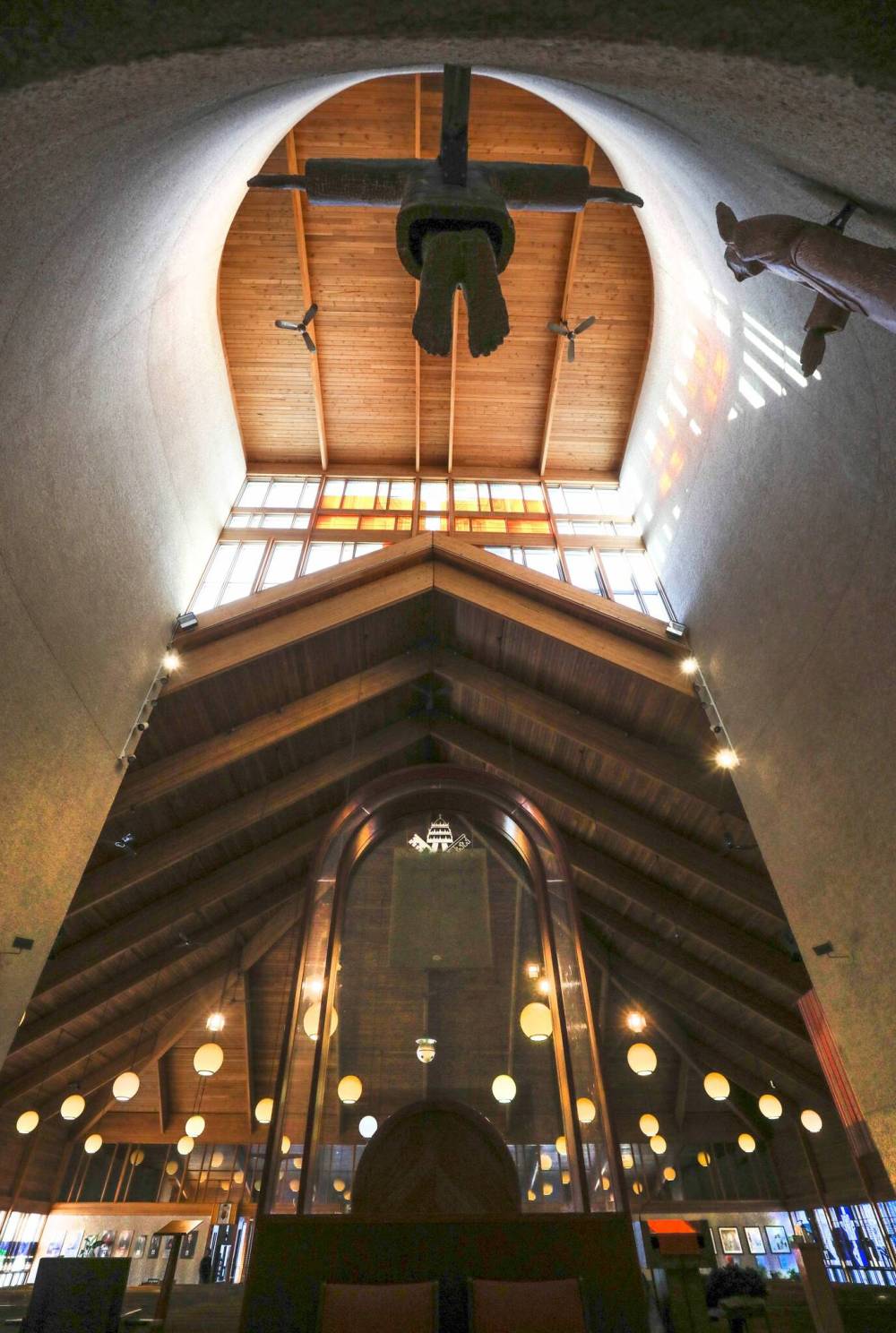
RUTH BONNEVILLE / WINNIPEG FREE PRESS
Warm wood rises into an angled ceiling where light flows in from a hidden source. Hanging globe lamps add to the ambience with their golden light.
RUTH BONNEVILLE / WINNIPEG FREE PRESS
The St. Boniface Cathedral, designed by Etienne Gaboury from 1969 to 1972 A selection of photos of some of the design elements to illustrate Gilmore’s story. Characteristics of the cathedral: warm wood that rises into an angled ceiling that contrasts with a curving stuccoed apse where light flows in from a hidden source. Hipped roof with the interplay of square and circle forms emphasizing the importance of light. Hanging globe lamps that glow with golden light, with much of the illumination in the cathedral coming from the low winter sun shining through expanses of glass near ground level, along the south walls of the nave.This light also passes through the abstracted modernist version of the Stations of Cross — which was created by Gaboury himself — and intensifies the colours of the stained glass. In the narthex of Gaboury’s church is a wooden maquette depicting the earlier 1906 cathedral. See Alison Gilmore’s story. Dec 1st, 2022

Henry Kalen photo
A fire consumed St. Boniface Cathedral in 1968.
Studying at the University of Winnipeg and later Toronto’s York University, Alison Gillmor planned to become an art historian. She ended up catching the journalism bug when she started as visual arts reviewer at the Winnipeg Free Press in 1992.
Our newsroom depends on a growing audience of readers to power our journalism. If you are not a paid reader, please consider becoming a subscriber.
Our newsroom depends on its audience of readers to power our journalism. Thank you for your support.
Studying at the University of Winnipeg and later Toronto’s York University, Alison Gillmor planned to become an art historian. She ended up catching the journalism bug when she started as visual arts reviewer at the Winnipeg Free Press in 1992.
Our newsroom depends on a growing audience of readers to power our journalism. If you are not a paid reader, please consider becoming a subscriber.
Our newsroom depends on its audience of readers to power our journalism. Thank you for your support.
Advertisement Advertise With Us
Advertisement Advertise With Us
History
Updated on Monday, December 5, 2022 10:41 AM CST: Adds web headline, changes tile photo
Updated on Monday, December 5, 2022 11:12 AM CST: Corrects typo