Lasting impacts
Digital production preserves stories and stage show

Advertisement
Read this article for free:
or
Already have an account? Log in here »
To continue reading, please subscribe:

Digital Subscription
One year of digital access for only $205*
- Enjoy unlimited reading on winnipegfreepress.com
- Read the E-Edition, our digital replica newspaper
- Access News Break, our award-winning app
- Play interactive puzzles
*First annual payment billed as $205.00 + GST for one year. This annual subscription will automatically renew at $233.00 + GST every 52 weeks (10% off the regular annual price of $259.35). Offer available to new and qualified returning subscribers only. Cancel any time.
To continue reading, please subscribe:
Add Free Press access to your Brandon Sun subscription for only an additional
$1 for the first 4 weeks*
- Enjoy unlimited reading on winnipegfreepress.com
- Read the E-Edition, our digital replica newspaper
- Access News Break, our award-winning app
- Play interactive puzzles
*Your next Brandon Sun subscription payment will increase by $1.00 and you will be charged $17.95 plus GST for four weeks. After four weeks, your payment will increase to $24.95 plus GST every four weeks.
Read unlimited articles for free today:
or
Already have an account? Log in here »
Hey there, time traveller!
This article was published 20/06/2023 (1181 days ago), so information in it may no longer be current.
Reckoning, the newest production from the theatrical team of Tara Beagan and Andy Moro, began as a stage show. But for the work to live inside that medium felt unsustainable. Each performance required actors to bear witness to the traumas of the residential school system, digging deep into communal and personal pain, over and over again.
It was a challenge, and somewhat mirrored the narratives the show sought to explore, centred on the reverberations of tragedy that emerged in the wake of the Truth and Reconciliation Commission and the experiences of its more than 6,500 witnesses.
So Beagan and Moro grabbed a camera and transferred their artistic interpretation of lived experiences into the realm of digital memory.
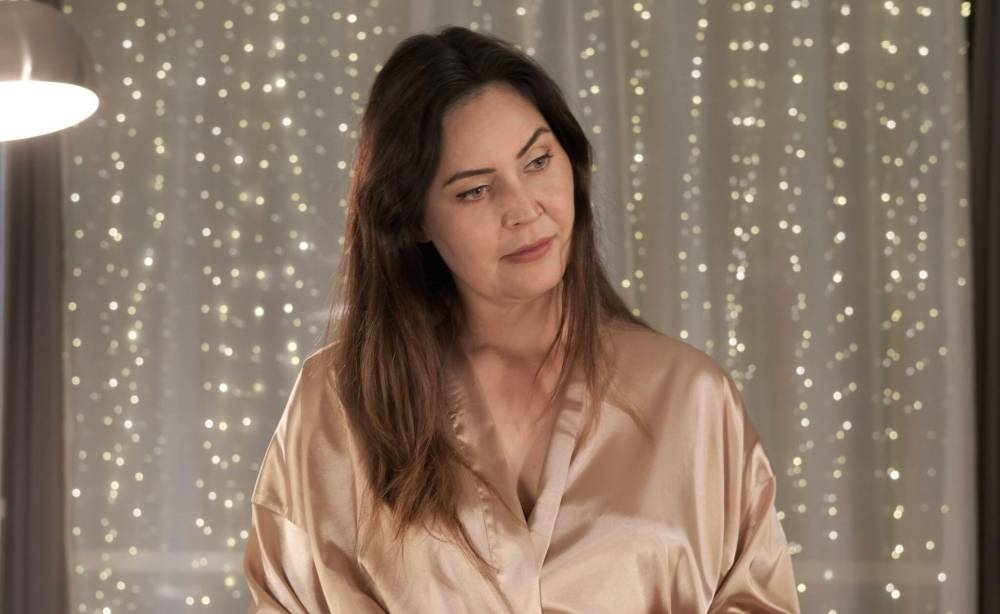
Andy Morillo photo
Quelemia Sparrow stars as the daughter of a residential school survivor, in a scene that reminds us trauma continues to be felt.
“The ubiquity of film is very appealing,” says Beagan, 47, a Ntlaka’pamux artist based in Calgary. “If you lay a thing down on video and send it out into the world, that’s one less time you have to explain the history to someone who hasn’t done their homework.
“It exists in perpetuity on video,” she adds.
Moro and Beagan, life partners who have been working together since 2007, are the co-founders of Article 11, an Indigenous arts activist production company. The 10-year-old company is named for the section of the United Nations Declaration of Human Rights that states: “Indigenous Peoples have the right to practise and revitalize their cultural traditions and customs,” including through design, visual and performing arts, and literature.
Since beginning her career in theatre in the early 2000s, Beagan has used her artistic platform to explore the lasting impacts of colonization, cultural erasure and genocide. As a contemporary Indigenous artist, she considers herself to be part of a generation of privilege, able to interrogate both historical injustice and contemporary struggles with vigour, urgency and humanistic truth.
Reckoning, which is being showcased by Prairie Theatre Exchange from today through Sunday, is very much in line with that artistic mission statement. The 90-minute filmed production is divided into three scenes, which explore “sideline stories” of the lasting impact of the TRC.
It’s not an educational piece and it isn’t meant to be watched “out of duty,” says Beagan, a daughter of a residential school survivor. “If you love great acting and strong storytelling, (you should) watch the film.”
The first section, Witness, is a solo dance piece, featuring an immigrant serving as an independent assessment hearing adjudicator (Pam Tzeng), who gets startling insights into Canada by reading through the “cold, bureaucratic” guidelines for compensation for residential school survivors.

Adrian Morillo photo
Jonathan Fisher plays a residential school survivor in the final act of Reckoning.
By listening to survivors, Beagan says, adjudicators performed a sacred duty, but as shown in Witness, that was not without its own pain.
“We wanted to honour that,” she says.
The second section, Daughter, depicts a first date gone wrong between a survivor (Telly James) and the daughter of both a survivor and someone accused of abuse within the residential school system (Quelemia Sparrow). Presented as a realistic two-hander, Beagan says the scene showcases how the aftermath of the residential school system continues to be felt on both macro and micro levels.
“It’s a reminder that so many people in the world are walking around with this history imprinted on our DNA,” she says.
The final section, Survivor, features a man (Jonathan Fisher) laying bare the abuses he and others suffered in residential school, delivered directly to the viewer as a call to attention and action.

“I think it has become more pressing now that more people in this nation we call Canada… have even a baseline understanding of what happened on this land,” says Beagan, who hopes Reckoning expands empathy and helps preserve stories in perpetuity as survivors age.
“If more elders and survivors can know that people younger than them understand to some small degree what they experienced, I feel like that may be a piece of a peaceful way for them to spend their final years,” she says.
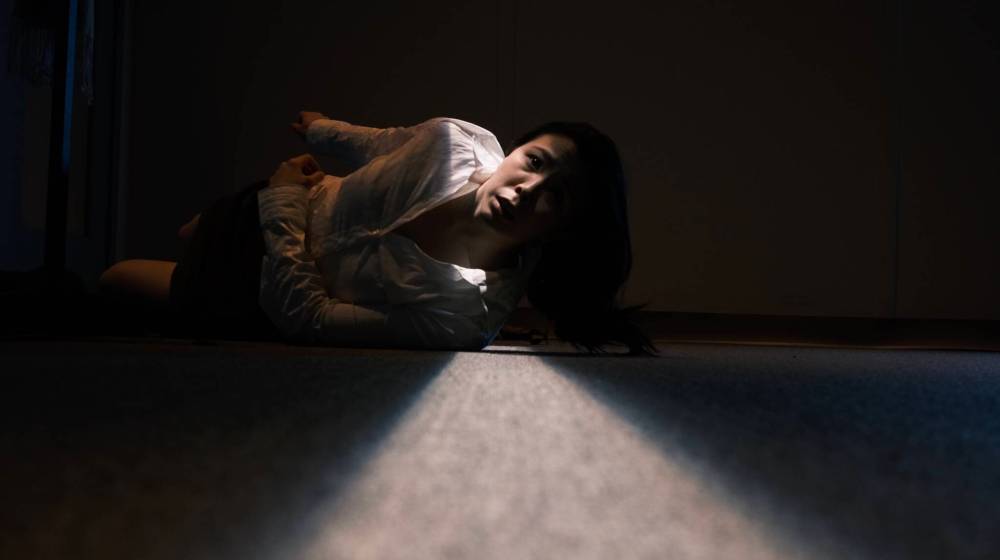
Supplied
Pam Tzeng plays an immigrant learning about residential schools.
“We learn a lot about intergenerational trauma, but the great thing about our intergenerational understanding, which Indigenous people have always had, is that (there’s also) intergenerational strength, excellence in storytelling and the pursuit of rigour,” she adds.
“The endless capacity to love — that didn’t get stolen from us. That exists still. And it’s important to celebrate that by continuing to create.”
ben.waldman@winnipegfreepress.com
Ben Waldman is a National Newspaper Award-nominated reporter on the Arts & Life desk at the Free Press. Born and raised in Winnipeg, Ben completed three internships with the Free Press while earning his degree at Ryerson University’s (now Toronto Metropolitan University’s) School of Journalism before joining the newsroom full-time in 2019. Read more about Ben.
Every piece of reporting Ben produces is reviewed by an editing team before it is posted online or published in print — part of the Free Press‘s tradition, since 1872, of producing reliable independent journalism. Read more about Free Press’s history and mandate, and learn how our newsroom operates.
Our newsroom depends on a growing audience of readers to power our journalism. If you are not a paid reader, please consider becoming a subscriber.
Our newsroom depends on its audience of readers to power our journalism. Thank you for your support.
Theatre preview
Reckoning
By Tara Beagan and Andy Moro
Presented digitally by Prairie Theatre Exchange, Wednesday to Sunday
Tickets: $20 (individual), $35 (household), $10 (students)
More information at pte.mb.ca
Ben Waldman is a National Newspaper Award-nominated reporter on the Arts & Life desk at the Free Press. Born and raised in Winnipeg, Ben completed three internships with the Free Press while earning his degree at Ryerson University’s (now Toronto Metropolitan University’s) School of Journalism before joining the newsroom full-time in 2019. Read more about Ben.
Every piece of reporting Ben produces is reviewed by an editing team before it is posted online or published in print — part of the Free Press‘s tradition, since 1872, of producing reliable independent journalism. Read more about Free Press’s history and mandate, and learn how our newsroom operates.
Our newsroom depends on a growing audience of readers to power our journalism. If you are not a paid reader, please consider becoming a subscriber.
Our newsroom depends on its audience of readers to power our journalism. Thank you for your support.
Advertisement Advertise With Us
Advertisement Advertise With Us