Exhibition shines light on Caribbean’s ‘barrel children’ left behind by Windrush migrants to UK
Advertisement
Read this article for free:
or
Already have an account? Log in here »
To continue reading, please subscribe:

Digital Subscription
One year of digital access for only $205*
- Enjoy unlimited reading on winnipegfreepress.com
- Read the E-Edition, our digital replica newspaper
- Access News Break, our award-winning app
- Play interactive puzzles
*First annual payment billed as $205.00 + GST for one year. This annual subscription will automatically renew at $233.00 + GST every 52 weeks (10% off the regular annual price of $259.35). Offer available to new and qualified returning subscribers only. Cancel any time.
To continue reading, please subscribe:
Add Free Press access to your Brandon Sun subscription for only an additional
$1 for the first 4 weeks*
- Enjoy unlimited reading on winnipegfreepress.com
- Read the E-Edition, our digital replica newspaper
- Access News Break, our award-winning app
- Play interactive puzzles
*Your next Brandon Sun subscription payment will increase by $1.00 and you will be charged $17.95 plus GST for four weeks. After four weeks, your payment will increase to $24.95 plus GST every four weeks.
Read unlimited articles for free today:
or
Already have an account? Log in here »
Hey there, time traveller!
This article was published 22/06/2023 (1199 days ago), so information in it may no longer be current.
LONDON (AP) — As a small child in Jamaica, Evadney Campbell loved it when barrels of gifts arrived at Christmastime from her parents in England. She was thrilled to receive the dolls, the English crinoline dresses with ribbons, the pretty white socks and shiny patent shoes.
It was only years later that Campbell realized the deliveries were bittersweet. For scores of children who grew up in Jamaica and elsewhere in the Caribbean in the 1950s and 60s, those barrels were the only connection they had with their parents, who had traveled thousands of miles away to Britain in search of better work opportunities.
Campbell was not yet a year old when her parents left and she did not reunite with her parents in England until she was 11.
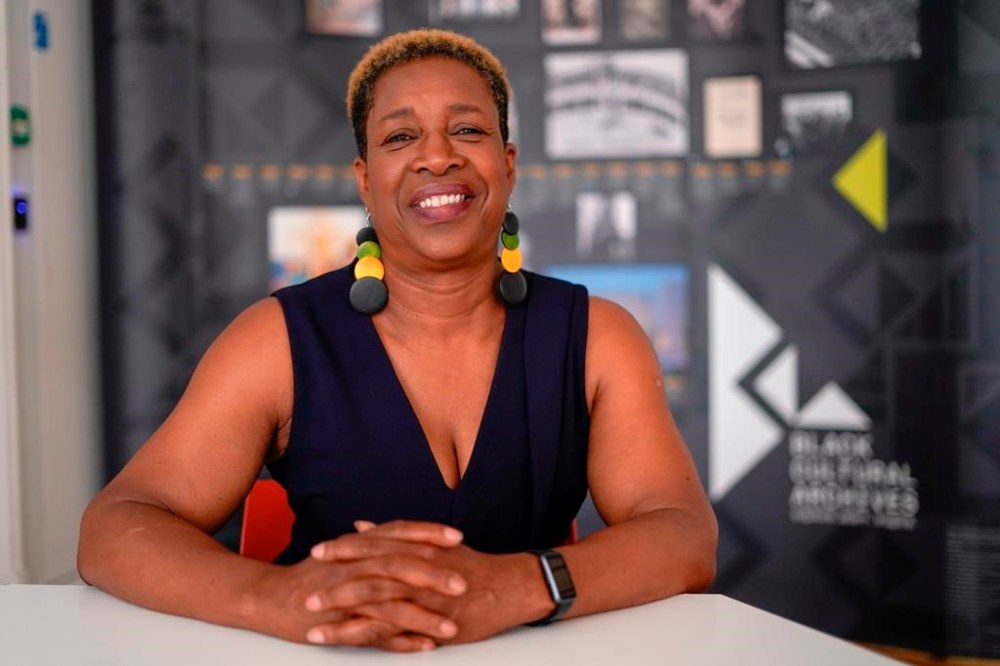
“The idea of a mother and father, it was just an idea. I didn’t know who they were, didn’t know what they looked like,” said Campbell, now 63. “You just knew they were in England, and you were in Jamaica.”
Campbell’s family story forms part of a new exhibition at London’s Black Cultural Archives that opens Thursday to coincide with 75 years since the ship Empire Windrush brought the first Caribbean migrants to a dock in Essex, near London, on June 22, 1948.
The ship has since become a symbol of a mass migration movement that saw many Caribbeans take up jobs as railway and factory workers, nurses and miners in the U.K., at the invitation of the British government to help rebuild the country after World War II. Hundreds of thousands settled in the U.K. and became known as the “Windrush generation.”
Curator Nadine White said that while much has been written about the trailblazing pioneers who departed from the Caribbean to contribute to British life, the stories of their children who were left behind are often overlooked.
Her exhibition focuses on the trauma suffered by what’s estimated to be thousands of “barrel children,” named after the shipping containers that were widely used by the Caribbean diaspora to send remittances and gifts back home.
In many cases, the parents left their children at home in the care of relatives because they initially believed they would merely be working away for a few years and return after earning good money abroad. But most soon began to build a new life in Britain. While many of the youngsters eventually reunited with their parents, others never did.
“We are really talking about the fragmentation of Black families – and I feel like that consequence of serial migration isn’t in the national conversation about Windrush,” White said.
On top of being uprooted from all things familiar and trying to build relationships with parents and siblings they didn’t know, the newly-arrived children also struggled to integrate into a “hostile society that was far more overtly racist than any of them had experienced or envisioned,” White said.
Events on Thursday to celebrate the Windrush generation will be mixed with protests and somber reminders of the Windrush scandal. They include revelations in recent years that large numbers of Caribbean migrants had been wrongly targeted in an immigration crackdown that saw long-time residents lose their right to work and state health care. In the worst cases, people were detained or deported.
While Britain’s government has apologized and pledged to issue compensation, many say the process is slow and ridden with bureaucracy. Some victims are still fighting for just settlements.
White says that the hostilities and racism faced by Windrush generation children were more insidious.
Instead of receiving educational support from British authorities, many Black migrant children were instead classified as “educationally subnormal” – a label that suggested they were intellectually inferior — and sent to special schools, she said.
“They were labelled, and cast aside,” White said. “The plight of Black children in the 1970s and ’80s within U.K. schools because of institutional racism is real. And the effects of that are ongoing.”
Campbell, a former broadcast journalist now working in public relations, said she “hated every moment” of her new life in England when she first arrived. She was placed in one of the worst schools in her neighborhood “because that’s where the local authority said I had to go,” she said.
“Even now if you ask my mom, she’ll say she knew it wasn’t right. But what could they have done? How could they have fought it? And I didn’t know I was being treated differently,” she recalled.
Campbell said she hoped the exhibition will spark awareness and debate about a chapter of the past that too few people talk about. Contrary to her happy memories of receiving the barrels as an innocent child, she said she can’t recall what it was like to arrive alone as an 11-year-old on a plane in London. That may be because her mind had blocked it out, she said.
“There are so many different tentacles and trauma that people have experienced that no one has spoken about. We’ve all buried what it meant to be uprooted from one country to another country to live with essentially strangers,” she said. “No one’s looked at what impact that has had on these thousands of children.”
___
“Over the Barrel: Windrush Children, Tragedy and Triumph” runs until Sept. 10 at the Black Cultural Archives in Brixton, south London.