A eulogy for the man who gave us Goku

Advertisement
Read this article for free:
or
Already have an account? Log in here »
To continue reading, please subscribe:

Digital Subscription
One year of digital access for only $205*
- Enjoy unlimited reading on winnipegfreepress.com
- Read the E-Edition, our digital replica newspaper
- Access News Break, our award-winning app
- Play interactive puzzles
*First annual payment billed as $205.00 + GST for one year. This annual subscription will automatically renew at $233.00 + GST every 52 weeks (10% off the regular annual price of $259.35). Offer available to new and qualified returning subscribers only. Cancel any time.
To continue reading, please subscribe:
Add Free Press access to your Brandon Sun subscription for only an additional
$1 for the first 4 weeks*
- Enjoy unlimited reading on winnipegfreepress.com
- Read the E-Edition, our digital replica newspaper
- Access News Break, our award-winning app
- Play interactive puzzles
*Your next Brandon Sun subscription payment will increase by $1.00 and you will be charged $17.95 plus GST for four weeks. After four weeks, your payment will increase to $24.95 plus GST every four weeks.
Read unlimited articles for free today:
or
Already have an account? Log in here »
Hey there, time traveller!
This article was published 12/03/2024 (920 days ago), so information in it may no longer be current.
If there’s an anime fan in your life who has been deeply sad of late, there’s a good reason for it: Akira Toriyama is dead and no wish to Shenron — the mystical dragon his characters looked to for a quick fix — will bring him back.
Toriyama’s Bird Studio announced the artist died March 1 of an acute subdural hematoma. He was 68. He may be a somewhat obscure figure in North America, but for millions across the world, he was a titan almost without equal.
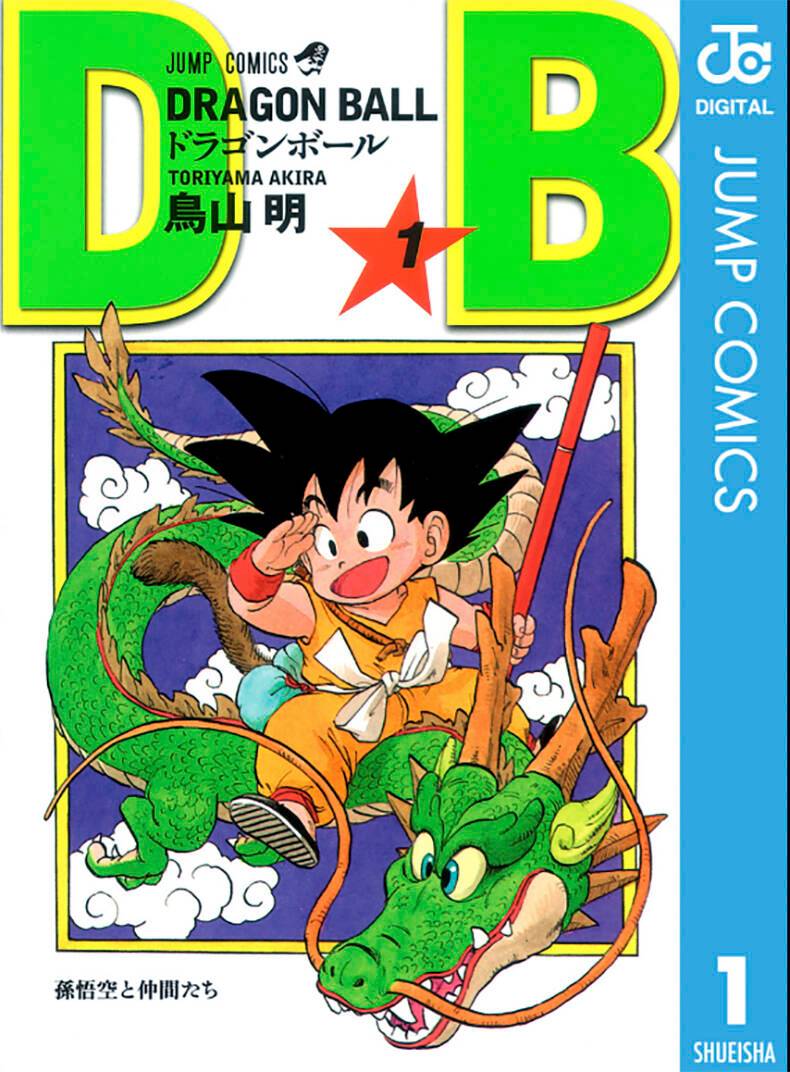
He is best known as the creator of martial-arts epic Dragon Ball, which began as a riff on 16th-century Chinese novel Journey to the West, starring a monkey-tailed boy named Son Goku who travelled the Earth with his comrades in search of the seven titular dragon-summoning orbs.
Bird Studio SHUEISHA
Akira Toriyama’s most famous series Dragon Ball (below) is beloved the world over for its blend of silliness and fantastical, high-octane martial arts action.
The manga-turned-franchise began in 1984 and has gone on to comprise more than 600 episodes of television, more than 20 movies, countless manga panels and mountains of merchandise. Toriyama’s fortune is estimated at around $US55 million.
Born in April 1955 in Kiyosu in Japan’s Aichi Prefecture, Toriyama started drawing young, and cited the work of manga godfather Osamu Tezuka of Astro Boy fame as an inspiration. His first comic, submitted when he was 23, was rejected.
“I’m the kind of person who hates to lose, so I submitted again, and a person from the editorial department (of Japanese publication Jump) said, ‘You look like you’ve got potential, so have at it.’” Toriyama said in a translated 1980 interview with Starlog magazine, hosted by fan site Kanzenshuu.
Before it took off, Dragon Ball was just one of many ideas Toriyama threw around in the 1980s. He only planned for it to run as long as it took Goku and company to complete their journey, maybe a year.
So much for that.
It was adapted for TV in 1986, and became a mega-hit in Asia before its most famous instalment — Dragon Ball Z — spread like wildfire across the planet during the mid-’90s.
It’s tough to sum up the impact of his work. A good comparison might be J.R.R. Tolkien; Tolkien wasn’t the first to put a wizard into a story, but his tale triggered a flow of pop culture that has yet to ebb. The same is true for Toriyama. So much of action-adventure animation and comics is touched by his influence that it’s impossible to imagine it without him.
To this day, there really isn’t anything like the world of Dragon Ball, a bizarro Earth where flying cars erupt from pocket-sized capsules with an onomatopoeic “BOM” and careen across the sky over foraging dinosaurs, past deserts full of towering mushrooms, before finally landing on the street of a futuristic city.
Toriyama fired every idea he had at the wall like buckshot and it worked.
Beyond his work at the drawing table, he married his wife Yoshimi Kato, a manga artist herself, in 1982. They had two children, son Sasuke and daughter Kikka. A famous recluse, he rarely appeared in public or granted interviews, instead addressing fans through messages included with published collections or video box sets.
Apart from Dragon Ball, Toriyama captured imaginations with the adventures of characters such as Jaco the Galactic Patrolman or Dr. Slump, his first hit. He handled character designs for hit video games such as Dragon Quest and Chrono Trigger.
In North America, Dragon Ball is something held close by a relative few, especially aging millennials who watched Z when it was imported to anchor prime-time teen-centric programming blocks. Worldwide, Dragon Ball’s impact is staggering.
Across Latin America, massive crowds gathered in public to watch the final episodes of Dragon Ball Super, which wrapped up in 2018. Rights-holder Toei Animation was forced to send cease-and-desists over the unauthorized screenings and the Japanese embassy in Mexico contacted a state governor about them. In October last year, 1,800 fans gathered at a convention in India to make a world-record attempt for largest group “kamehameha” (the azure hand-fired laser that is Goku’s signature).

Kyodo News / The Associated Press
Dragon Ball
Other “mangaka” inspired by Toriyama went on to create hits such as Naruto and One Piece (both of which, like Dragon Ball, star innocent dummies who love to eat piles of food). One Piece creator Eiichiro Oda said in a statement that “the hole is too big,” after the creator’s death.
“For not only mangakas but also creators in various industries, the excitement and emotion of the time of Dragon Ball serialization must have taken root in their childhood. His existence is like a big tree,” Oda said.
The artist known publicly as Toyotaro, who took over art duties from Toriyama when Dragon Ball’s manga returned in its Super iteration in 2015, attributed his career to his predecessor.
“I drew manga because I wanted to be praised by Toriyama-sensei. It was everything to me,” he posted on X (formerly Twitter) following Toriyama’s death.
Toriyama himself remained self-deprecating about his work.
“I didn’t feel like I put much effort into the stuff I drew for Dragon Ball,” he writes in the intro to 2019’s Dragon Ball: A Visual History. “Dragon Ball was a manga series with a lot of emphasis on movement and action, so I was never too particular about the individual drawings themselves. I think I was just trying to convey that feeling of raw speed.
“OK, just kidding, that’s just my excuse for when people start to ask, ‘Was this art really worthy of a whole book?’ I’m still learning and practising to this day, so please forgive me.”
Toriyama’s self-image was comically diminutive: a tiny round mechano-man, face much like a gas mask, standing nervously at the corner of a page. When it came down to it, the creator of a cast of all-powerful fighters depicted himself as a weird little dude.
For all the grunting combat for which his flagship became stereotyped, weirdness and whimsy were always at the heart of things. And it’s because of this that his work remains some of the most unique and resonant pieces of pop culture of the 20th century.
Darren Ridgley is a member of the Free Press adjunct editorial board. He grew up practising the kamehameha with his brother and friends in Killarney.
Darren Ridgley is a copy editor and member of the adjunct editorial board at the Free Press. Darren has previously worked as a reporter, photographer and editor at weekly newspapers in Drumheller, Alta., Manitoba’s Interlake region and at Canstar Community News. He joined the Free Press in 2020. Read more about Darren.
Every piece of reporting and analysis Darren produces is reviewed by an editing team before it is posted online or published in print — part of the Free Press‘s tradition, since 1872, of producing reliable independent journalism. Read more about Free Press’s history and mandate, and learn how our newsroom operates.
Our newsroom depends on a growing audience of readers to power our journalism. If you are not a paid reader, please consider becoming a subscriber.
Our newsroom depends on its audience of readers to power our journalism. Thank you for your support.
Darren Ridgley is a copy editor and member of the adjunct editorial board at the Free Press. Darren has previously worked as a reporter, photographer and editor at weekly newspapers in Drumheller, Alta., Manitoba’s Interlake region and at Canstar Community News. He joined the Free Press in 2020. Read more about Darren.
Every piece of reporting and analysis Darren produces is reviewed by an editing team before it is posted online or published in print — part of the Free Press‘s tradition, since 1872, of producing reliable independent journalism. Read more about Free Press’s history and mandate, and learn how our newsroom operates.
Our newsroom depends on a growing audience of readers to power our journalism. If you are not a paid reader, please consider becoming a subscriber.
Our newsroom depends on its audience of readers to power our journalism. Thank you for your support.
Advertisement Advertise With Us
Advertisement Advertise With Us