The power of one, real object in a virtual age

Advertisement
Read this article for free:
or
Already have an account? Log in here »
To continue reading, please subscribe:

Digital Subscription
One year of digital access for only $205*
- Enjoy unlimited reading on winnipegfreepress.com
- Read the E-Edition, our digital replica newspaper
- Access News Break, our award-winning app
- Play interactive puzzles
*First annual payment billed as $205.00 + GST for one year. This annual subscription will automatically renew at $233.00 + GST every 52 weeks (10% off the regular annual price of $259.35). Offer available to new and qualified returning subscribers only. Cancel any time.
To continue reading, please subscribe:
Add Free Press access to your Brandon Sun subscription for only an additional
$1 for the first 4 weeks*
- Enjoy unlimited reading on winnipegfreepress.com
- Read the E-Edition, our digital replica newspaper
- Access News Break, our award-winning app
- Play interactive puzzles
*Your next Brandon Sun subscription payment will increase by $1.00 and you will be charged $17.95 plus GST for four weeks. After four weeks, your payment will increase to $24.95 plus GST every four weeks.
Read unlimited articles for free today:
or
Already have an account? Log in here »
Hey there, time traveller!
This article was published 22/01/2026 (243 days ago), so information in it may no longer be current.
We live in an age of perfect images. With a few swipes of a phone, we can zoom into almost any masterpiece ever made, stream music on demand, and tour museums virtually from our living rooms. And yet, people still travel across continents, wait in long lines, and stand silently in front of objects they have already seen a thousand times online. This is not nostalgia, nor is it elitism. It is something more basic — and more human. The more virtual our world becomes, the more we seem to crave encounters with things that have survived time, and with each other.
Original works of art and historical objects carry a weight that cannot be replicated. They are not simply images or ideas; they are evidence. Art is one of humanity’s oldest languages, predating literacy, formal history, and written law. Before words, humans marked, carved, painted, and shaped objects to communicate experience, belief, and memory. These works do not merely illustrate history — they carry it. Their physical presence reminds us that someone once stood where we stand now, made something with intention, and sent it forward into time.
That sense of survival gives original objects their authority: a facsimile can show us what something looks like. Only the original confronts us with what it means.
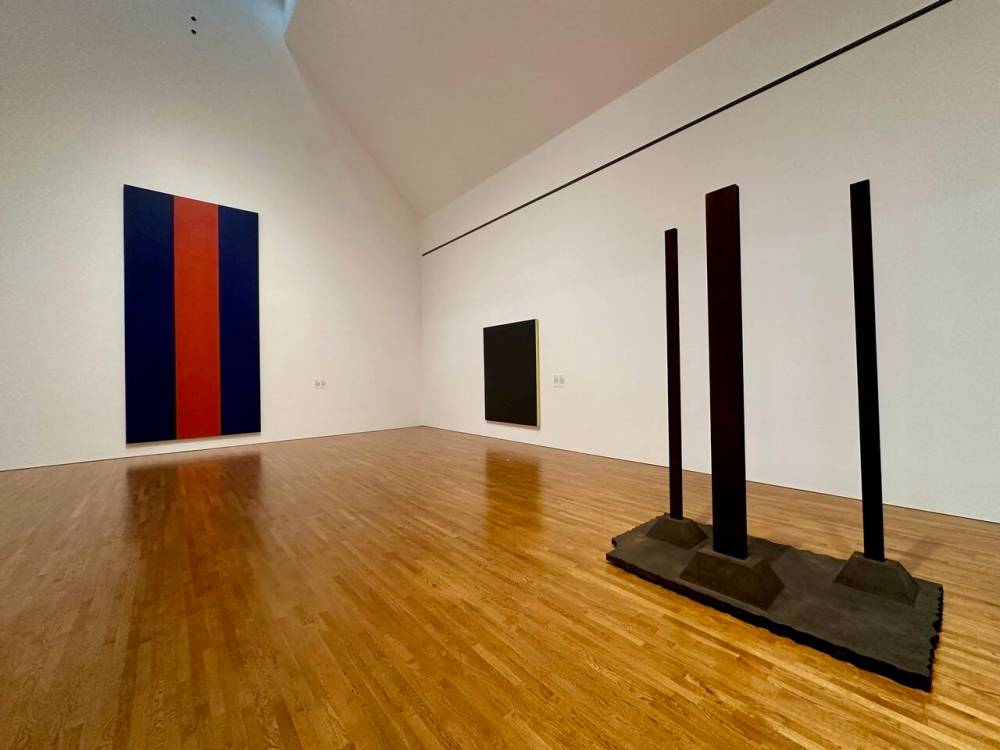
Submitted/Stephen Borys
Left to right — Barnett Newman’s Voice of Fire, Yellow Edge, and Here II at the National Gallery of Canada
This became clear recently with the acquisition of the Hudson’s Bay Company Royal Charter, issued on May 2, 1670, by King Charles II. The document granted exclusive trading rights over Rupert’s Land and asserted colonial authority over vast Indigenous territories for two centuries. When the original charter entered the public trust at auction in 2025, following the company’s insolvency proceedings, it was not simply a transaction. It was a civic intervention. The document now carries commitments to public access, Indigenous consultation, and responsible interpretation. A digital reproduction can convey the words. The original forces us to reckon with consequence, legacy, and responsibility.
The same was true when an original 1215 copy of the Magna Carta — one of the four surviving exemplars issued under King John of England — was exhibited at the Canadian Museum for Human Rights in 2015. The CMHR is a museum of ideas rather than a collecting institution, yet placing a fragile medieval document — one that narrowly survived war, fire, and neglect — into the space transformed abstract concepts such as justice and the rule of law into something tangible. Many visitors spoke not only of awe, but of fragility: how easily rights can be lost when their material and historical foundations are forgotten.
The object mattered.
This paradox plays out daily at the Musée du Louvre. Leonardo da Vinci’s Mona Lisa, painted between about 1503 and 1506, entered the French royal collection around 1518 and has been on public display since 1797. It is among the most reproduced images in human history. You can see it online in higher resolution than the human eye can register. And yet, more than 10 million people a year insist on seeing it in person. They are not going to learn what it looks like. They are going to know that it is there — that it has endured. The appeal is not optical; it is existential.
Value, too, is bound up in belief. When Leonardo’s Salvator Mundi — painted around 1500, rediscovered in 2005, and debated ever since — sold at Christie’s in New York in 2017 for US$450 million, the price did not reflect paint and wood alone. It reflected faith in authorship, rarity, survival, and the authority of the original. Markets do not merely price objects; they price belief in what those objects represent.
A few years ago, I debated this very question onstage at a Walrus Talks event with Marc Mayer, then director of the National Gallery of Canada. The topic was deceptively simple: Is art relevant, is it vital? What struck me was not the split in opinion, but how easily we forget that art is not just about museums, markets, or critics. It’s about survival, memory, and shared meaning. The debate ended in a tie, but the audience response was telling. People were not arguing theory; they were arguing from lived experience.
That lived experience is rarely solitary. One of the most powerful aspects of standing before an original work is that we usually do so with others. Museums and galleries are places of shared attention — where we observe not just the object, but one another’s responses to it. This social dimension cannot be digitized.

Few artworks in a Canadian collection illustrate this better than Barnett Newman’s Voice of Fire. Painted in 1967 for Expo 67 in Montreal and acquired by the National Gallery of Canada in 1989 for $1.8 million, the work was met with immediate and vocal backlash: too expensive, too simple, too abstract. Decades later, it is among the most visited and discussed works in the national collection. Standing before its monumental scale, viewers watch others struggle, dismiss, reconsider, and sometimes fall silent. The space between the painting and the viewer becomes a forum. A composition of three vertical bands becomes a catalyst for civic discourse.
It’s also worth noting that what was once derided as an irresponsible public purchase has proven anything but. If Voice of Fire were to be sold today, it would likely command well over $50 million on the international market. By any financial measure, that makes the original acquisition a remarkable investment. A year after the infamous purchase, the artist’s widow donated Yellow Edge to the National Gallery. It underscores a deeper truth: markets eventually catch up to cultural significance.
In an image-saturated age, museums continue to attract millions of visitors — not because they offer better pictures, but because they offer something rarer: presence. Art does not simply reflect society; it assembles it. It slows us down. It places us in proximity to objects that have endured — and to people whose reactions challenge our own.
In a world where almost everything can be copied, shared, and consumed instantly, the real thing still stops us. Original objects remind us that ideas have histories, that values have consequences, and that meaning is often made in proximity — to things, and to one another. Art is not just something we look at. It is something we experience together, as proof that we were here, and that it mattered.
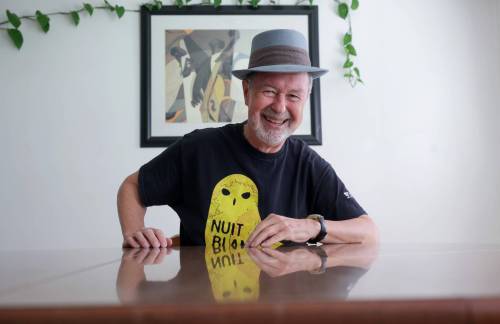
Stephen Borys is president and CEO of Civic Muse, and former director and CEO of the Winnipeg Art Gallery–Qaumajuq.
Our newsroom depends on a growing audience of readers to power our journalism. If you are not a paid reader, please consider becoming a subscriber.
Our newsroom depends on its audience of readers to power our journalism. Thank you for your support.
Our newsroom depends on a growing audience of readers to power our journalism. If you are not a paid reader, please consider becoming a subscriber.
Our newsroom depends on its audience of readers to power our journalism. Thank you for your support.
Related Articles
At 356, the HBC charter is about to get a Manitoba Museum welcome
Advertisement Advertise With Us
Advertisement Advertise With Us