Secrets & survival Exhibition takes Canadian history of Chinese oppression from the archives into the light
Read this article for free:
or
Already have an account? Log in here »
To continue reading, please subscribe:

Digital Subscription
One year of digital access for only $205*
- Enjoy unlimited reading on winnipegfreepress.com
- Read the E-Edition, our digital replica newspaper
- Access News Break, our award-winning app
- Play interactive puzzles
*First annual payment billed as $205.00 + GST for one year. This annual subscription will automatically renew at $233.00 + GST every 52 weeks (10% off the regular annual price of $259.35). Offer available to new and qualified returning subscribers only. Cancel any time.
To continue reading, please subscribe:
Add Free Press access to your Brandon Sun subscription for only an additional
$1 for the first 4 weeks*
- Enjoy unlimited reading on winnipegfreepress.com
- Read the E-Edition, our digital replica newspaper
- Access News Break, our award-winning app
- Play interactive puzzles
*Your next Brandon Sun subscription payment will increase by $1.00 and you will be charged $17.95 plus GST for four weeks. After four weeks, your payment will increase to $24.95 plus GST every four weeks.
Read unlimited articles for free today:
or
Already have an account? Log in here »
Housed within two innocuous rooms flanking the Welcome Gallery at Manitoba Museum is a sobering record of a government’s betrayal of its own citizens.
The Paper Trail to the 1923 Chinese Exclusion Act details the era when the Canadian government banned all Chinese nationals from entering the country.
The act also targeted those born within the country’s borders. All Chinese people in Canada, including Canadian citizens of Chinese descent, were made to register with the government and carry government-issued photo ID.
Anyone who was unable to produce the certificate would face fines, imprisonment or deportation.
The exhibit is a special adaption of the broader award-winning exhibition that debuted at the Chinese Canadian Museum in Vancouver on July 1, 2023, to mark the 100th anniversary of the act.
This is the first time the exhibit is being shown outside B.C. It will remain at the Manitoba Museum until April next year, before moving to Montreal.
Ruth Bonneville / Free Press Catherine Clement, curator of The Paper Trail exhibition, delved into newspaper archives to find stories of people who were affected by the Chinese Exclusion Act.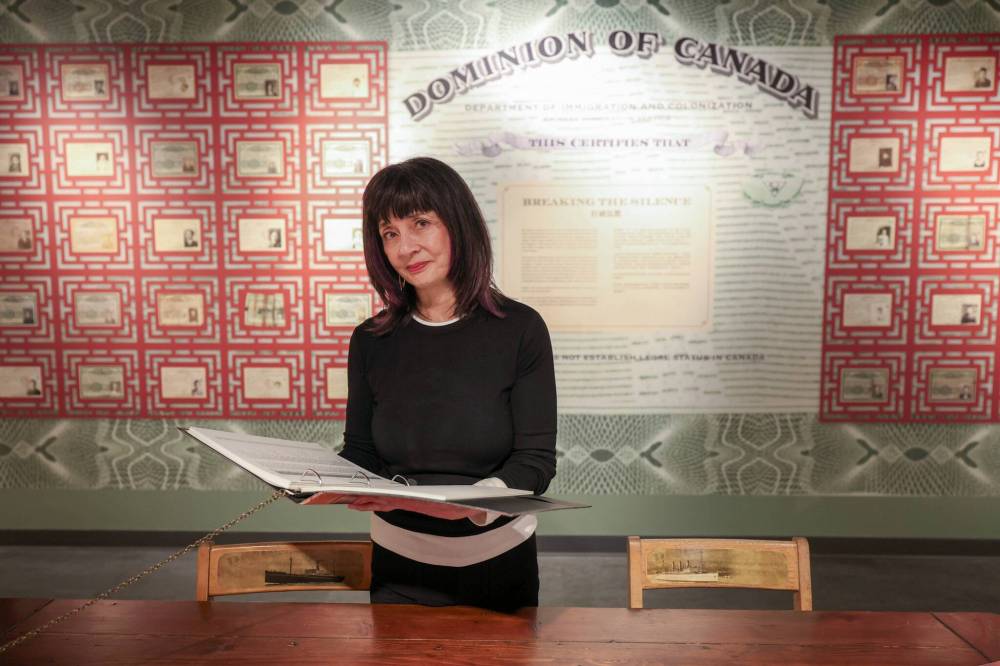
“The 1923 Chinese Exclusion Act was about banning one particular group in Canada for almost a quarter of a century,” exhibition curator and author Catherine Clement explains.
“It is a monumental chapter in Canadian history which has been largely forgotten.”
“It is a monumental chapter in Canadian history which has been largely forgotten, even by the Chinese-Canadian community itself.”
Clement and her team delved into the archives of Canadian newspapers from across the country in search of stories during that time period. From there they would follow paper trails through court documents and coroners records to piece together what happened to members of the Chinese community.
“We started to find stories of these men, who had been eking out a living here for the last 30 to 40 years, who had managed to hang on, but this act made them give up,” Clement says. “Men who had been here for years fell apart, they started taking their lives, they were being placed in mental institutions, or as they were called then, insane asylums.
Ruth Bonneville/ Free Press Grace Wong, board chair of the Chinese Canadian Museum (left) with Olivia Chow, director of curatorial programs at the Chinese Canadian Museum, take in The Paper Trail Exhibit.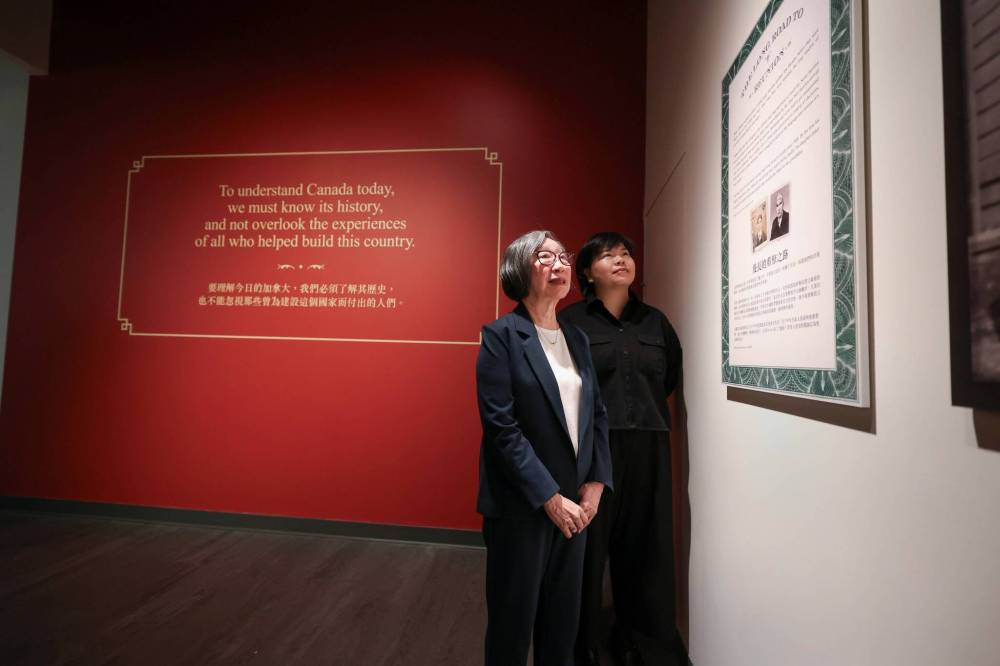
“Those are the stories nobody remembers, those were the people who fell apart. But there are survivor stories too, of people who did survive despite facing intense challenges.”
For many visitors, the exhibition is an education in state-sanctioned racism.
For Winnipegger Thomas Rempel-Ong, 40, is it the unveiling of a decades-long family secret.
Rempel-Ong’s great-great-uncle Henry Yee Chung Yen was one of nearly 50,000 Chinese-Canadians to be affected by the act.
Growing up, the name Henry Yee was never mentioned, Rempel-Ong says.
Ruth Bonneville / Free Press Thomas Rempel-Ong's donation of the items he discovered hidden away in his grandfather’s dresser drawer is encased in a glass exhibit case.

His grandfather, Don Ong, had migrated to Canada in 1952, years after the act had been repealed. He made contact with with Yee in Portage la Prairie, where Yee ran a cafe. The two men formed a tight bond that lasted until Yee died in 1982.
Exhibition preview
The Paper Trail to the 1923 Chinese Exclusion Act
● Discovery Room and Urban Corridor,
Manitoba Museum
● Tuesday to Sunday, 10 a.m.-4 p.m
● Until April 2027
“I only knew about him after my grandfather Don Ong had passed,” Rempel-Ong says. “I was going through his effects and found all the documentation on Henry in an envelope in a dresser drawer. There were pictures of Henry, his ID, his head tax certificate, and even his end-of-life medical bills and funeral expenses, which I found out my grandfather had paid for.”
Born in 1895, Yee had emigrated to Canada in 1917 to build the foundations of a better life. He duly paid the $500 Head Tax Act (1885 to 1923) fee that was required of all Chinese immigrants arriving here, leaving behind his wife and children in the hope they would one day be reunited.
But the passing of the act made any further immigration impossible, and his wife and children died before he was able to bring them to this country.
In 1960, Yee became a Canadian citizen. He started to help other newcomers find their footing in Canada. Now his story is finally being brought to light.
“The only way we can prevent this from happening again is to acknowledge it did happen.”
Rempel-Ong’s donation of the items he discovered hidden away in his grandfather’s dresser drawer is encased in a glass exhibit case.
Among the documents and pictures is an unopened bottle of Crown Royal with an unbroken sticker label dated 1962. The bottle had been sitting in the family liquor cabinet for as long as Rempel-Ong can remember, protected by a strict decree from his grandfather that it wasn’t to be touched, let alone opened.
“The date on the sticker is very important; 1962 was the year my grandfather found out he could finally bring my dad and my grandmother to Canada,” Rempel-Ong says.
“Reading between the lines, I am pretty sure that bottle would have been a celebratory gift to Henry when my grandfather found out he could bring his family here. My guess is Henry would have accepted the gift, but could not bring himself to open it.”
Ruth Bonneville / Free Press Archival photos and information on Henry Yee, whose legacy is detailed in the exhibit.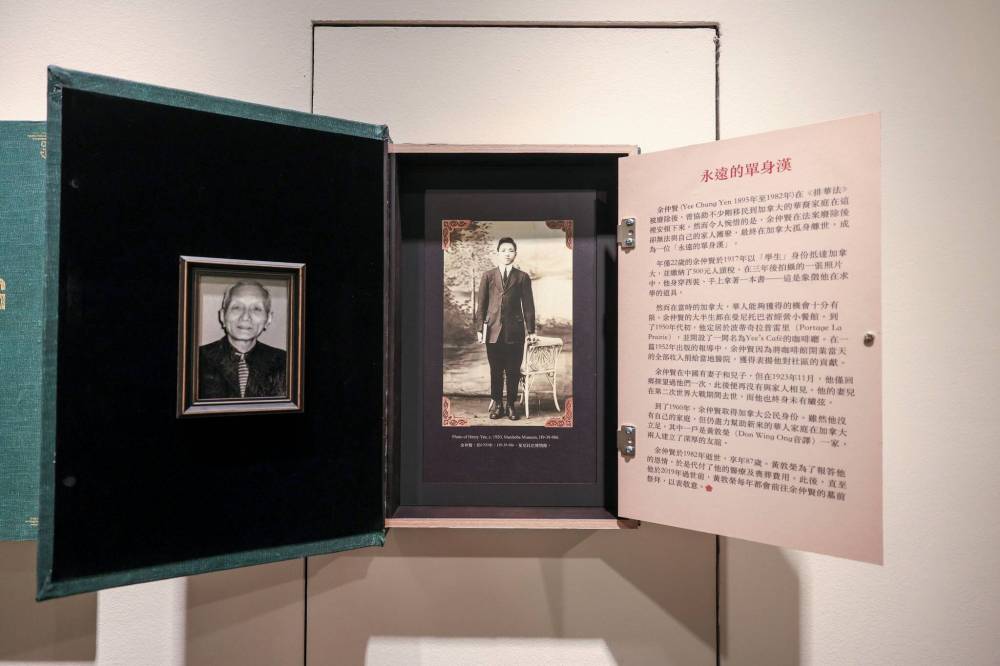
Perhaps the gesture was too painful a reminder of the family Yee would never see again, Rempel-Ong surmises, a freedom that came too late for him.
Henry Yee died in 1982, aged 87. He is buried near the Field of Honour at Brookside Cemetery, with a view of the airport.
“There is a certain irony to this,” Rempel-Ong says. “The person who was told his family was undesirable has been, for 40-plus years, seeing immigrants coming and going out of the city in a way I’m pretty sure he didn’t think would be possible back in the 1920s.”
In June 2006, then-prime minister Stephen Harper offered a full, formal apology in the House of Commons to Chinese Canadians for the discriminatory head tax and the subsequent exclusion of Chinese immigrants between 1923 and 1947.
Ruth Bonneville / Free Press 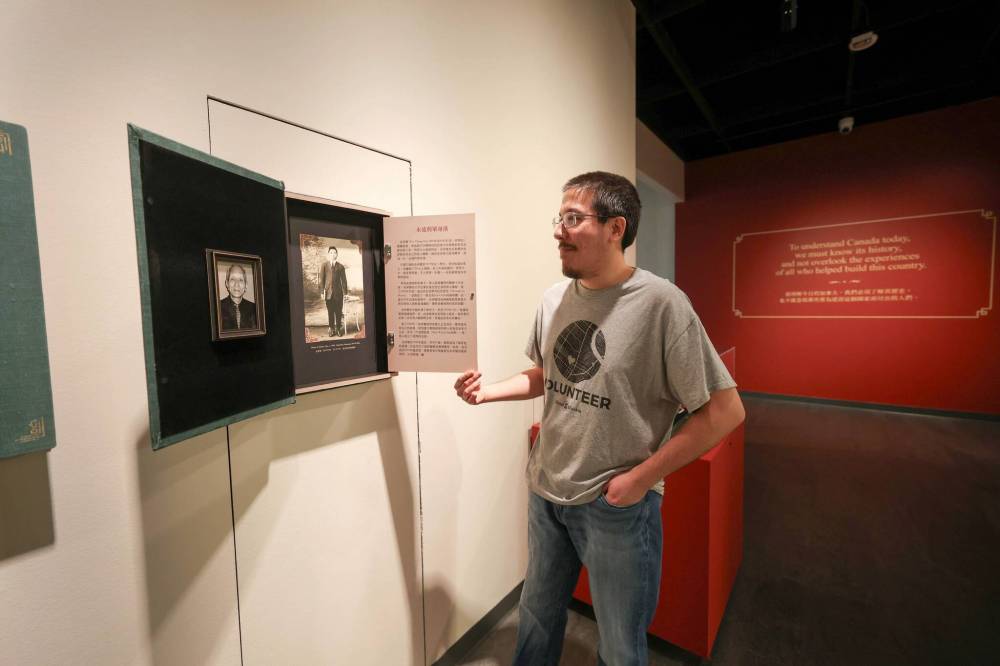
“In prime minister Harper’s apology he says, ‘Let me assure the house, this government will continually strive to ensure that similar unjust practices are never allowed to happen again,’” Rempel-Ong says.
“The only way we can prevent this from happening again is to acknowledge it did happen. We can’t pretend Canada’s never been a racist society. It’s useful to see this exhibit to have a different perspective of how it has impacted Canada in the past so we can think about how we want to act today and in the future.”
winnipegfreepress.com/avkitching

AV Kitching is an arts and life writer at the Free Press. She has been a journalist for more than two decades and has worked across three continents writing about people, travel, food, and fashion. Read more about AV.
Every piece of reporting AV produces is reviewed by an editing team before it is posted online or published in print — part of the Free Press‘s tradition, since 1872, of producing reliable independent journalism. Read more about Free Press’s history and mandate, and learn how our newsroom operates.
Our newsroom depends on a growing audience of readers to power our journalism. If you are not a paid reader, please consider becoming a subscriber.
Our newsroom depends on its audience of readers to power our journalism. Thank you for your support.