Tattoo artists beset by requests for unworkable AI pieces
Read this article for free:
or
Already have an account? Log in here »
To continue reading, please subscribe:

Digital Subscription
One year of digital access for only $205*
- Enjoy unlimited reading on winnipegfreepress.com
- Read the E-Edition, our digital replica newspaper
- Access News Break, our award-winning app
- Play interactive puzzles
*First annual payment billed as $205.00 + GST for one year. This annual subscription will automatically renew at $233.00 + GST every 52 weeks (10% off the regular annual price of $259.35). Offer available to new and qualified returning subscribers only. Cancel any time.
To continue reading, please subscribe:
Add Free Press access to your Brandon Sun subscription for only an additional
$1 for the first 4 weeks*
- Enjoy unlimited reading on winnipegfreepress.com
- Read the E-Edition, our digital replica newspaper
- Access News Break, our award-winning app
- Play interactive puzzles
*Your next Brandon Sun subscription payment will increase by $1.00 and you will be charged $17.95 plus GST for four weeks. After four weeks, your payment will increase to $24.95 plus GST every four weeks.
Read unlimited articles for free today:
or
Already have an account? Log in here »
As a professional tattooist with eight years of ink on her fingers, Justine Proulx is used to getting all sorts of requests from clients looking to decorate their bodies with memories, tributes and reminders.
But over the past six months, the Winnipeg artist, who works out of Black Thistle Tattoo, has noticed some troublesome trends.
Most — about 90 per cent — of clients are bringing in AI-generated images that “aren’t doable” to Proulx’s Henderson Highway studio.
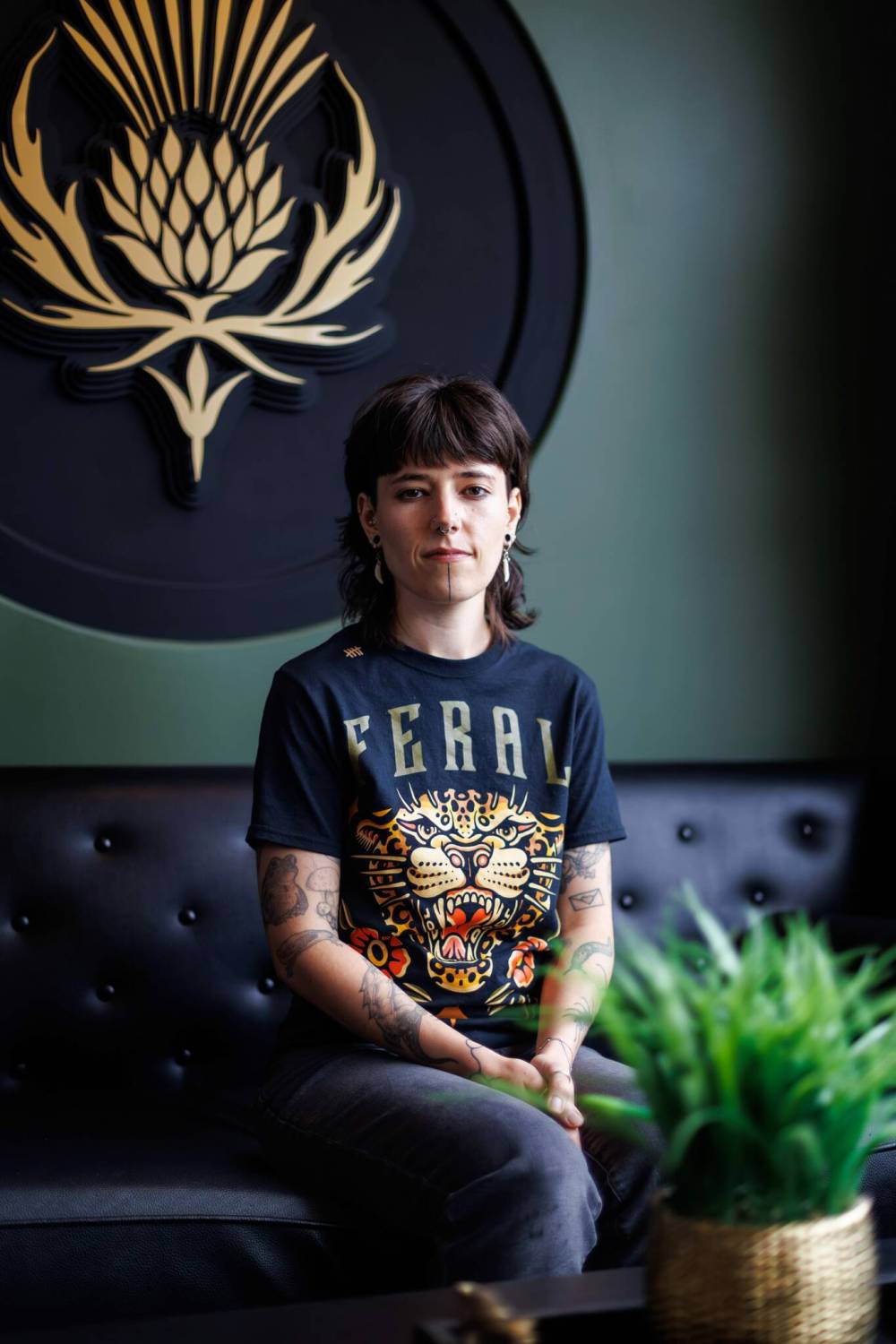
MIKE DEAL / FREE PRESS
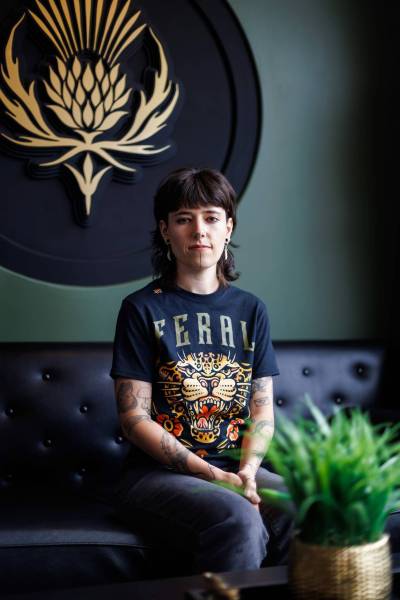
Justine Proulx at Black Thistle Tattoo is dealing with clients bringing in AI-generated tattoo proposals, some of which are made by feeding her own style into a generative model.
Not only do these prompts undermine the artist’s hard-won style, but such images don’t account for the technical expertise of experienced tattooists, who have worked for years to understand the intricacies, the possibilities and the limitations of a dermal canvas.
That’s been a challenge for thousands of creatives and designers across disciplines since the 2022 launch of ChatGPT and subsequent generative AI programs, such as Google’s Gemini.
But for Proulx — an Indigenous artist who also creates traditional murals across the province in a modified Woodlands style — the deleterious effects of artificial intelligence upon her artistic practice run deeper.
Some prospective clients — whom Proulx takes care not to malign or name — are taking images from her website and feeding them into AI models, which then chew up Proulx’s original style and spit out an ersatz imitation.
“Instead of just saying to me, ‘Oh, I want a wolf tattoo with some sage,’ instead of verbally telling me that this is what they’re doing, they’re taking a picture of a wolf tattoo that I already did on somebody’s body. So they’re also taking images of people’s bodies off my Instagram, right?” says Proulx, whose most prominent public art work, installed in 2025, is a seasonal cycle of mammalian murals on the northern side of the RBC Convention Centre.
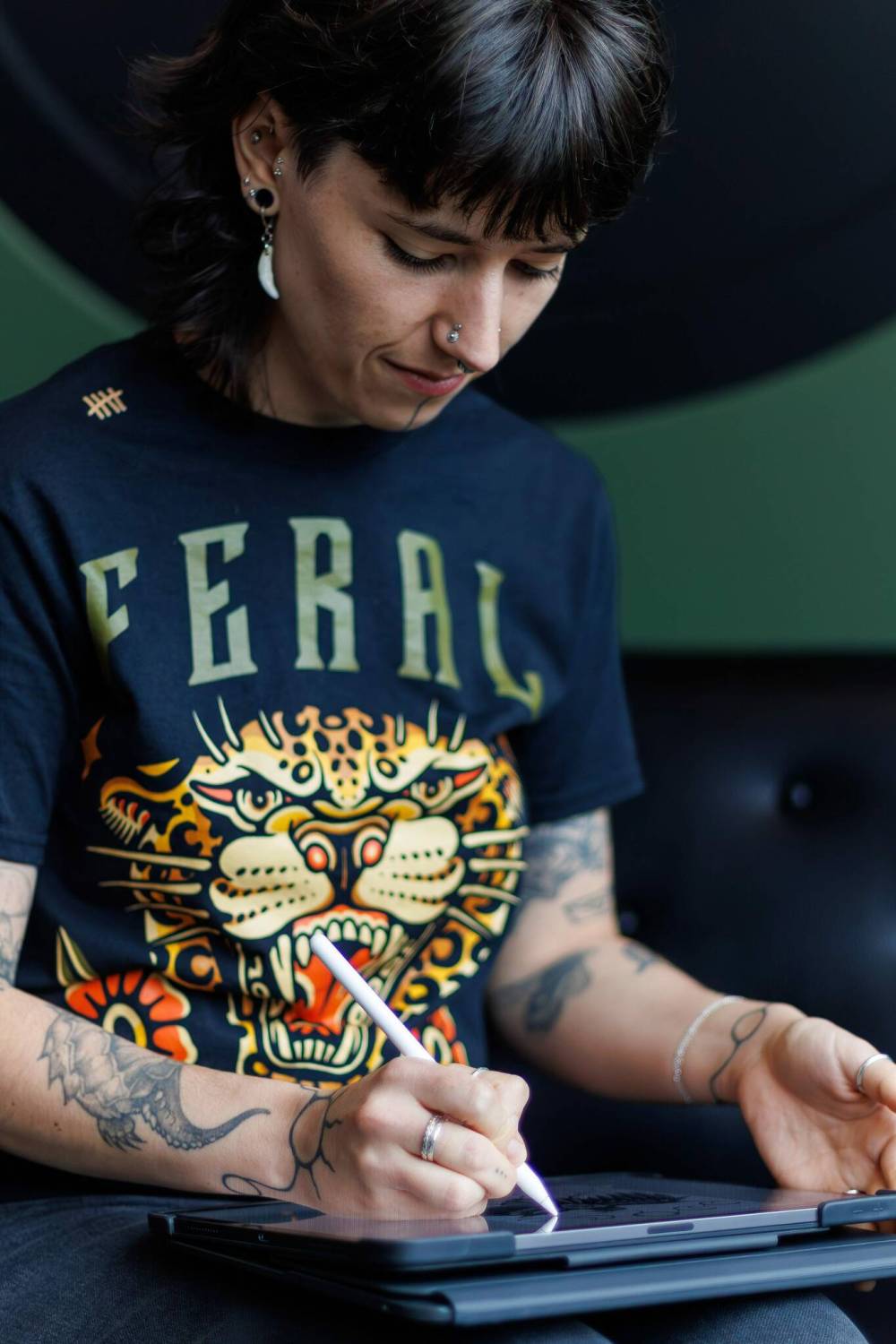
MIKE DEAL / FREE PRESS
Proulx says she believes people bringing in AI-generated tattoo ideas may be trying to save the artist time — forgetting that the time and energy put into tattoo design is what they’re paying for.
“I opened my books a couple of weeks ago and had not just one, but multiple people do that. I don’t think anybody has ill intent, obviously,” adds Proulx, whose widely shared Intagram post about the issue has been viewed thousands of times since June 16.
“I would say there’s not a huge divide within the tattoo community. Like 99 per cent of the people I talk to hate generative AI, but yeah, people really do think they’re saving us time and being helpful.”
Bram Adey, a tattooist who owns Ritual Winnipeg on Arthur Street, gives kudos to Proulx for publicly discussing a growing concern within the industry. As an advocate for all things analogue and a veteran artist, Adey had largely been insulated from AI in the industry until mid-June.
“In the last week-and-a-half, I’ve got a whole flood of AI-generated images in my inbox,” says Adey, who has been tattooing since 2010.
Adey says it’s common that prospective clients send references of other artists’ work to their hired tattooists, requesting that the artist work in another’s style.
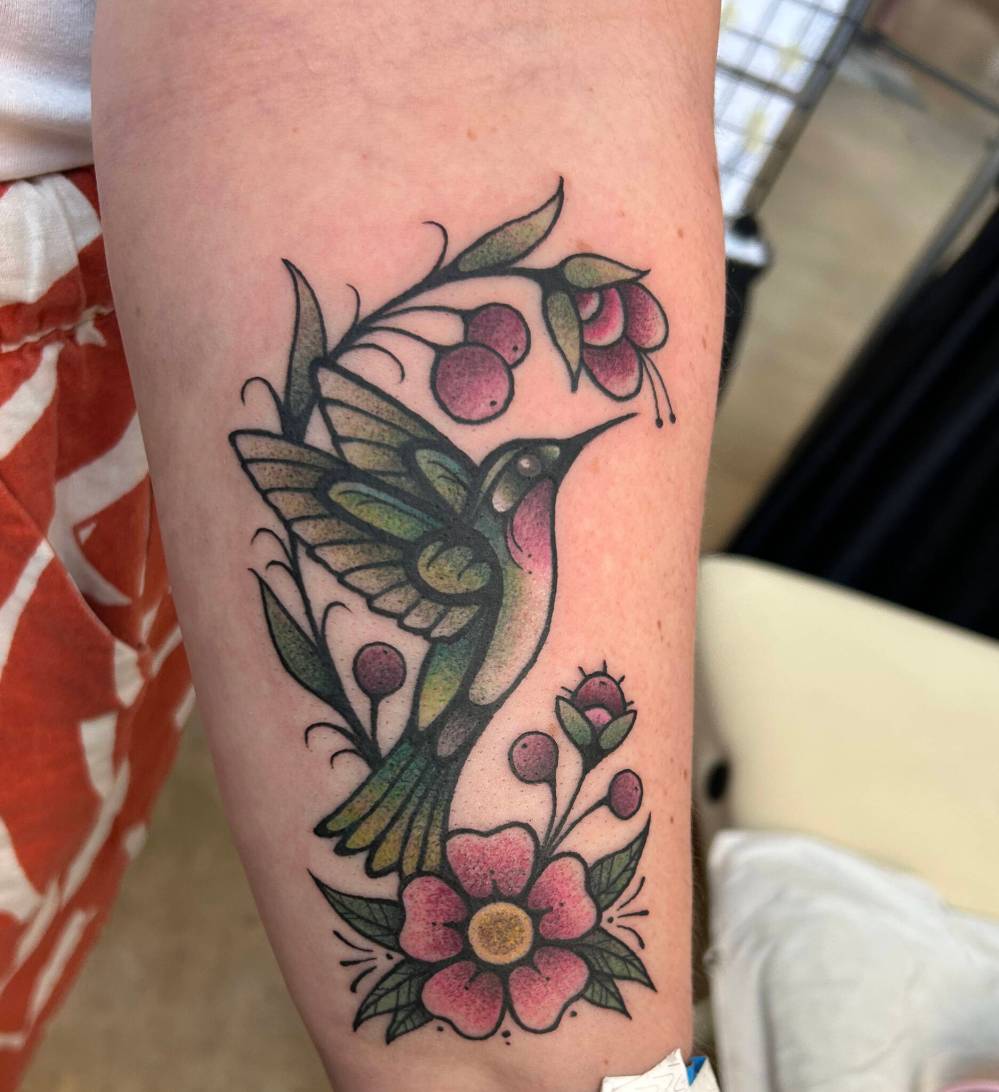
SUPPLIED
Original works by tattooist Justine Proulx.
“I’d say this feels roughly the same as that. It’s not a good starting point for us, and I think it has to do with expectations,” Adey says. “As someone who has worked for many years to develop a style or a visual language, when someone sends you another person’s tattoo or a tattoo design generated by a computer, it sets us off on bad footing.”
If Adey’s sent another tattoo artist’s design, Adey can take it as a starting point, but discards the original almost immediately.
“Usually what I do is look at it, look away, and make a sketch of my own. I need to distance myself from the (sent image) as much as possible right away.”
With AI-generated images, Adey agrees with Proulx that the “doability” isn’t taken into account.
“Tattooing itself is a very specific artform with very real and complex limitations. It’s our job as tattooers to be knowledgable about what we’re working with craft-wise and creating designs within those parameters. If you’ve found an artist whose work you like, they don’t need a ton from you,” Adey says.
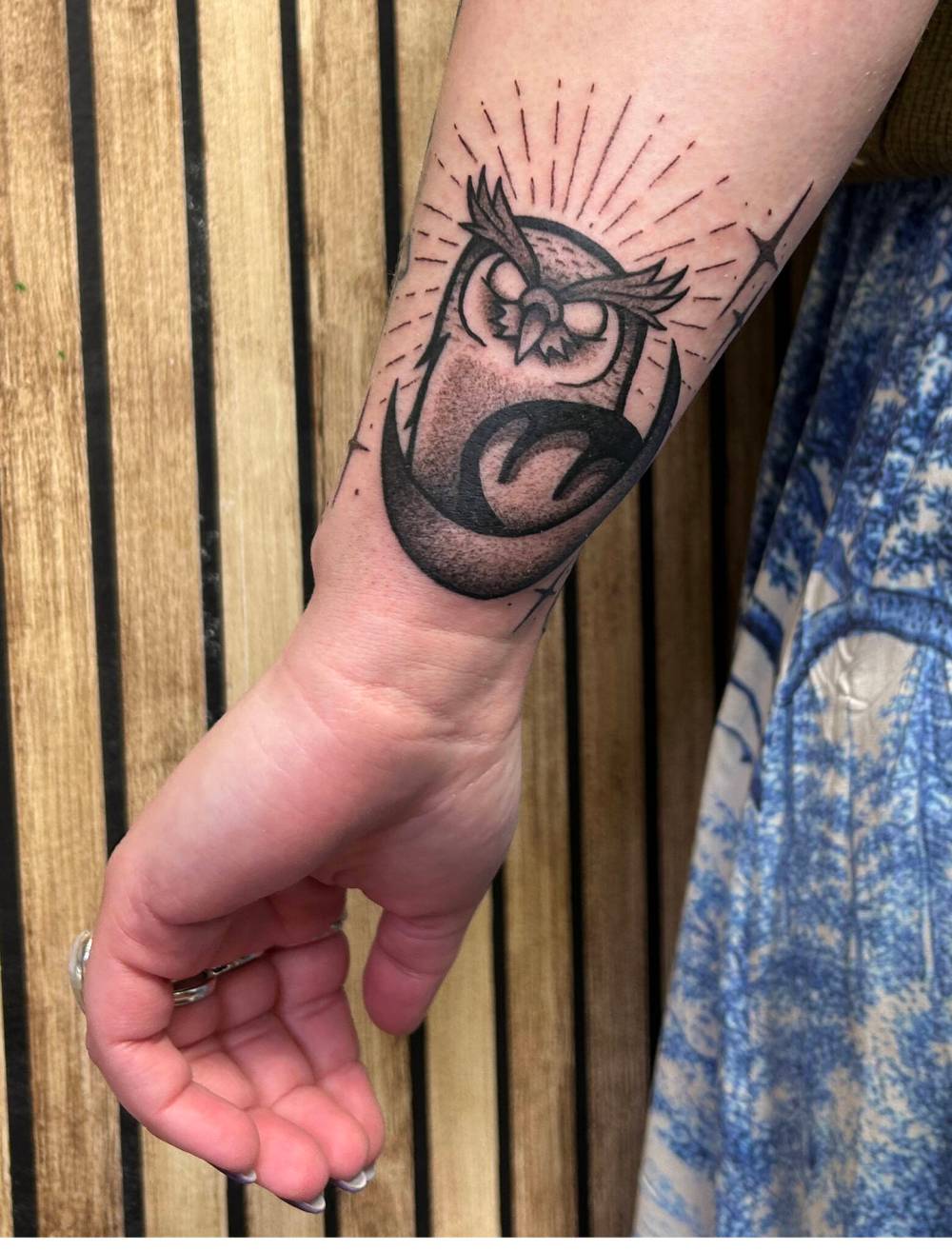
SUPPLIED
Original works by tattooist Justine Proulx.
“A client coming to me does not need to give me a visual: they can simply say I want a bison skull with crocuses on my shoulder, about this big, and that’s well enough.”
Clients may think they’re saving the designer time or effort, but that expert labour is what the person getting a tattoo signs up for, says Proulx, who loves the design-generation stage.
From a moral standpoint, the artist also has qualms with the environmental cost of using AI to generate Proulxian imagery.
“That’s one more thing that pisses me off (about generative AI),” says Proulx. “It’s just destroying the environment. There’s no ethical way to use it.”
winnipegfreepress.com/benwaldman
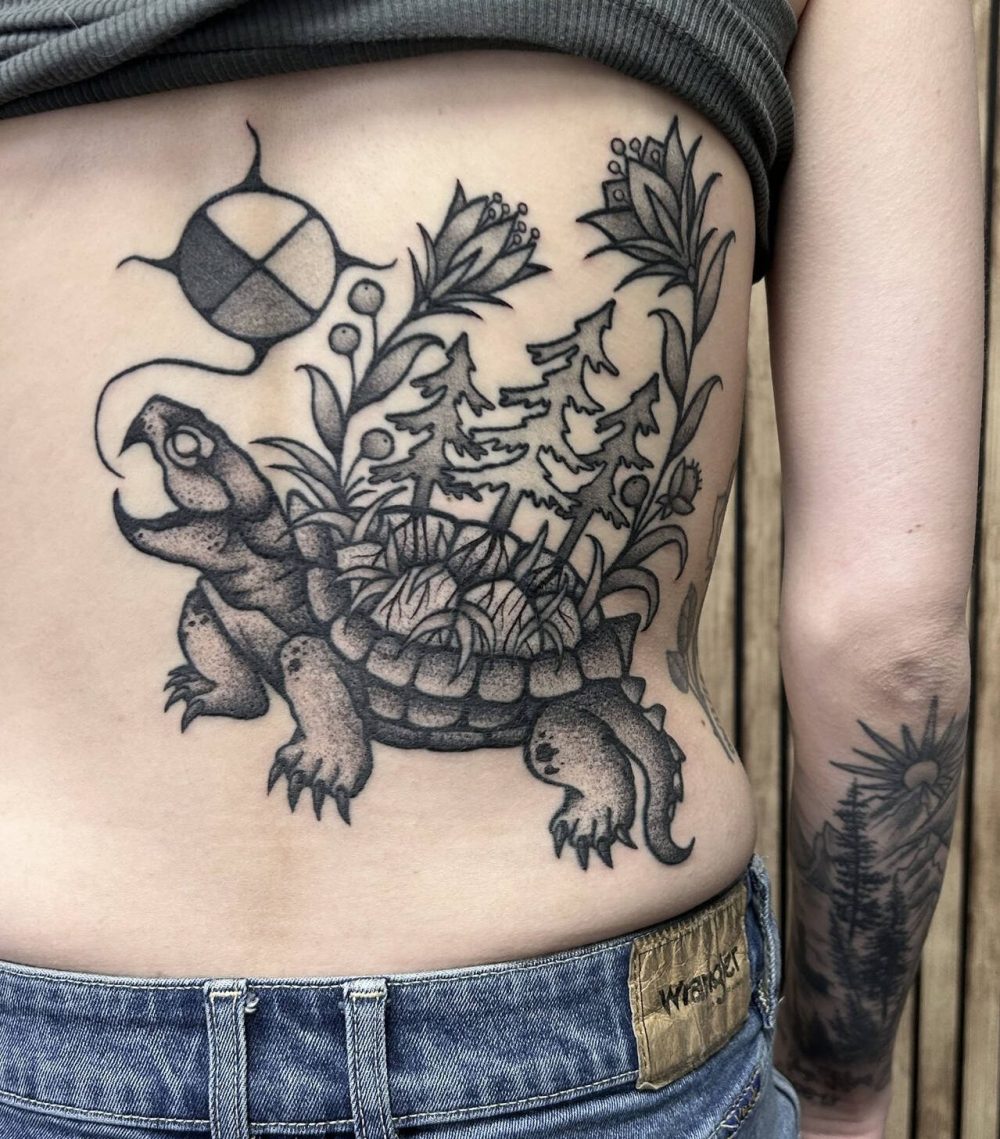
SUPPLIED
Tattoo artists pride themselves on their own creativity and skill.

An artist’s request
Justine Proulx posted the following message to her Instagram account on June 16 in response to a spate of AI-generated tattoo requests, including several that were made by plugging her own original artwork into generative artificial intelligence programs such as ChatGPT or Gemini.
Please do not feed my tattoo designs, paintings, or murals into AI. (Or any artist’s work, for that matter.)
Recently, I have had a rise in clients using my original artwork to generate AI images, to send me as references for their tattoo appointment, or mural. This post is not meant to shame any individual, but to educate, as every person who has done this with my work did not understand how generative AI works, and the harm they were causing.
Al is now very prominent in our world and is being used all over the place. I’ve seen how Al can be helpful when it comes to data analysis or coding or other very taxing tasks. I understand that for some people, the companies you work for require you to use it. Most of us use it unknowingly, through various programs and search engines.
But in the art world, the way generative Al is working is very damaging. Aside from the data centres being extremely harmful to the environment and creating a lack of water, (I won’t yap too much about that, there are many resources you can look into to support that claim) the way “generative” Al works is that when you type in prompts to have an Al model create an artistic photo, what it actually does is searches everything available to it (which for most AI models, is almost the entirety of the internet) and steals reference images and art from real artists. Generative AI steals intellectual property from real artists. Because it is Al and always “learning,” if you have a continuous conversation with an AI model, or an account, when you give Al art pieces intentionally, like my tattoo images, what that Al is going to learn to do is continue to go back to me and use my images as references, because it’s being told that my images are “helpful” for you.
This is not limited to popular models like ChatGPT and Gemini, countless other programs like Canva also use generative AI. If you have to type in a prompt to have something created, you are most likely using generative AI.
That’s the best way I can describe it in layman’s terms. This has been happening in our industry much more frequently as of recent, many tattoo artists are posting about it and trying to explain why this can be very harmful and insulting as artists. Many clients and people don’t know how Al works when it comes to art.
I know that it seems like it can be very helpful to convey what you’re thinking, or give inspiration, but it is not something I condone, or want done with my images. I have had schools put several of my murals into AI so they can “show me what they like.” This has happened with multiple tattoo designs, some of my prints, and other paintings.
As artists/tattoo artists, our entire existence revolves around creating our clients unique and original pieces of art to wear. AI destroys the creative, human process. Instead of using generative AI when you are requesting commissioned art, send us real images of our work, or real-life inspiration photos. Just simply write out what you may want to the best of your ability, or we can have an in-person consultation. As artists we will do our job to converse with you and create a unique piece that you will love!

Ben Waldman is a National Newspaper Award-nominated reporter on the Arts & Life desk at the Free Press. Born and raised in Winnipeg, Ben completed three internships with the Free Press while earning his degree at Ryerson University’s (now Toronto Metropolitan University’s) School of Journalism before joining the newsroom full-time in 2019. Read more about Ben.
Every piece of reporting Ben produces is reviewed by an editing team before it is posted online or published in print — part of the Free Press‘s tradition, since 1872, of producing reliable independent journalism. Read more about Free Press’s history and mandate, and learn how our newsroom operates.
Our newsroom depends on a growing audience of readers to power our journalism. If you are not a paid reader, please consider becoming a subscriber.
Our newsroom depends on its audience of readers to power our journalism. Thank you for your support.
History
Updated on Wednesday, June 24, 2026 8:58 PM CDT: fixes typo