An angel earns its wings
Strong acting and directing lifts Christmas classic's radio play above rerun status

Advertisement
Read this article for free:
or
Already have an account? Log in here »
To continue reading, please subscribe:

Digital Subscription
One year of digital access for only $205*
- Enjoy unlimited reading on winnipegfreepress.com
- Read the E-Edition, our digital replica newspaper
- Access News Break, our award-winning app
- Play interactive puzzles
*First annual payment billed as $205.00 + GST for one year. This annual subscription will automatically renew at $233.00 + GST every 52 weeks (10% off the regular annual price of $259.35). Offer available to new and qualified returning subscribers only. Cancel any time.
To continue reading, please subscribe:
Add Free Press access to your Brandon Sun subscription for only an additional
$1 for the first 4 weeks*
- Enjoy unlimited reading on winnipegfreepress.com
- Read the E-Edition, our digital replica newspaper
- Access News Break, our award-winning app
- Play interactive puzzles
*Your next Brandon Sun subscription payment will increase by $1.00 and you will be charged $17.95 plus GST for four weeks. After four weeks, your payment will increase to $24.95 plus GST every four weeks.
Read unlimited articles for free today:
or
Already have an account? Log in here »
Hey there, time traveller!
This article was published 24/11/2018 (2845 days ago), so information in it may no longer be current.
Frank Capra’s 1947 fantasy It’s a Wonderful Life needed a couple of decades to become a perennial Christmas classic. In fact, it bombed at the box office upon initial release.
Its success was due to the fact it was available and cheap, as the film slipped into public domain in 1974 when its studio — Republic Pictures — neglected to renew its copyright. Hence between 1974 and 1993 (when the property was essentially rescued from public domain due to some legal manoeuvring) it could be broadcast free of charge.
The film could also be distributed on video, usually in the form of a dirty, degraded print.
Those 19 years of free availability permitted a vast reconsideration of the movie, previously considered an overly sentimental piece of “Capra-corn.” It was the story of how James Stewart’s everyman character George Bailey was forced to evaluate the importance of his life due to the magic machinations of an eccentric angel named Clarence. Notwithstanding the preciousness of the premise, it got dark and viewers could detect serious adult themes lurking in the Rockwellian ambiance of scenic Bedford Falls.
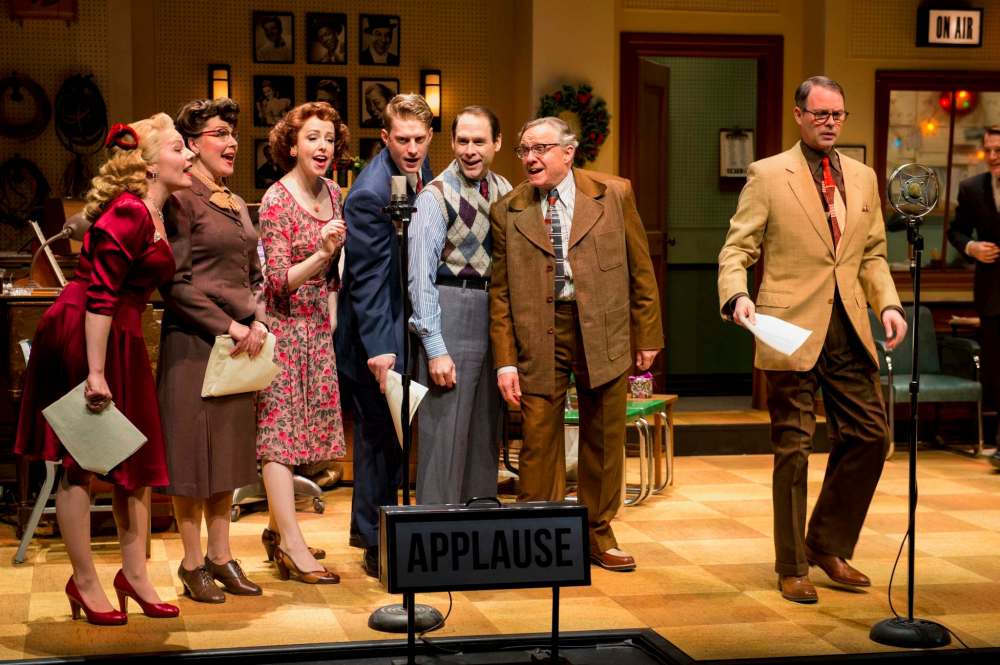
Philip Grecian’s much-produced stage adaptation of the film re-packages the movie as a radio play, which was actually a common practice in Hollywood’s Golden Age.
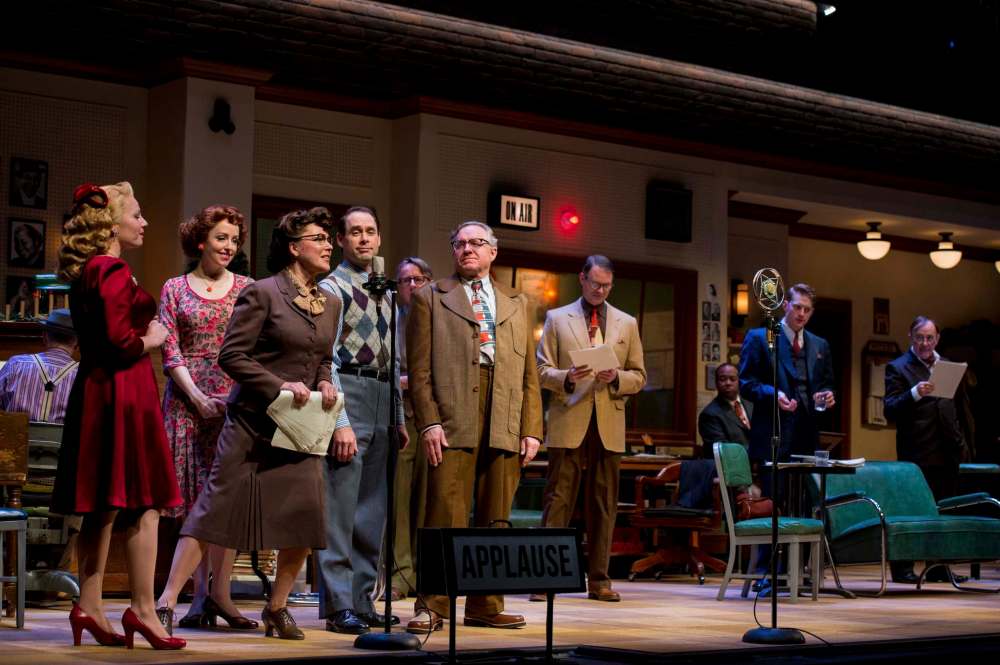
The Royal MTC show’s director, Steven Schipper, goes further, presenting the radio show as the product of an old-timey Winnipeg station, CMTC, circa 1947. It’s here, a troupe of 10 actors — the “Red River Radio Players” — perform the drama, scripts in hand, along with a keyboard player (Danny Carroll) and a foley artist (John Gzowski) doing live music and sound effects.
If a movie allows us to slip into an alternate reality like a warm bath, the premise of the play is reality twice removed: You can watch actors acting and sound artists working hard to convince your ears that, say, a train is entering a station, even as you watch Gzowski blow the train whistle and rub a cookie cutter on metal to approximate the sound of a braking locomotive.
In short, the “radio play” poses even greater challenges to the audience’s suspension of disbelief. If you buy into it — and you do — it’s largely because of the strength of the film’s original screenplay, to which Grecian adheres as though it was scripture. And quite rightly.
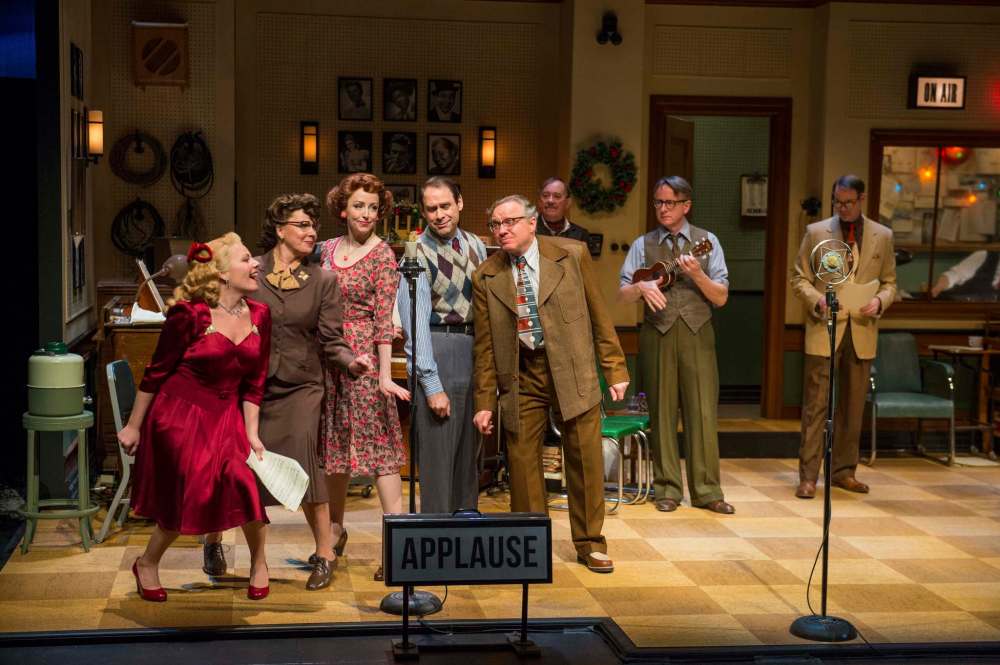
Of course, good acting doesn’t hurt. With the exception of Wade Bogert-O’Brien, who ably plays George Bailey, all the other actors play multiple parts with a kind of infectious look-at-me spirit of fun. Hence, Robb Patterson plays both the angel Clarence and George’s feeble-minded Uncle Billy.
Jon Ted Wynne gives mellifluous voice to both the godly angel Joseph and the demonic banker Mr. Potter. Tracy Penner manages the neat trick of voicing George’s innocent daughter Zuzu and the all-too-experienced town flirt Violet.

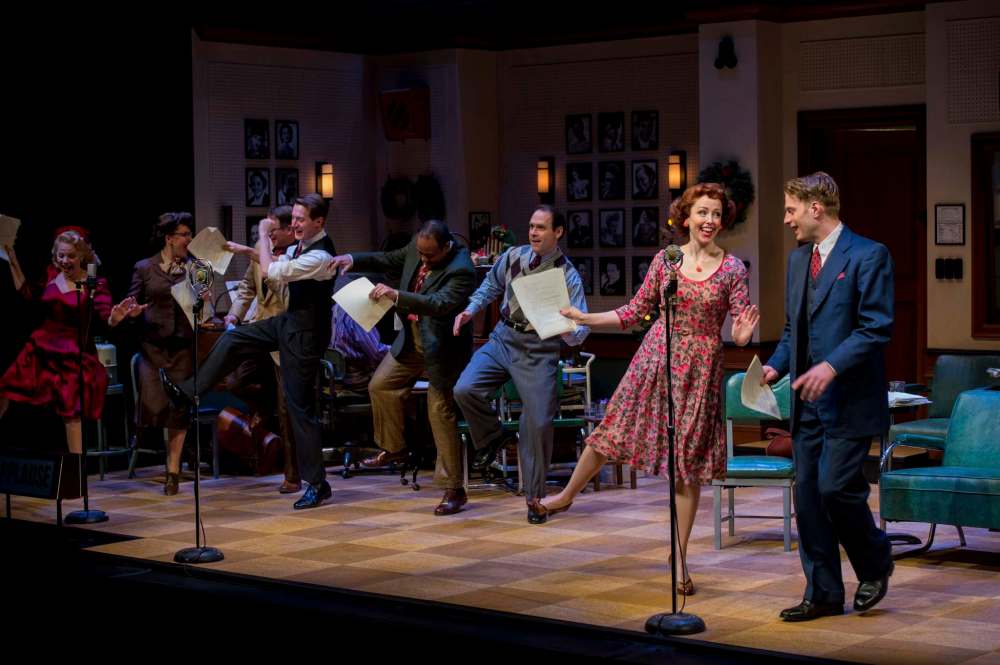
Kevin Klassen, Eric Blais, Ray Strachan, Toby Hughes and Jennifer Lyon play seven or more characters apiece, and it’s a particular kick to watch Strachan do the vocal equivalent of a quick change in the climactic feel-good ending.
The show should spark a new appreciation for the original. But if it all seems a simple rehash, it’s decidedly not.
The show’s breezy flow is the product of Schipper’s expert hand. For all its casual feel, it’s a meticulously directed work, embellished by some lovely set and costume design by Michael Gianfrancesco.
randall.king@freepress.mb.ca
Twitter: @FreepKing
Our newsroom depends on a growing audience of readers to power our journalism. If you are not a paid reader, please consider becoming a subscriber.
Our newsroom depends on its audience of readers to power our journalism. Thank you for your support.
THEATRE REVIEW
It’s a Wonderful Life: The Radio Play
Adapted by Philip Grecian from the film by Frank Capra
Royal Manitoba Theatre Centre
To Dec. 15
Tickets $27-$100 at royalmtc.ca
★★★1/2 stars out of five
Our newsroom depends on a growing audience of readers to power our journalism. If you are not a paid reader, please consider becoming a subscriber.
Our newsroom depends on its audience of readers to power our journalism. Thank you for your support.
Advertisement Advertise With Us
Advertisement Advertise With Us