

Foote prints
Photographer made an impact with iconic images, now U of M Press plans to publish his photos in a book
Advertisement
Read this article for free:
or
Already have an account? Log in here »
To continue reading, please subscribe:
Digital Subscription
One year of digital access for only $1.44 a week*
- Enjoy unlimited reading on winnipegfreepress.com
- Read the E-Edition, our digital replica newspaper
- Access News Break, our award-winning app
- Play interactive puzzles
*Billed as $5.77 plus GST every four weeks. After 52 weeks, price increases to the regular rate of $19.95 plus GST every four weeks. Offer available to new and qualified returning subscribers only. Cancel any time.
To continue reading, please subscribe:
Add Free Press access to your Brandon Sun subscription for only an additional
$1 for the first 4 weeks*
- Enjoy unlimited reading on winnipegfreepress.com
- Read the E-Edition, our digital replica newspaper
- Access News Break, our award-winning app
- Play interactive puzzles
*Your next Brandon Sun subscription payment will increase by $1.00 and you will be charged $17.95 plus GST for four weeks. After four weeks, your payment will increase to $24.95 plus GST every four weeks.
Read unlimited articles for free today:
or
Already have an account? Log in here »
Hey there, time traveller!
This article was published 12/01/2012 (5282 days ago), so information in it may no longer be current.
January is a popular month for de-cluttering. But editors at the University of Manitoba Press are hoping to stop Winnipeggers from tossing out tattered photo albums or musty shoeboxes of old black-and-white photos.
They’re asking residents to dig through family and organizational archives in hopes of recovering lost images by L.B. Foote, the pre-eminent photographer of early 20th-century Winnipeg.
They’d also be delighted if anyone dug up correspondence with Foote or even receipts for his services, since the textual record of his life is slim.
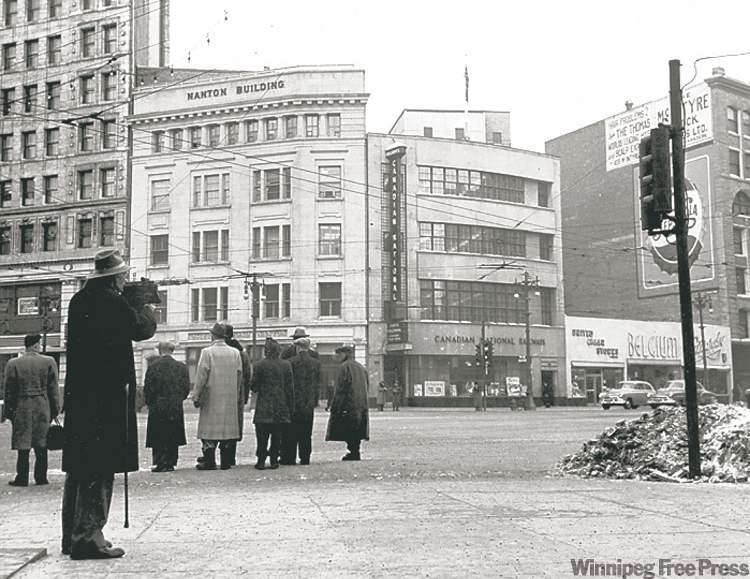
This fall, the press plans to publish a book of photos by the self-taught, highly skilled Foote, who lived from 1873 to 1957. The adventurous Newfoundlander born Lewis Benjamin arrived here in 1902 and captured thousands of images during a freelance career spanning more than four decades.
Since the Manitoba Archives acquired Foote’s personal archive from his family in the early 1970s, his photos have been used in many books, documentaries and museum exhibits.
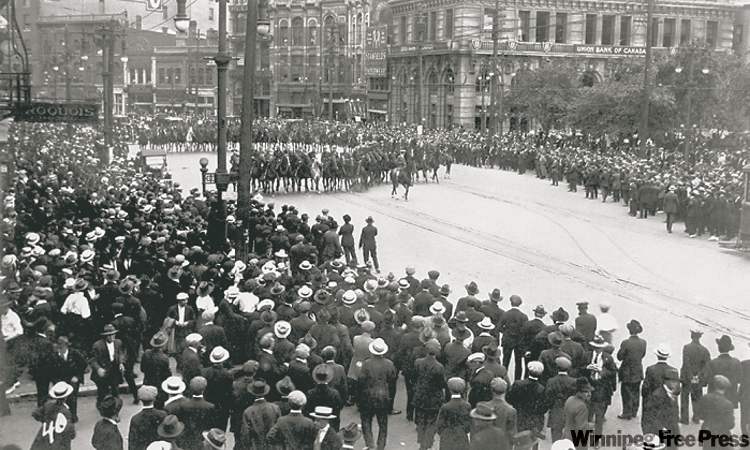
Foote’s rare, compelling images of the 1919 Winnipeg General Strike have attained iconic status, particularly his shot of workers rocking a streetcar on Bloody Saturday.
But his day-in, day-out work was commercial photography. He had a downtown studio, but also worked for at least part of his career from his home on Gertrude Avenue.
“His bread and butter was shots of weddings, funerals and Winnipeg’s small businesses,” says David Carr, director of U of M Press, “and that’s what we’d like to see and possibly share with a wider audience.”
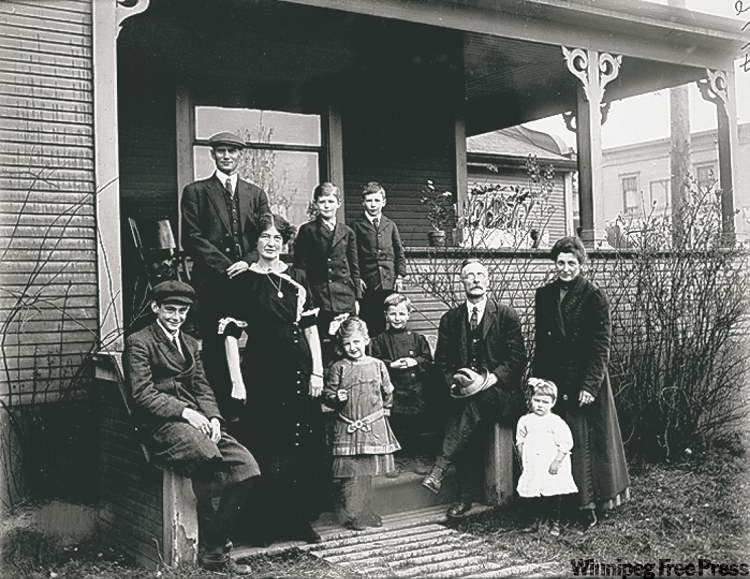
Many photos can be identified by “FOOTE” stamped in a bottom corner. U of M Press has a blog, lostfootephotos.blogspot.com, that explains more about how to identify Foote images. Historians and other Winnipeggers, such as Strike! The Musical composer Danny Schur, are contributing to the blog by choosing their favourite Foote photo and writing about it.
Any member of the public can go to the Manitoba Archives reading room at 200 Vaughan St., pull open filing-cabinet drawers and view about 2,500 fascinating Foote photos (you must sign in at a security desk). A blue binder serves as a “finding aid” to the image trove, arranged by subject.
Foote was hired to shoot graduating classes, sports teams, military units, company parties and picnics, anniversaries, conventions, parades, carnivals, theatrical casts, Boy Scouts and Girl Guides and service clubs like the Elks, Rotary and Kiwanis.
He was a master of the group portrait who once said he was happiest photographing families.
He captured light-hearted activities such as skating on the Assiniboine River and bathing at Winnipeg Beach. He chronicled construction projects.
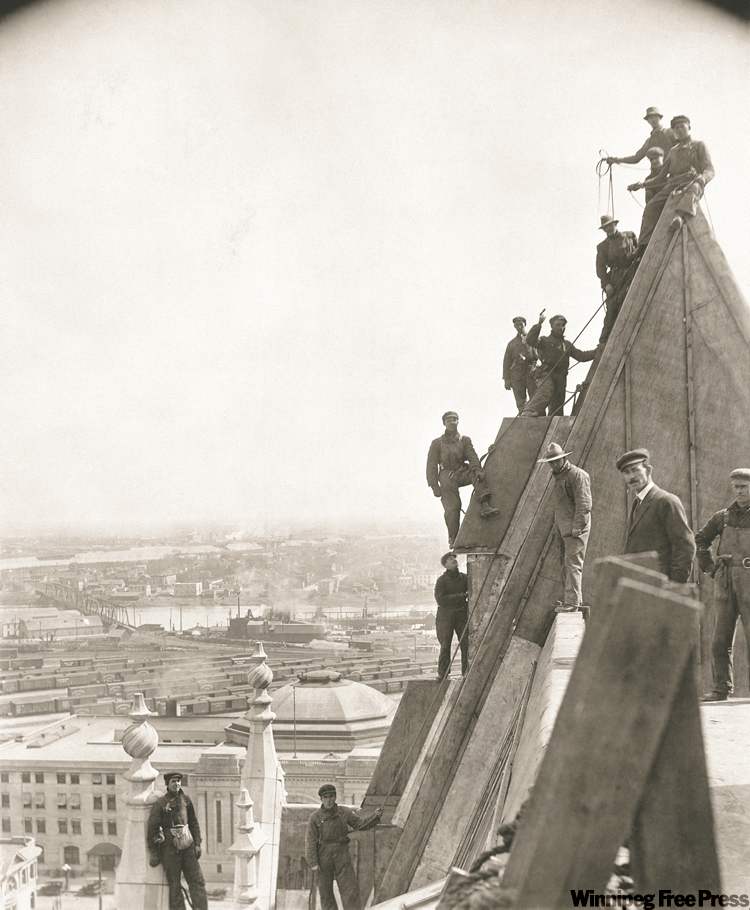
Probably because of his working-class background, he liked to shoot rugged, dangerous labour and prided himself on scaling heights to get shots like one of construction workers atop the Fort Garry Hotel.
He was enough of a self-promoter to secure jobs shooting the wealthy and famous, including Edward, Prince of Wales on a 1919 visit to Manitoba.
“He was a real entrepreneurial character,” says Esyllt Jones, a social historian at U of M who is writing the book’s introductory essay.
Roughly 120 photos will appear in the book, Jones says. As the author of Influenza 1918: Disease, Death, and Struggle in Winnipeg (2007), Jones has long been familiar with some aspects of Foote’s work, but says many of his photos are unknown to the public.
Foote’s pre-1920 images have often been used to support the view that Winnipeg enjoyed a golden era of prosperity, rapid growth and optimism that came crashing down as the First World War dawned, to be replaced by permanent decline.
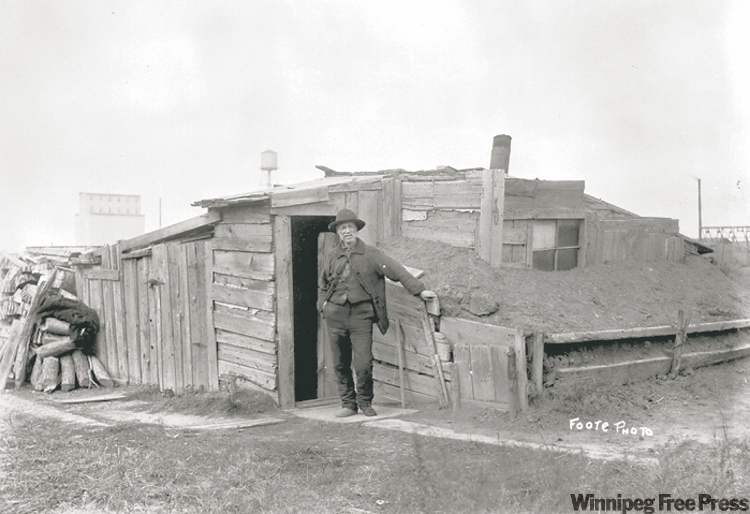
Jones says her key interest in Foote’s images is how they have selectively been used to “prop up” such historical narratives.

Besides his general strike photos, the photographer is best known for a small number of “slum” images of deep immigrant poverty in the North End. He was hired by Protestant social reformers to capture images that could be used to promote fundraising for missions.
“As a historian, I feel I have a responsibility to really scrutinize that,” Jones says.
Jones believes Foote did the slum assignments half-heartedly. His body of work is diverse, she says, and includes many photos of immigrant and First Nations life that don’t fit within a narrow, middle-class Anglo view of those communities. “His archive is more balanced,” she says.
Anyone with photos or Foote materials to share can contact U of M Press’s Ariel Gordon at 474-8408 or email gordoajd@cc.umanitoba.ca.
History
Updated on Friday, January 13, 2012 9:01 AM CST: adds links