Putting the curator into context
Art Talk/Art Walk event seeks to open discourse on oft-misunderstood role

Advertisement
Read this article for free:
or
Already have an account? Log in here »
To continue reading, please subscribe:
Digital Subscription
One year of digital access for only $1.44 a week*
- Enjoy unlimited reading on winnipegfreepress.com
- Read the E-Edition, our digital replica newspaper
- Access News Break, our award-winning app
- Play interactive puzzles
*Billed as $5.77 plus GST every four weeks. After 52 weeks, price increases to the regular rate of $19.95 plus GST every four weeks. Offer available to new and qualified returning subscribers only. Cancel any time.
To continue reading, please subscribe:
Add Free Press access to your Brandon Sun subscription for only an additional
$1 for the first 4 weeks*
- Enjoy unlimited reading on winnipegfreepress.com
- Read the E-Edition, our digital replica newspaper
- Access News Break, our award-winning app
- Play interactive puzzles
*Your next Brandon Sun subscription payment will increase by $1.00 and you will be charged $17.95 plus GST for four weeks. After four weeks, your payment will increase to $24.95 plus GST every four weeks.
Read unlimited articles for free today:
or
Already have an account? Log in here »
Hey there, time traveller!
This article was published 28/05/2018 (3072 days ago), so information in it may no longer be current.
It seems as if everybody is a curator these days. Coffee selections, music lists, social media pages, clothing boutiques are all “curated” now. The term often carries consumerist connotations, suggesting that curating involves picking the prettiest things and putting them on a shelf.
But what about art curators, the ones who got all this curating talk started? What do art curators actually do? And how do they feel about this new loosey-goosey use of their job title?
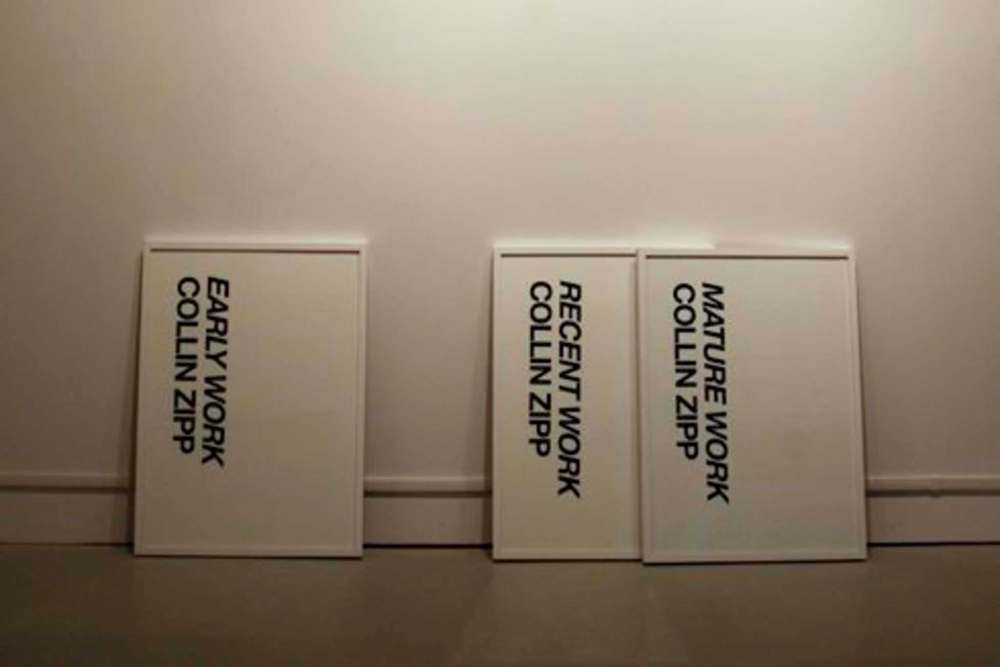
At this month’s First Fridays’ Art Talk/Art Walk we’ll be chatting with Jennifer Smith, an arts administrator and Indigenous curator-in-residence at aceart, and Collin Zipp, an artist-curator and director of Platform Centre, about their multiple roles in an increasingly complex and controversial art world.
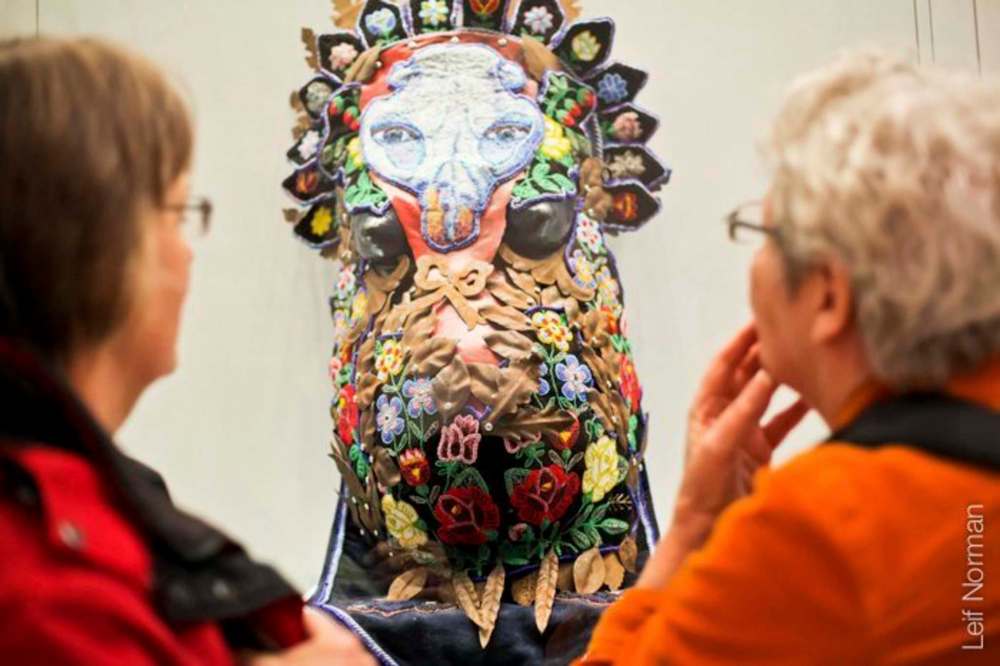
For Smith, throwing around the term “curator” can be problematic.
“It can take away some of the weight of responsibility of that role,” she says. “For example, Indigenous curators are bringing our heritage and our culture and social and political issues into our curatorial practice.
“That’s a really different thing from ‘curating’ an Instagram feed.”
The popular use of the term also leaves out much of a contemporary art curator’s actual work, which goes far beyond the selection process.
As Zipp says, “Its not just picking, say, five artists and putting them in a show.
“When you curate something, you contextualize it, whether that’s putting together a talk or writing something or explaining about the thought processes behind it,” he says.
“You want the questions to be interesting and compelling enough that the viewer will want to answer them, navigate through. It’s a curator’s responsibility to provide enough information to give an opening or interest point for the viewer.”
Historically, curators were often rather cloistered academics charged with preserving art and artifacts. As the international contemporary art scene has heated up, some curators have become art-world superstars, viewed as gatekeepers, power brokers and influencers. Some observers believe they have taken on too much power, often outshining the art they show.
Most curators, though, especially those working in smaller galleries, spend a lot of time on “everyday administrative things,” Smith says, performing multiple roles that can include writing and doing research, making studio visits, hanging shows, planning openings and doing outreach. Here in Winnipeg, where things run on a modest scale, being a curator can even mean “mopping the floors and cleaning the washrooms,” Smith points out with a laugh.
Curators also juggle their responsibilities to art, to artists and to audiences. Smith sees a central part of her job as “providing opportunities for artists and connecting artists to audiences.” This can be a balancing act.
As Zipp suggests, the curating process sometimes risks becoming “too academic and too closed off, creating experiences only for other artists.” It can be “too jargon-y, too ‘industry,’” he adds.
Smith also sees this as a challenge. “Bringing art to a public audience can be complicated,” she says.
“In the art world, we have a way of speaking among ourselves and that’s important, but it can be alienating to a public that feels that they don’t understand that.
“How do you find that middle ground? How do you make an exhibition relevant to different audiences?”
Contemporary curators are also increasingly finding themselves at the centre of controversy and contention, often concerning issues of race and gender, representation and cultural appropriation.
When the #MeToo movement hit the art world, many curators had to make difficult decisions about the works of American painter and photographer Chuck Close, who had been accused of sexual harassment. In one case, curators were dealing with the fallout right in the middle of a major exhibition.
The Walker Art Center in Minneapolis also faced criticism when it purchased Sam Durant’s Scaffold, a large-scale outdoor sculpture that referenced, in part, the execution of 38 members of the Dakota Nation in 1862. Indigenous groups in Minnesota felt the work — and its placement among several lighthearted works in the sculpture garden — trivialized the Dakota people’s historical trauma. After peaceful protests, intense media coverage and several mediation meetings, the Walker’s director apologized for not reaching out to the community beforehand and the piece was dismantled.
For Smith, “the curator’s responsibility is to create a forum for discourse.”
“When there is controversy with an exhibit, the curator needs to remain open to the dialogue, find ways to objectively facilitate the dialogue and keep it going,” she says.

Zipp agrees: “It the curator’s responsibility — everybody’s responsibility, really — not to close down, but to open up dialogue in intelligent and respectful ways.”
This Friday, we’ll be opening up some dialogue about the challenges and satisfactions of being a curator, in the original, art-world sense.
The First Fridays’ Art Talk/Art Walk with Collin Zipp and Jennifer Smith takes place at the Free Press News Café at 237 McDermot Ave., on Friday, June 1 at 6 p.m., with a guided art tour of the Exchange afterwards.
Call 204-421-0682 or email wfpnewscafe@gmail.com to reserve tickets, which include dinner and cost $20.
alison.gillmor@freepress.mb.ca
Studying at the University of Winnipeg and later Toronto’s York University, Alison Gillmor planned to become an art historian. She ended up catching the journalism bug when she started as visual arts reviewer at the Winnipeg Free Press in 1992.
Our newsroom depends on a growing audience of readers to power our journalism. If you are not a paid reader, please consider becoming a subscriber.
Our newsroom depends on its audience of readers to power our journalism. Thank you for your support.
Studying at the University of Winnipeg and later Toronto’s York University, Alison Gillmor planned to become an art historian. She ended up catching the journalism bug when she started as visual arts reviewer at the Winnipeg Free Press in 1992.
Our newsroom depends on a growing audience of readers to power our journalism. If you are not a paid reader, please consider becoming a subscriber.
Our newsroom depends on its audience of readers to power our journalism. Thank you for your support.
Advertisement Advertise With Us
Advertisement Advertise With Us