Even-handed, fascinating look at Alice creator
Advertisement
Read this article for free:
or
Already have an account? Log in here »
To continue reading, please subscribe:

Digital Subscription
One year of digital access for only $205*
- Enjoy unlimited reading on winnipegfreepress.com
- Read the E-Edition, our digital replica newspaper
- Access News Break, our award-winning app
- Play interactive puzzles
*First annual payment billed as $205.00 + GST for one year. This annual subscription will automatically renew at $233.00 + GST every 52 weeks (10% off the regular annual price of $259.35). Offer available to new and qualified returning subscribers only. Cancel any time.
To continue reading, please subscribe:
Add Free Press access to your Brandon Sun subscription for only an additional
$1 for the first 4 weeks*
- Enjoy unlimited reading on winnipegfreepress.com
- Read the E-Edition, our digital replica newspaper
- Access News Break, our award-winning app
- Play interactive puzzles
*Your next Brandon Sun subscription payment will increase by $1.00 and you will be charged $17.95 plus GST for four weeks. After four weeks, your payment will increase to $24.95 plus GST every four weeks.
Read unlimited articles for free today:
or
Already have an account? Log in here »
Hey there, time traveller!
This article was published 13/03/2010 (6054 days ago), so information in it may no longer be current.
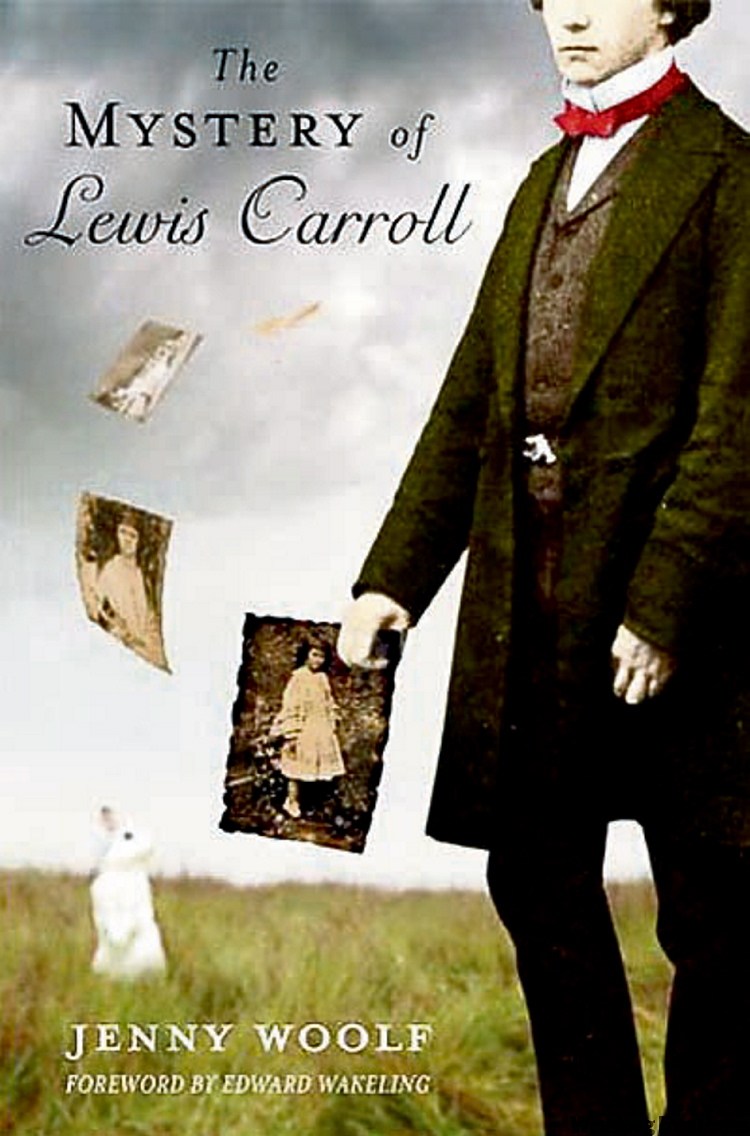
The Mystery of Lewis Carroll
Discovering the Whimsical, Thoughtful, and Sometimes Lonely Man Who Created Alice in Wonderland
By Jenny Woolf

St. Martin’s Press, 336 pages, $34
Pedophile or prude? Transparent or secretive? Boring or brilliant?
This biography, coat-tailing on the release of Tim Burton’s hit movie Alice in Wonderland, answers these questions gracefully, knowledgeably and fairly.
It is a well-written and excellent summary of the life of a fascinating writer distinguished by her sense of fair play, love of Lewis Carroll’s creativity, and great knowledge of the times he lived in.
Although this is not a scholarly book, it is clearly written by a Carroll scholar. Woolf has not only immersed herself in Carroll lore, but she has also unearthed some hitherto unknown but significant documents. The book is prefaced and endorsed by a leading Carroll scholar, Edward Wakeling.
Lewis Carroll was the pen-name of Charles Lutwidge Dodgson, a don at Christ Church at Oxford University. He wrote Alice’s Adventures in Wonderland and its sequel, Through the Looking Glass and What Alice Found There, immortal fantasies that have appealed to children and adults since they were first published in 1865 and 1871 respectively.
Dodgson himself, however, has remained a mystery.
On the surface he led a simple life. He was born in 1832 to a relatively poor parson in England, studied mathematics at Christ Church, and taught mathematics at Christ Church until he died in 1898.
He lived a secluded life and rarely travelled. He never married and apparently lived a chaste and spiritual life. He was notoriously prudish. He was a prolific writer of both academic works in mathematics and logic, and imaginative works of fiction, poetry and puzzles.
What lay underneath? He himself was relatively secretive. After his death, his family destroyed a number of his papers and diaries. There are tremendous gaps in our knowledge of his life.
What has become more clearly acknowledged over the years is that he was an avid photographer of little girls and took many nude photographs of them, that he had extensive correspondence with many of them, and that he told them he hated little boys. A whole series of biographies have relied on these facts to assert the existence of the baser, darker Carroll.
Woolf effectively deals with these issues. She shows clearly that the nudity of little girls was considered in Victorian times to be the epitome of innocence and beauty, that Carroll was following a painting and photographic tradition, that there was never a hint by his subjects of anything but a chaste, innocent and caring relationship, and that Carroll took great care with those relationships to avoid controversy.
She shows that his professed hatred of boys was a pose, that he had friendships with both genders and a wide variety of ages, and some significant friendships with older women, and that he enjoyed confronting conventional morality while at the same time espousing high moral principles.
Woolf deftly juggles known facts about Carroll’s life and Victorian time with reasonable inferences; there are no wild leaps of faith that has allowed other biographers to superimpose upon Carroll their own sense of what he must have done.
Take, for example, her excellent discussion of whether Carroll’s diary notes of asking for forgiveness for sin imply that he had an adulterous affair, or that he engaged prostitutes, as others have conjectured.

She ultimately comes to the conclusion that the "sin" might have been simple sex or adultery, although it was clearly not pedophilia, but could just as easily have simply been his wish to be morally pure being at times overridden by sexual longings.
It is this even-handedness that distinguishes Woolf’s work from many others. She willingly confronts extremes but will not yield to the temptation of the biographer to make wild allegations that cannot be reasonably supported by the evidence.
She has written a very readable, enjoyable, and fascinating biography of a brilliant and creative genius.
Lawrie Cherniack is a Winnipeg lawyer who provides conflict resolution services to employers as The Workplace Ombudsman.