Suzuki enters ‘Death Zone’ with optimism
Advertisement
Read this article for free:
or
Already have an account? Log in here »
To continue reading, please subscribe:

Digital Subscription
One year of digital access for only $205*
- Enjoy unlimited reading on winnipegfreepress.com
- Read the E-Edition, our digital replica newspaper
- Access News Break, our award-winning app
- Play interactive puzzles
*First annual payment billed as $205.00 + GST for one year. This annual subscription will automatically renew at $233.00 + GST every 52 weeks (10% off the regular annual price of $259.35). Offer available to new and qualified returning subscribers only. Cancel any time.
To continue reading, please subscribe:
Add Free Press access to your Brandon Sun subscription for only an additional
$1 for the first 4 weeks*
- Enjoy unlimited reading on winnipegfreepress.com
- Read the E-Edition, our digital replica newspaper
- Access News Break, our award-winning app
- Play interactive puzzles
*Your next Brandon Sun subscription payment will increase by $1.00 and you will be charged $17.95 plus GST for four weeks. After four weeks, your payment will increase to $24.95 plus GST every four weeks.
Read unlimited articles for free today:
or
Already have an account? Log in here »
Hey there, time traveller!
This article was published 11/09/2010 (5845 days ago), so information in it may no longer be current.
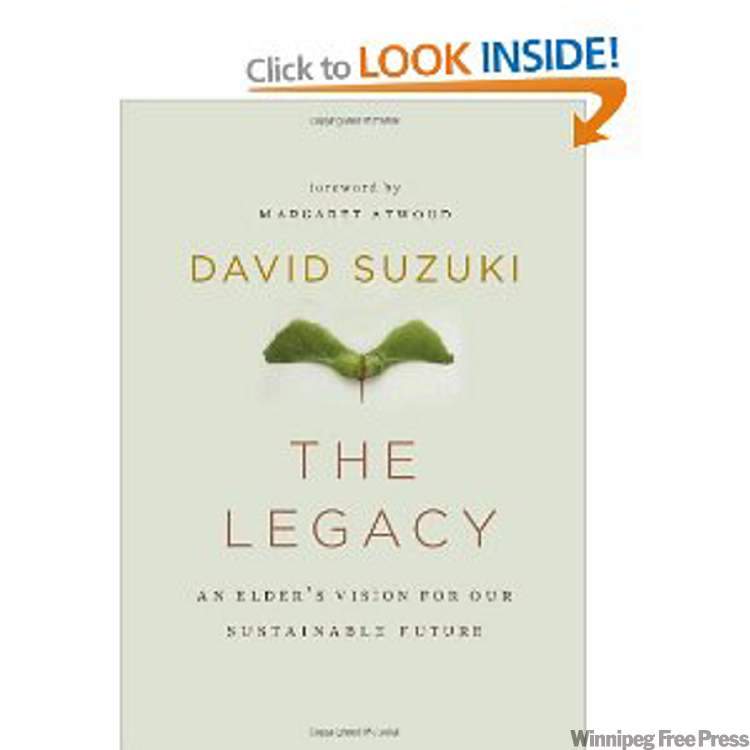
The Legacy
An Elder’s Vision for Our Sustainable Future
By David Suzuki
Greystone Books, 113 pages, $25
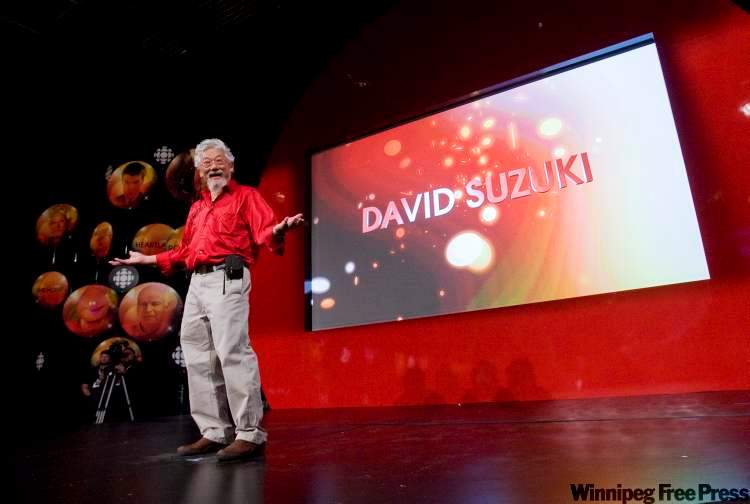
David Suzuki has, he tells us, now entered "The Death Zone" — what the now 74-year-old expects will be the final stage of his life.
It’s an unexpectedly sombre introduction to a sustainability lecture envisioning a more positive future for the problem-plagued planet.
But the country’s most noted environmentalist sees a silver lining in his latest role, that of elder, and in the idea of a final, "legacy" lecture: not just an opportunity to share his lifetime of knowledge, but the chance to change the precarious path he believes has been laid out for coming generations.
The Legacy is the latest in a long line of publishing credits for the Suzuki. Along with his work with the David Suzuki Foundation, the veteran Vancouver-based broadcaster and prolific author has, as he admits, already dared to pen not one, but two autobiographies.
As such readers will find some familiar ground in his latest work, a thoughtful if scattered book based on the legacy lecture Suzuki delivered last year at the University of British Columbia, where he taught for decades. (The same lecture is incorporated into the new documentary film Force of Nature, set for release this fall.)
At just over 100 pages, The Legacy is a slender volume of reflections on how humans wound up in their present environmental predicament, and how they might alter the course.
Starting with a retrospective on the distant past, Suzuki traces humanity’s evolution from the physically weak but big-brained inhabitants of the African plains to a super-species "single-handedly altering the biological, chemical and physical properties of the planet in a mere instant of cosmic time."
Breaking down the planet and its surroundings into their most basic forms — earth, air, fire, water and biodiversity — Suzuki briskly tallies some of the human-influenced problems linked to each: topsoil loss, destruction of the atmosphere, overfishing of oceans, and species extinction, to name a few.
It’s a dire but familiar summary that paves the way for Suzuki’s call to "put the eco back in economics," and the scientist has plenty to say about the dangers of bowing before the economy at the expense of natural resources.
What he ultimately advocates is a return to a more holistic and balanced relationship with the earth, highlighting the values of North America’s Aboriginal people as a sound example.
"It used to be understood that we have a sacred duty to pass on to future generations a world that is as rich or richer than the one we came into," he writes. "We are no longer living up to that obligation."
Suzuki’s typically articulate and often poetic writing doesn’t quite compensate for a general lack of cohesion in The Legacy, a somewhat unfocused mingling of textbook-style science, historical references, notable quotes and personal anecdotes, packaged under vague headings and interspersed with mini-essays on all manner of subjects.

But readers who don’t mind the meandering will find Suzuki’s tangential musings on subjects like argon molecules, shrinking swordfish, or the role of salmon in fertilizing forests some of the book’s best reading.
After decades of environmental activism, Suzuki might seem like the last person on Earth with cause for optimism about the planet’s future.
But at the core of his writing lurks a scientist’s wonder at the world, and a compelling sincerity that makes you believe — or at least, want to believe — Dr. Doom and Gloom still has some hope for this muddled planet.
Lindsey Wiebe is an environmental reporter for the Winnipeg Free Press.