De Rossi captures spell of eating disorder
Advertisement
Read this article for free:
or
Already have an account? Log in here »
To continue reading, please subscribe:

Digital Subscription
One year of digital access for only $205*
- Enjoy unlimited reading on winnipegfreepress.com
- Read the E-Edition, our digital replica newspaper
- Access News Break, our award-winning app
- Play interactive puzzles
*First annual payment billed as $205.00 + GST for one year. This annual subscription will automatically renew at $233.00 + GST every 52 weeks (10% off the regular annual price of $259.35). Offer available to new and qualified returning subscribers only. Cancel any time.
To continue reading, please subscribe:
Add Free Press access to your Brandon Sun subscription for only an additional
$1 for the first 4 weeks*
- Enjoy unlimited reading on winnipegfreepress.com
- Read the E-Edition, our digital replica newspaper
- Access News Break, our award-winning app
- Play interactive puzzles
*Your next Brandon Sun subscription payment will increase by $1.00 and you will be charged $17.95 plus GST for four weeks. After four weeks, your payment will increase to $24.95 plus GST every four weeks.
Read unlimited articles for free today:
or
Already have an account? Log in here »
Hey there, time traveller!
This article was published 27/11/2010 (5789 days ago), so information in it may no longer be current.
Unbearable Lightness
A Story of Loss and Gain
By Portia de Rossi
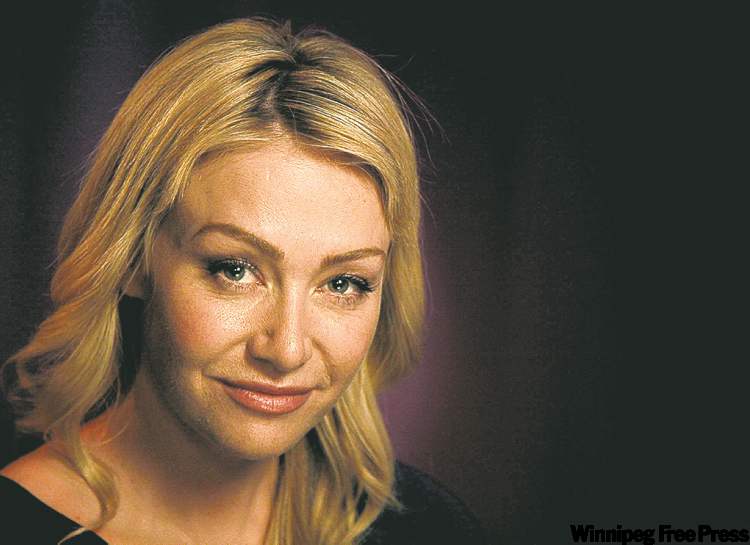
Atria Books, 308 pages, $30
American actress Portia de Rossi is perhaps best known as the wife of Ellen DeGeneres, the TV talk show host whose personality exemplifies a “live, laugh and love” philosophy. But before she met DeGeneres, de Rossi’s life was anything but ideal.
In her revealing memoir, the Australian-born actress earnestly recounts her 20-year struggle with an eating disorder — a struggle, which de Rossi, now 37, explains, “snuck up on me disguised as a healthy diet, a professional attitude.”
The success of this memoir lies in de Rossi’s impressive ability to describe her mentality when she was under the spell of her eating disorder.
She says her “healthy diet,” which personified itself as the voice of a male drill sergeant, was the first thing that came into her mind every morning, asking her, “what did you eat last night?”
Every day started with panic, as she tried to remember how many calories she had consumed while lunging across her apartment to the treadmill where she would run for an hour, her first of multiple workouts.
Sitting still became so difficult, she broke up her drive to work by pulling over and running around the block.
The memoir opens as she is starting her new acting job as the femme fatale Nelle Porter on the late ’90s TV series Ally McBeal. She had immigrated to California after her first American movie, The Woman in the Moon, in 1995.
But through flashbacks, de Rossi, who also starred in the sitcoms Arrested Development and Better Off Ted, reveals that her struggles with food began long before that.
One of the most poignant flashbacks from her teenage years takes place at a Jenny Craig weight-loss meeting. When she was asked what part of her body she likes the best, she recalls thinking, “I am 15 years old and 130 pounds in a room filled with people twice my weight and age and yet I can’t think of a thing.”
As she recounts her career progress, de Rossi explains her eating disorder was only one symptom of her desire for success. To make herself less of an “outsider,” she trained herself to speak with an “American accent,” changed her name from Amanda Rogers and hid her homosexuality. But the stress of putting on a front every day only added to her unhealthy habits.

De Rossi went through cycles of binging and purging, over-exercising and the careful weighing and measuring of all her food, which she would only eat with certain utensils.
At one point, her daily intake consisted of little more than two-thirds of a package of oatmeal, a third of a tin of tuna, a tablespoon of lean ground turkey and a dessert concocted of Jell-O, Splenda and I Can’t Believe It’s Not Butter spray.
Her lowest daily caloric intake was under 300 (the lowest recommended amount is 1,400). At her lowest point in 2001, she weighed 82 lbs.
After collapsing on a movie set that year, de Rossi allowed herself to be examined. She was diagnosed with osteoporosis and lupus (the lupus ended up being a misdiagnosis). It was enough for her to accept help.
The epilogue, which could have been lengthened, begins with a heartwarming description of de Rossi waking up in her new life on the ranch she shares with DeGeneres. They have been together since 2004; they married in 2008.
She goes on to describe how, with the aid of specialists, family, friends and a horse, she was able to squash the “drill sergeant” in her head, which remained long after she returned to a healthy weight.
While de Rossi hopes to reach out to those with eating disorders and perpetual dieters, the memoir will interest anyone wanting to learn more about how eating disorders consume the lives of those who suffer from them.
Kim Lawson is a journalism student at Red River College.