New ground broken in Thomson mystery

Advertisement
Read this article for free:
or
Already have an account? Log in here »
To continue reading, please subscribe:

Digital Subscription
One year of digital access for only $205*
- Enjoy unlimited reading on winnipegfreepress.com
- Read the E-Edition, our digital replica newspaper
- Access News Break, our award-winning app
- Play interactive puzzles
*First annual payment billed as $205.00 + GST for one year. This annual subscription will automatically renew at $233.00 + GST every 52 weeks (10% off the regular annual price of $259.35). Offer available to new and qualified returning subscribers only. Cancel any time.
To continue reading, please subscribe:
Add Free Press access to your Brandon Sun subscription for only an additional
$1 for the first 4 weeks*
- Enjoy unlimited reading on winnipegfreepress.com
- Read the E-Edition, our digital replica newspaper
- Access News Break, our award-winning app
- Play interactive puzzles
*Your next Brandon Sun subscription payment will increase by $1.00 and you will be charged $17.95 plus GST for four weeks. After four weeks, your payment will increase to $24.95 plus GST every four weeks.
Read unlimited articles for free today:
or
Already have an account? Log in here »
Hey there, time traveller!
This article was published 04/12/2010 (5744 days ago), so information in it may no longer be current.
Northern Light
The Enduring Mystery of Tom Thomson and the Woman Who Loved Him
By Roy MacGregor
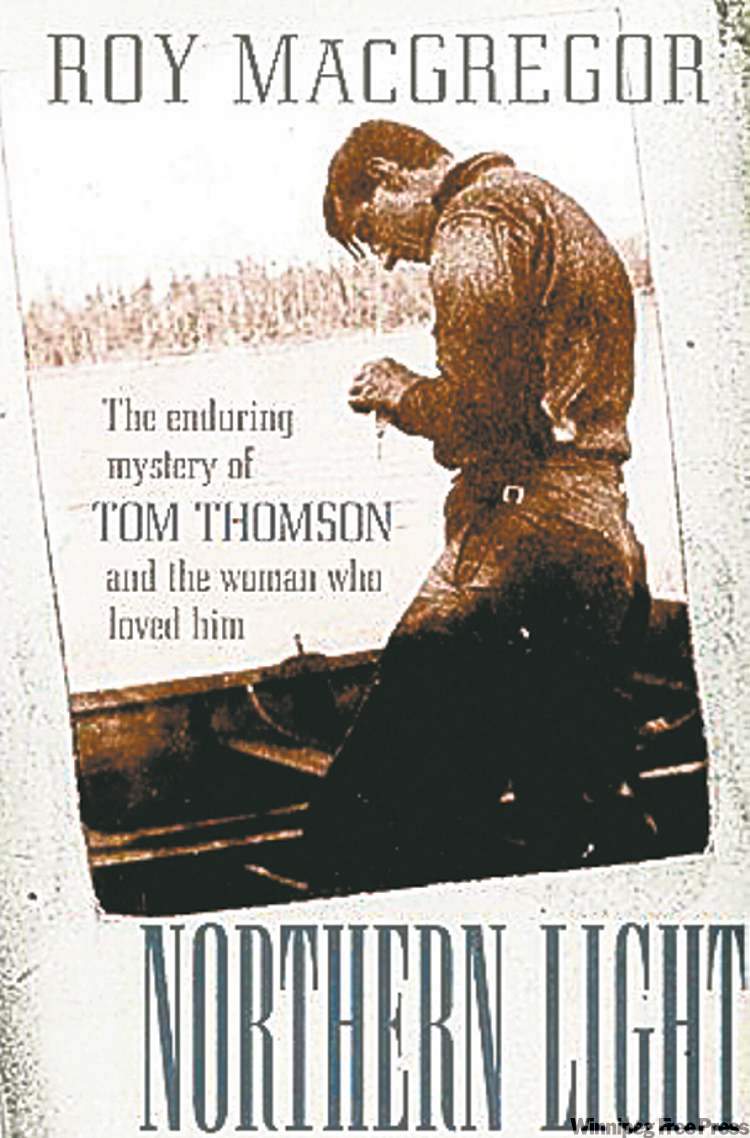
Random House Canada, 358 pages, $35
ICONIC Canadian painter Tom Thomson died in 1917 on Canoe Lake in Algonquin Park. His sudden death — officially ruled an accidental drowning after a cursory inquest and a hasty burial — has long been a source of mystery and myth.
Even after decades of speculation, and numerous books, plays, films and songs, this intriguing investigation by veteran Ontario journalist and author Roy MacGregor manages to break new ground.
MacGregor cracks open the Thomson story by focusing on Winnifred Trainor, the woman said to be engaged to Thomson at the time of his death. She kept several of his oil sketches — worth probably $20 million on today’s market — until she died, wrapped in newspaper and stored in a six-quart basket.
Part history, part true-crime investigation and part memoir, Northern Light is both scrupulously even-handed and deeply personal. MacGregor grew up in Huntsville, just outside Algonquin Park, and is actually connected to Trainor, whose sister married his great-uncle.
As a kid, MacGregor knew Trainor as an eccentric and formidable spinster, and admits to nervously following his friends when they played “nicky-nicky-nine-doors” by knocking on her door and running like hell.
MacGregor atones for his boyhood tricks with an empathetic portrayal of a woman who was, as he says, “a widow before she even married.”
MacGregor, who explored the Thomson mystery in his novel Canoe Lake (first published in 1980 under the title Shorelines), keeps the narrative moving while patiently sifting through a forest of contradictory evidence.

Much of the Thomson story relies on oral history, and MacGregor has a shrewd understanding of the way talk works in a small town. He weighs gossip and tall tales, including the boast of one old-timer who claimed to have Thomson’s shin bone stashed in his woodshed. He cuts through protective lies — many of the townspeople had a Victorian horror of scandal — and convenient, self-serving fibs.
He gives plausible reasons why some local men dismissed Thomson as a bum, a womanizer and an indifferent outdoorsman, while others — in particular, Group of Seven patron James MacCallum — put forward an image of Thomson as pure and solitary, at one with the nature he painted.
It’s clear that the enigma of Tom Thomson has been keeping MacGregor company for decades. Some of his interviews go back to the early 1970s, while some of the material, in particular the CSI-type forensic research, is very recent. In the last chapter, MacGregor carefully sets out his beliefs about what happened that day on the lake, while admitting that “the reality remains, at this time, beyond grasp.”
Even if MacGregor doesn’t have the final word on Canada’s famous painter, he has crafted a beautifully realized picture of a time and place. And by shining a light on Winnie Trainor, who was so often dismissed as an odd, embittered old maid, he has revealed a remarkable woman. Thomson’s premature death may be the book’s hook, but Trainor’s long life is its heart.
Alison Gillmor writes on visual art and pop culture for the Free Press.
Studying at the University of Winnipeg and later Toronto’s York University, Alison Gillmor planned to become an art historian. She ended up catching the journalism bug when she started as visual arts reviewer at the Winnipeg Free Press in 1992.
Our newsroom depends on a growing audience of readers to power our journalism. If you are not a paid reader, please consider becoming a subscriber.
Our newsroom depends on its audience of readers to power our journalism. Thank you for your support.
Studying at the University of Winnipeg and later Toronto’s York University, Alison Gillmor planned to become an art historian. She ended up catching the journalism bug when she started as visual arts reviewer at the Winnipeg Free Press in 1992.
Our newsroom depends on a growing audience of readers to power our journalism. If you are not a paid reader, please consider becoming a subscriber.
Our newsroom depends on its audience of readers to power our journalism. Thank you for your support.
Advertisement Advertise With Us
Advertisement Advertise With Us