

Book scores with complex Rocket
Advertisement
Read this article for free:
or
Already have an account? Log in here »
To continue reading, please subscribe:
Monthly Digital Subscription
$1 per week for 24 weeks*
- Enjoy unlimited reading on winnipegfreepress.com
- Read the E-Edition, our digital replica newspaper
- Access News Break, our award-winning app
- Play interactive puzzles
*Billed as $4.00 plus GST every four weeks. After 24 weeks, price increases to the regular rate of $19.95 plus GST every four weeks. Offer available to new and qualified returning subscribers only. Cancel any time.
Monthly Digital Subscription
$4.99/week*
- Enjoy unlimited reading on winnipegfreepress.com
- Read the E-Edition, our digital replica newspaper
- Access News Break, our award-winning app
- Play interactive puzzles
*Billed as $19.95 plus GST every four weeks. Cancel any time.
To continue reading, please subscribe:
Add Free Press access to your Brandon Sun subscription for only an additional
$1 for the first 4 weeks*
*Your next subscription payment will increase by $1.00 and you will be charged $16.99 plus GST for four weeks. After four weeks, your payment will increase to $23.99 plus GST every four weeks.
Read unlimited articles for free today:
or
Already have an account? Log in here »
Hey there, time traveller!
This article was published 12/03/2011 (5512 days ago), so information in it may no longer be current.
Maurice Richard
Extraordinary Canadians
By Charles Foran
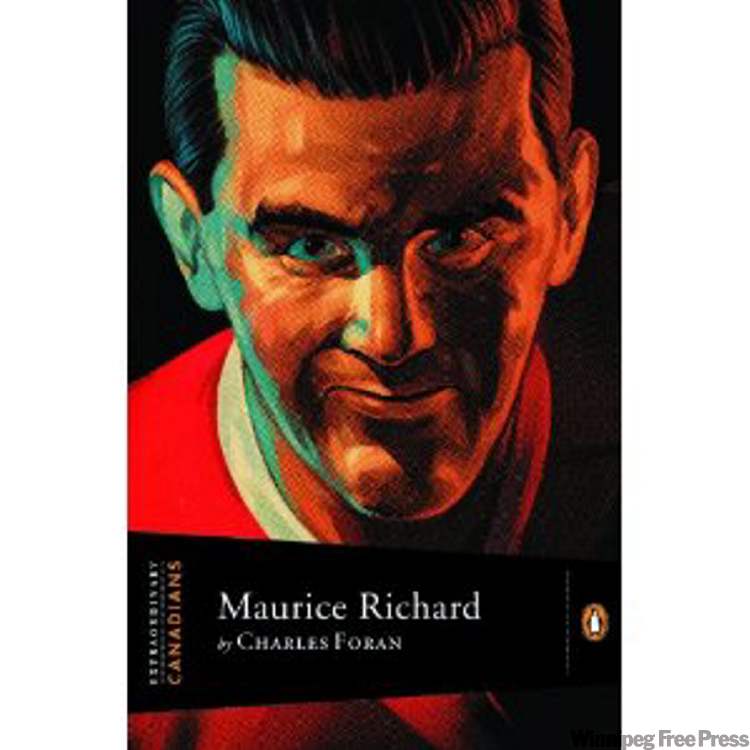
Penguin Canada, 166 pages, $26
IT’S fitting that Maurice (Rocket) Richard should be the first sports figure to come alive — those famously fierce eyes glaring from the cover — in the excellent Penguin Extraordinary Canadians series.
Happily for his millions of fans, 11 years after Richard’s death in May 2000, at 78, Ontario author Charles Foran has skilfully resurrected not only the life of this extraordinary athlete and cultural icon; he has also placed the Rocket in his extraordinary time and place, the Quebec of the ’40s and ’50s, as the province moved into La Révolution tranquille, and as the majority of its population aspired to become maîtres chez nous in the 1960s.
Foran opens by giving us a straightforward but engaging account of Richard’s parents’ move to Montreal from the Gaspé region, and of Maurice growing up in the city’s north end. He first laced on the blades at age four; the first startling statistic, in 1939, has him scoring 133 of his junior team’s 144 goals for the season.
Richard joined the Canadiens, the only club he would ever play for, in 1940, but a broken ankle cut his first season to one game. A broken wrist curtailed 1941, and a broken leg did the same for 1942.
Richard tried to enlist in the army three times, finally giving up in 1944, the year he was dubbed the Rocket; in the 1944-45 season, he scored 50 goals in 50 games.
From then on Richard’s feats and the Rocket’s legend grew. Foran deftly weaves the rising star’s reality and mythology into the ethos created by Quebec’s other Maurice during the Duplessis era, showing how the Rocket’s exploits became, for many, synonymous with and symbolic of the aspirations of the “little people,” the majority of Quebec’s population. These were glory years for the Habs, who followed their Stanley Cups of the late ’40s with five straight from 1956-1960.
On March 13, 1955, Richard fought a Boston player and then attacked a referee in Beantown, and on March 16, Clarence Campbell — the powerful president of the NHL and for many French Canadians, the despotic face of Anglo-Canadian control — suspended Richard for the rest of the season and the playoffs, precipitating the infamous “Richard Riot” on March 17 in Montreal. Foran gives us a both a fluent depiction of that night, and of the uses to which the events were put by the politicians and the press.
One of the virtues of Foran’s narration throughout is that it gives us Richard in all his complexity: he was, ill at ease with the media, inarticulate in English until late in his career. He adored children, his own and others. He was homesick away from Montreal and his wife Lucille.
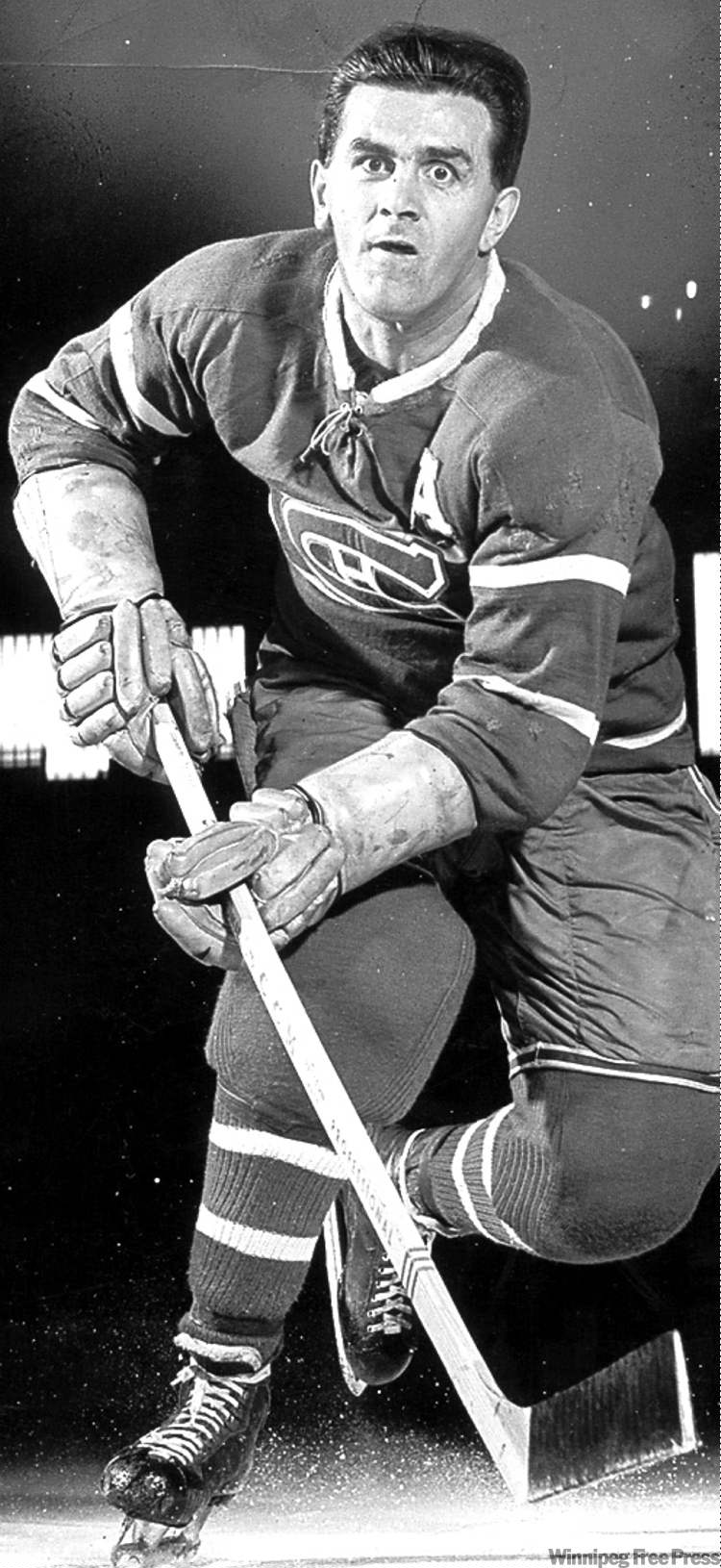
On the ice, he was volatile and violent, an implacable, almost demonic force until late in his career; and, mercurial as he was, he became the heart and soul of those fabled teams — and of his people.
Unhappily but predictably, Richard’s years after he was eased off the team in 1960 were lonely and bewildering, and we witness his embittered withdrawal. Richard never commanded the salary of a Gordie Howe or a Boom Boom Geoffrion; despite the adulation of his fans, he believed himself — with some justification — to have been exploited by his Anglo masters.
All the more moving, then, and masterfully narrated here, are the events of March 11, 1996, in Montreal. On the occasion of the old Montreal Forum’s closing, the Habs’ legends were brought out onto the ice — Béliveau, Geoffrion, Lafleur, Ken Dryden — to “steady applause” from the crowd.
When Richard appeared, the Forum erupted in a nine-minute standing ovation that neither the famed announcer, Richard Garneau, nor Richard himself could quell.
At 738 pages, Foran’s recent biography of Mordecai Richler (2010) showed his command of the longer form. But in 166 pages, Foran succeeds equally in giving us the best account to date of the original Flying Frenchman. Two minutes for lookin’ so good.
Neil Besner is the University of Winnipeg’s vice-president, research and international, and a lifelong Habs fan.