Completed Crichton run-of-the-mill potboiler

Advertisement
Read this article for free:
or
Already have an account? Log in here »
To continue reading, please subscribe:

Digital Subscription
One year of digital access for only $205*
- Enjoy unlimited reading on winnipegfreepress.com
- Read the E-Edition, our digital replica newspaper
- Access News Break, our award-winning app
- Play interactive puzzles
*First annual payment billed as $205.00 + GST for one year. This annual subscription will automatically renew at $233.00 + GST every 52 weeks (10% off the regular annual price of $259.35). Offer available to new and qualified returning subscribers only. Cancel any time.
To continue reading, please subscribe:
Add Free Press access to your Brandon Sun subscription for only an additional
$1 for the first 4 weeks*
- Enjoy unlimited reading on winnipegfreepress.com
- Read the E-Edition, our digital replica newspaper
- Access News Break, our award-winning app
- Play interactive puzzles
*Your next Brandon Sun subscription payment will increase by $1.00 and you will be charged $17.95 plus GST for four weeks. After four weeks, your payment will increase to $24.95 plus GST every four weeks.
Read unlimited articles for free today:
or
Already have an account? Log in here »
Hey there, time traveller!
This article was published 17/12/2011 (5404 days ago), so information in it may no longer be current.
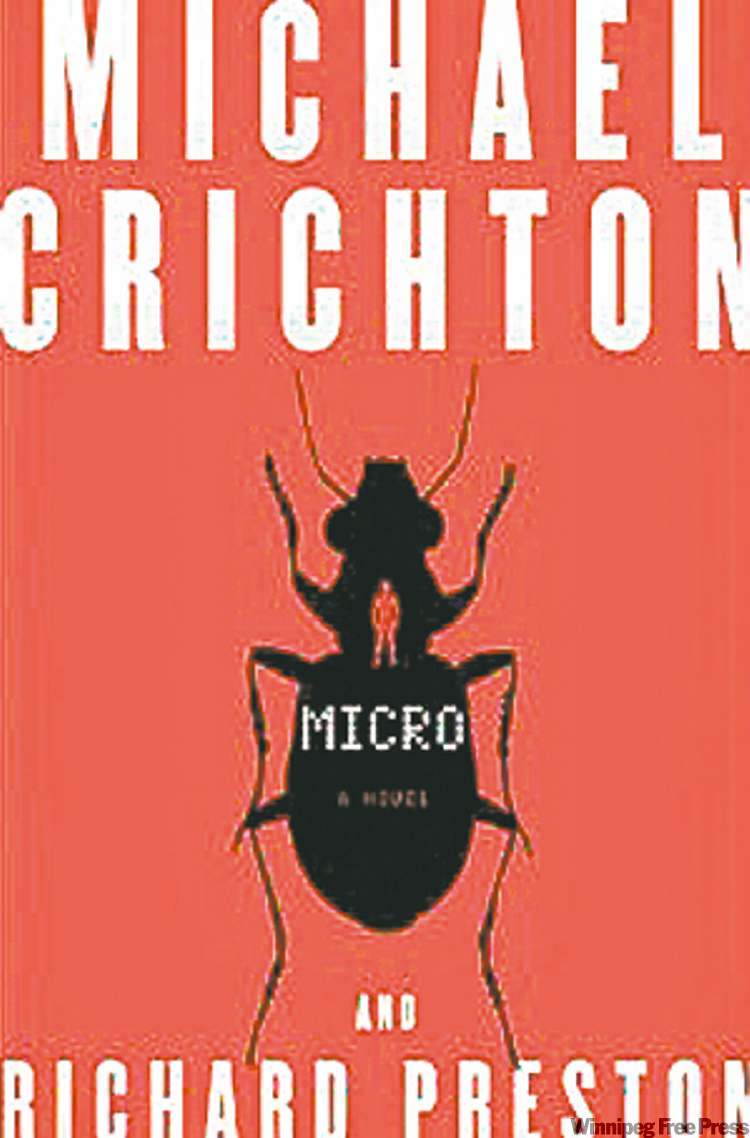
Micro
By Michael Crichton and Richard Preston
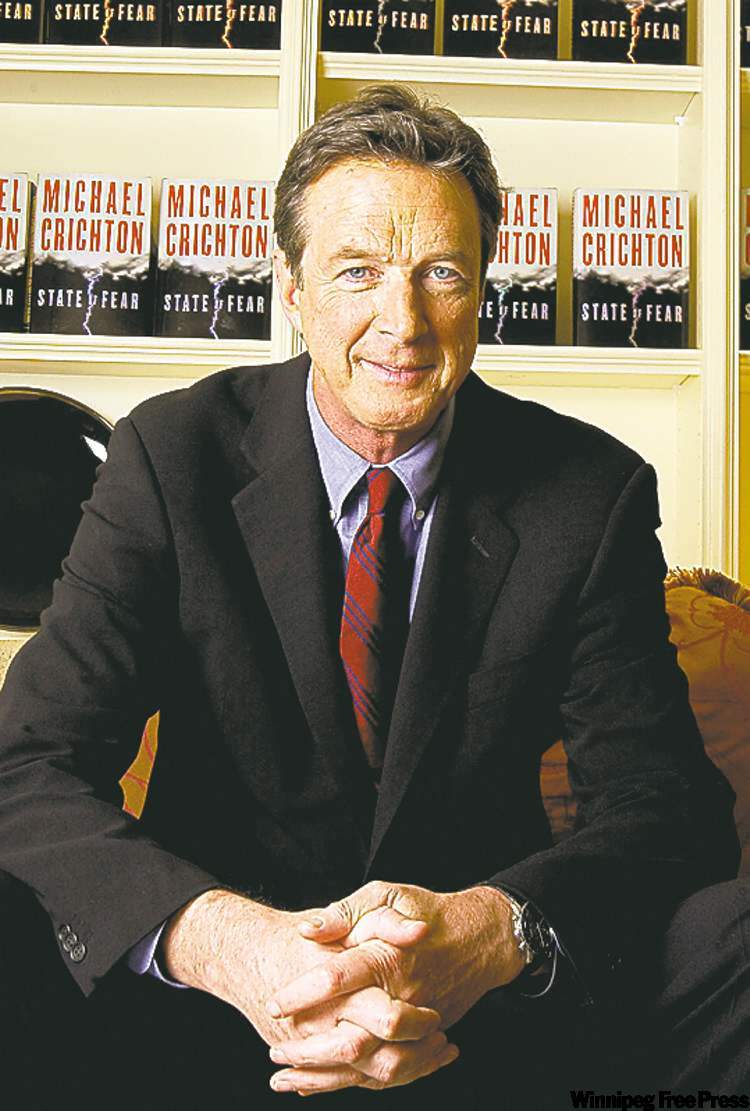
HarperCollins, 429 pages, $32
Micro isn’t the worst novel that American techno-thriller novelist Michael Crichton has had published since his death in 2008.
It’s nowhere near as bad as the execrable Pirate Latitudes two years ago.
Richard Preston, best known for writing non-fiction books about deadly viruses and superbugs, such as The Hot Zone and The Demon in the Freezer, completed the novel that Crichton was writing when his life was cut short by throat cancer.
Set in and around Honolulu, Micro gives us smoothly evil industrialist Vin Drake, whose mysterious lab conducts research using micro-robots sent into the nearby rain forest to search for new pharmaceuticals in tiny insects and plants.
But did Drake develop technology that could build teensy robots virtually invisible to the naked eye? Or did he use enormous magnetic fields to shrink normal-sized robots, vehicles, even aircraft?
Could his technology have weapons applications? And could it — spoiler alert! — work on people?
Drake has had some difficulty keeping his scientific researchers alive, so he recruits a fresh batch of brilliant young graduate students from Harvard.
In typical Crichton fashion, he lists the characters over a couple of pages, outlines each student’s area of scientific expertise, and assigns each person one characteristic — arrogant know-it-all, vegetarian, warrior princess, lesbian, hero, whining scaredy-cat, and sexually aggressive woman.
Micro is Crichton’s 21st book, and for a time, he wrote cracking good reads about technology messing with nature at the peril of the human race. Andromeda Strain (1969) and Jurassic Park (1990) were top notch.
But in the last 10 to 15 years, Crichton’s novels became nothing more than outlines for screenplays, bereft of characterization, plot development and literary structure.
It should come as no surprise that Micro will bring to mind movies, not books, from Dr. Cyclops, Attack of the Puppet People and The Incredible Shrinking Man to Fantastic Voyage and Honey, I Shrunk the Kids.
You can picture the Crichton visualizing the enormous advances made in special effects since the 1968 cheesy TV series Land of the Giants.

Crichton used his last few novels to unleash a torrent of scorn on environmentalists and the greens, accusing those who believe in the threat of global warming of being deluded fools.
And, indeed, Crichton has his Micro characters pause while they dodge hungry insects the size of school buses to engage in philosophical debates about the nature of nature, the point of which is to dump all over the tree-huggers.
But the reader may well sense when a new hand is at the keyboard. That’s when scenes become more than three pages long, when events build and build and build, when there’s some actual suspense and uncertainty about how things will turn out.
Still, Preston doesn’t have enough influence to salvage Micro as more than a run-of-the-mill potboiler.
Nick Martin is a Free Press reporter.
Nick Martin
Former Free Press reporter Nick Martin, who wrote the monthly suspense column in the books section and was prolific in his standalone reviews of mystery/thriller novels, died Oct. 15 at age 77 while on holiday in Edinburgh, Scotland.
Our newsroom depends on a growing audience of readers to power our journalism. If you are not a paid reader, please consider becoming a subscriber.
Our newsroom depends on its audience of readers to power our journalism. Thank you for your support.
Nick Martin
Former Free Press reporter Nick Martin, who wrote the monthly suspense column in the books section and was prolific in his standalone reviews of mystery/thriller novels, died Oct. 15 at age 77 while on holiday in Edinburgh, Scotland.
Our newsroom depends on a growing audience of readers to power our journalism. If you are not a paid reader, please consider becoming a subscriber.
Our newsroom depends on its audience of readers to power our journalism. Thank you for your support.
Related Articles
Maybe fiction ruined her memoir
Advertisement Advertise With Us
Advertisement Advertise With Us