

Hitchens’ thin volume poignant, deeply moving
Advertisement
Read this article for free:
or
Already have an account? Log in here »
To continue reading, please subscribe:
Digital Subscription
One year of digital access for only $75*
- Enjoy unlimited reading on winnipegfreepress.com
- Read the E-Edition, our digital replica newspaper
- Access News Break, our award-winning app
- Play interactive puzzles
*Billed as $5.77 plus GST every four weeks. After 52 weeks, price increases to the regular rate of $19.95 plus GST every four weeks. Offer available to new and qualified returning subscribers only. Cancel any time.
Monthly Digital Subscription
$4.99/week*
- Enjoy unlimited reading on winnipegfreepress.com
- Read the E-Edition, our digital replica newspaper
- Access News Break, our award-winning app
- Play interactive puzzles
*Billed as $19.95 plus GST every four weeks. Cancel any time.
To continue reading, please subscribe:
Add Free Press access to your Brandon Sun subscription for only an additional
$1 for the first 4 weeks*
- Enjoy unlimited reading on winnipegfreepress.com
- Read the E-Edition, our digital replica newspaper
- Access News Break, our award-winning app
- Play interactive puzzles
*Your next Brandon Sun subscription payment will increase by $1.00 and you will be charged $17.95 plus GST for four weeks. After four weeks, your payment will increase to $24.95 plus GST every four weeks.
Read unlimited articles for free today:
or
Already have an account? Log in here »
Hey there, time traveller!
This article was published 08/09/2012 (5002 days ago), so information in it may no longer be current.
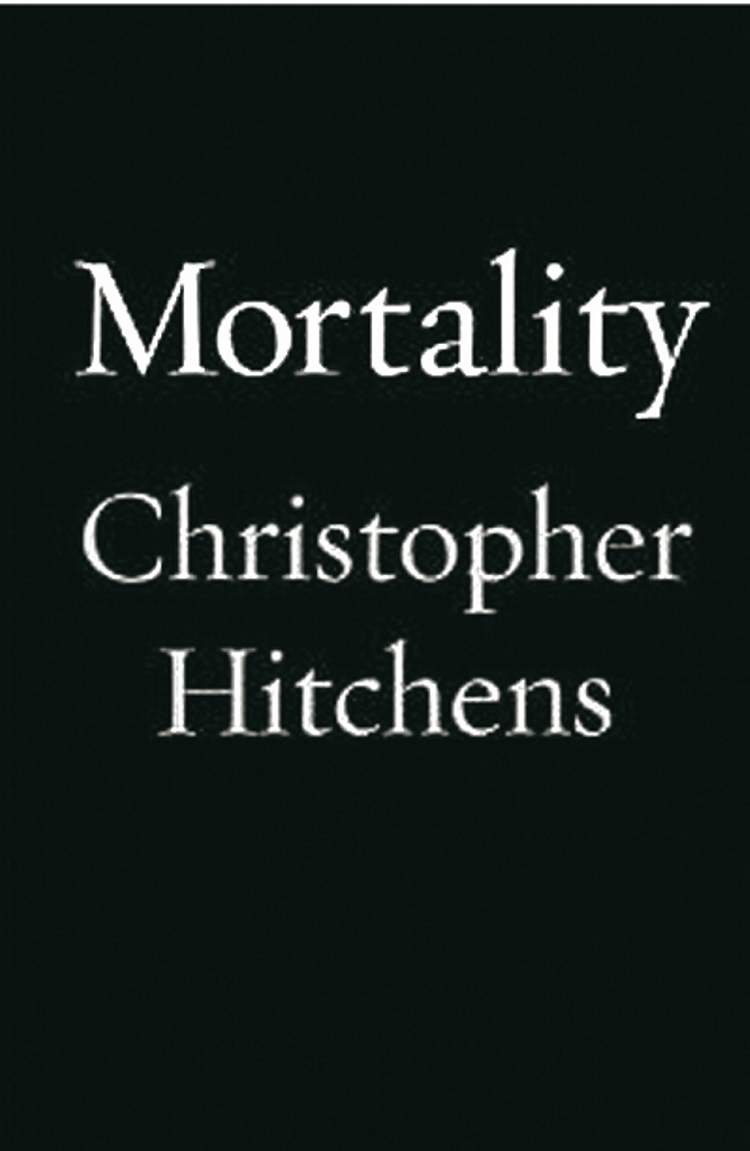
Mortality
By Christopher Hitchens
McClelland & Stewart, 104 pages, $23
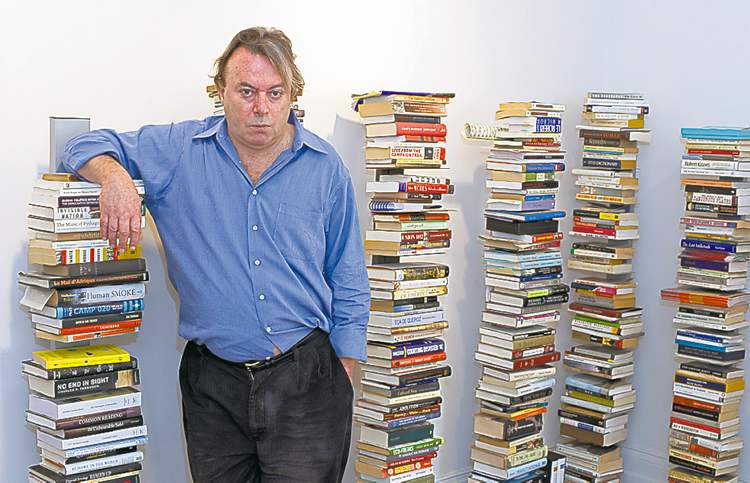
When the late Christopher Hitchens, celebrated journalist and debater, was diagnosed with terminal esophageal cancer in 2010, he decided to write about “living dyingly.”
Mortality is the result, a little book that while thin in several ways, consists of a collection of essays, originally published in Vanity Fair magazine, that are poignant, frustrating, revealing, often funny and sometimes deeply moving.
The book (a booklet, really) allows us to observe from the inside the dying of a self-proclaimed stoic materialist atheist who remains faithful to that creed until the bitter end.
The British-born Hitchens’ wide contrarian streak (this is someone who wrote an exposé of Mother Teresa) remains alive and well in these essays, as the strength of his fine prose. He adamantly refuses to take solace in any form of religion.
He died last December at age 62 in the U.S., where he immigrated in 1981. Those hoping and praying for a deathbed conversion or even softening in that direction will be disappointed.
Instead, Hitchens reasserts some of his long-standing complaints about religion — the incoherence of belief in prayer, the mean-spiritedness of many religious folks, and so on.
Those who have read Hitchens’ 2007 book, God Is Not Great: How Religion Poisons Everything, will find nothing new here.
In fact, Hitchens’ criticisms of religion are the least interesting and convincing parts of these essays, because they amount to little more than cynicism.
He wants desperately to refuse and escape illusion. Fair enough, but as has been said about Bertrand Russell, Hitchens is the least philosophical and insightful when he is at his most atheistic.
However, Hitchens is very insightful when he describes and reflects on the materialist view that he embraces. He is often deeply personal but never maudlin.
He self-consciously resists sentimentality and self-pity, rebels against wallowing in a sense of waste and refuses to ask “Why me?”
Instead, we are afforded a glimpse into this stoic materialist’s struggle to live in this new country of sickness with its new language and gestures.
Hitchens describes both the exhilaration of being offered hopeful new cures and the melancholy of realizing that the ones proffered do not apply to his particular case. We are able to witness him struggling with the possibility of losing key markers of his identity — his speaking and writing voices — and wondering what that might mean to him as a human being.

As he considers these matters, he is consistently aware of the temptation of self-centredness, even solipsism. His attempt to come to grips with his experience in a fully human way leads to the profound understanding that to do so means embracing the fact that he does not just have a body, but that he is a body.
These kinds of insights that come to view in his exposition of his own deeply held beliefs are far more astute than any of his blunt attacks on religion. In fact, religious readers would do well not to ignore these “secular” insights of Hitchens’ — there’s much to learn here.
These essays are certainly worth reading, but overall the book feels thin. It gets to a 100 pages by using oversized font, lots of blank space, and the inclusion of an introduction by Vanity Fair editor Graydon Carter and an afterword by Hitchens’ widow, Carol Blue, as well as some fragments found in Hitchens’ notebooks.
It’s hard not to see this slender volume as an attempt to capitalize on Hitchens’ notoriety.
Paul Doerksen teaches theology and Anabaptist Studies at Canadian Mennonite University in Winnipeg.