Reincarnated fly funny, if confusing
Advertisement
Read this article for free:
or
Already have an account? Log in here »
To continue reading, please subscribe:

Digital Subscription
One year of digital access for only $205*
- Enjoy unlimited reading on winnipegfreepress.com
- Read the E-Edition, our digital replica newspaper
- Access News Break, our award-winning app
- Play interactive puzzles
*First annual payment billed as $205.00 + GST for one year. This annual subscription will automatically renew at $233.00 + GST every 52 weeks (10% off the regular annual price of $259.35). Offer available to new and qualified returning subscribers only. Cancel any time.
To continue reading, please subscribe:
Add Free Press access to your Brandon Sun subscription for only an additional
$1 for the first 4 weeks*
- Enjoy unlimited reading on winnipegfreepress.com
- Read the E-Edition, our digital replica newspaper
- Access News Break, our award-winning app
- Play interactive puzzles
*Your next Brandon Sun subscription payment will increase by $1.00 and you will be charged $17.95 plus GST for four weeks. After four weeks, your payment will increase to $24.95 plus GST every four weeks.
Read unlimited articles for free today:
or
Already have an account? Log in here »
Hey there, time traveller!
This article was published 09/03/2013 (4881 days ago), so information in it may no longer be current.
Jacob’s Folly
By Rebecca Miller
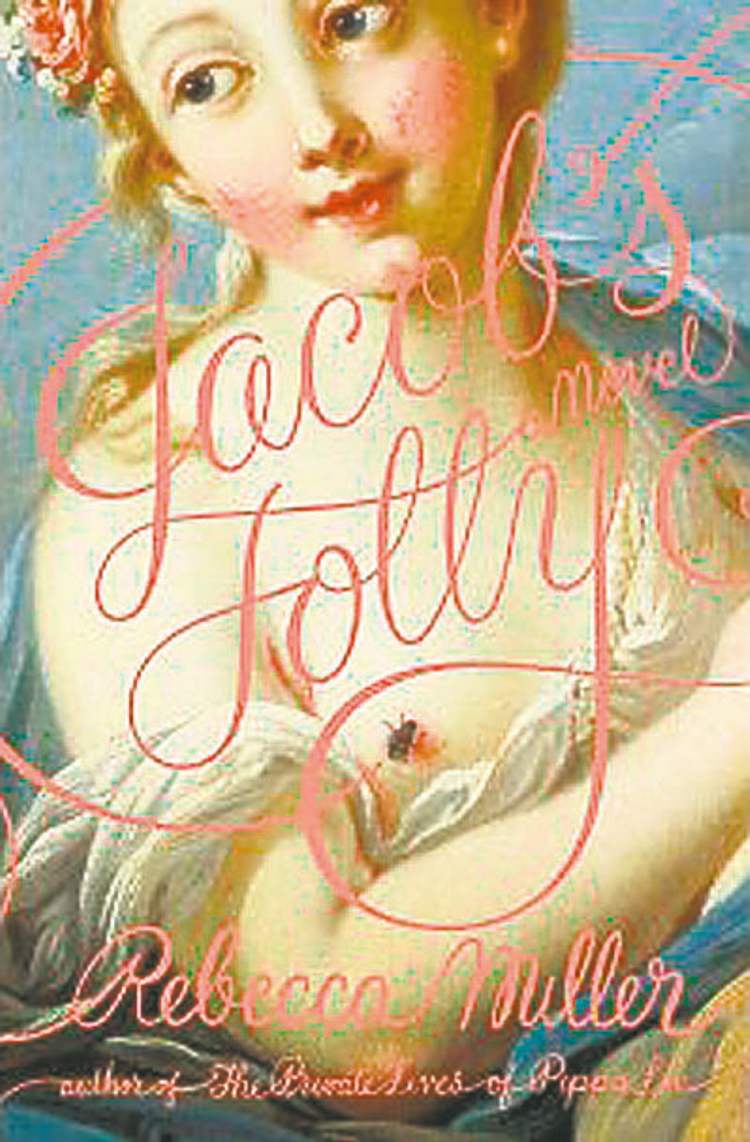
HarperCollins, 337 pages, $30
FOR anyone who’s ever wondered what it would be like to be the proverbial fly on the wall, this American literary novel provides an answer — though not an entirely satisfying one.
The title character is a “wandering soul,” according to his Orthodox Jewish faith, reincarnated after death until his sins are redeemed.
The lion’s share of Jacob’s Folly is given over to his rather convoluted history — first as a street peddler in 18th-century Paris, then as a valet, a student and an actor in the 19th century — before his reincarnation as a housefly in the 21st century.
The idea of man turned insect got a fairly famous workout by Franz Kafka in his 1915 novella, The Metamorphosis. In Jacob’s Folly, however, it is an overly complicated, exhausting saga, involving demons, exorcism and even some S&M, which may have some readers reaching for a flyswatter.
Author Rebecca Miller is obviously a gifted writer. But in this instance, she seems unclear as to what type of novel she is writing. Ultimately, it’s uneven in structure and suffers from a lack of focus.
As the daughter of famed American playwright Arthur Miller, author of The Crucible and Death of a Salesman, among other classics, Miller comes by her talent honestly. She has penned two previous novels, 2008’s The Private Lives of Pippa Lee and 2005’s The Ballad of Jack and Rose,, both of which she later adapted and directed for the big screen, starring her husband, the Oscar-winning British-born actor Daniel Day-Lewis.
But back to Jacob the fly. Propelled somehow to the 21st century, he buzzes in and out of the lives of the novel’s main characters, Leslie and Masha, at irregular intervals, observing and, more often than not, meddling.
Masha is a comely young woman who is drawn to acting as an escape from what she perceives to be the narrow constraints of her ultra-Orthodox Judaism. But her freedom comes at the risk of alienating her family and the only life she’s ever known.
Leslie Senzatimore is a middle-aged Gentile man with a hero complex, taking in stray cats and family members alike, carrying their troubles “like a cheerful Sisyphus.”
Still, he’s unable to rescue his deaf son from the loneliness of his silent world. Desperate for change, he pursues the mysterious Masha, with near disastrous results.

Unlike Kafka’s tortured insect, Miller’s fly is endowed with supernatural abilities, able to read minds and even, in some cases, to spur the characters to action.
As he tempts them to rebel against the constraints in their lives, he is the catalyst urging them toward their true destiny. Jacob’s Folly speaks to finding one’s place in the world and discovering one’s true purpose. And most important, how transformation — physical or otherwise — can lead to redemption.
Miller shifts continually back and forth between centuries, which quickly becomes tiresome, as does the gargantuan cast of characters and jumble of subplots, which serve only to distract from the main story.
As is often the case in novels with multiple story lines, some are more enjoyable than others. Thankfully, Miller peppers her poetic prose with fabulous imagery and a good deal of humour, which almost make up for the confusion.
Lindsay McKnight toils in the arts in Winnipeg.