CHILDREN’S BOOKS: First novel tribute to power of books
Advertisement
Read this article for free:
or
Already have an account? Log in here »
To continue reading, please subscribe:

Digital Subscription
One year of digital access for only $205*
- Enjoy unlimited reading on winnipegfreepress.com
- Read the E-Edition, our digital replica newspaper
- Access News Break, our award-winning app
- Play interactive puzzles
*First annual payment billed as $205.00 + GST for one year. This annual subscription will automatically renew at $233.00 + GST every 52 weeks (10% off the regular annual price of $259.35). Offer available to new and qualified returning subscribers only. Cancel any time.
To continue reading, please subscribe:
Add Free Press access to your Brandon Sun subscription for only an additional
$1 for the first 4 weeks*
- Enjoy unlimited reading on winnipegfreepress.com
- Read the E-Edition, our digital replica newspaper
- Access News Break, our award-winning app
- Play interactive puzzles
*Your next Brandon Sun subscription payment will increase by $1.00 and you will be charged $17.95 plus GST for four weeks. After four weeks, your payment will increase to $24.95 plus GST every four weeks.
Read unlimited articles for free today:
or
Already have an account? Log in here »
Hey there, time traveller!
This article was published 18/05/2013 (4890 days ago), so information in it may no longer be current.
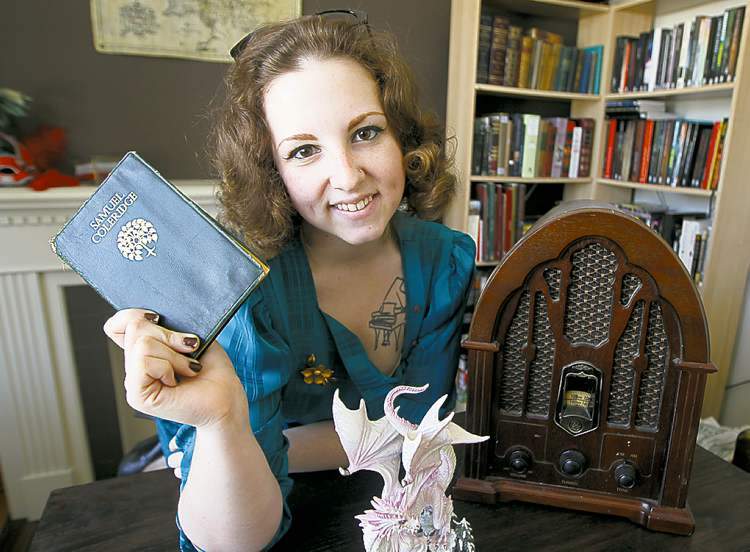
Samantha Beiko, writing under S.M. Beiko, is a Winnipeg author and editor whose first book for young people, The Lake and the Library (ECW Press, 237 pages, $15 paperback) shows a great deal of promise.
Sixteen-year-old Ash faces her final summer in the dying town of Treade, a fictional small community in southwestern Manitoba. Her mother has decided it’s time to move on, and Ash can hardly wait — until she decides to explore an abandoned building on the outskirts of town.
In the building Ash discovers a magnificent library of books and also a handsome, sensitive young man named Li, who is unable to speak but who serves as a wonderful guide to this enchanting space.
As Ash begins to spend more and more time there, she realizes that the library, and Li, are not always what they seem.
Is it all an illusion? Why does she dream of being immersed in water? Is she neglecting her best friends in her last summer in Treade? Can she return to them, or is she imprisoned in a new world of magic?
Beiko’s prose is often lyrical, and her word-pictures are compelling. However, the plot of her novel is sometimes confusing, especially as she tries to tie Li to a former life.
Nevertheless, The Lake and the Library could be called a tribute to the power of books, and it is certainly an auspicious first novel by a new Winnipeg author.
— — —
One of the funniest young adult novels to appear in years is Harry Flammable, by Calgary author Frank O’Keeffe (Dundurn, 176 pages, $13 paperback). High school student Harry Flanagan has earned the nickname Harry Flammable after a series of unfortunate accidents at his school.
He’s dying to get a chance to make movies, but instead he’s sent to help in the kitchen of the local Ritz Hotel as part of his student work experience. A drunken movie star combined with crepes flamb© enhance his reputation as a pyromaniac, as Harry moves from one disaster to another.
This is one young adult novel that has the novelty of a normal home life, with parents who are both supportive and humorous. O’Keefe, who hails originally from Ireland, also manages to suggest Harry’s troubles are hardly his fault, so we continue to sympathize with him. For a light, enjoyable read, this one is recommended.
— — —
Veteran young children’s author and storyteller Jan Andrews (Very Last First Time, The Auction) has written her latest novel, The Silent Summer of Kyle McGinley (Great Plains, 200 pages, $15 paperback), for an older teen audience.

Kyle is 15 when he is sent to live in a rural home with Scott and Jill, dedicated wild-life rescuers. After numerous failed foster placements, he is extremely wary of strangers and has decided to stop talking.
Only after he gets a chance to nurse a wounded crow back to health and paints a mural of one of his favourite places on the walls of the loft at the barn does he gradually come to understand his own feelings and frustrations.
The method Andrews uses to tell Kyle’s story, in the first person with numerous angry interjections from what he feels his abusive father would say and also what “Ingen” or “the Lord of Ingenuity” (his own conscience or common sense) tells him, makes this novel often disjointed and difficult to read. While we certainly feel Kyle’s pain, we can’t always sympathize with his almost total lack of understanding for those trying to help him.
While Andrews’ novel is a window into the world of abused and neglected teenagers, it may not be one that many are eager to read.
Winnipegger Helen Norrie is a former teacher of children’s literature. Her column appears on the third weekend of the month.