Murdered women’s sad stories skilfully told
Advertisement
Read this article for free:
or
Already have an account? Log in here »
To continue reading, please subscribe:

Digital Subscription
One year of digital access for only $205*
- Enjoy unlimited reading on winnipegfreepress.com
- Read the E-Edition, our digital replica newspaper
- Access News Break, our award-winning app
- Play interactive puzzles
*First annual payment billed as $205.00 + GST for one year. This annual subscription will automatically renew at $233.00 + GST every 52 weeks (10% off the regular annual price of $259.35). Offer available to new and qualified returning subscribers only. Cancel any time.
To continue reading, please subscribe:
Add Free Press access to your Brandon Sun subscription for only an additional
$1 for the first 4 weeks*
- Enjoy unlimited reading on winnipegfreepress.com
- Read the E-Edition, our digital replica newspaper
- Access News Break, our award-winning app
- Play interactive puzzles
*Your next Brandon Sun subscription payment will increase by $1.00 and you will be charged $17.95 plus GST for four weeks. After four weeks, your payment will increase to $24.95 plus GST every four weeks.
Read unlimited articles for free today:
or
Already have an account? Log in here »
Hey there, time traveller!
This article was published 13/07/2013 (4805 days ago), so information in it may no longer be current.
Although this true crime book is set in Long Island, N.Y., it has special relevance to western Canadians.
A much expanded version of an article that contributing editor Robert Kolker wrote for New York magazine in May 2011, Lost Girls is about “the missing missing” — young sex-trade workers who disappeared and whose absences were hardly noticed.
This is always a sad story, as we Prairie residents know only too well, but the book is especially depressing because the killers have not yet been found. And it’s unlikely that they ever will be.
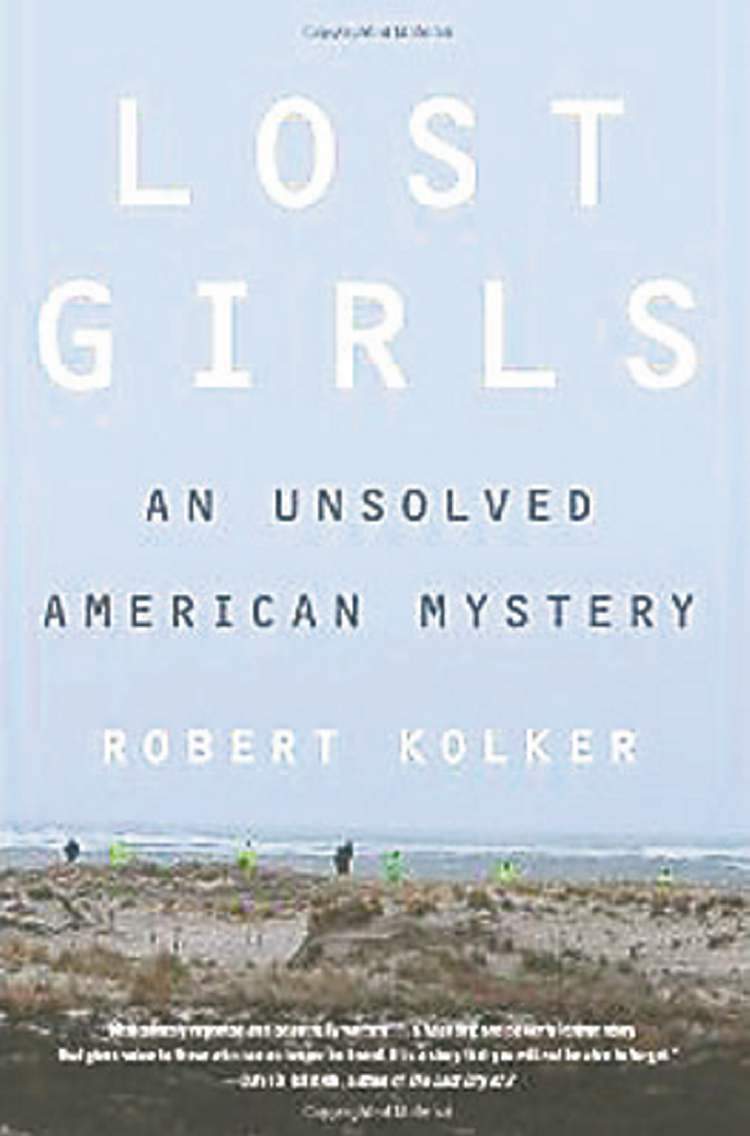
At least four of the young prostitutes, Kolker writes, “were victims of “the most skilful and accomplished serial killer in New York since Joel Rifkin and David Berkowitz.”
This tragic saga begins when, in the spring 2010, Shannan Gilbert, a 20-something “escort” (the new term for prostitute) runs screaming for her life from a “client’s” house in Oak Beach, Long Island. She disappears into a nearly impenetrable nearby marsh.
Neighbours take notice and the police are called.
In the lengthy but spotty process of searching for Gilbert, the police discover four more bodies of young escorts, each wrapped in burlap, clearly the work of a serial killer.
Before Gilbert’s body is found, more than 20 months later, the police find the remains of six more people in the same small “dumping zone.”
Gilbert and her companions in death — Maureen Brainard-Barnes, Melissa Barthelemy, Megan Waterman and Amber Lynn Costello — were part of the new regime of prostitution: those plying their trade via the Internet.
Advertising from Craigslist and Backpage websites, the escorts did not have to endure endless streetwalking and the humiliation of sidewalk bargaining in bad weather, hassles from the police, or thralldom to abusive pimps.
Internet prostitution is easier and more lucrative, but also much more dangerous.
For clients, ordering an escort is like ordering a pizza online.
It’s anonymous, with fixed prices and free delivery to your door, and review websites to ensure quality control.
Anonymity and door-to-door service are a boon to sexual predators. It’s almost impossible to trace a hookup.
Because of this and because of the often meagre efforts of the police, for whatever reasons, it is important to tell the stories of the victims. This is where Kolker’s book fits in.
Unfortunately, despite minor variations, the young women’s stories are so sadly similar that the opening half of the book, devoted to their lives, is slow going. It’s confusing and there’s little narrative drive.

The lost girls are all from dysfunctional families, all desperately needy dreamers, all falsely confident that they can take care of themselves.
The book is gripping, however, in its second half because of the weird and colourful secondary characters and the mystery of the hunt.
Lost Girls does not put Kolker in the same league as Caitlin Rother, the U.S. Pulitzer Prize-winning journalist who wrote a much-awarded book with exactly the same main title and subject matter in 2012.
Nor will it unseat Anne Rule, the queen of true crime books, despite its skilful and important contribution to the genre.
Gene Walz is a retired film studies professor at the University of Manitoba.