A father’s difficult path to redemption
Advertisement
Read this article for free:
or
Already have an account? Log in here »
To continue reading, please subscribe:

Digital Subscription
One year of digital access for only $205*
- Enjoy unlimited reading on winnipegfreepress.com
- Read the E-Edition, our digital replica newspaper
- Access News Break, our award-winning app
- Play interactive puzzles
*First annual payment billed as $205.00 + GST for one year. This annual subscription will automatically renew at $233.00 + GST every 52 weeks (10% off the regular annual price of $259.35). Offer available to new and qualified returning subscribers only. Cancel any time.
To continue reading, please subscribe:
Add Free Press access to your Brandon Sun subscription for only an additional
$1 for the first 4 weeks*
- Enjoy unlimited reading on winnipegfreepress.com
- Read the E-Edition, our digital replica newspaper
- Access News Break, our award-winning app
- Play interactive puzzles
*Your next Brandon Sun subscription payment will increase by $1.00 and you will be charged $17.95 plus GST for four weeks. After four weeks, your payment will increase to $24.95 plus GST every four weeks.
Read unlimited articles for free today:
or
Already have an account? Log in here »
Hey there, time traveller!
This article was published 26/04/2014 (4467 days ago), so information in it may no longer be current.
While Medicine Walk is no Indian Horse, the brilliant 2012 novel from Richard Wagamese, it is a distinctive, powerfully written work nevertheless. From Kamloops, B.C., Wagamese continues to show a talent for storytelling.
In fact, many of the characters in the novel are storytellers themselves. These compelling characters, as well as the stories they tell, are some of Medicine Walk’s more striking achievements.
The novel has a slow start, with “the old man” figuring prominently. His lack of a name at the outset forces the reader into some initial head-scratching.
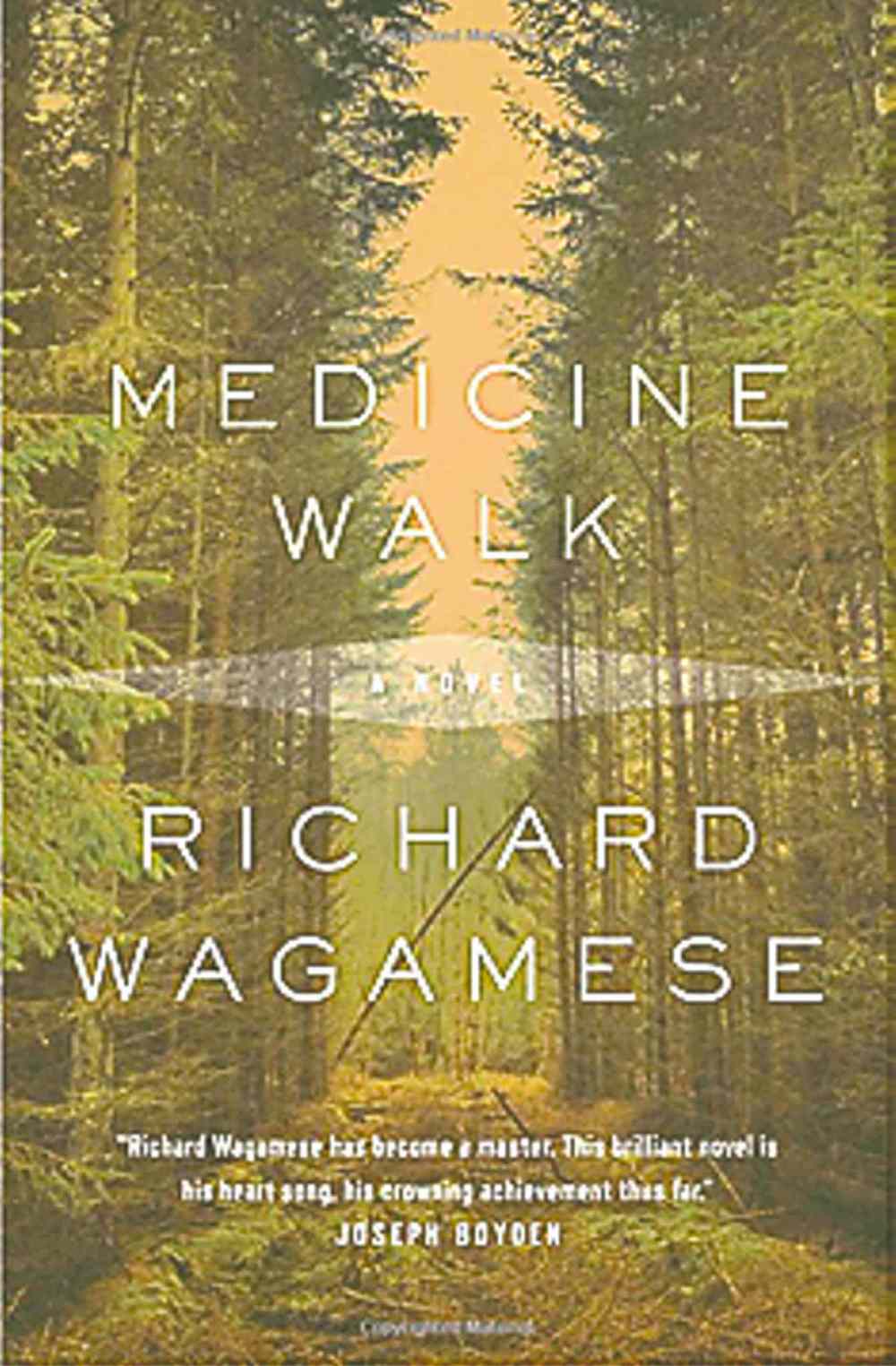
Protagonist Franklin Starlight, the old man’s adopted child, proves to be an interesting focus at various ages, especially because of his stressful relationship with Eldon Starlight, his biological father.
Eldon identifies himself as “Indian,” claiming to be Ojibway. He also claims to be a warrior, but has a hard time impressing on his son that he’s worthy of a warrior’s burial.
It’s not surprising that Franklin struggles to admire Eldon. To begin with, it wasn’t until he was seven years old that he learned Eldon, not “the old man,” was his biological father.
Years of broken promises then minimized the possibility of a positive father-son relationship.
Furthermore, Franklin’s impressions of his father are partially formed from watching Eldon (and many other characters) frequently chugalugging straight whiskey. Eldon keeps some pretty rough company, including the regulars who drink in Charlie’s hangout.
While not aboriginal, the old man is the one who successfully teaches Franklin many native traditions and practices, including the tracking and hunting of moose, elk, coyotes and black bear.
In the context of this book, a “medicine walk” appears to take the form of a journey — accompanying one who is approaching death to his final resting place.
During Franklin’s walk with Eldon, the boy’s empathy for his father increases. This is especially true as he learns the tragic circumstances of his father’s life, including his participation in the Korean War, as well as the hardships of Angie, his mother, who died giving birth to Franklin.
Wagamese’s depiction of the fighting in the war is particularly graphic. Quite dramatic in its own right is the profound story of Eldon and Jimmy Weaseltail, his only friend.
One of the most striking features of Medicine Walk is the description of animal life and the magnificent British Columbia interior.
Readers may find some initial difficulty with the language of the book, notably the apparently indiscriminate use of pronouns.

Too often a character is referred to as “he” without clear identification of the person involved; as such, conversations are sometimes rather confusing.
Still, Medicine Walk is a moving read, full of unforgettable characters and scenarios.
The conclusion of the medicine walk, and the boy’s burial of his father, are emotionally gripping.
Ron Kirbyson is a Winnipeg writer who hopes to continue learning about aboriginal culture.