Delightful book about the brain might make you think twice
Advertisement
Read this article for free:
or
Already have an account? Log in here »
To continue reading, please subscribe:

Digital Subscription
One year of digital access for only $205*
- Enjoy unlimited reading on winnipegfreepress.com
- Read the E-Edition, our digital replica newspaper
- Access News Break, our award-winning app
- Play interactive puzzles
*First annual payment billed as $205.00 + GST for one year. This annual subscription will automatically renew at $233.00 + GST every 52 weeks (10% off the regular annual price of $259.35). Offer available to new and qualified returning subscribers only. Cancel any time.
To continue reading, please subscribe:
Add Free Press access to your Brandon Sun subscription for only an additional
$1 for the first 4 weeks*
- Enjoy unlimited reading on winnipegfreepress.com
- Read the E-Edition, our digital replica newspaper
- Access News Break, our award-winning app
- Play interactive puzzles
*Your next Brandon Sun subscription payment will increase by $1.00 and you will be charged $17.95 plus GST for four weeks. After four weeks, your payment will increase to $24.95 plus GST every four weeks.
Read unlimited articles for free today:
or
Already have an account? Log in here »
Hey there, time traveller!
This article was published 10/05/2014 (4499 days ago), so information in it may no longer be current.
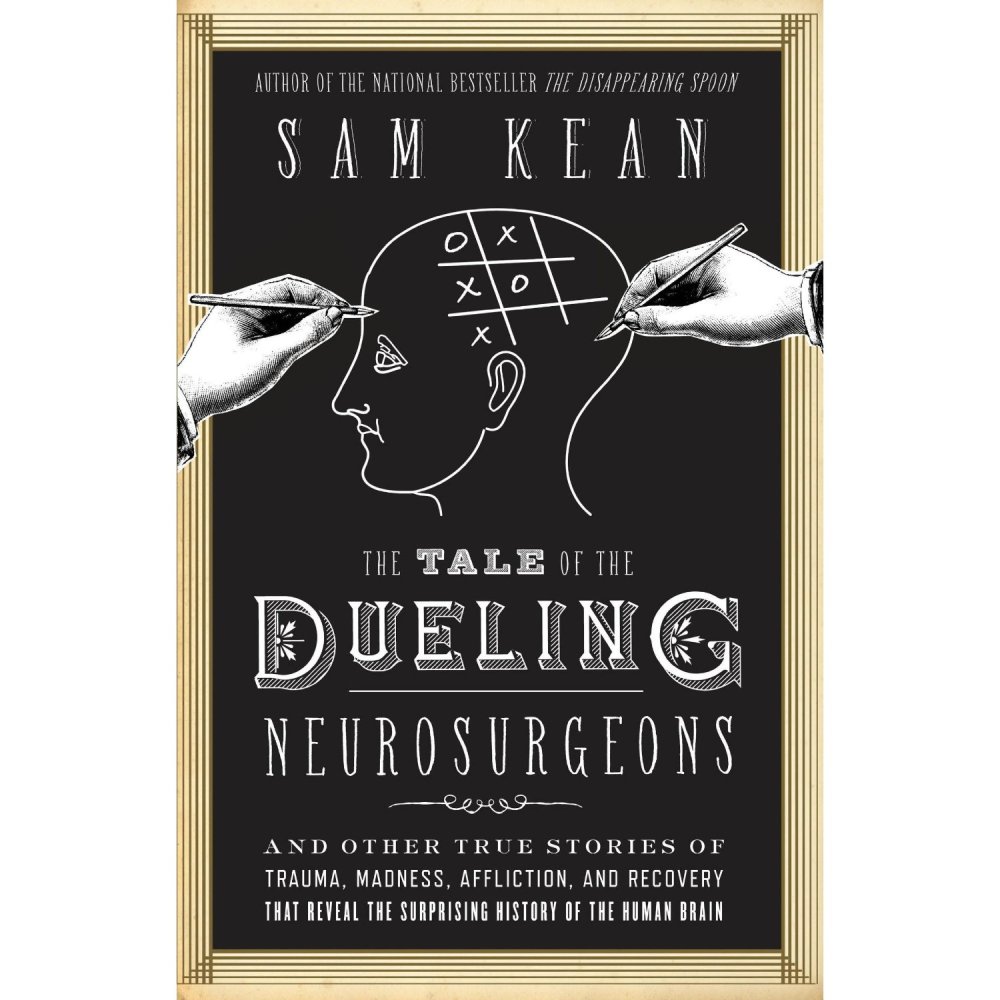
In this amazingly charming book, science writer Sam Kean bravely sets out to answer the question: How does a mind emerge from the human brain?
His journey to the answer takes us all the way back to 1559, and to the duelling doctors of his intriguing title.
That was the year that an unlucky king of France, Henri the Second, was lanced through the skull with an iron javelin during a joust, giving us one of the most significant cases in neuroscience history.
Two of the very august medical men of the day, Ambroise Paré and Andreas Vesalius, treated and tended to Henri both as he clung to life and after he surrendered to his wounds. Their differing observations would serve as a fascinating model of information about the workings of the human brain for the next four centuries.
Poor Henri’s story also illustrates an important sub-theme of Kean’s book — everything we know about the brain, its disease, dysfunction and its wellness, is owed to ordinary people who have suffered bizarre accidents, illness and disasters. These include strokes, seizures, sabre wounds, explosions and, yes, botched surgeries.
With this in mind, Kean cheerfully (though respectfully) goes about “resurrecting the lives of kings, cannibals, dwarfs… whose struggles made modern neurosurgery possible.”
Kean’s style brings to mind the irreverence of travel writer Bill Bryson, as well as American fiction writer and environmentalist Carl Hiaasen. Kean’s work is widely featured in Slate, Psychology Today and the New Scientist, and is heard often on American public radio.
The writer dwells eloquently on trauma-induced changes in human behaviour, notably the story of New Englander Phineas Gage, which he considers the single most famous tale in neuroscience.
Gage was a popular, respected railway foreman who was shot cleanly through the eye by a steel rod measuring almost a metre long. (Squeamish readers may want to skip the vivid description of this event.) Gage’s survival was miraculous, but the incident left him wildly eccentric, selfish and foul-mouthed. He was, his friends said, “no longer Gage.”
Aha! Sad, but another leap forward in brain science for which, Kean says, we ought to be grateful.
While acknowledging tragedy, Kean certainly delights in the description of all things gory and freaky. The many tales of injury and woe are softened, however, by his excitement at the still-untold and miraculous capacities of the brain.

Dueling Neurosurgeons will confirm Kean’s already-solid reputation as a writer who can make anything understandable and interesting. Previous works such as The Disappearing Spoon (a love story about the periodic table) and The Violinist’s Thumb (a playful romp through the wonders of the genetic code) have established his impeccable research and his ironic tone.
Although hugely entertaining (perhaps especially so in this era of vampire and zombie fascination), Kean’s book contains amazingly clear details about our brains. He proceeds from gross anatomy through to cells, senses and circuitry, discredited beliefs and delusions about consciousness, and explores memory and language.
Readers may recoil, may read certain sections of Dueling Neurosurgeons twice in disbelief, and may want to use Kean’s material to sound smart at dinner parties, but by book’s end, they will have a better idea of how all of us use our brains to arrive at our “sense of self.”
Lesley Hughes is a Winnipeg-based writer and broadcaster.
History
Updated on Saturday, May 10, 2014 8:46 AM CDT: Tweaks formatting.