

Study of Buddhism highlights evolution of mindfulness
Advertisement
Read this article for free:
or
Already have an account? Log in here »
To continue reading, please subscribe:
Digital Subscription
One year of digital access for only $75*
- Enjoy unlimited reading on winnipegfreepress.com
- Read the E-Edition, our digital replica newspaper
- Access News Break, our award-winning app
- Play interactive puzzles
*Billed as $5.77 plus GST every four weeks. After 52 weeks, price increases to the regular rate of $19.95 plus GST every four weeks. Offer available to new and qualified returning subscribers only. Cancel any time.
Monthly Digital Subscription
$4.99/week*
- Enjoy unlimited reading on winnipegfreepress.com
- Read the E-Edition, our digital replica newspaper
- Access News Break, our award-winning app
- Play interactive puzzles
*Billed as $19.95 plus GST every four weeks. Cancel any time.
To continue reading, please subscribe:
Add Free Press access to your Brandon Sun subscription for only an additional
$1 for the first 4 weeks*
- Enjoy unlimited reading on winnipegfreepress.com
- Read the E-Edition, our digital replica newspaper
- Access News Break, our award-winning app
- Play interactive puzzles
*Your next Brandon Sun subscription payment will increase by $1.00 and you will be charged $17.95 plus GST for four weeks. After four weeks, your payment will increase to $24.95 plus GST every four weeks.
Read unlimited articles for free today:
or
Already have an account? Log in here »
Hey there, time traveller!
This article was published 16/08/2014 (4300 days ago), so information in it may no longer be current.
In an ostensibly secular age, it is difficult to imagine a concept derived from religious tradition gaining widespread pop-culture currency. Even less likely that it might appeal equally to followers of diverse religious backgrounds as to atheists, agnostics, and other sceptics.
Yet this is precisely what has happened in the last decade under the umbrella of what has come to be called the mindfulness movement.
Mindful America, by American scholar Jeff Wilson, traces the growth and integration of mindfulness, a traditional Buddhist practice, in contemporary America. An associate professor of religious studies at Renison University College, Wilson has investigated the mutually transformative relationship of Buddhism and the U.S. in two previous works.
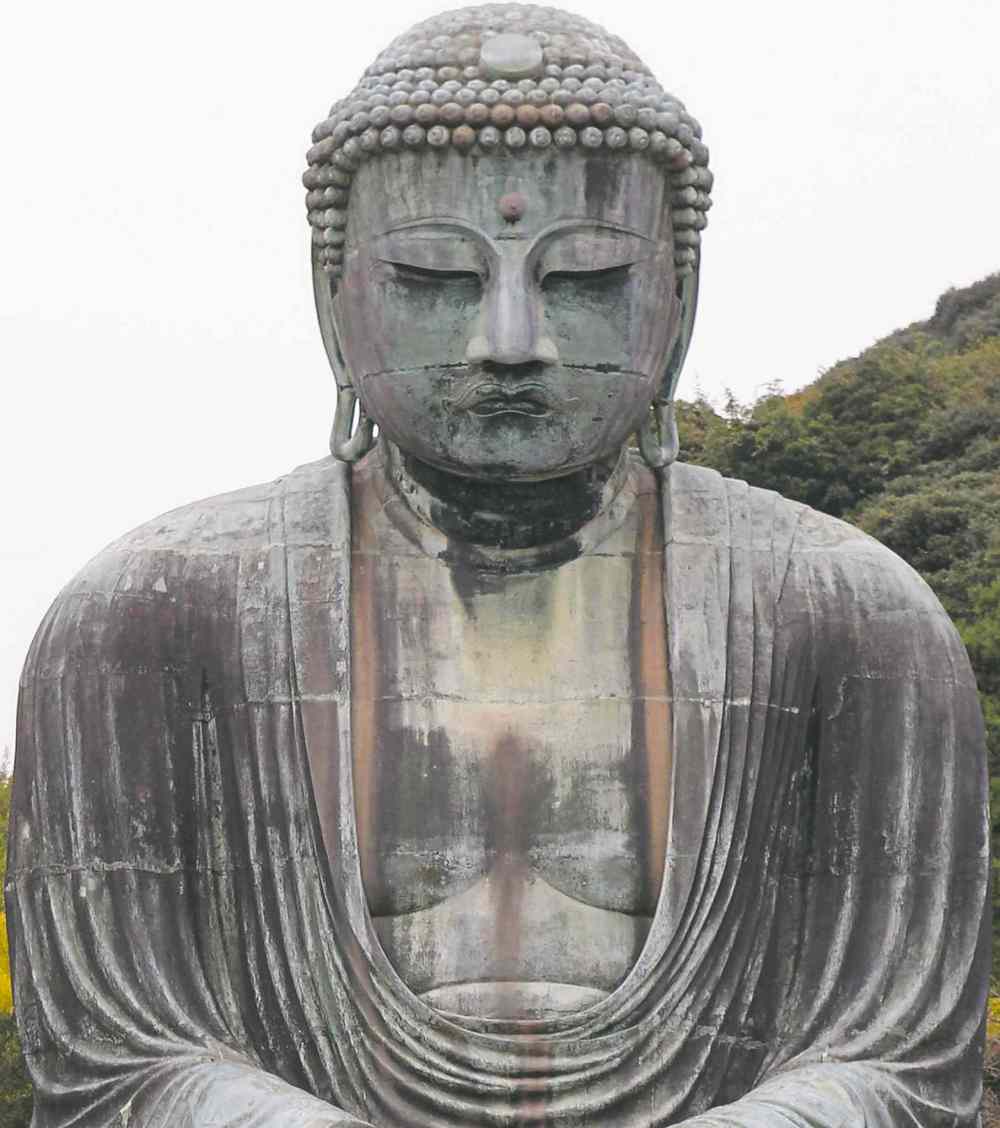
A central tenet of Buddhist thought is the ineluctability of change. Originally an obscure monastic meditative discipline, mindfulness today is part concept, part practice, part utopian social movement. Moreover, it has come to represent the Western face of Buddhism — or, as Wilson would have it, crypto-Buddhism.
It is also a major economic force, with books and seminars aimed at mindful treatment of anxiety, grief, substance abuse and even shyness. There are courses for mindful law students, investors, teachers, parents and lovers.
Mindful America‘s primary audience is scholars of religion and American culture, yet is as equally applicable in Canada, or indeed, in the generalized Western world. Wilson positions his work as a pioneering attempt to bridge a gap in scholarship centred around mindfulness. He is explicitly unconcerned with whether mindfulness as a practice actually confers the assorted benefits its proponents claim.
Despite its intended scholarly audience, this is an accessible and remarkably jargon-free study. Wilson is clearly not a reluctant writer, and his prose is clear without being reductive or dry. The readability, and thus possibility of a larger, non-academic audience, is due in large part to the fantastic organization of his argument. He makes his case clearly and forcefully, without treading into repetition.
Wilson’s central claim is that Buddhism, as a tradition, owes its continued existence to an ability to meet the needs of new cultures it encounters. It does this through both adoption and adaption. In this frame, mindfulness acts as a test case for Wilson’s thesis.
In earlier incarnations, mindfulness was a contemplative practice intended to help monks appreciate the ever-changing nature of reality and existence. This insight allows a lack of attachment to all things temporal. Mindfulness was thus strongly tied to the metaphysical concept of nirvana and cycles of birth, death and rebirth.
To find a foothold in America, mindfulness underwent a series of fascinating transformations Wilson describes with insight and acuity. First popularized in the work of a fairly small number of advocates, its religious lineage was obscured. Explicitly metaphysical connections were symbolized or re-interpreted to a form more palatable to middle-class America.
The religious associations of mindfulness were further abstracted as discussions became increasingly centred upon the benefits available from mindful practice and attitudes. Philosophical insight was exchanged for stress reduction, healthier relationships and the ability to function more efficiently in the economic marketplace. These benefits were then given neuro-scientific backing, which in turn allowed mindfulness increased penetration into areas typically unavailable to religion, such as schools and hospitals.


Framing religion as a set of solutions to problems encountered by particular cultures proves a fruitful methodological choice for Wilson. At the same time, a more extensive treatment of mindfulness and contemporary American Buddhism as religion in other guises would prove fascinating.
Wilson has done something rather remarkable: he has written a well-researched, intensively referenced work intended for scholars, which is nevertheless both interesting and accessible to non-specialists.
In accounting for the success of a particularly ancient religious tradition and its encounter with American culture, Wilson has capably demonstrated the aforementioned Buddhist insight that all things, everywhere, are in flux.
Jarett Myskiw is a Winnipeg teacher with a master’s degree from the department of religion at the University of Manitoba.
History
Updated on Saturday, August 16, 2014 8:27 AM CDT: Formatting.