Beauty in brevity: Thúy’s sophomore novel thin but thrilling
Advertisement
Read this article for free:
or
Already have an account? Log in here »
To continue reading, please subscribe:

Digital Subscription
One year of digital access for only $205*
- Enjoy unlimited reading on winnipegfreepress.com
- Read the E-Edition, our digital replica newspaper
- Access News Break, our award-winning app
- Play interactive puzzles
*First annual payment billed as $205.00 + GST for one year. This annual subscription will automatically renew at $233.00 + GST every 52 weeks (10% off the regular annual price of $259.35). Offer available to new and qualified returning subscribers only. Cancel any time.
To continue reading, please subscribe:
Add Free Press access to your Brandon Sun subscription for only an additional
$1 for the first 4 weeks*
- Enjoy unlimited reading on winnipegfreepress.com
- Read the E-Edition, our digital replica newspaper
- Access News Break, our award-winning app
- Play interactive puzzles
*Your next Brandon Sun subscription payment will increase by $1.00 and you will be charged $17.95 plus GST for four weeks. After four weeks, your payment will increase to $24.95 plus GST every four weeks.
Read unlimited articles for free today:
or
Already have an account? Log in here »
Hey there, time traveller!
This article was published 06/09/2014 (4367 days ago), so information in it may no longer be current.
Some writers speak volumes with a few well-chosen words. Canadian author Kim Thúy is such a writer.
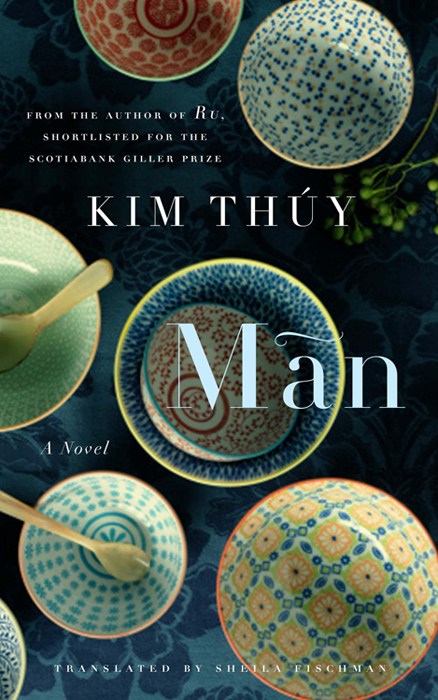
Thúy first demonstrated her extraordinary way with words with her debut novel Ru, which was shortlisted for the Giller Prize in 2012. She demonstrates that talent again with her sparse and elegant new novel, Mãn.
This recent fiction, like the author’s debut, has been translated from French into English by award-winning Montreal translator Sheila Fischman.

Like Ru, it is a semi-autobiographical tale that borrows elements from Thúy’s own history of exile and immigration. Thúy emigrated from war-torn Saigon to Montreal as a child in 1979.
Mãn — which means perfect fulfillment in Vietnamese — describes the life of a woman, also named Mãn.
Mãn is born in Vietnam, abandoned at birth, taken in by a nun, and adopted by a new “Maman.” Maman is loving and instructive, patiently teaching Mãn the culinary traditions that Vietnamese women had been passing on to their daughters for generations.
In her greatest act of love, Maman arranges for her daughter to marry an older man, a “boat person” who had fled Vietnam years before and settled in Montreal.
As Mãn notes, “Unlike other Vietnamese mothers, who counted on the loyalty and gratitude of their children, Maman wanted me to forget, to forget her because I now had a chance to start again, to go away with no baggage, to reinvent myself.”
In Montreal, Mãn relies on the ancient culinary traditions learned at Maman’s knee. They become a gateway to her new world and an anchor to her past.
As Mãn takes over the dingy kitchen in her husband’s Vietnamese restaurant, she slowly begins to blossom. She takes command of the menu, makes friends, becomes a mother, writes a cookbook, brings Maman to Canada, travels to France, and only then falls in love.
Remarkably, all of this activity is captured in a series of chapters that rarely extend beyond a single page.
Yet as succinct as they are, these chapters resonate with profound imagery and emotion. They are replete with stories of joy and disappointment, of lost wars and lost fathers, broken hearts and broken promises, of simple acts of love and simple acts of kindness.
Their one fault may be that they assume too much knowledge on the part of the reader of Vietnam’s politics and past.
But this fault hardly detracts from the beauty of the prose and the story that it tells.
That story is about how food sustains and sates the soul of a people. It is a story about the way that ingredients, carefully selected and considered, can combine to forge memory, connect family members, and cross cultures, generations and oceans.
It is a story that is ageless and universal, and exquisitely told.
Sharon Chisvin is a Winnipeg writer.
History
Updated on Saturday, September 6, 2014 7:59 AM CDT: Formatting.