

Referendum redux
Former political players speak candidly about a potential Yes vote
Advertisement
Read this article for free:
or
Already have an account? Log in here »
To continue reading, please subscribe:
Monthly Digital Subscription
$1 per week for 24 weeks*
- Enjoy unlimited reading on winnipegfreepress.com
- Read the E-Edition, our digital replica newspaper
- Access News Break, our award-winning app
- Play interactive puzzles
*Billed as $4.00 plus GST every four weeks. After 24 weeks, price increases to the regular rate of $19.95 plus GST every four weeks. Offer available to new and qualified returning subscribers only. Cancel any time.
Monthly Digital Subscription
$4.99/week*
- Enjoy unlimited reading on winnipegfreepress.com
- Read the E-Edition, our digital replica newspaper
- Access News Break, our award-winning app
- Play interactive puzzles
*Billed as $19.95 plus GST every four weeks. Cancel any time.
To continue reading, please subscribe:
Add Free Press access to your Brandon Sun subscription for only an additional
$1 for the first 4 weeks*
*Your next subscription payment will increase by $1.00 and you will be charged $16.99 plus GST for four weeks. After four weeks, your payment will increase to $23.99 plus GST every four weeks.
Read unlimited articles for free today:
or
Already have an account? Log in here »
Hey there, time traveller!
This article was published 13/09/2014 (4221 days ago), so information in it may no longer be current.
For many Canadians, making sense of Quebec’s political landscape is as likely as Greg Selinger and Brian Pallister double-dating.
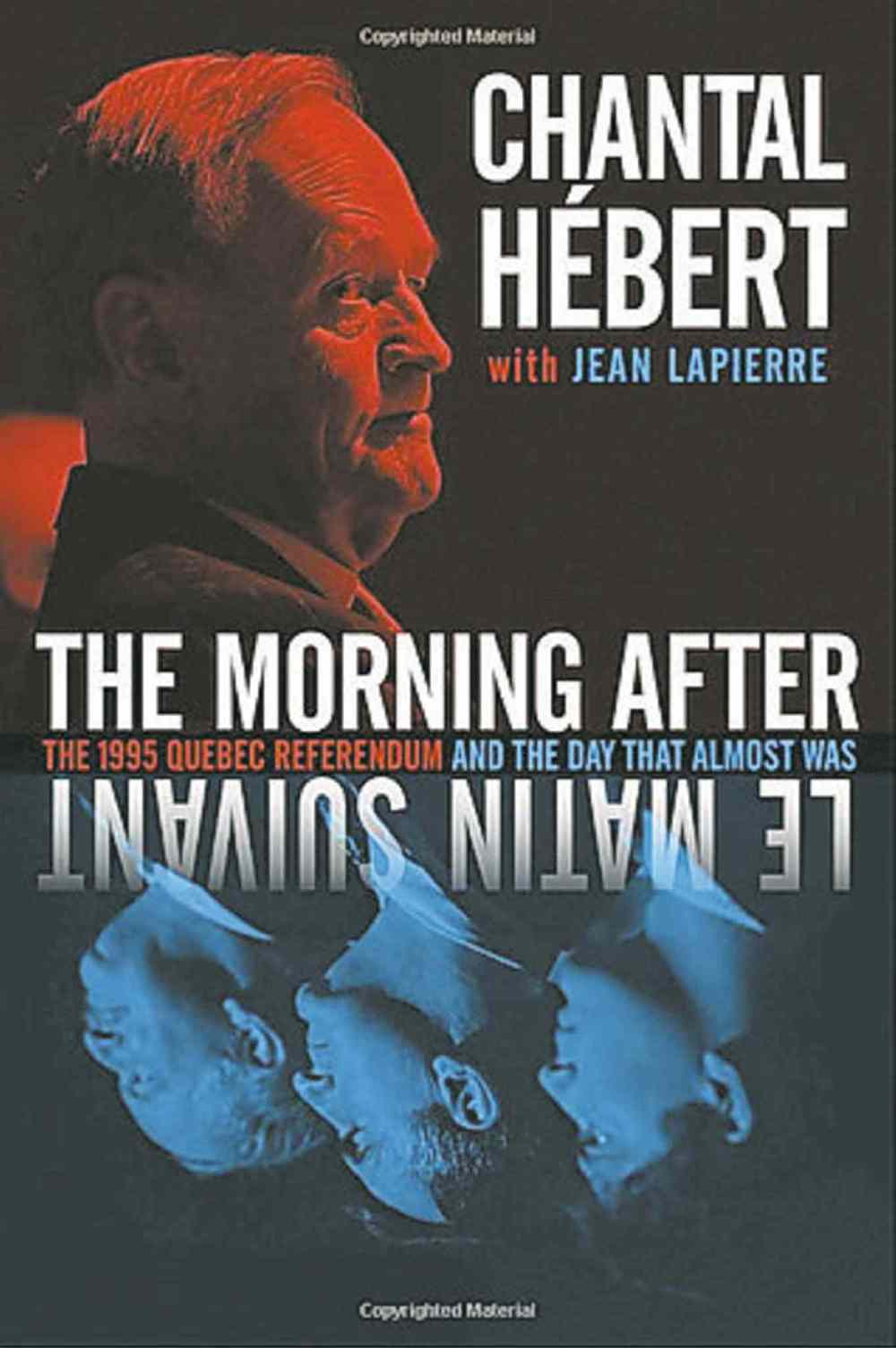
But Chantal Hébert, in her perceptive book The Morning After, tries her damndest to help us understand this beguiling place, a part of Canada some consider more a nursery of demanding offspring than a province, a nursery that nearly 20 years ago came razor-thin-close to picking up its toys and leaving home.
It is over this seminal event — the 1995 Quebec referendum — that writer Hébert, with the help of broadcaster/former Liberal MP Jean Lapierre, poses the following captivating question to 18 principal politicians who were affected by the Quebec independence vote, both for and against:
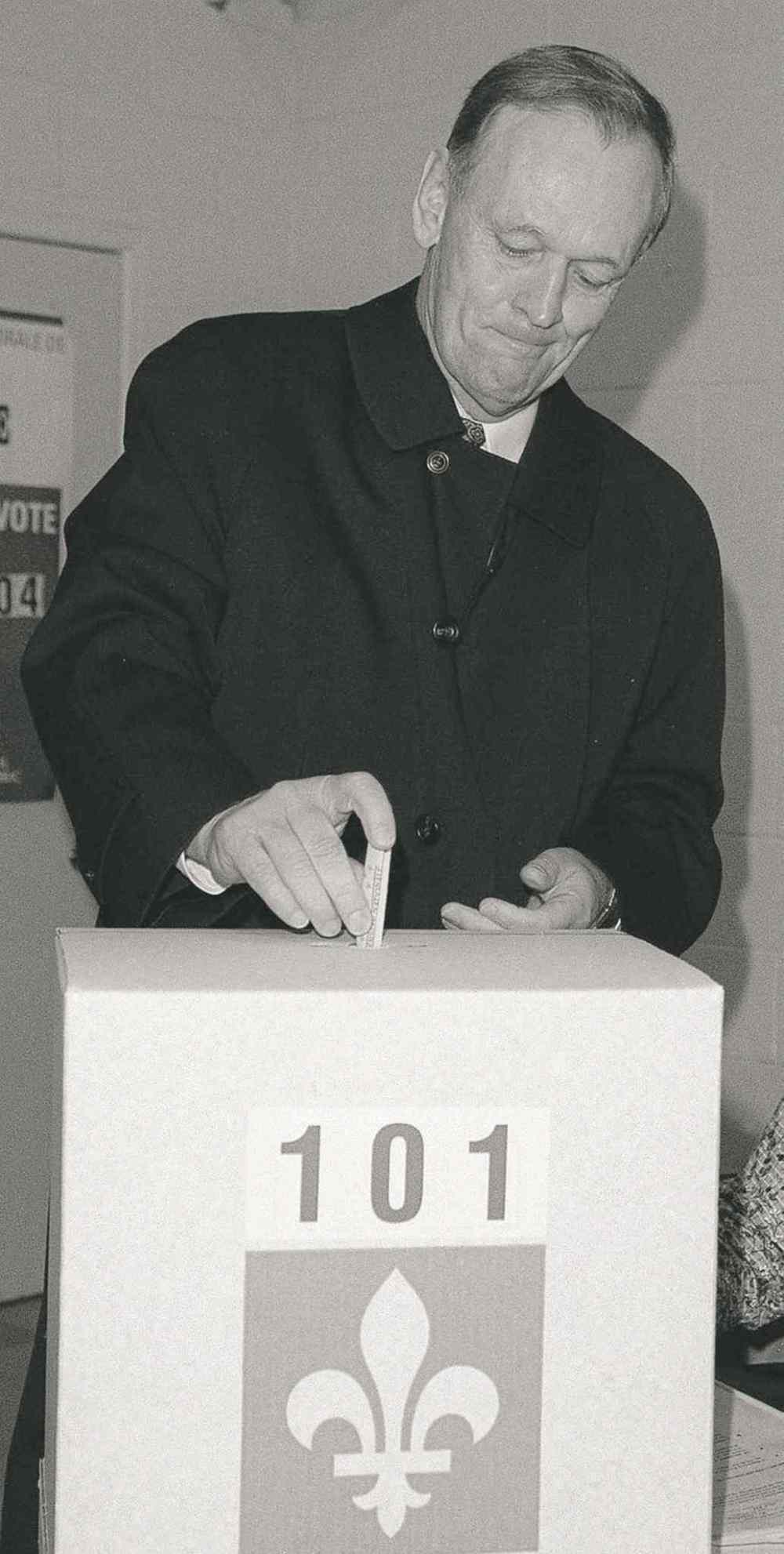
What would you have done back then if the sovereigntists had won?
While you might think that trying to answer this hypothetical would bloat most people quicker than poutine, these co-authors combine their analytical skills and political experience to paint an imaginary and plausible canvas of what-if.
Thanks to Hébert’s brush, the resulting picture is both believable and revealing, and worth much, much more than a passing look.
As a result, The Morning After probably brings us closer to understanding our country, and especially our Quebec — surely a good thing.
Hébert is a credible political observer in both print and television, Lapierre a respected political broadcaster and former Quebec politician.
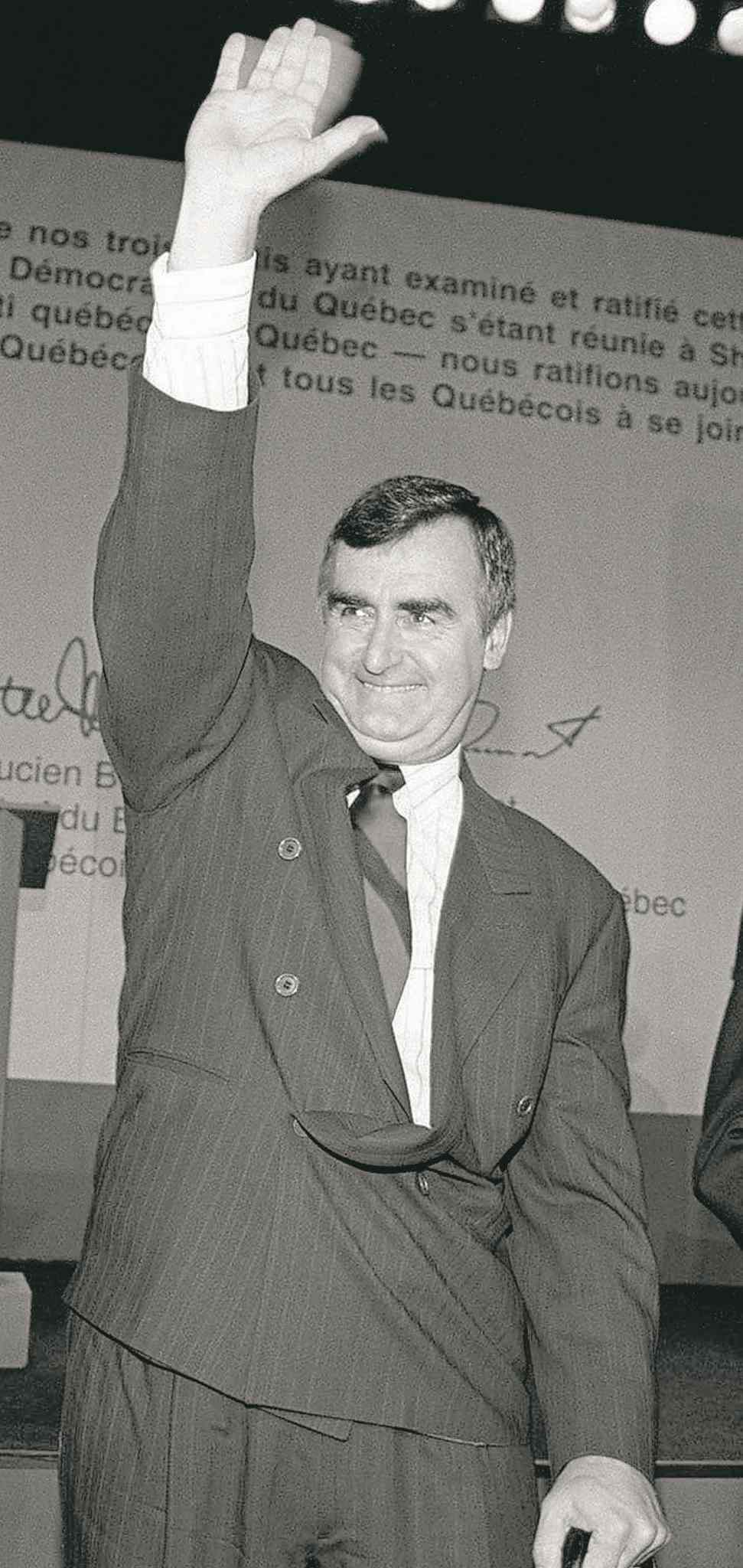
The campaign started out with the federalists ahead (and smug about it). But with the entry of the brilliant, almost-Churchillian Lucien Bouchard for the sovereigntists, the Yes side came so, so close to winning and lost by a sliver at the wire — about one per cent of the vote. The Chrétien government sighed and the PQ government cried.
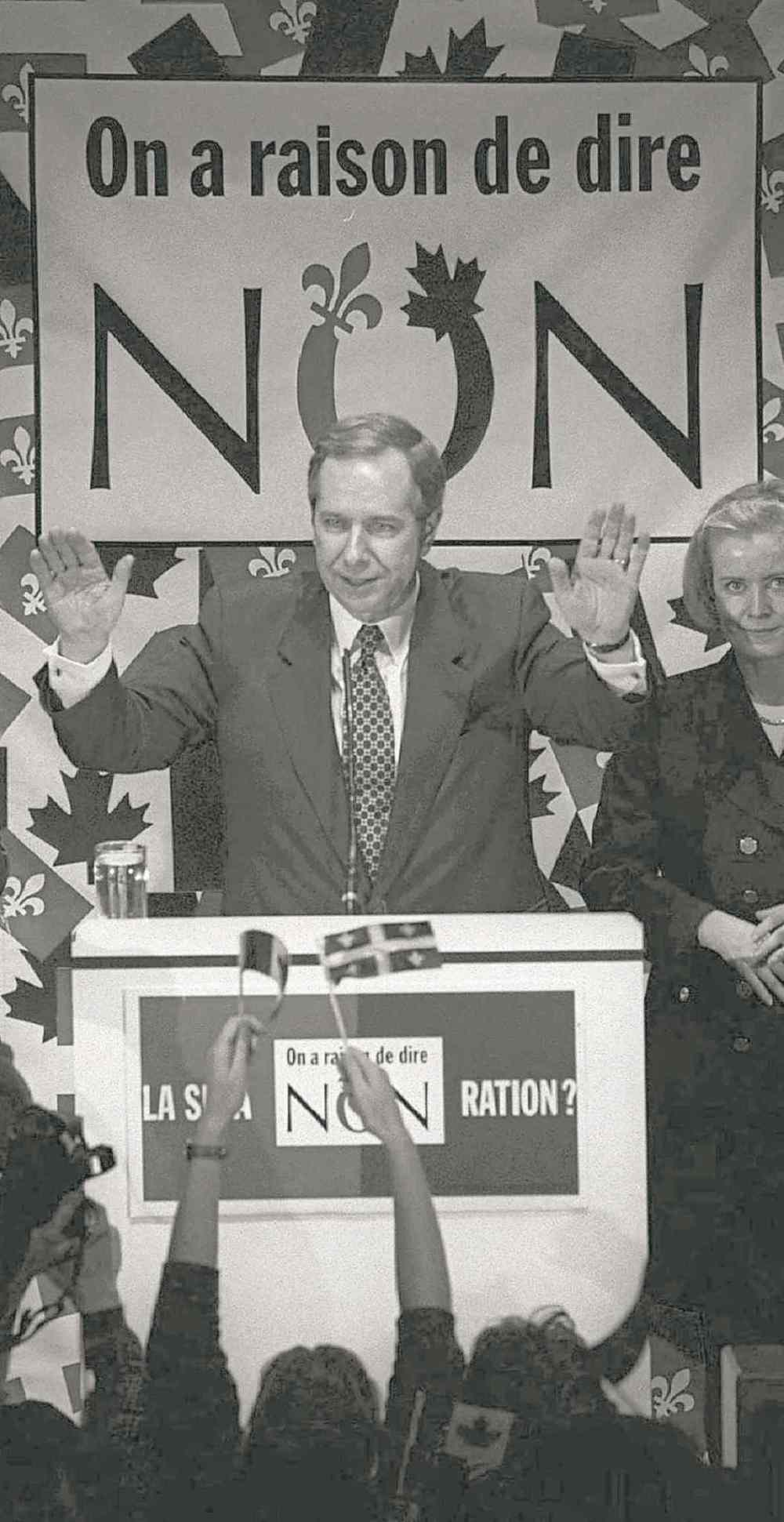
As Hébert explains, the so-thin win by the federalists in 1995 kept alive the PQ’s dream of an independent Quebec until it was put out to pasture indefinitely with the defeat of the PQ government in the April 2014 provincial election. The vote was a clear message: Quebecers don’t want another referendum right now.
Probably because they’re now out of the game, almost all of the political heavyweights interviewed by the Hébert/Lapierre duo about the ’95 vote and the lead-up to it are arresting in their candor.
Some examples:
— As then-premier of Saskatchewan, Roy Romanow reveals that before the vote he put together a super-secret group of bureaucrats to examine all scenarios if sovereigntists won — including whether Saskatchewan too should quit the country, or maybe propose a confederation of the four western provinces. Ralph Klein, the late premier of Alberta, would have nothing to do with the idea and privately told Romanow such talk was “treason.”
— Did a guy in another country help Canada stay Canada? Since the federalists at the end needed all the help they could get, then-U.S. president Bill Clinton came out and publicly and without reservation supported the existing Canadian confederation. According to then-Canadian ambassador to the U.S. Raymond Chrétien (a nephew of then-PM Jean), Clinton’s support had an influence — he was widely admired in Quebec. The inference of Chrétien’s remarks is that with the vote so agonizingly tight, it is possible a U.S. president saved Canada.
— The irrepressible Sheila Copps, then deputy prime minister, a position she says wasn’t worth two cents of influence, explains: “I wanted to fight for my country and I was told to fuck off and go away.” (The government had decreed from the start that the federal fight to save the country wouldn’t involve the rest of Canada’s MPs.)
— Brian Tobin, then a federal cabinet minister and Chrétien loyalist, describes just how potent Lucien Bouchard was in campaigning for the sovereigntist side. The No side picked a fight with the sovereigntists by describing them as “the big, bad separatists,” By contrast, Tobin says Bouchard’s message was a “pretty brilliant” common-sense and moderating argument that the average Quebecer could easily embrace.
“[Bouchard] was not saying anglophones in the rest of Canada are terrible people or bad people and we need to get away from them. What he was saying to Quebecers was that [the anglophones] are actually nice people and they must be getting tired of us because we can’t seem to make up our mind and it’s really unfair to them and it is time to have a clear answer.”
Seductive stuff that came oh, so close to winning.
Meanwhile, if you want to know what a cautious-speaking Jean Chrétien thinks today of the 1995 kerfuffle, you’ll have to buy the book.
The Morning After is the anatomy of a near-death experience for the country. It also is nirvana for political junkies.
Barry Craig came to Canada from Scotland and is forever glad he did. His birthplace votes Sept. 18 on its independence.
History
Updated on Saturday, September 13, 2014 7:28 AM CDT: Formatting.