French author Patrick Modiano wins Nobel Prize in literature
Advertisement
Read this article for free:
or
Already have an account? Log in here »
To continue reading, please subscribe:

Digital Subscription
One year of digital access for only $205*
- Enjoy unlimited reading on winnipegfreepress.com
- Read the E-Edition, our digital replica newspaper
- Access News Break, our award-winning app
- Play interactive puzzles
*First annual payment billed as $205.00 + GST for one year. This annual subscription will automatically renew at $233.00 + GST every 52 weeks (10% off the regular annual price of $259.35). Offer available to new and qualified returning subscribers only. Cancel any time.
To continue reading, please subscribe:
Add Free Press access to your Brandon Sun subscription for only an additional
$1 for the first 4 weeks*
- Enjoy unlimited reading on winnipegfreepress.com
- Read the E-Edition, our digital replica newspaper
- Access News Break, our award-winning app
- Play interactive puzzles
*Your next Brandon Sun subscription payment will increase by $1.00 and you will be charged $17.95 plus GST for four weeks. After four weeks, your payment will increase to $24.95 plus GST every four weeks.
Read unlimited articles for free today:
or
Already have an account? Log in here »
Hey there, time traveller!
This article was published 10/10/2014 (4375 days ago), so information in it may no longer be current.
STOCKHOLM, Sweden — Patrick Modiano of France, who has made a lifelong study of the Nazi occupation and its effects on his country, won the 2014 Nobel Prize in literature Thursday for what one academic called “crystal clear” prose.
Modiano, a 69-year-old resident of Paris, is an acclaimed writer in France but not well known in the English-speaking world. The Swedish Academy said it gave him the eight-million kronor ($1.1- million) prize for evoking “the most ungraspable human destinies” and uncovering the humanity of life under Nazi occupation.
Jewishness, the Nazi occupation and loss of identity are recurrent themes in his novels, which include 1968’s La Place de l’Etoile — later hailed in Germany as a key post-Holocaust work.
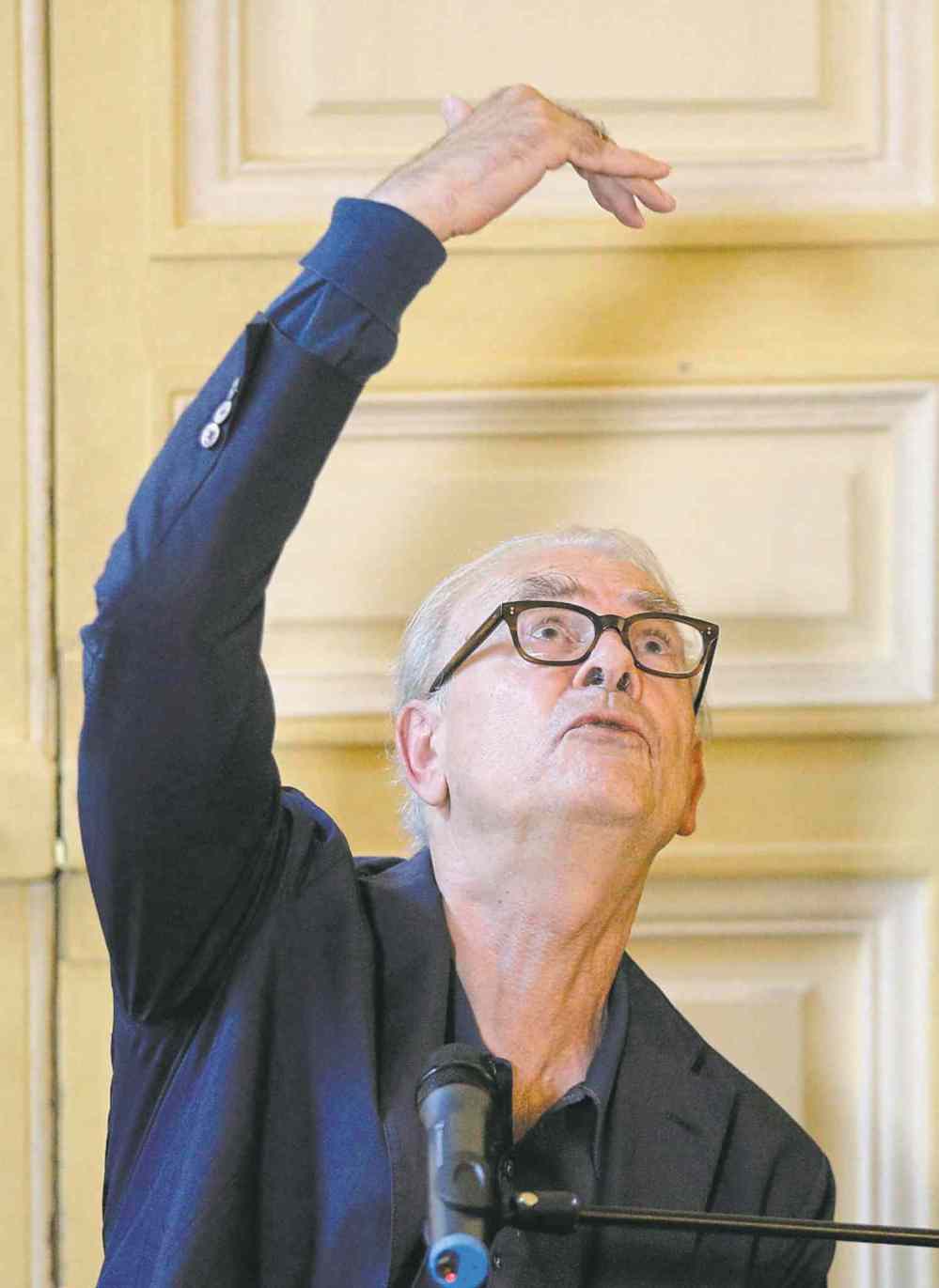
Modiano’s novel Missing Person won the prestigious Prix Goncourt in 1978 and is among the more than 40 of his works published in French. Some have been translated into English, including Ring of Roads: A Novel, Villa Triste, A Trace of Malice and Honeymoon.
Dervila Cooke of Dublin City University, author of a book about Modiano, said his works deal with the traumas of France’s past but have a “darkly humorous touch.”
“His prose is crystal clear and resonant,” she said. “A common description of his work is of its ‘petite musique’ — its haunting little music.”
Modiano was born in a west Paris suburb in July 1945, two months after the Second World War ended in Europe, to a father with Jewish-Italian origins and a Belgian actress mother who met during the 1940-44 occupation of Paris.
He has also written children’s books and film scripts, including co-writing the 1974 movie Lacombe, Lucien with director Louis Malle. He was a member of the jury at the Cannes Film Festival in 2000.
Peter Englund, the permanent secretary of the Swedish Academy, said Modiano’s works often explore the themes of time, memory and identity.
“He is returning to the same topics again and again simply because these topics, you can’t exhaust them,” Englund told journalists in Stockholm. “You can’t give a definite answer to: Why did I turn into the person I am today? What happened to me? How will I break out of the weight of time? How can I reach back into past times?”

Englund, who wasn’t able to reach Modiano before the announcement, said the French writer also liked to play with the detective genre. In Missing Person, he wrote about a private detective launching his last investigation — finding out who he is because he has lost his memory.
“I’ve always had the wish, the nostalgia to be able to write detective novels,” Modiano said in a rare interview last week in Telerama magazine. “At heart, the principal themes of detective novels are close to the things that obsess me: disappearance, the problems of identity, amnesia, the return to an enigmatic past.”
French President François Hollande congratulated Modiano, the 15th French citizen to win the Nobel for literature, saying he “takes his readers right to the deep trouble of the occupation’s dark period. And he tries to understand how the events lead individuals to lose as well as find themselves.”
The awards will be presented on Dec. 10, the anniversary of prize founder Alfred Nobel’s death in 1896.
— The Associated Press