

Deal between dictators sealed the fate of millions
Advertisement
Read this article for free:
or
Already have an account? Log in here »
To continue reading, please subscribe:
Monthly Digital Subscription
$1 per week for 24 weeks*
- Enjoy unlimited reading on winnipegfreepress.com
- Read the E-Edition, our digital replica newspaper
- Access News Break, our award-winning app
- Play interactive puzzles
*Billed as $4.00 plus GST every four weeks. After 24 weeks, price increases to the regular rate of $19.95 plus GST every four weeks. Offer available to new and qualified returning subscribers only. Cancel any time.
Monthly Digital Subscription
$4.99/week*
- Enjoy unlimited reading on winnipegfreepress.com
- Read the E-Edition, our digital replica newspaper
- Access News Break, our award-winning app
- Play interactive puzzles
*Billed as $19.95 plus GST every four weeks. Cancel any time.
To continue reading, please subscribe:
Add Free Press access to your Brandon Sun subscription for only an additional
$1 for the first 4 weeks*
*Your next subscription payment will increase by $1.00 and you will be charged $16.99 plus GST for four weeks. After four weeks, your payment will increase to $23.99 plus GST every four weeks.
Read unlimited articles for free today:
or
Already have an account? Log in here »
Hey there, time traveller!
This article was published 29/11/2014 (4160 days ago), so information in it may no longer be current.
Aug. 4 of this year marked the beginning of the first global conflict a century ago and made Remembrance Day especially poignant.
But another notable anniversary passed by in August, with only cursory acknowledgment by Canada’s media.
Now an English historian and award-winning author specializing in modern German history, including 2007’s Killing Hitler and 2011’s Berlin at War, shines a light on the 75th anniversary of the pact between Adolf Hitler and Joseph Stalin, revealing why a resolution passed by the European Parliament in Brussels in 2009 now officially recognizes Aug. 23 as the European Day of Remembrance For Victims of Stalinism and Nazism.
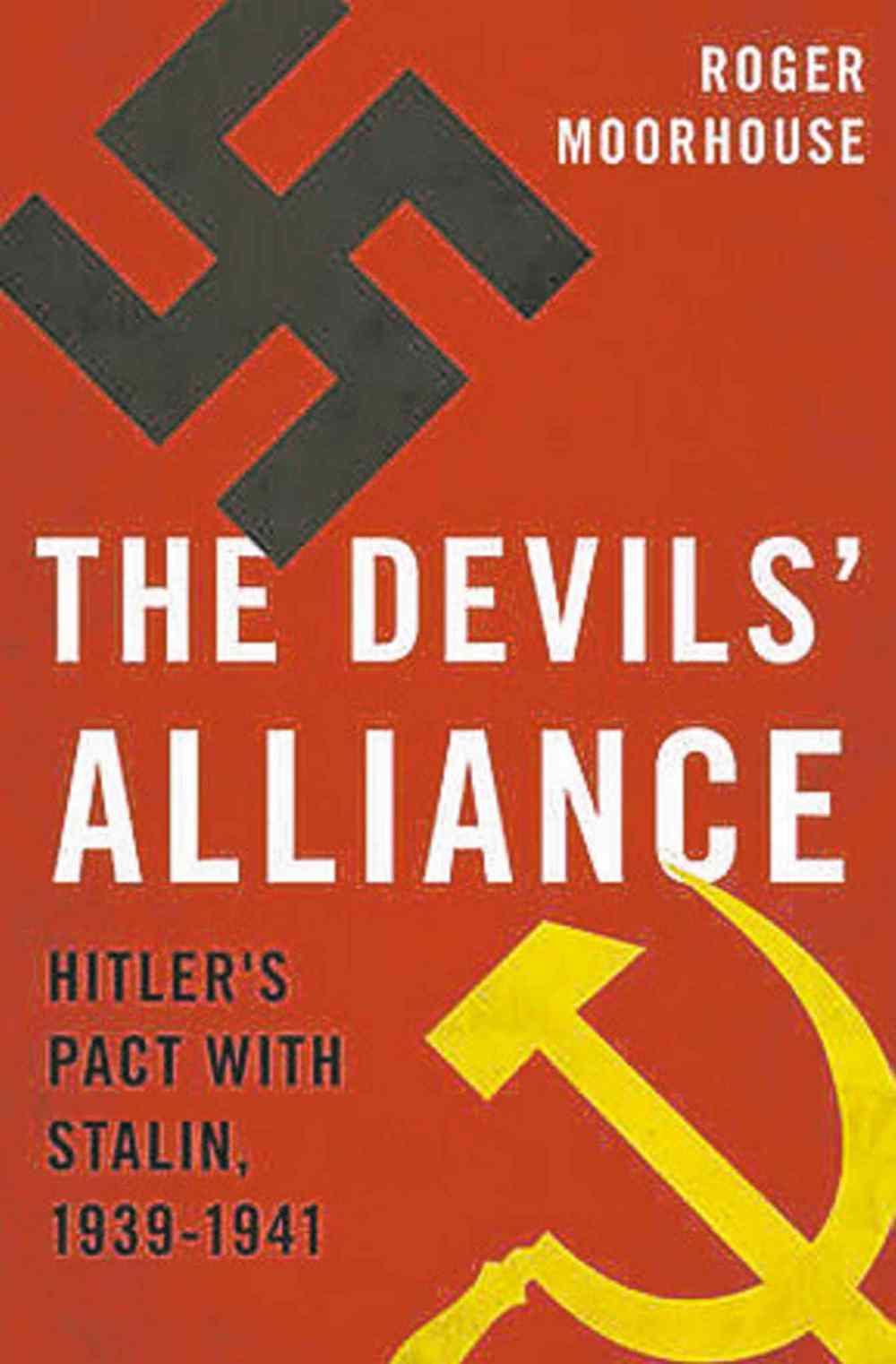
For Europeans whose kin were among the first casualties of the unexpected but strategic power play by two sworn enemies, that August day has the same significance as Remembrance Day does for us.
The Molotov-Ribbentrop non-aggression pact of Aug. 23, 1939, between the Soviet Union and Nazi Germany, named after the Soviet and German foreign ministers, respectively, stunned the world when it was signed a mere week before Hitler launched his vaunted Blitzkreig into Poland on Sept. 1, 1939 and ushered in the Second World War.
While the Second World War has been scrupulously documented, analyzed and liberally interpreted, Moorhouse’s knack for combining scholarly and comprehensive research with first-hand and eyewitness testimony creates an engaging, informative, and lucid polemic that adds to the canon.
In The Devils’ Alliance, Europe’s two most powerful dictators are portrayed as emperors without clothes as Moorhouse takes readers into their respective confines, revealing the mutual distrust and animosity that explains why their historic pact was signed without a face-to-face meeting.
The book’s title likely comes from a quote Moorhouse attributes to a high-ranking member of Britain’s Communist party, who — like other flabbergasted Communists in 1939 — commented that defending communism sometimes made it necessary to “make an alliance with the devil himself.”
There is evidence similar sentiments were held by high-level German and Soviet officials even while diplomatic exchanges led to commercial agreements in 1939 and 1940 that “tied the economies of Nazi Germany and the U.S.S.R. closely together.”
Commercial undertakings were generally an exchange of raw materials and foodstuffs for technological and military hardware. The Soviet Union, for example, committed “to supply one million tons of feed grains, 900,000 tons of petroleum, 800,000 tons of scrap and pig iron,” while Germany’s obligations included fighter and bomber aircraft, helicopters and even sundries such as submarine periscopes and spark plugs.
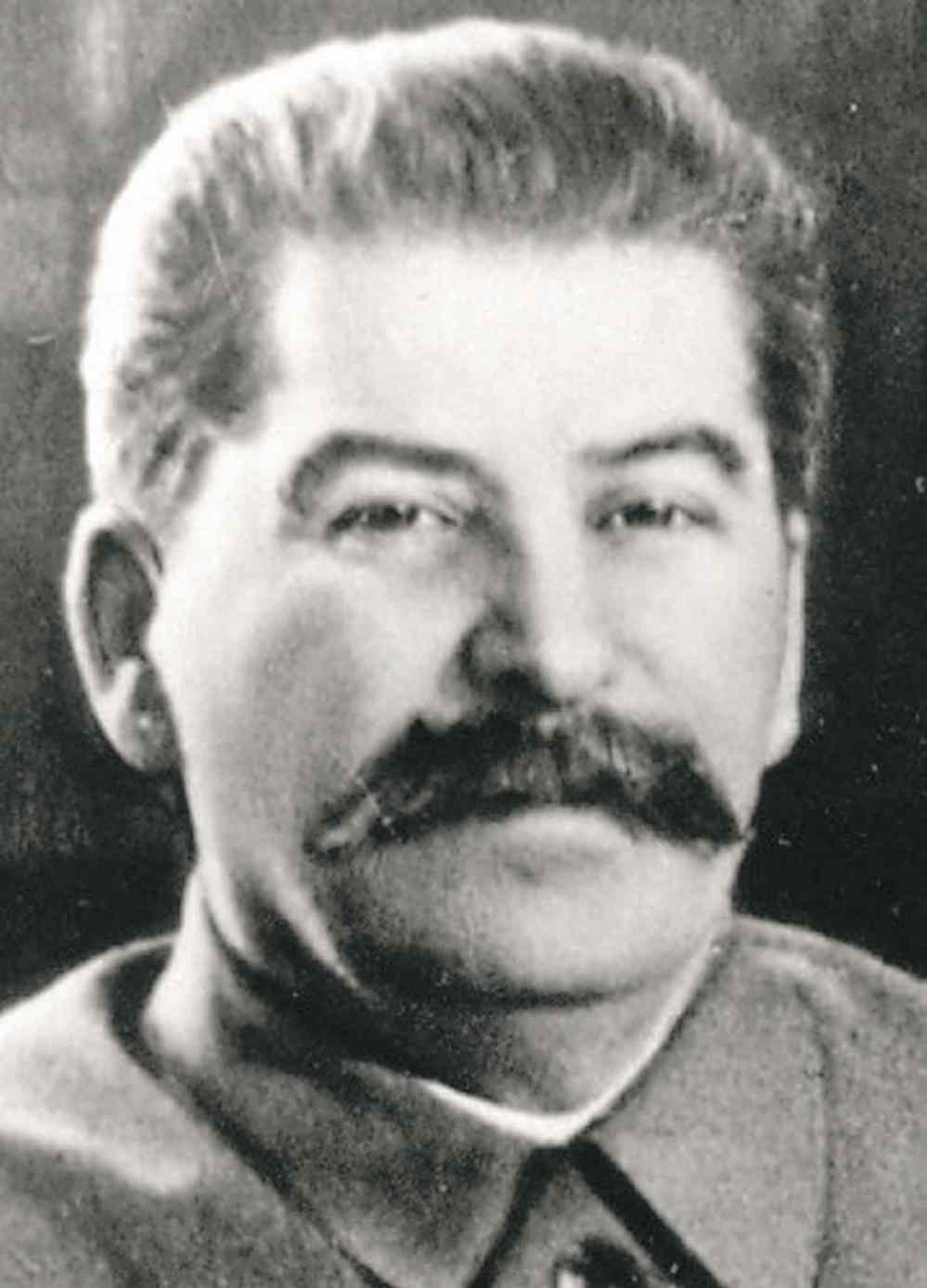
While these trade agreements hardly impacted Germany’s early military success against France and Britain, once Hitler broke the pact by unleashing Operation Barbarossa on the Soviet Union on June 22, 1941, Moorhouse states, “Germany was effectively reliant on supplies from the Soviet Union.” Ironically, as their armies first clashed, food products from Stalin’s collective farmers “were keeping Hitler’s people fed.”
Of even greater significance was a secret protocol accompanying the non-aggression pact that facilitated Soviet and Nazi sharing of Polish territory in 1939, and which by 1941 had divided much of Europe between the two dictators.
This side agreement allowed Stalin to seize eastern Poland, Byelorussia and the Baltic republics — a price Hitler agreed to pay “to secure his rear while he turned west to fight the British and the French.”
A chapter titled Sharing the Spoils discloses the ideologically-opposite but brutally-similar effects of the pact upon people in occupied countries. Moorhouse contends Hitler’s plan for a racially pure Thousand-Year Reich and Stalin’s goal of a “workers’ paradise” together affected more than 75 million people.
Even though the Holocaust didn’t get underway until after the German invasion of the U.S.S.R., Moorhouse acknowledges that Poles and Jews in German-occupied western Poland were immediately subjected to expropriation, deportation, and execution.
Similarly, huge numbers of people from eastern Poland and the Baltic States, deemed anti-Bolshevik, “suffered persecution, torture and death at Soviet hands,” with hundreds of thousands sent to Siberian gulags.
Although attempting to compare any positive aspects of Stalin’s and Hitler’s legacy would be a fool’s errand, Moorhouse is remiss in not recognizing how Soviet armies eventually rescued millions of Europeans from Hitler’s gas chambers.
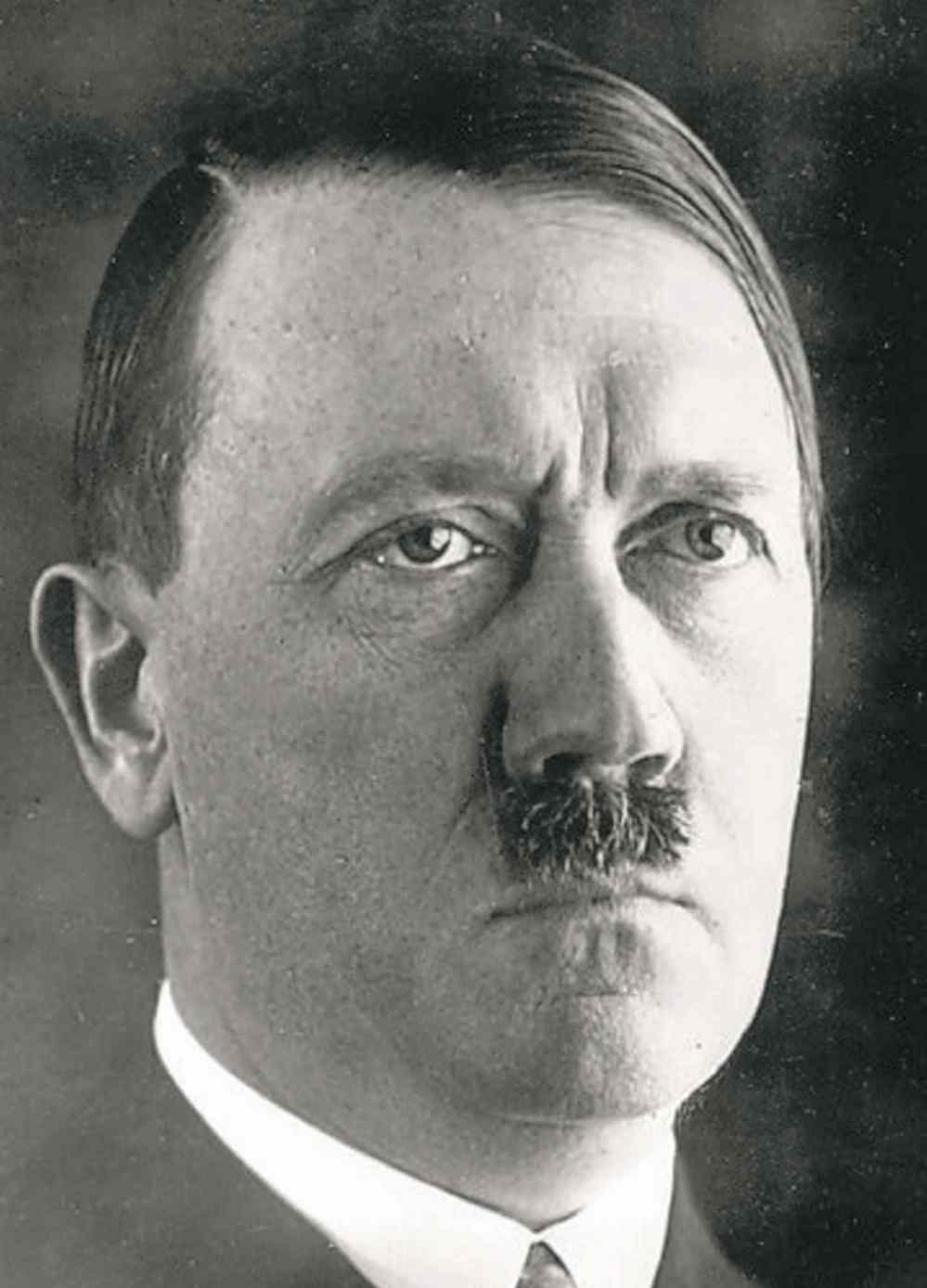
He calls it “frankly scandalous” that Hitler’s crimes are well-known and well-documented, while Stalin’s crimes “scarcely penetrate the public consciousness,” but curiously downplays the collapse of Stalin’s heroic stature that first began decades ago.
Apart from such occasional biases, this engaging study of realpolitik gone berserk reminds us that dictators are real, and that benevolent dictators are only found in fairy tales.
Joseph Hnatiuk is a retired teacher in Winnipeg.
History
Updated on Saturday, November 29, 2014 8:20 AM CST: Formatting.