

Hard lessons to be learned from the war in Afghanistan
Advertisement
Read this article for free:
or
Already have an account? Log in here »
To continue reading, please subscribe:
Monthly Digital Subscription
$1 per week for 24 weeks*
- Enjoy unlimited reading on winnipegfreepress.com
- Read the E-Edition, our digital replica newspaper
- Access News Break, our award-winning app
- Play interactive puzzles
*Billed as $4.00 plus GST every four weeks. After 24 weeks, price increases to the regular rate of $19.95 plus GST every four weeks. Offer available to new and qualified returning subscribers only. Cancel any time.
Monthly Digital Subscription
$4.99/week*
- Enjoy unlimited reading on winnipegfreepress.com
- Read the E-Edition, our digital replica newspaper
- Access News Break, our award-winning app
- Play interactive puzzles
*Billed as $19.95 plus GST every four weeks. Cancel any time.
To continue reading, please subscribe:
Add Free Press access to your Brandon Sun subscription for only an additional
$1 for the first 4 weeks*
*Your next subscription payment will increase by $1.00 and you will be charged $16.99 plus GST for four weeks. After four weeks, your payment will increase to $23.99 plus GST every four weeks.
Read unlimited articles for free today:
or
Already have an account? Log in here »
Hey there, time traveller!
This article was published 13/12/2014 (4140 days ago), so information in it may no longer be current.
As the war in Afghanistan winds down, Canada now finds itself in a new war in Iraq. And there are some timely lessons to be learned from Middle East editor and Bloomberg News correspondent Jack Fairweather’s well-told history of the Afghanistan war.
Thirteen years of intervention by Canadian troops and their NATO allies has resulted in the revival of basic state institutions devastated by the anti-Soviet war and later Taliban rule, including access to basic health care and education for over one-third of Afghan girls.
In the recent presidential election, over nine million Afghans voted, including more than three million women in defiance of Taliban death threats.
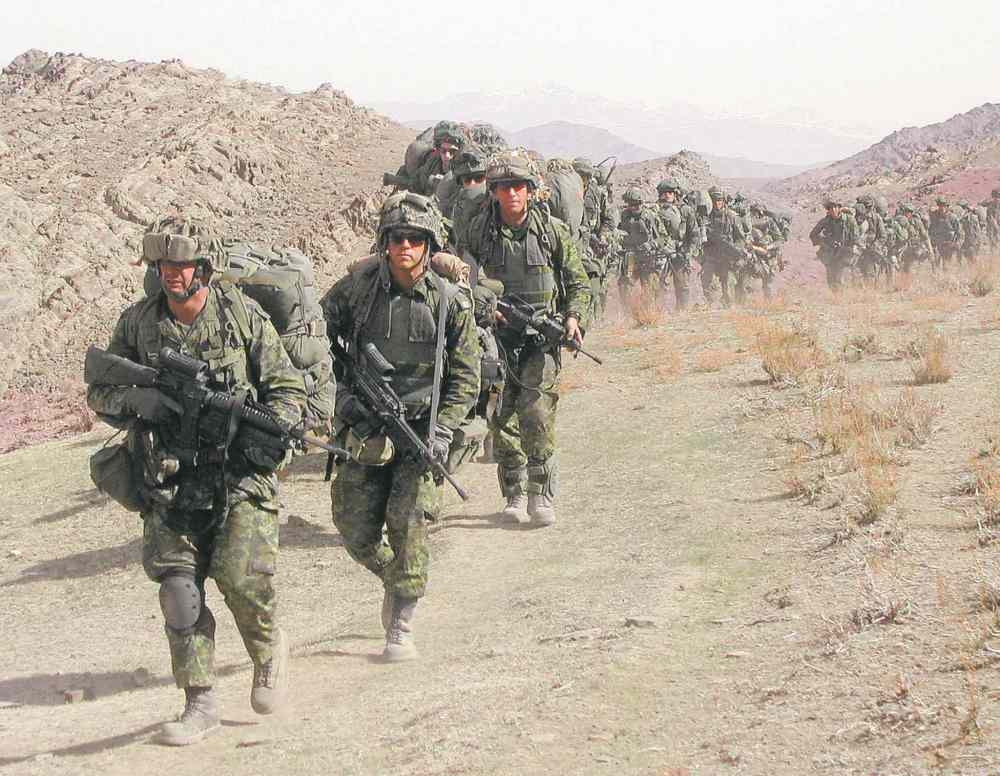
However, Fairweather believes that these successes, achieved at the cost of over 30,000 NATO and Afghan lives, may be fleeting. He doubts they can be sustained, as they depend on an Afghan government propped up with foreign money and without the widespread credibility to enforce law and order.
The war in Afghanistan became known as “the Good War” because, unlike the invasion of Iraq, the U.S. and its allies invaded Afghanistan to punish al-Qaida, the perpetrators of 9/11, who were being sheltered by the Taliban government.
Within the last three months of 2001, the Americans and their Afghan allies defeated the Taliban and drove the remnants of al-Qaida into Pakistan.
That swift victory brought on a fit of hubris. The limited campaign to defeat al Qaeda morphed into a great humanitarian movement to turn Afghanistan into a liberal democracy, guaranteeing equal rights for all.
Fairweather makes the case that the Western world’s problems in Afghanistan were rooted in ignorance, plain and simple.
NATO, including the U.S., failed to distinguish between the Taliban and al-Qaida. Al-Qaida’s purpose was global jihad — to advance their fundamentalist interpretation of Islam — while the Taliban wanted only to control Afghanistan. Their beliefs were no more than an extreme version of the conservative beliefs of many Afghanis.
Afghanistan has no history of strong central government; for the country to work, it would need to be through a patchwork of deals and accommodations among rival tribes and clans. For this, Western politicians had neither the time nor the patience.
Americans in particular, either because of ignorance or cynicism, refused to recognize Pakistan’s duplicitous role. Because of its fear of India, Pakistan was determined to control Afghanistan, and actively supported the Taliban.
NATO forces eventually came to appear as just another army of of occupation to be resisted. The killing of civilians, destruction of poppy fields and disdain for the advice of local leaders ended up creating more and more insurgents.
Even when it should have become apparent that Afghanistan was becoming a morass, Western politicians became trapped in what economists call the sunk-cost fallacy — the greater the costs and casualties, the harder it became to admit they were wrong.
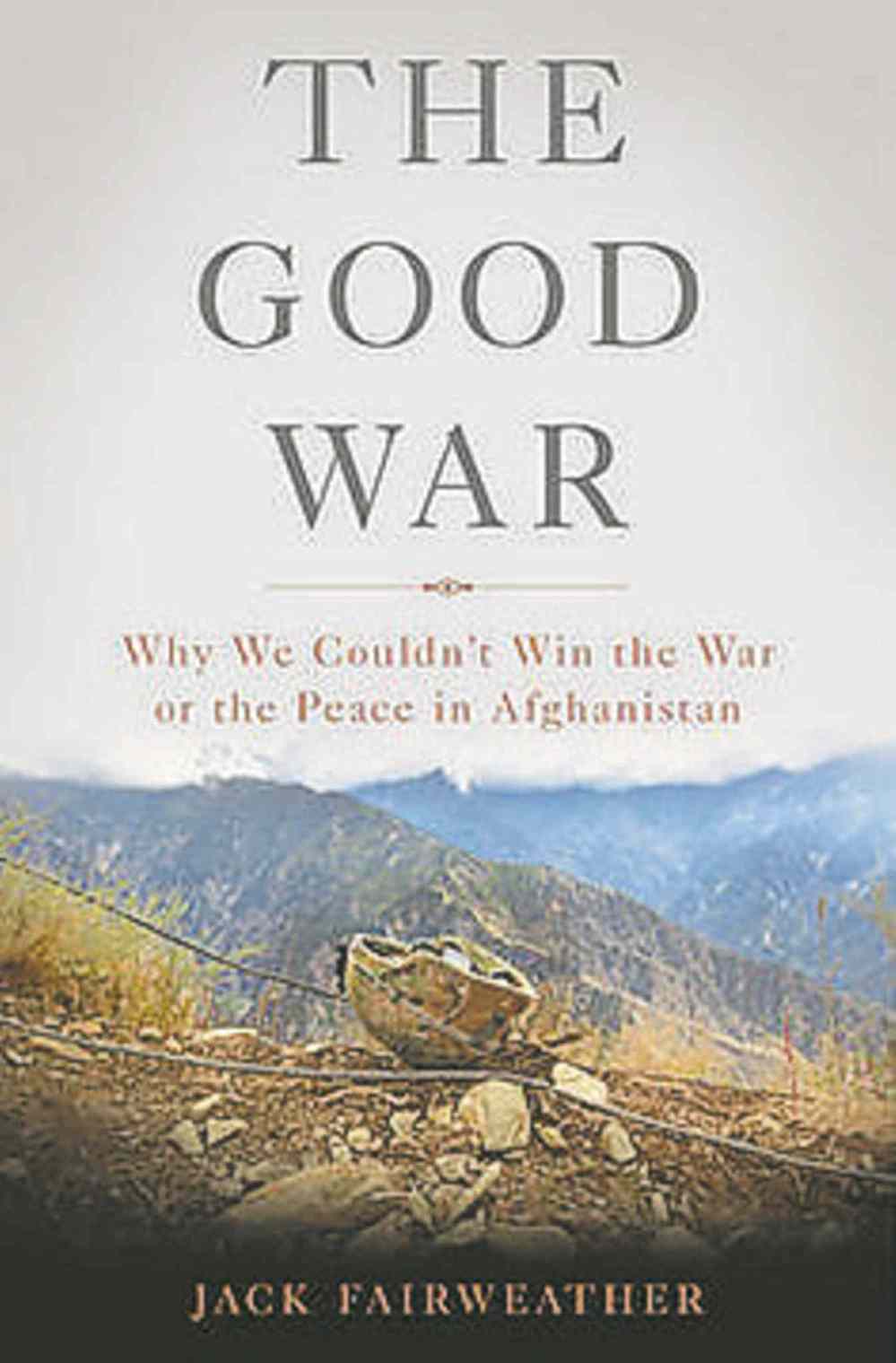
While the book mostly deals with American and British events, Canada’s efforts are not ignored. Ambassador Chris Alexander is “one of a handful of diplomats who truly believed in the decency of the Afghan people, the moral mission of the United Nations and the West’s ability to help this suffering nation.”
The battle of Panjwai is also detailed, where the courage of Canadian soldiers overcame inept leadership and American friendly fire.
Fairweather introduces us to a cast of fascinating characters, including “pugnacious” Canadian Col. Ian Hope, U.S. Gen. David Petraeus, former Afghan president Hamid Karzai and his successor, Ashraf Ghani.
Fairweather ends by quoting Robert McNamara: “We viewed the people and leaders of South Vietnam in terms of our own experience. We do not have the God-given right to shape every nation in our own image.”
Obviously, we are very slow learners.
John K. Collins fears that we are doomed to repeat the past, again and again.
History
Updated on Saturday, December 13, 2014 8:35 AM CST: Formatting.