

Demise of ‘Original Six’ NHL a fundamental game-changer
Advertisement
Read this article for free:
or
Already have an account? Log in here »
To continue reading, please subscribe:
Digital Subscription
One year of digital access for only $1.44 a week*
- Enjoy unlimited reading on winnipegfreepress.com
- Read the E-Edition, our digital replica newspaper
- Access News Break, our award-winning app
- Play interactive puzzles
*Billed as $5.77 plus GST every four weeks. After 52 weeks, price increases to the regular rate of $19.95 plus GST every four weeks. Offer available to new and qualified returning subscribers only. Cancel any time.
To continue reading, please subscribe:
Add Free Press access to your Brandon Sun subscription for only an additional
$1 for the first 4 weeks*
- Enjoy unlimited reading on winnipegfreepress.com
- Read the E-Edition, our digital replica newspaper
- Access News Break, our award-winning app
- Play interactive puzzles
*Your next Brandon Sun subscription payment will increase by $1.00 and you will be charged $17.95 plus GST for four weeks. After four weeks, your payment will increase to $24.95 plus GST every four weeks.
Read unlimited articles for free today:
or
Already have an account? Log in here »
Hey there, time traveller!
This article was published 20/12/2014 (4186 days ago), so information in it may no longer be current.
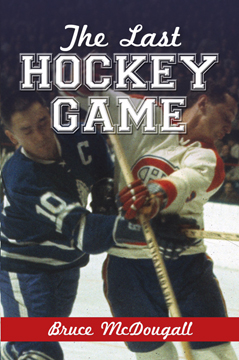
Bruce McDougall’s The Last Hockey Game begins from the narrowest premise: a detailed written description of the on-ice action, shift by shift and period by period, of Game 6 (the final game) of the Stanley Cup finals between the Toronto Maple Leafs and the Montreal Canadiens on May 2, 1967.
It would be the last game played when the NHL was comprised of the “Original Six” teams — the league doubled in size the following season.
McDougall literally writes out a play-by-play narration of the entire game from the first puck drop: “With stickblades flicking like lizards’ tongues at a bug, Ralph Backstrom and Pete Stemkowski stabbed at the falling puck… The game was on.”
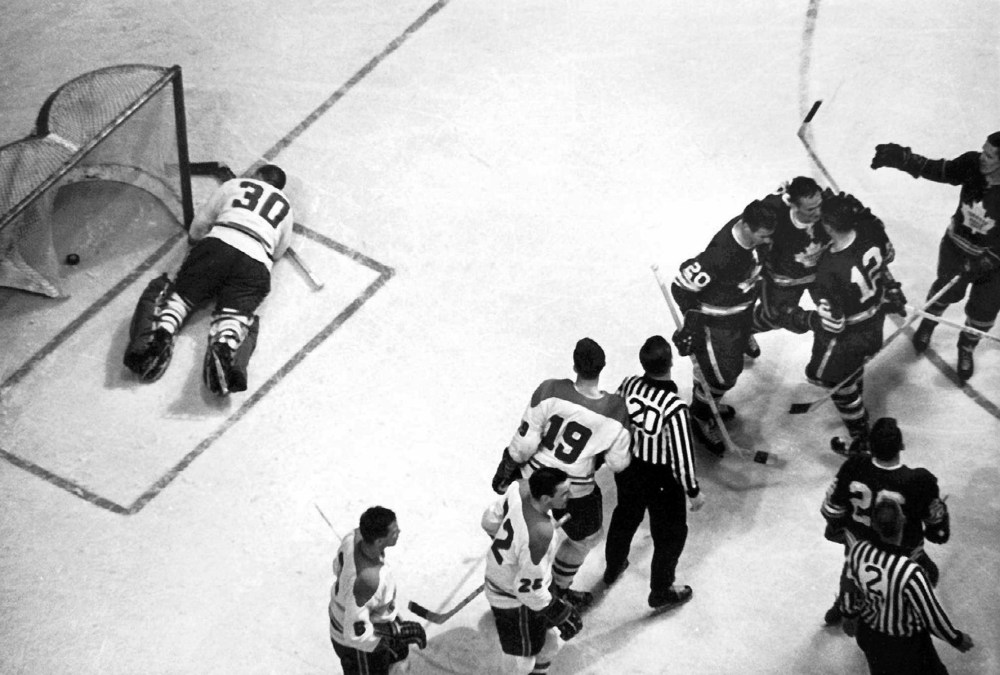
There is no mystery in the result. The Leafs, heavy underdogs and a team called too old and too slow, won the game 3-1, giving Toronto its last Stanley Cup victory.
For McDougall, this would be “the last hockey game” for myriad reasons, and he skilfully pulls back the focus from a potentially boring play-by-play description to examine the fundamental changes to the game of hockey over time in the context of a century of professional hockey history in Canada. His anecdotes, stories and clearly enunciated insights and analysis put The Last Hockey Game right up there on the shelf with Ken Dryden’s The Game.
It’s easy to underestimate how much the game has changed since that 1967 contest. This series wasn’t just the curtain call for the Original Six; it took place just before the successful formation of the NHL Players Association, which would emancipate hockey players from serfdom.
Five years later, the Russian national hockey team shocked North American fans with a game-changing performance in the 1972 Summit Series. That same year, play began in the rebel World Hockey Association, with 67 players jumping from the NHL, led by Bobby Hull and his multimillion-dollar contract.
The WHA would be “the fundamental catalyst for the financial bonanza” that would finally flow to the group that McDougall believes to be most deserving — the men who played the game. But he’s also sanguine about the changes on hockey wrought by this enormous bounty: In the decades after the 1967 playoffs “no one would believe that professional hockey players played for any other reason than money, whether they did or not.”
The book contains streams of interesting factoids and insights. Of the 40 players who dressed for Game 6, for example, 10 Leafs and nine Canadiens would play more than 1,000 NHL games, but only four would remain with the same team for their entire careers. Leafs star Frank Mahovlich earned $18,000 that season, and was maligned by coach George (Punch) Imlach for being lazy.
Henri Richard joined the Canadiens in 1955 and won five Stanley Cups in a row. “I went six seasons,” he said, “before I found out that you didn’t automatically get the Stanley Cup every year.”
McDougall is critical of the hockey business — both the NHL for careless guardianship of a national treasure, and generations of ruthless team owners and management for their rapacious treatment of players and fans alike.
He adds his denunciation of the role of fighting in hockey, backing it up with quotes from the likes of Ken Dryden, who in 1972 said “Fighting degrades the sport, turning it into a dubious spectacle and confining it to the fringes of sports respectability.”
It’s apparent that Conn Smythe’s dictum from the 1940s — “if you can’t beat ’em in the alley, you can’t beat ’em on the ice” — continues to rule the game to this day, but much else has changed. McDougall describes a scene in the Leafs’ dressing room during the first intermission of the 1967 game, where Bob Baun, Marcel Pronovost and George Armstrong visit Bob Pulford in the washroom to share a cigarette.
While The Last Hockey Game will be of more immediate interest to hockey fans old enough to have been following hockey since 1966-67, the book will broaden the perspective of any fan who reads it. The ultimate question of whether the game is better now than it was in 1967 is not answered.
But there can be no question after reading this excellent addition to hockey’s literary canon that our game isn’t now and will never be the same as it was then.
Jim Millican was CEO of the Manitoba Moose from 1996 to 1998 and a member of the planning and construction group behind the MTS Centre.
History
Updated on Saturday, December 20, 2014 8:08 AM CST: Formatting.