Cleese’s biography tedious, unfunny
Advertisement
Read this article for free:
or
Already have an account? Log in here »
To continue reading, please subscribe:

Digital Subscription
One year of digital access for only $205*
- Enjoy unlimited reading on winnipegfreepress.com
- Read the E-Edition, our digital replica newspaper
- Access News Break, our award-winning app
- Play interactive puzzles
*First annual payment billed as $205.00 + GST for one year. This annual subscription will automatically renew at $233.00 + GST every 52 weeks (10% off the regular annual price of $259.35). Offer available to new and qualified returning subscribers only. Cancel any time.
To continue reading, please subscribe:
Add Free Press access to your Brandon Sun subscription for only an additional
$1 for the first 4 weeks*
- Enjoy unlimited reading on winnipegfreepress.com
- Read the E-Edition, our digital replica newspaper
- Access News Break, our award-winning app
- Play interactive puzzles
*Your next Brandon Sun subscription payment will increase by $1.00 and you will be charged $17.95 plus GST for four weeks. After four weeks, your payment will increase to $24.95 plus GST every four weeks.
Read unlimited articles for free today:
or
Already have an account? Log in here »
Hey there, time traveller!
This article was published 03/01/2015 (4249 days ago), so information in it may no longer be current.
For a man whose timing is impeccable, it surely seemed obvious to John Cleese that to place his first detailed reminiscences about Monty Python a scant 10 pages from the end of his biography was “coming in a bit late,” as they say in the biz.
Now, there are reasons an autobiographer might take this approach. Perhaps a second volume is in the offing, although it’s unlikely. Perhaps Cleese felt that by now Python stories are a bit overdone, given all the coffee-table books and a feature documentary.
Or perhaps there’s a Dylanesque perversity at play: Why write about Monty Python and the Holy Grail when so much of the story of your novice days in the Cambridge Footlights remains in the dark? Again, unlikely.
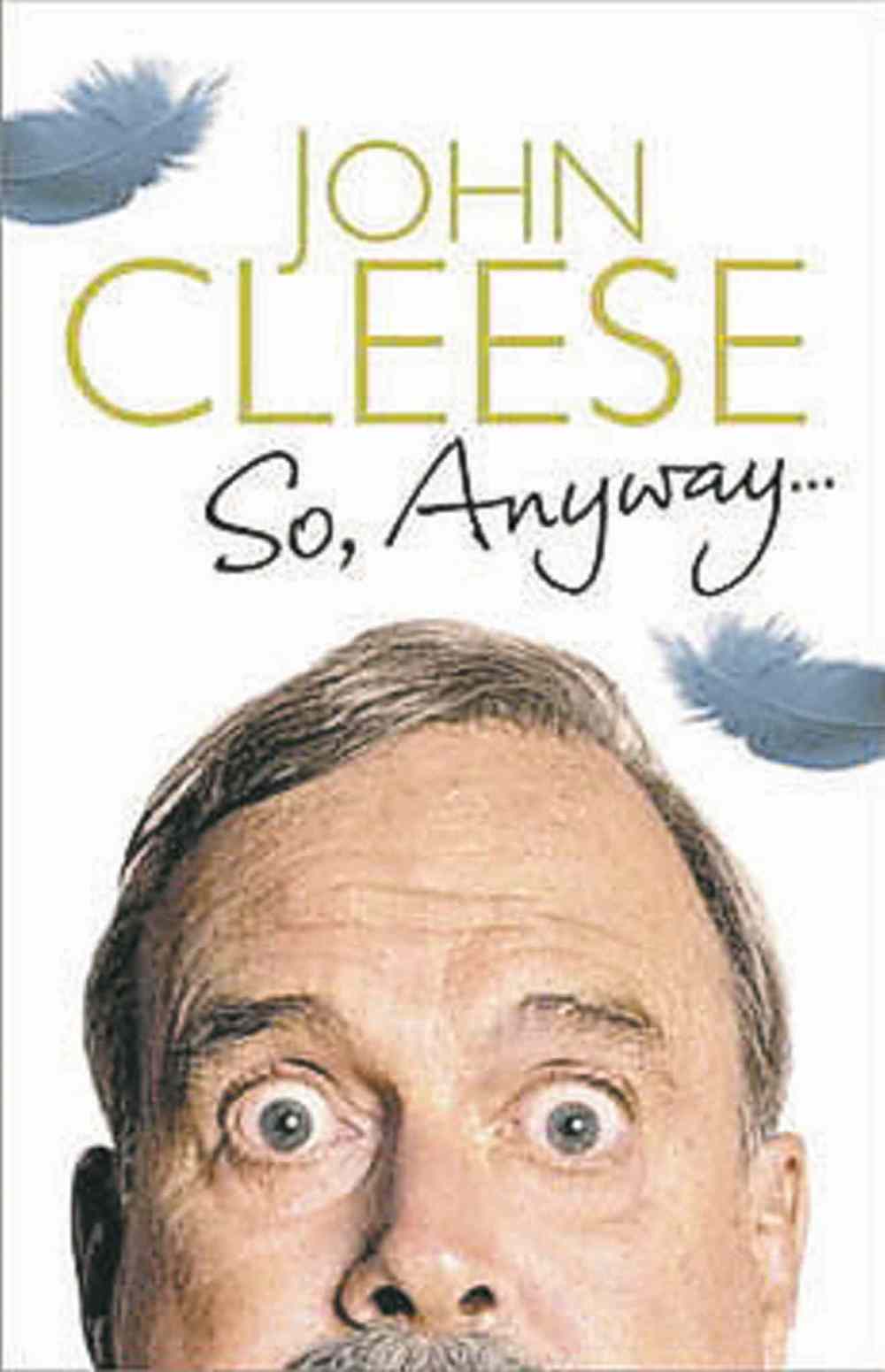
Alas, the reason seems more pedestrian: Cleese did not care enough to make the book better.
The singular success of Monty Python — unlike, say, George Carlin — lay in the irony that they looked exactly like (and in some ways lived their lives exactly like) the establishment figures they mocked.
Nobody could play the pompous but ultimately tedious British Man better than John Cleese.
But it always seemed that under the banality was brightness and a bold, bohemian heart. This is why it comes first as a shock and then as sad acceptance that Cleese’s long and long-awaited book is a dull, tedious, upper-middle-class affair.
Exhibit A: “On the first day back, I walked into North Town and strolled up to the noticeboard to confirm that Mr. Williams, my housemaster, had finally made me house prefect. This was not an unreasonable assumption: in the summer, I’d been in the School XI, captained the House XI, passed three A levels, completely reorganized the house library, played the lead in the house play and stolen more cricket equipment from the other houses than had ever been nicked before. Besides, all my other friends were not only house prefects, but school praeposters, official Big Cheeses, and none of them seemed so vastly superior to me…”
And so on, for the rest of a full page. Making house prefect wouldn’t have merited a page; not making house prefect merits no mention at all.
There was once a Monty Python album called Contractual Obligations, and this tiring book reads like Cleese had a legal requirement to write it (although there is no evidence he had one, unless greed is a legal requirement).
The Kurt Vonnegut-like phrase “So, anyway” that Cleese inconsistently employs when changing to a new subject never reaches the frequency of a literary device.
Like a lot of his prose, it seems a sluggish attempt at style.
When Johnny Carson announced he was writing an autobiography, he joked on the Tonight Show that publishers had rushed to get copyright on the title Cold and Aloof.
On closing the covers of Cleese’s book, the phrase “So, anyway” leaves one equally unmoved. It’s what someone says when a distasteful episode is over and they are on to the next thing.
Is this how Cleese felt when writing his memoirs? If it’s not, someone should have told his pen.
Hopefully Cleese had more fun living his life than he did writing about it.
Al Rae is a Winnipeg comedian.
History
Updated on Saturday, January 3, 2015 8:49 AM CST: Formatting.