

Probable clause: Free Press’s grammar mavens hold court over semicolons, deride dangling participles
Advertisement
Read this article for free:
or
Already have an account? Log in here »
To continue reading, please subscribe:
Digital Subscription
One year of digital access for only $1.44 a week*
- Enjoy unlimited reading on winnipegfreepress.com
- Read the E-Edition, our digital replica newspaper
- Access News Break, our award-winning app
- Play interactive puzzles
*Billed as $5.77 plus GST every four weeks. After 52 weeks, price increases to the regular rate of $19.95 plus GST every four weeks. Offer available to new and qualified returning subscribers only. Cancel any time.
To continue reading, please subscribe:
Add Free Press access to your Brandon Sun subscription for only an additional
$1 for the first 4 weeks*
- Enjoy unlimited reading on winnipegfreepress.com
- Read the E-Edition, our digital replica newspaper
- Access News Break, our award-winning app
- Play interactive puzzles
*Your next Brandon Sun subscription payment will increase by $1.00 and you will be charged $17.95 plus GST for four weeks. After four weeks, your payment will increase to $24.95 plus GST every four weeks.
Read unlimited articles for free today:
or
Already have an account? Log in here »
Hey there, time traveller!
This article was published 06/01/2015 (4166 days ago), so information in it may no longer be current.
There are two types of people in this world: those for whom “Book’s for sale” does not increase their blood pressure and those who would lunge forward, red marker in hand, and perpetrate vandalism to correct the atrocity.
And yet, there is only one English language — whatever the Americans may think — and we all have to find a way to communicate clearly.
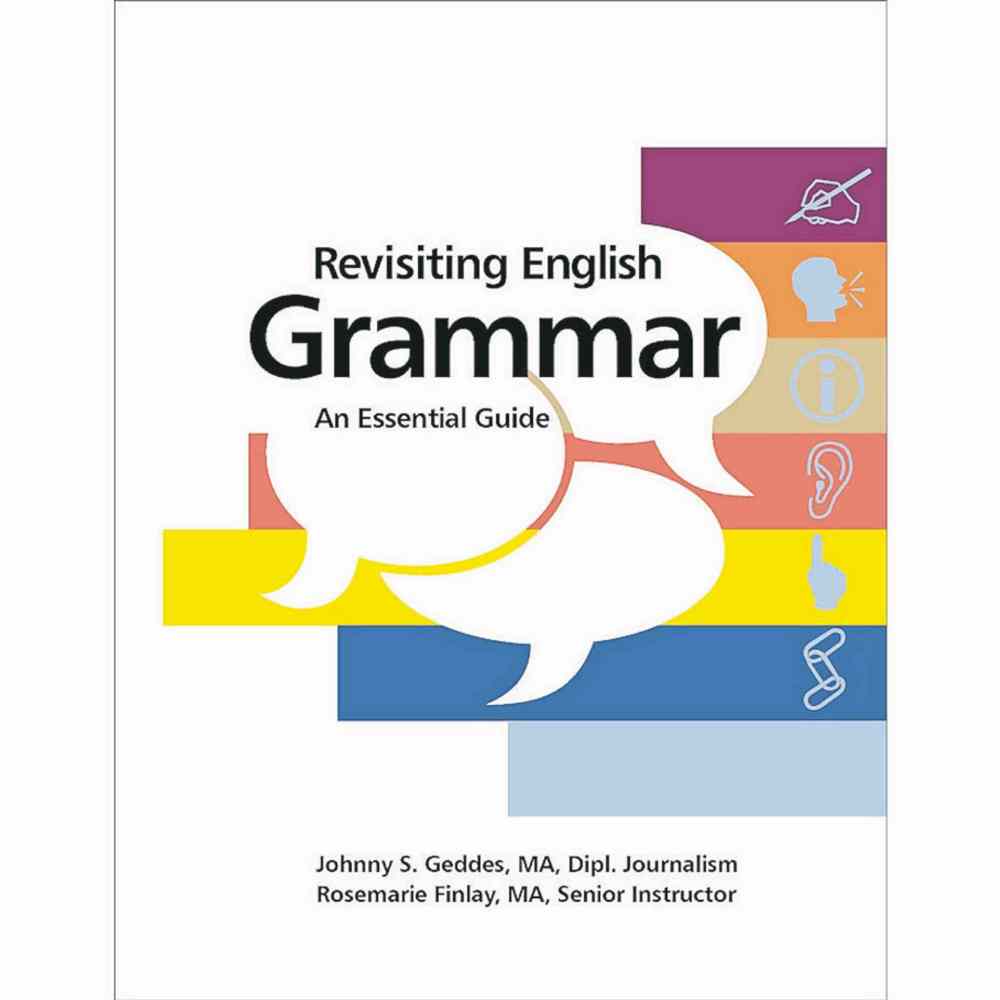
A new book by British writer Johnny Geddes with Rosemarie Finlay, a senior instructor at the University of Manitoba, might be just the peace balm we need. At the very least, Revisiting English Grammar could kick off a discussion about our written communications.
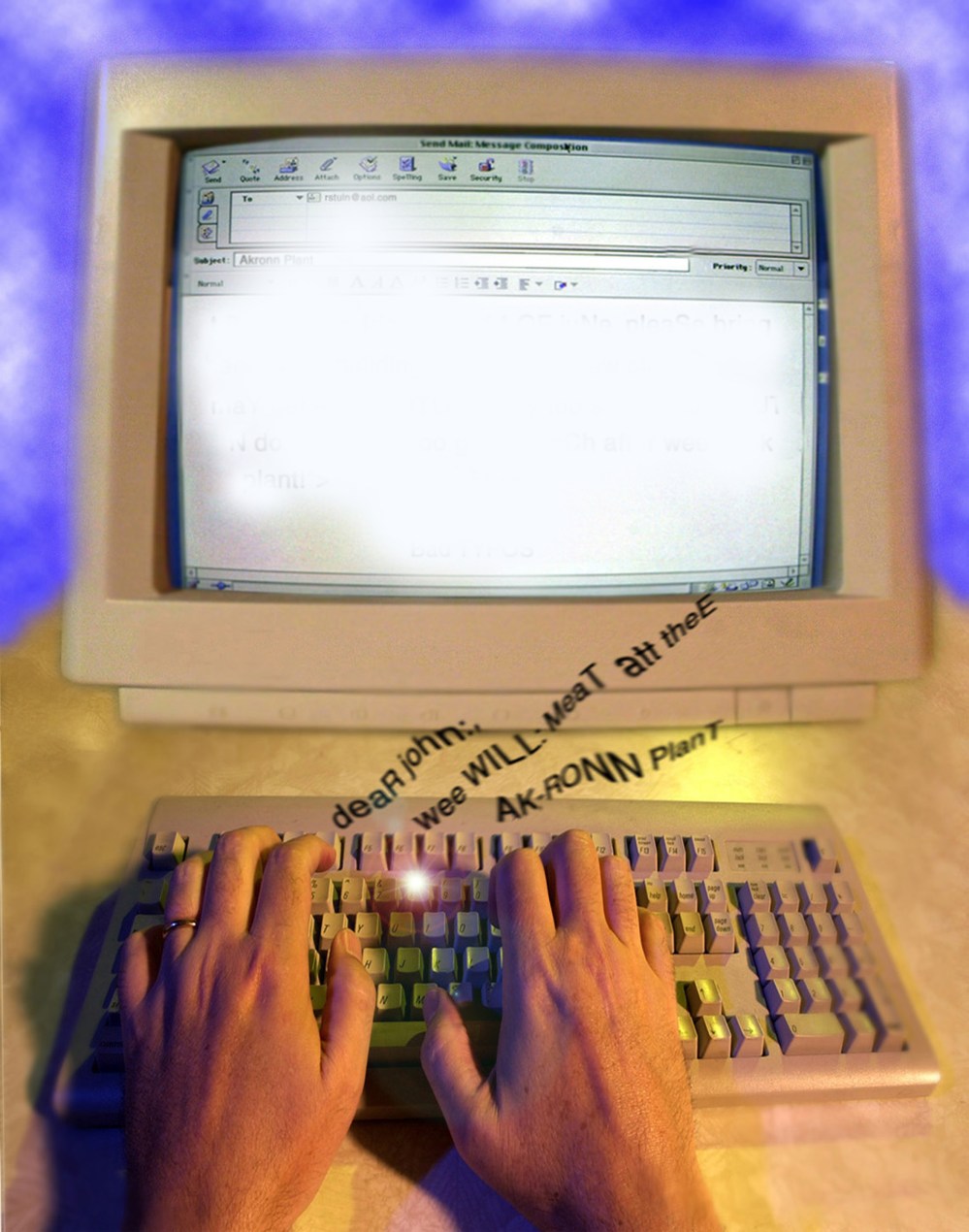
With any luck, that discussion will not be just among English majors, newspaper editors and others keeping watch on the language.
Geddes and Finlay’s goal was to produce an English grammar guide to help improve students’ writing skills and lower their stress upon entering university. But the book’s emphasis on good writing makes it a tool that could benefit all writers of the English language. For it’s not only university students who enter the academic world with a blank slate where grammar education used to be. So, too, do fledgling reporters often enter newsrooms harbouring the same vacuum in knowledge.
To keep the Free Press on track, the paper has a style committee of seven people from disciplines across the newsroom. A few editors, copy editors — those unsung heroes of the newsroom who correct grammar and spelling, and save many a wayward writer from public humiliation — a couple of reporters and people who work on our website. They are an extremely intelligent group of people who care passionately about the power of words and great writing.
They ride shotgun on the paper’s grammar and keep our style consistent, working from the paper’s own style guide and those bibles of the Canadian newsroom, The Canadian Press Caps and Spelling and The Canadian Press Stylebook, all of which continue to evolve along with the English language.
The guides deal with such scintillating topics as which words are hyphenated, which are spelled with one L or two — traveler vs. traveller (for those with red marker poised, CP dictates it’s two Ls) — and whether IKEA is an acronym and is thus spelled IKEA (as the style committee says) or is not a true acronym and is spelled Ikea (as CP says).
A couple of times a week, points arise on which the guides are not clear and email discussions ensue until the committee reaches consensus.
Once, in a marvellously exciting moment, the style committee met with the sports editor of the time to decide whether the Jets play at MTS Centre or at “the” MTS Centre. Legal documents were presented, guides of all stripe consulted and, after passionate debate, it was decided our boys play at the MTS Centre.
Yes, that is the sort of thing style committees obsess about. I am certain the red-marker crowd appreciates it.
In the last year, the style committee has dealt with whether to use accents on foreign words despite the technological problems it presents our system (accent use won: Vive la différence!), what we should call ISIS (Islamic State in first reference, IS in second) and if “openly gay” is an antiquated phrase (generally it is, but not always, which will no doubt lead to further debate).
The committee is concerned not just with proper grammar and a consistent style, but also with poor language use. Two members of the style committee — a.k.a. the Word Nerds — create jaunty little posters that have educated us all. We now know enormous has a vastly different meaning than enormity, decimate does not mean what you think (ditto elderly — a word that can really get us into trouble with readers) and the word unthaw simply does not exist.
A big challenge the style committee will take on this year is to delve into how the paper should refer to indigenous people. Should that be Aboriginal Peoples? Should it be Iyiniwok? Or Anishinaabe? Or Nishnaabe? We welcome suggestions, as always.
We hear from a lot of readers with a truly impressive grasp of grammar. Some are apologetic about catching us out; they need not be. Some are far from apologetic and are quite angry with us. I love the surprise in their voices when I tell them that we do care about grammar, that we actually have a committee that discusses it and that we welcome being set back on the straight and narrow when we have strayed.

Correct grammar is not quaint or outdated. It’s the lubricant that keeps the language rolling along. That’s why Geddes and Finlay’s Revisiting English Grammar and the Free Press‘s style committee are so important. We should all be talking about language and how we use it.
As the world grows more complex and at times confusing and, frankly, overwhelming, it is even more important that our use of language is exact, that our communication be crystal clear.
Of course, Chaucer, writing for a far simpler world, probably felt the same way. I often wonder if his style committee obsessed over whether he really meant “cupiditas” or if “caritas” was the more accurate word. (That’s a little something for fellow English majors and other shotgun riders of language to sort out.)
julie.carl@freepress.mb.ca
What are some of your grammar pet peeves? Join the conversation in the comments below.
History
Updated on Tuesday, January 6, 2015 6:05 AM CST: Replaces photo, changes headline, adds question for discussion
Updated on Tuesday, January 6, 2015 6:12 AM CST: Adds image
Updated on Tuesday, January 6, 2015 8:00 AM CST: Corrects typo
Updated on Tuesday, January 6, 2015 9:15 AM CST: Adds info about News Café interview