

Star of The Princess Bride recalls film’s inconceivable path to success
Advertisement
Read this article for free:
or
Already have an account? Log in here »
To continue reading, please subscribe:
Digital Subscription
One year of digital access for only $1.44 a week*
- Enjoy unlimited reading on winnipegfreepress.com
- Read the E-Edition, our digital replica newspaper
- Access News Break, our award-winning app
- Play interactive puzzles
*Billed as $5.77 plus GST every four weeks. After 52 weeks, price increases to the regular rate of $19.95 plus GST every four weeks. Offer available to new and qualified returning subscribers only. Cancel any time.
To continue reading, please subscribe:
Add Free Press access to your Brandon Sun subscription for only an additional
$1 for the first 4 weeks*
- Enjoy unlimited reading on winnipegfreepress.com
- Read the E-Edition, our digital replica newspaper
- Access News Break, our award-winning app
- Play interactive puzzles
*Your next Brandon Sun subscription payment will increase by $1.00 and you will be charged $17.95 plus GST for four weeks. After four weeks, your payment will increase to $24.95 plus GST every four weeks.
Read unlimited articles for free today:
or
Already have an account? Log in here »
Hey there, time traveller!
This article was published 31/01/2015 (4137 days ago), so information in it may no longer be current.
In the film The Princess Bride (1987), a host of characters utter mighty one-liners. Two of the most echoed of these give this memoir its title: “As you wish…” and “Inconceivable!”
There are several uncommon things about these ubiquitous quips. One is that they were composed by William Goldman, universally regarded as Hollywood’s greatest living screenwriter. He scripted, to Oscar accolades, Butch Cassidy and the Sundance Kid (1969) and All the President’s Men (1976).
In 1973, Goldman had written the original Princess Bride novel. This “romance-fantasy” (it defies genre) had duped — and still does — much of its audience, fooling them into buying that the novel is an abridgement of a much longer history by one “S. Morgenstern.” It is ironic that a long book of fiction about an even longer fictitious “historical” tome was turned into a 98-minute movie remembered for its individual sentences.
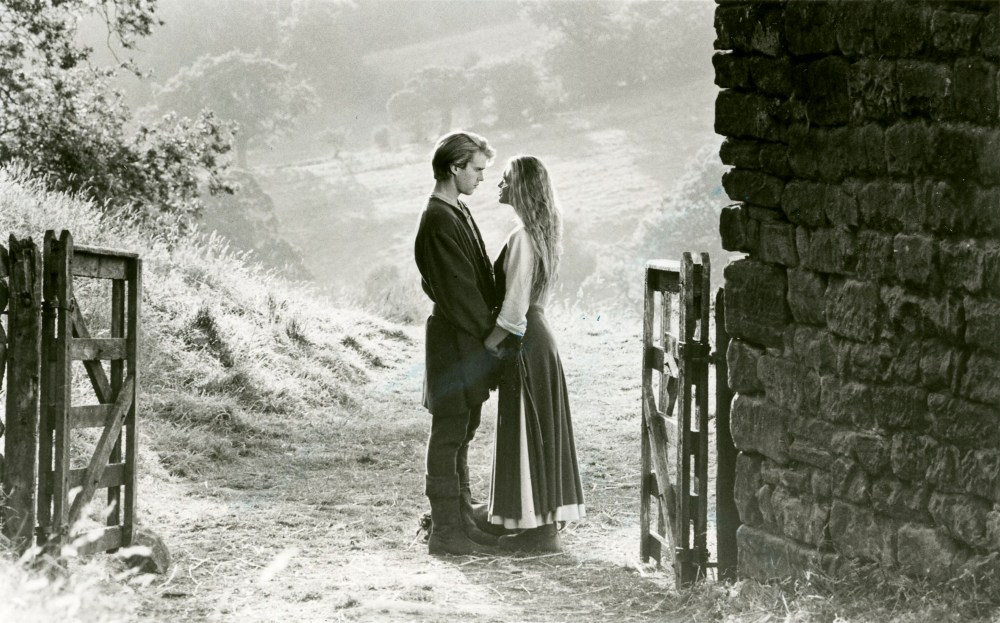
These lines are parroted in all sorts of places by all sorts of people. The film’s audience is now truly unbounded.
Although The Princess Bride did win the People’s Choice award at its debut in the Toronto Film Festival, it fizzled at the box office. This was the product of a misleading title, very misguided marketing and the inertia of the vigorous condemnation of Goldman’s novel by Hollywood powers as “unfilmable.”
In the film, Cary Elwes played Westley, the meek and near-mute farm boy who becomes the dashing and eloquent Dread Pirate Roberts. When the film was crafted, Elwes was an early-20s, nearly unknown British actor at the outset of an uncertain film career.
Elwes had been cast by the film’s director, Rob Reiner, white-hot at the time as the director of the hugely cult film This is Spinal Tap! (1984) and Stand by Me (1986) and a couple years from When Harry Met Sally (1989).
Reiner had the luxury of the freedom to take creative risks. He did. At first, they failed.
The film was mostly dead until it came out on VHS. It then rocketed back to life and stormed the castle, tirelessly enchanting a now-teeming audience.
In As You Wish, Elwes delightfully reflects on the production of the film: the remarkable casting, his dear relationship with Robin Wright (Princess Buttercup), the special effects, the “Greatest Swordfight in Modern Times” (Dread Pirate Roberts besting the steel of vengeful bandit Inigo Montoya, played by Mandy Patinkin), and the camaraderie of the troop.
Chapters are organized by memorable characters and famous scenes. Throughout, side panels by co-stars anecdotally engage Elwes’ chronicle. These are penned by the likes of Christopher Guest (the six-fingered man), Chris Sarandon (cowardly Prince Humperdinck), Billy Crystal (Miracle Max), Wallace Shawn (Vizzini, the Sicilian mastermind), Wright and Reiner. These are consistently amusing and mostly fawning but often seriously revealing of aches and anxieties.
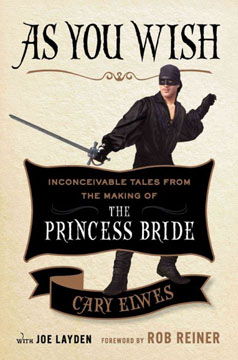
Slightly less famous than the “As you wish…” line, or “Hello. My name is Inigo Montoya. You killed my father. Prepare to die!” is Westley’s seething swipe at Buttercup before he realizes she has remained his true love: “Life is pain, Highness. Anyone who says differently is selling something.” Elwes is, of course, selling something fluffy, but he peppers his book with painful reflections on deaths, most memorably the premature death of much-adored 1980s wrestler André the Giant, who played Fezzik, the dull but lovable rhyming behemoth.
Those who treasure the film’s characters, their actors and their words will glide through this book, frequently nodding, often tearing up, regularly smiling. Elwes has tapped the magic of this beautiful little timeless film, the one with a second life.
Laurence Broadhurst teaches in the departments of religion & culture and classics at the University of Winnipeg.
History
Updated on Saturday, January 31, 2015 8:55 AM CST: Formatting.