Mideast war novel brings gritty moral greys
Advertisement
Read this article for free:
or
Already have an account? Log in here »
To continue reading, please subscribe:

Digital Subscription
One year of digital access for only $205*
- Enjoy unlimited reading on winnipegfreepress.com
- Read the E-Edition, our digital replica newspaper
- Access News Break, our award-winning app
- Play interactive puzzles
*First annual payment billed as $205.00 + GST for one year. This annual subscription will automatically renew at $233.00 + GST every 52 weeks (10% off the regular annual price of $259.35). Offer available to new and qualified returning subscribers only. Cancel any time.
To continue reading, please subscribe:
Add Free Press access to your Brandon Sun subscription for only an additional
$1 for the first 4 weeks*
- Enjoy unlimited reading on winnipegfreepress.com
- Read the E-Edition, our digital replica newspaper
- Access News Break, our award-winning app
- Play interactive puzzles
*Your next Brandon Sun subscription payment will increase by $1.00 and you will be charged $17.95 plus GST for four weeks. After four weeks, your payment will increase to $24.95 plus GST every four weeks.
Read unlimited articles for free today:
or
Already have an account? Log in here »
Hey there, time traveller!
This article was published 07/02/2015 (4212 days ago), so information in it may no longer be current.
In the late great war writer James Jones’ Some Came Running, the character Wally Dennis says to himself: “I wonder if a guy could really write a book about people as they really are and still make it interesting enough to read.”
Ross Ritchell, in his first try, has come close to doing just that.
In Ritchell’s maiden novel of fighting in fictitious Afghanipakiraqistan — he is a Middle East combat veteran of the U.S. Rangers — there are no gung-ho, raise-the-flag, America-the-beautiful, John Wayne, Steve McQueen, Steven Seagal, Chuck Norris star-spangled heroics, no holier-than-thou undertones, no moral high ground, no presumption of martial superiority.
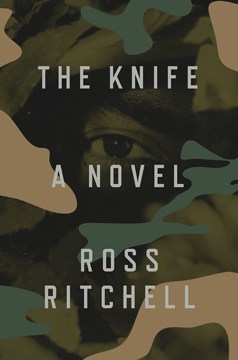
In The Knife, there’s just people, albeit people deadly at what they do. There’s just American people talking, dreaming, thinking, acting, fearing, hoping, laughing — just like people everywhere. The only difference between their off-duty banter in this make-believe Afghanistan and drinks and repartée after work in Detroit or New York is the location. Being in a war doesn’t change what they are — just where they are.
That’s how novelist Ritchell skilfully presents his people, along with a surprise ending of lifelike, cynical ambiguity.
When two U.S. helicopters are shot down in a sister squadron, Special Forces leader Dutch Shaw and his five-man rangers team has to feel its way into enemy territory and try to locate a little-known insurgent group called Al Ayeelaa.
Ritchell’s combat scenes — it takes a while to get to them in The Knife, and they are not the bulk of the book — appear to be as realistic as his descriptions of the humans in them.
His U.S. combatants, as elite soldiers high up in the fighting food chain, are at times terrifying people, finely tuned to kill and who do so systematically and, it seems on the surface, matter-of-factly. At the same time, their war, like all wars, is about the deaths of individual human beings and they know it, but like people everywhere they share the same hope — that it’s not their turn to succumb. To ward off those worries, they think and do very different things than when they are doing what they are trained to do — and like people everywhere, what they do is a changing mix of the ordinary and the extraordinary.
The only criticism of Ritchell is that his soldiers’ banter is occasionally hackneyed. As well, some of the moral questioning is typical. However, his writing makes it believable and at home in his narrative.
The strength of The Knife is that there is no false bravado in it and no absolute rights and wrongs, just moral greys. Ritchell’s characters appear to be drawn from life. The success of his novel may be that they are part Ritchell himself.
This veteran’s believable portrayal of modern soldiering in the Mideast outback runs the gamut of battlefield living. His characters experience the exhausting tension of endless waiting and the numbing of feelings in the name of self-preservation, the cruel fatigue of battle, the guilt and self-doubt when they survive and comrades don’t, the boredom of the same food and the same people in the same and constant close proximity, and a predictability that at times grates the mind like fingernails clawing a blackboard, yet at other times provides a comforting sense of anonymity.
And, above all, being too tired to cry and so used to killing that it’s no longer killing — it’s something else.
As ranger Dutch Shaw puts it, in a sort of confusing riddle-rhyme civilians probably aren’t meant to understand: “Living over life, way of the knife.”
It may very well be that the best part of Ross Ritchell’s war is the novel that followed it.
Barry Craig is a retired journalist.
History
Updated on Saturday, February 7, 2015 8:35 AM CST: Formatting.