

King con: Koretz was fleecing people long before Ponzi schemes
Advertisement
Read this article for free:
or
Already have an account? Log in here »
To continue reading, please subscribe:
Digital Subscription
One year of digital access for only $75*
- Enjoy unlimited reading on winnipegfreepress.com
- Read the E-Edition, our digital replica newspaper
- Access News Break, our award-winning app
- Play interactive puzzles
*Billed as $5.77 plus GST every four weeks. After 52 weeks, price increases to the regular rate of $19.95 plus GST every four weeks. Offer available to new and qualified returning subscribers only. Cancel any time.
Monthly Digital Subscription
$4.99/week*
- Enjoy unlimited reading on winnipegfreepress.com
- Read the E-Edition, our digital replica newspaper
- Access News Break, our award-winning app
- Play interactive puzzles
*Billed as $19.95 plus GST every four weeks. Cancel any time.
To continue reading, please subscribe:
Add Free Press access to your Brandon Sun subscription for only an additional
$1 for the first 4 weeks*
- Enjoy unlimited reading on winnipegfreepress.com
- Read the E-Edition, our digital replica newspaper
- Access News Break, our award-winning app
- Play interactive puzzles
*Your next Brandon Sun subscription payment will increase by $1.00 and you will be charged $17.95 plus GST for four weeks. After four weeks, your payment will increase to $24.95 plus GST every four weeks.
Read unlimited articles for free today:
or
Already have an account? Log in here »
Hey there, time traveller!
This article was published 30/05/2015 (4009 days ago), so information in it may no longer be current.
A Ponzi scheme is a scam that pays unrealistically high returns to early investors in a usually bogus venture from the capital contributed by later investors, rather than legitimate profits earned by the business or fund.
It takes its name from Charles Ponzi, a Boston-based Italian immigrant who in 1920 defrauded investors in a phoney arbitrage scheme of $20 million.
Dean Jobb has authored a terrific account of Chicago lawyer-turned-con-artist Leo Koretz, a guy who out-Ponzied Ponzi, and who — just as he was about to be unmasked with the last of the cash — fled to Nova Scotia, where he lived the good life. At least for a while.
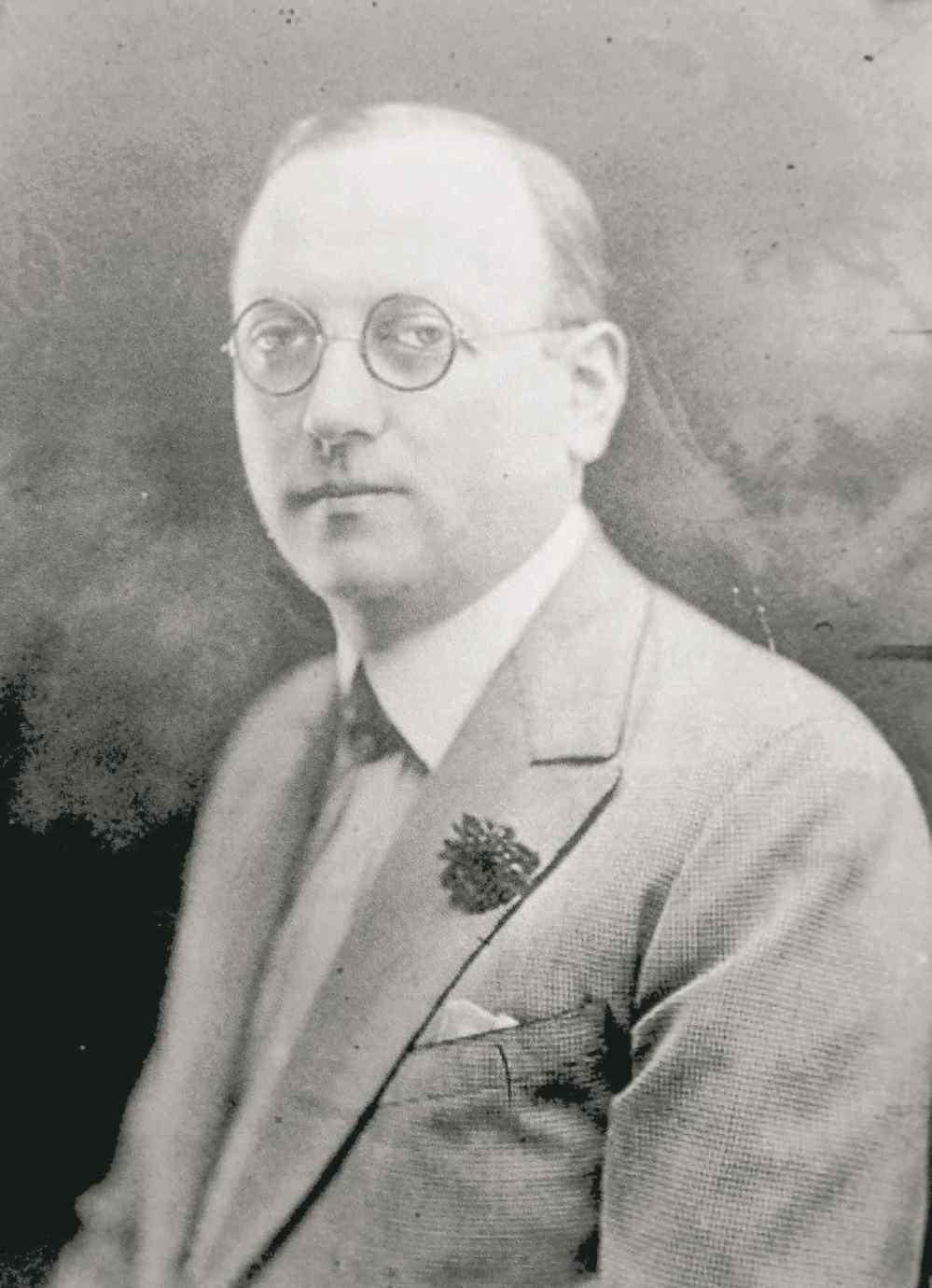
Jobb, a professor of journalism at Halifax’s Kings College, is an occasional Winnipeg Free Press op-ed columnist and author of a half-dozen historical and true-crime books.
He maintains the reason the world doesn’t know such scams as Koretz schemes is that Ponzi got caught much earlier, within a year of running his con. Koretz, on the other hand, ran a succession of swindles for two decades before his scheme collapsed.
This is a fast-paced, fact-laden narrative populated by red-blooded personalities — principally Koretz, but also his nemesis in the Illinois justice system, state’s attorney for Cook County Robert Crowe. Koretz and Crowe knew each other personally and were on a first-name basis. They’d started their legal careers at the same time with the same Chicago law firm.
Jobb tries to get at the root of Koretz’s motives, beyond the obvious one of greed. He doesn’t pretend to play amateur psychoanalyst. But his portrait suggests a long streak of hedonism at the core of Koretz’s personality.
Koretz’s financial chicanery was matched only by his marital duplicity. While living with his wife and family in suburban Evanston, Ill., he kept an apartment on Chicago’s fashionable north side as Al Branson, complete with a pretty brunette “wife” whom everyone from the janitor and maid to the neighbours knew as Alice Branson.
Koretz’s genius was his ability to morph from one con into another whenever the flow of funds from investors slowed enough to threaten to dry up payouts to existing investors.
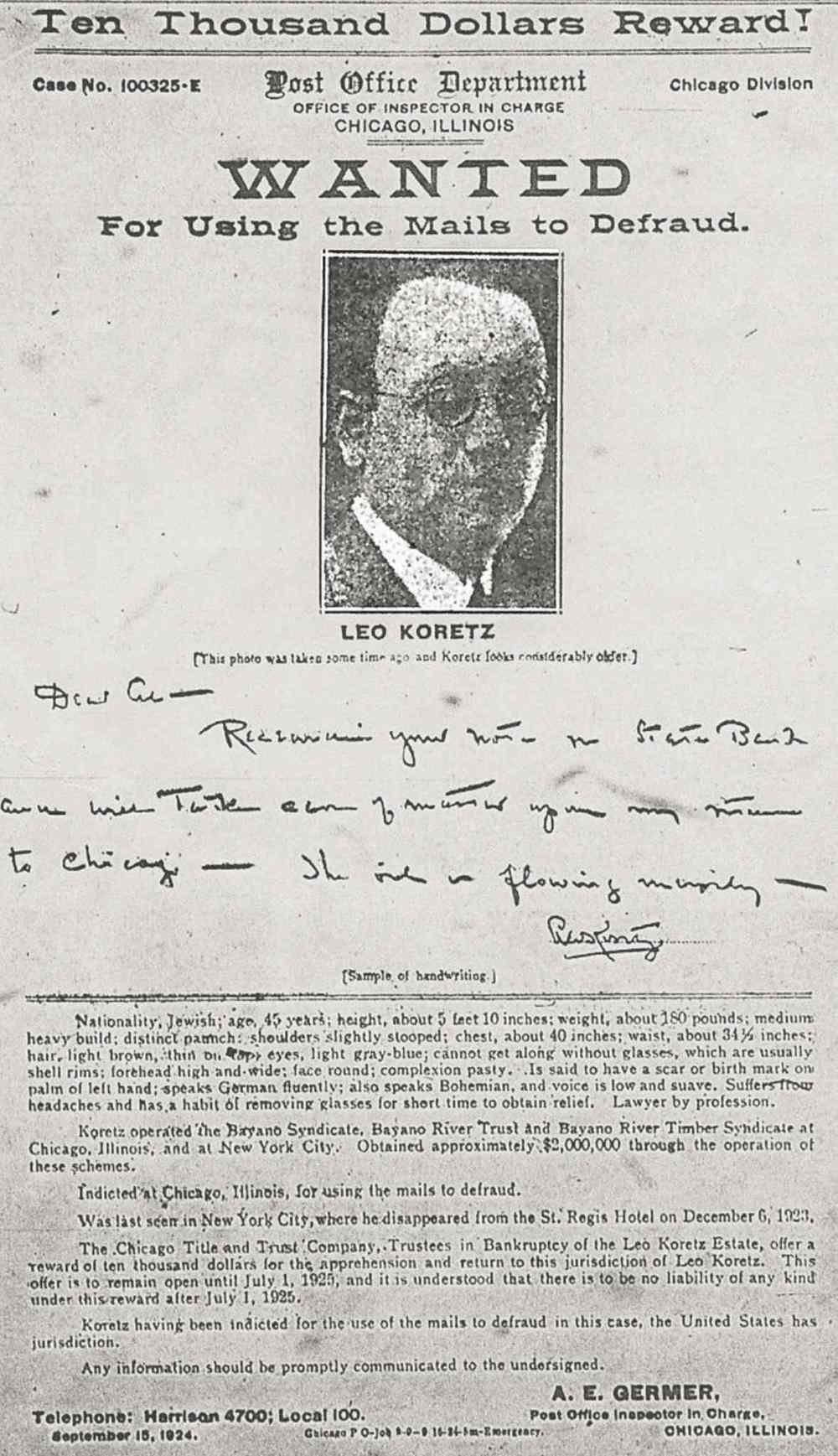
He started in 1905, issuing fake local mortgages for cash. He then shifted to issuing mortgages on non-existent Arkansas rice farms. When that scam started to have cash-flow problems, he sold shares in a bogus Panama timber business. He crowned his career by selling units in a Panama oil-production empire that existed only on fraudulent receipts he gave to investors.
He kept his fake enterprises afloat until his disappearance in 1923 — a step ahead of prosecutors and police — and lit out for a new life and identity near Caledonia, N.S. It’s uncertain how much he stole from gullible and greedy investors; the best estimates are about $30 million, the equivalent of $400 million in 2015 dollars.
Koretz disguised his identity while in Nova Scotia but didn’t exactly lay low. Adopting the name Lou Keyte, he gave lavish parties and purchased and renovated an ostentatious lodge.
He inevitably came to the attention of American authorities, who hauled him back to Illinois after he waived extradition proceedings.
The book’s end is a bit truncated, largely because there was an abrupt end, and no satisfying closure, to Koretz’s life. Thirty-four days after being sentenced and imprisoned, he fell into a diabetic coma and died in Joliet prison, just outside of Chicago.
Speculation has it Koretz, a diabetic, committed suicide by gorging on a smuggled-in, 1.3-kilogram box of chocolates that triggered a fatally high blood-sugar level.
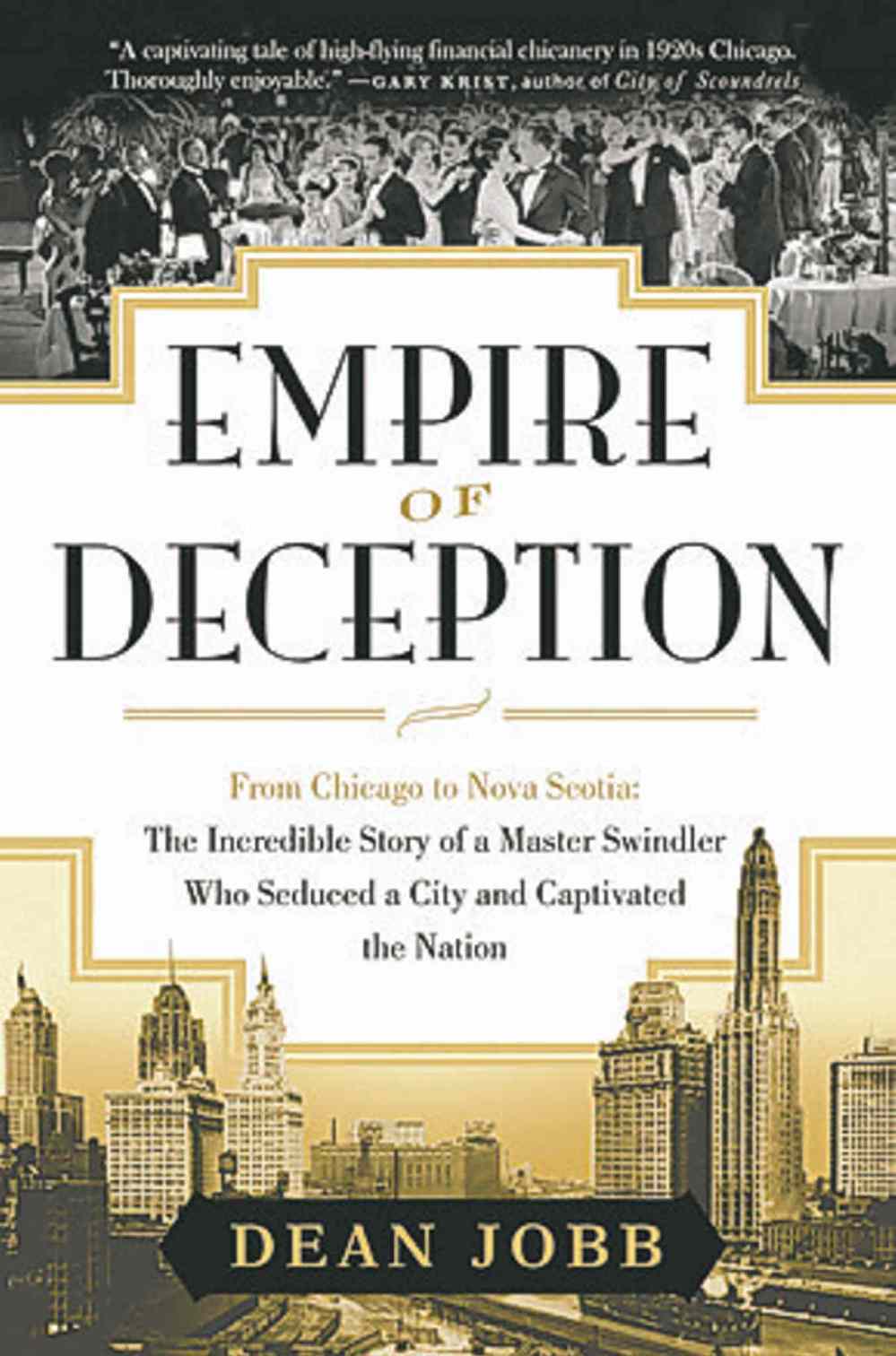
Jobb has penned a captivating account of a con artist whose life — and maybe his death — was a cheat.
Douglas J. Johnston is a Winnipeg lawyer and writer.