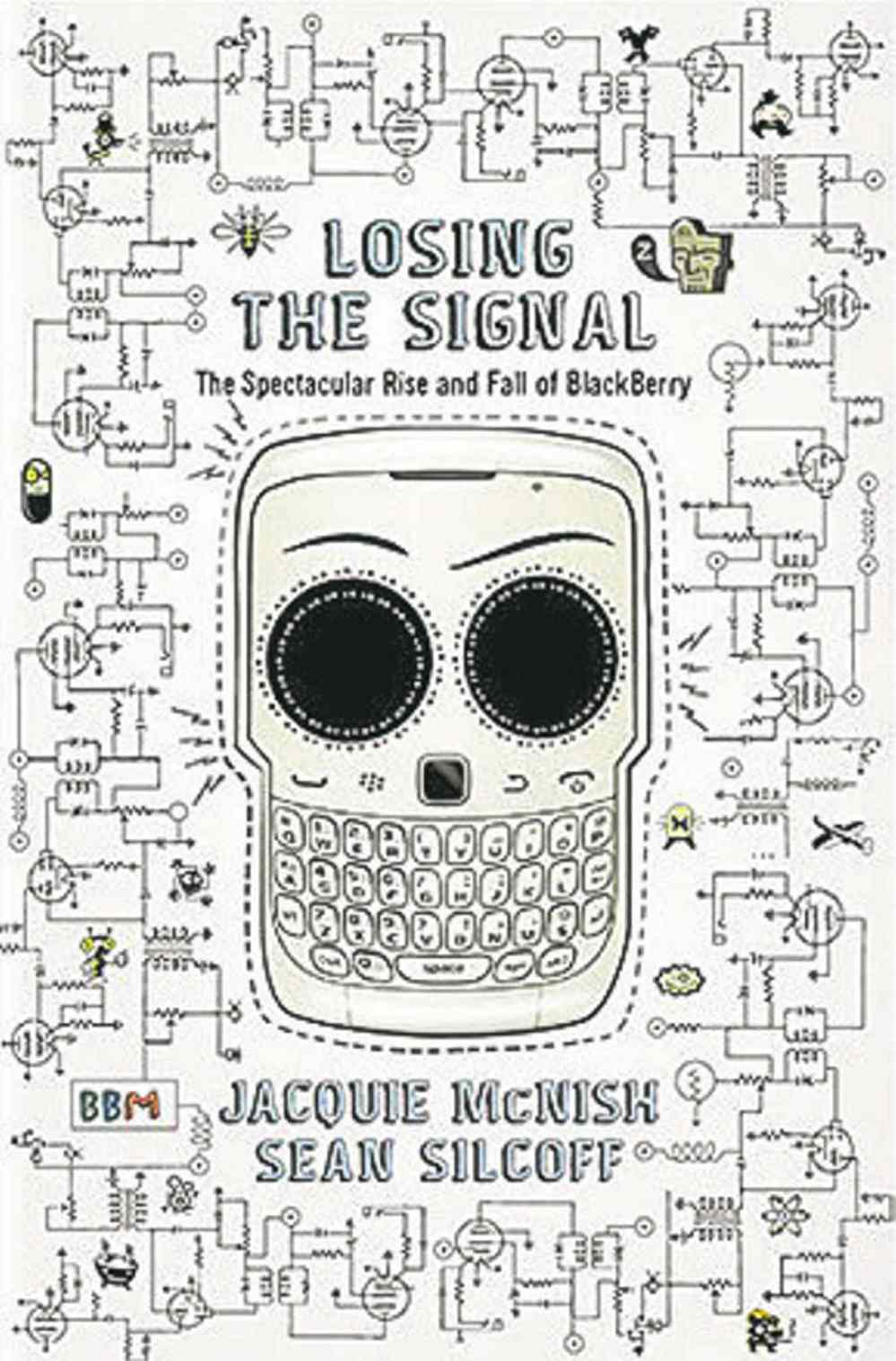
History of RIM’s BlackBerry a brilliant business thriller
Advertisement
Read this article for free:
or
Already have an account? Log in here »
To continue reading, please subscribe:

Digital Subscription
One year of digital access for only $205*
- Enjoy unlimited reading on winnipegfreepress.com
- Read the E-Edition, our digital replica newspaper
- Access News Break, our award-winning app
- Play interactive puzzles
*First annual payment billed as $205.00 + GST for one year. This annual subscription will automatically renew at $233.00 + GST every 52 weeks (10% off the regular annual price of $259.35). Offer available to new and qualified returning subscribers only. Cancel any time.
To continue reading, please subscribe:
Add Free Press access to your Brandon Sun subscription for only an additional
$1 for the first 4 weeks*
- Enjoy unlimited reading on winnipegfreepress.com
- Read the E-Edition, our digital replica newspaper
- Access News Break, our award-winning app
- Play interactive puzzles
*Your next Brandon Sun subscription payment will increase by $1.00 and you will be charged $17.95 plus GST for four weeks. After four weeks, your payment will increase to $24.95 plus GST every four weeks.
Read unlimited articles for free today:
or
Already have an account? Log in here »
Hey there, time traveller!
This article was published 27/06/2015 (4042 days ago), so information in it may no longer be current.
When he was in high school, Mike Lazaridis used to hang out at the home of his electronics teacher, John Micsinszki, and his wife Margaret, a computer science teacher.
Margaret predicted the future would be created by those who used computers to their full potential. Her husband chimed in: “The person who puts wireless communications and computers together is really going to build something special.”
Lazaridis, a boy wonder who had already built his own oscilloscope and computer, never forgot the concept synthesized that day. It became the BlackBerry.
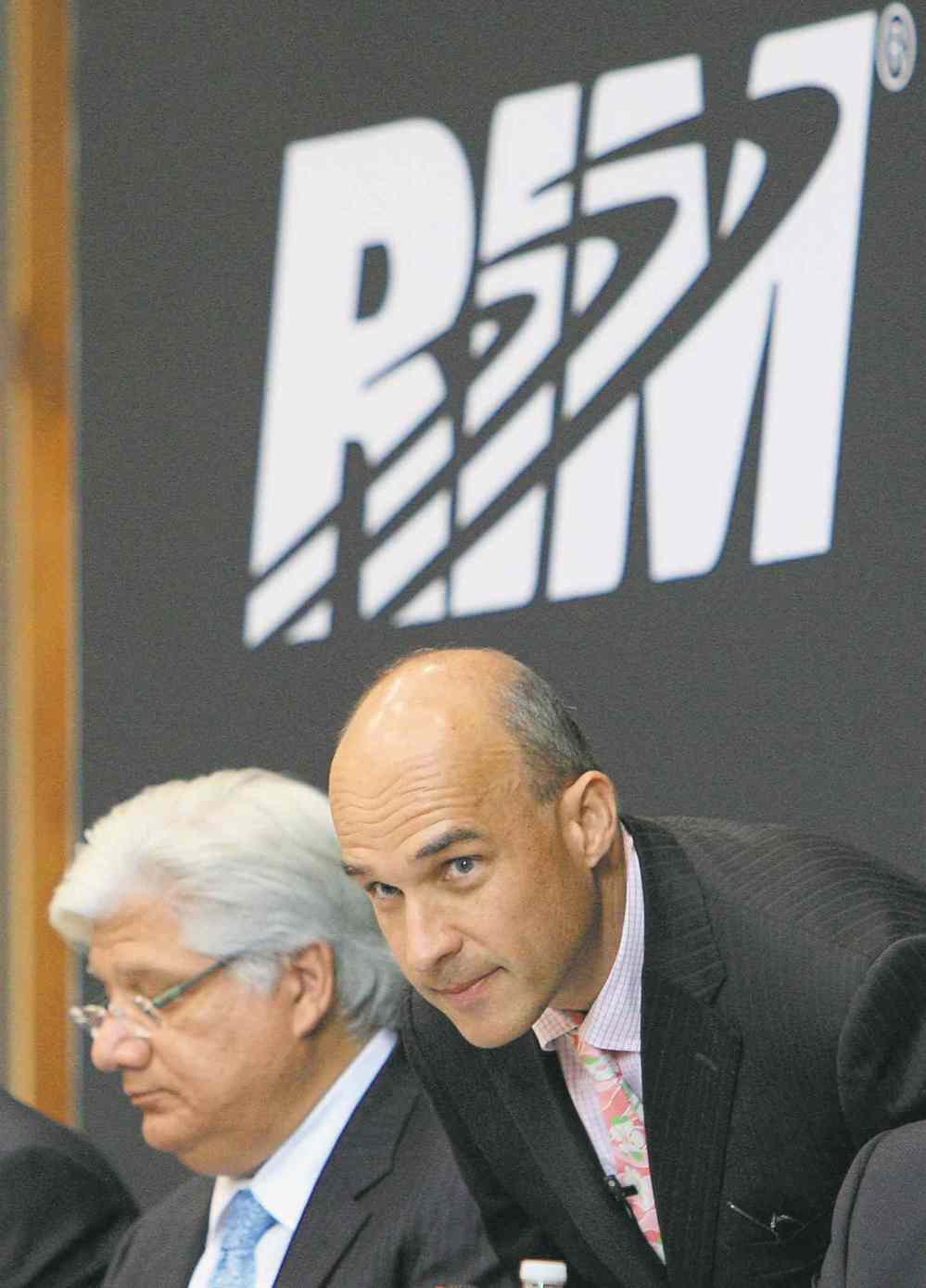
Authors Jacquie McNish and Sean Silcoff, both of the Globe and Mail, have captured that significant anecdote and dozens more through their in-depth interviews with 120 participants in the BlackBerry story.
Lazaridis and Jim Balsillie, co-CEOs of BlackBerry producers Research In Motion (RIM), appear to have spoken frankly to the authors about their experience.
McNish, an adjunct professor at Osgoode Hall Law School, has written three previous books, including Wrong Way: The Fall of Conrad Black, and won six National Newspaper Awards. This is Silcoff’s first book, but he comes with a National Newspaper Award of his own and 17 years covering top business stories for the Globe, including leading the coverage of Research In Motion.
This business thriller can be compared favourably to the best of the genre, Barbarians at the Gates, the 1990 bestseller that chronicled the shenanigans of former Winnipegger F. Ross Johnson at RJR Nabisco.
The cautionary tale also echoes with the timeless theme of rags to riches and with Shakespearean tragedy, as flawed heroes overcome adversity but ultimately succumb to hubris.
Even if you know how it’s going to turn out, the book is a compelling read, marred only by poor copy editing (including a misspelling of Balsillie’s name).
The partnership between Lazaridis and Balsillie, acting as co-CEOs, played to their respective strengths. Lazaridis handled all the geeky stuff in product development; Balsillie was the hard-driving negotiator who bullied U.S. wireless companies into paying a premium for BlackBerry customers.
Dubbed the CrackBerry because of its addictive nature, the wireless device instantly sent and received emails, freeing the user from being tied to a desktop computer.
It quickly became the must-have business tool for everyone important from U.S. President Barack Obama, who overruled the Secret Service to keep his BlackBerry, to Arab sheiks, who were willing to pay $10,000 for an engraved BlackBerry.
The overnight success created billions of dollars in personal profits for Lazaridis and Balsillie and jobs for thousands of Canadians.
Then one day in 2007, Steve Jobs stepped on stage in San Francisco to demonstrate the iPhone, and the taste of BlackBerry suddenly went sour. By adding full email capability to a cellphone and media player, the Apple CEO eliminated BlackBerry’s advantage.
Apple signed an exclusive four-year deal with AT&T to be the wireless carrier for the iPhone; RIM had a long-time relationship with Verizon. If the company could just come up with an “Apple-killer” for Verizon, it could save its U.S. business.
They blew it. The company became confused over strategic direction. Lazaridis wanted to stick with hardware; Balsillie wanted to sell BlackBerry text messaging to other platforms.
RIM released several phones that were duds. Market share fell precipitously.
Having failed to compete successfully against the iPhone, Lazaridis took on the iPad and insisted that RIM make its own tablet. In its rush to market, the tablet was stripped of most of its functions — including email. Not even the advertising people could find anything nice to say about a product that had strayed so far from BlackBerry’s original vision.

As the business unravelled, so did the working relationship between the co-CEOs. Lazaridis particularly resented being pulled into a stock-options scandal with the Ontario Securities Commission for which he blamed Balsillie. As revenues and profits plummeted, shareholders woke up the sleepy board and forced it to oust the two men from the co-CEO positions.
McNish and Silcoff have fashioned a fascinating narrative full of direct quotations and behind-the-scenes insight, making it a worthy read for anyone interested in the universal themes of ambition, greed, meteoric success and catastrophic downfall.
Donald Benham is manager of hunger and poverty awareness
at Winnipeg Harvest.