

Filling the void: Letters to late husband help local writer grapple with grief
Advertisement
Read this article for free:
or
Already have an account? Log in here »
To continue reading, please subscribe:
Digital Subscription
One year of digital access for only $1.44 a week*
- Enjoy unlimited reading on winnipegfreepress.com
- Read the E-Edition, our digital replica newspaper
- Access News Break, our award-winning app
- Play interactive puzzles
*Billed as $5.77 plus GST every four weeks. After 52 weeks, price increases to the regular rate of $19.95 plus GST every four weeks. Offer available to new and qualified returning subscribers only. Cancel any time.
To continue reading, please subscribe:
Add Free Press access to your Brandon Sun subscription for only an additional
$1 for the first 4 weeks*
- Enjoy unlimited reading on winnipegfreepress.com
- Read the E-Edition, our digital replica newspaper
- Access News Break, our award-winning app
- Play interactive puzzles
*Your next Brandon Sun subscription payment will increase by $1.00 and you will be charged $17.95 plus GST for four weeks. After four weeks, your payment will increase to $24.95 plus GST every four weeks.
Read unlimited articles for free today:
or
Already have an account? Log in here »
Hey there, time traveller!
This article was published 04/07/2015 (3989 days ago), so information in it may no longer be current.
There’s a new category in professional life-writing — the first-year-of-grief memoir.
Outpourings from this initial stage of raw, protracted mourning are often confined in personal journals or on loose papers tucked in desk drawers. In the past decade, however, some of these accounts have emerged as published works from well-known fiction writers. The Year of Magical Thinking by Joan Didion (2007) and A Widow’s Story: A Memoir by Joyce Carol Oates (2011) are two notable examples.
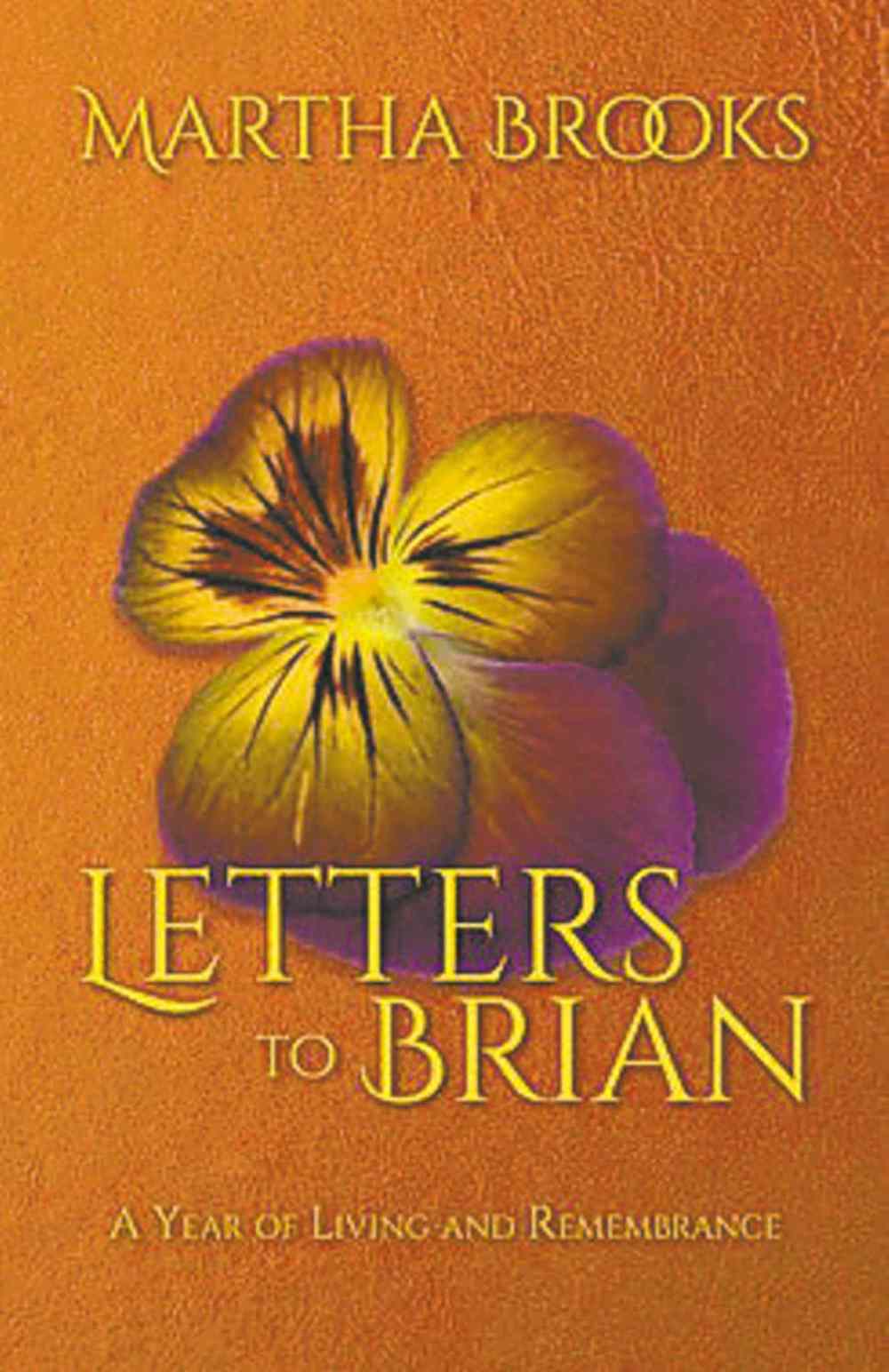
Now we have the “heart-full” Letters to Brian: A Year of Living and Remembrance from acclaimed local writer and jazz singer Martha Brooks.

Her husband Brian is “Gone. Gone. Gone,” the ravages of brain cancer having robbed her of a soulmate and ended 49 years of an intensely loving “hip-to-hip” relationship. She is confessedly “nuts with grief,” grappling with the sense of being “dragged to the bottom of the ocean, lost, alone and hoping to be rescued.”
Her first act of self-rescue is to fill the void by writing daily love letters to her “dearly dead” man. They provide solace and connect her to his essence on another plane, seemingly defying the severance of death: “I find you here more heartbreakingly visceral than anywhere else I try to seek you out.”
The letters generate mysterious alchemy, and the agency of Brian’s spirit grows — a predominant motif in the memoir. He “pulls heavenly strings” to facilitate her triumphant return to performing. She feels his hand on her shoulder and a friend sees him standing behind her as she sings. Her trusted grief counsellor validates these experiences: “He’ll be everywhere out there. He’s going to talk to you. All you have to do is open your ears.”
And she does. Brian’s voice flows inside her, nudging her on to embrace a new life, even advising when it’s time to take off her wedding ring and look for a boyfriend. In a moment of awareness in one of the letters, the author muses on how these revelations might come across to those “who haven’t had the privilege of being touched by this kind of mystery,” but concludes that, for now, “they are beyond my window of caring.”
And, of course, that’s the point being made about acute grief — it is and must be, as Brooks’ counsellor states, intensely selfish. To survive, a person has to turn inward, focus on the shattered self, patch it up, allow for its excesses, find sympathetic ears to hear all the tortured thoughts and exalted memories until a sense of peace and acceptance emerges — and where better to do that, the author intuits, than in intimate, confessional missives to a darling husband?
As the year passes and raw pain lessens, the insistent voice of the grieving woman recedes and the lyrical sway of the accomplished writer predominates. Two exquisite scenes most powerfully demonstrate what Brooks has yearned to convey.
In one, she tells of performing a ceremonial tea as “blue twilight” fell over their sacred Pelican Lake. She placed two chairs and two cups of tea at the table on the deck.
“Then,” she confides, “side-by-side, you in spirit and me in flesh we sat and watched an immense pink moon rise over the eastern slopes across the lake. I left it all, later, bathed in moonlight, and went to bed.”
The other is a brief but stunning memory of Brian sitting with her father at that table facing the lake, taking the older man’s hands into his and “gently manicuring his nails.”
These beautifully rendered tableaux are a lasting imprint of what’s been revealed in this memoir — the impressive measure of the man, Brian Brooks, and the profound love and loyalty of his wife, Martha.
Marjorie Anderson works as a freelance editor and an occasional teacher of creative writing.
History
Updated on Saturday, July 4, 2015 9:31 AM CDT: Formatting.