Montreal journalist takes readers inside the music-recording process
Advertisement
Read this article for free:
or
Already have an account? Log in here »
To continue reading, please subscribe:

Digital Subscription
One year of digital access for only $205*
- Enjoy unlimited reading on winnipegfreepress.com
- Read the E-Edition, our digital replica newspaper
- Access News Break, our award-winning app
- Play interactive puzzles
*First annual payment billed as $205.00 + GST for one year. This annual subscription will automatically renew at $233.00 + GST every 52 weeks (10% off the regular annual price of $259.35). Offer available to new and qualified returning subscribers only. Cancel any time.
To continue reading, please subscribe:
Add Free Press access to your Brandon Sun subscription for only an additional
$1 for the first 4 weeks*
- Enjoy unlimited reading on winnipegfreepress.com
- Read the E-Edition, our digital replica newspaper
- Access News Break, our award-winning app
- Play interactive puzzles
*Your next Brandon Sun subscription payment will increase by $1.00 and you will be charged $17.95 plus GST for four weeks. After four weeks, your payment will increase to $24.95 plus GST every four weeks.
Read unlimited articles for free today:
or
Already have an account? Log in here »
Hey there, time traveller!
This article was published 11/07/2015 (4103 days ago), so information in it may no longer be current.
According to Joni Mitchell, producer David Geffen couldn’t go back to Paris — and freedom — because he had taken on the work of “stoking the star-maker machinery of the popular song.”
Montreal journalist Eric Siblin spent a year recently associating with some of what that machinery has become since Mitchell sang Free Man in Paris in 1974. His odyssey to create an album of his own songs is the subject of his second book, Studio Grace.
Siblin’s first book, 2009’s The Cello Suites: J.S. Bach, Pablo Casals, and the Search for a Baroque Masterpiece, won high praise for his ability to translate musical ideas into words. That talent is on display again in this engaging and informative memoir.
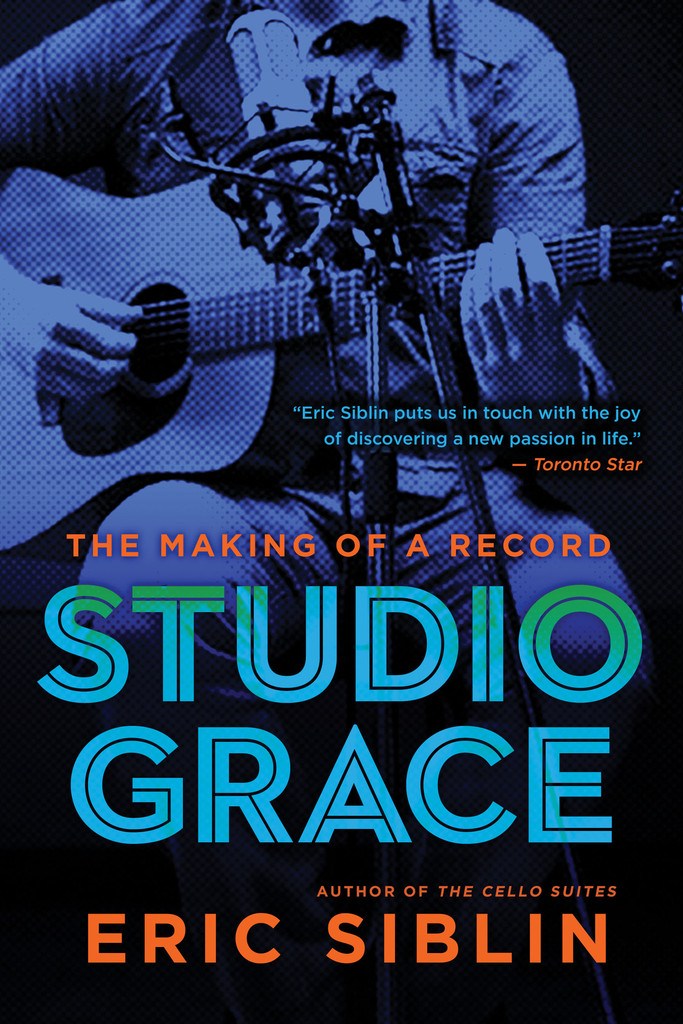
Motivated by chance meetings with his musical friends Jo Simonetti and Morey Richman, Siblin decide to chase his childhood dream of producing an album of original songs. Studio Grace chronicles his developing ideas and experience about songwriting, collaborating, recording and publishing pop music in the digital age. The book coincides with the release of the resultant album, also called Studio Grace. The songs can be streamed from Siblin’s website using a code published in the book, or purchased from iTunes.
This isn’t a record review, but listening to Siblin’s songs while (or after) reading his intimate portraits of their composition and development — sometimes in directions he didn’t anticipate — can increase the enjoyment of the music, sometimes in ways that would have been hard to predict.
Siblin records with multiple friends and professional musicians in three very different environments. Richman, a retired music executive, concentrates on producing his teenage daughter’s YouTube covers of Siblin’s songs using a laptop: “what passes for a sound recording studio in the early 21st century.” Many of the initial recordings are then recorded and mixed in the rudimentary basement studio of wedding-band drummer and engineer Eli Krantzberg.
Finally, Siblin had several sessions with Howard Bilerman in Montreal’s Hotel2Tango, where Arcade Fire also recorded.
Studio Grace‘s short chapters keep the story moving along as ideas and songs are emailed back and forth, and advice from all quarters swirls around the songwriter’s quest for a finished piece of creativity.
Siblin’s songs range widely in musical style and in lyrical content: from Internet dangers in Another Man’s Crime to a credible rendition of the opening conflict of Homer’s Iliad in Achilles.
Richman’s daughter Hayley surprises Siblin and others who had heard Honey From the Sky with her ethereal, scorching interpretation filled out digitally on Richman’s laptop.
Without overanalyzing or pontificating, Siblin communicates a great deal about the intricacies of recording music. One song, Grace of Love, presented various difficulties and suggested solutions. Then, exults Siblin, it “acquired a new lease on life. All of us… had differing takes on the tune. I had to figure it out based not on consensus or conversation, but on my own wild bias.”

The musicians who eventually play on the project are an interesting lot, and Siblin presents them cordially and clearly, often reporting conversations about musical backgrounds and influences.
He has specific songs in mind for Montreal R&B singer Shaharah, chanteuse Rebecca Campbell and Simonetti, but the finished products often end up evolving in surprising ways. Several songs are available as alternate takes with Siblin on vocals as well as guitar, confirming him as a competent singer-songwriter.
Studio Grace succeeds in letting the reader into the songmaking process. Without being overly technical about music or technology, Siblin uncovers an authenticity too lacking in focus-grouped, sanitized hits. Music, not “star-maker machinery,” should be what songwriting is all about.
Bill Rambo teaches at the Laureate Academy in St. Norbert. He loves music.