

Texan expat turns oil tycoon in Gillmor’s scathing new novel
Advertisement
Read this article for free:
or
Already have an account? Log in here »
To continue reading, please subscribe:
Digital Subscription
One year of digital access for only $1.44 a week*
- Enjoy unlimited reading on winnipegfreepress.com
- Read the E-Edition, our digital replica newspaper
- Access News Break, our award-winning app
- Play interactive puzzles
*Billed as $5.77 plus GST every four weeks. After 52 weeks, price increases to the regular rate of $19.95 plus GST every four weeks. Offer available to new and qualified returning subscribers only. Cancel any time.
To continue reading, please subscribe:
Add Free Press access to your Brandon Sun subscription for only an additional
$1 for the first 4 weeks*
- Enjoy unlimited reading on winnipegfreepress.com
- Read the E-Edition, our digital replica newspaper
- Access News Break, our award-winning app
- Play interactive puzzles
*Your next Brandon Sun subscription payment will increase by $1.00 and you will be charged $17.95 plus GST for four weeks. After four weeks, your payment will increase to $24.95 plus GST every four weeks.
Read unlimited articles for free today:
or
Already have an account? Log in here »
Hey there, time traveller!
This article was published 22/08/2015 (3940 days ago), so information in it may no longer be current.
Torontonian Don Gillmor gets his hands oily in his slick third novel, which explores the history of Canada’s oil and gas industry through the experiences of his main character.
Long Change displays Gillmor’s talents for beautiful prose, strong storytelling and character development, while the novel’s details about machinery, business practices and geology show how well he researched his subject.
Research is nothing new to Gillmor, the author of several nonfiction history books, most notably the two-volume Canada: A People’s History in 2000.

He’s also developed his creative side in more recent years. His most recent novel, 2013’s Mount Pleasant, explored the financial industry and its effects on average Canadians.
With Calgary’s most recent economic slump, oil prices sinking all over the globe and loud concern over climate change, the time seems perfect for a novel about such an infamous industry.
Having said that, readers expecting a literary version of the TV series Dallas will be disappointed. While Long Change contains its share of shady deals, evil villains and love affairs, it refuses to glamorize wealth or big oil.
Instead, Gillmor’s themes of greed, corruption, damage and disappointment present an industry as ugly and cruel as a nuclear wasteland.
The story opens with 15-year-old Ritt Devlin, a good ol’ Texas boy, fleeing across the U.S.-Canadian border, leaving behind his violent, religious zealot of a father as well as a crime Ritt accidentally committed.
Though he’s underage, his height and experience working on oil rigs help him secure a job in Alberta’s booming oil fields. His hard work, instinct and love of geology help him to succeed, and by the time he’s 27, he has opened his own drilling company.
Ritt’s deepest desire is to drill for oil in the pristine waters of the Canadian Arctic, a call he cannot ignore.
“This was the New World, what Elizabeth I had tried to glimpse through Martin Frobisher’s eyes four hundred years earlier. It was the gateway to riches,” Gillmor writes of Ritt’s feelings on the north.
But when Ritt’s dream seems to be in reach, he must finally realize the extent of the damage he’s caused, and pay for his greed and ruthlessness.
Gillmor splits the novel into three sections, each framed by one of Ritt’s marriages. His marriages reflect the state of his mind and his business, from his hopeful and happy first union to his dysfunctional third.
Ritt’s deep love of nature contrasts with his willingness to exploit the environment to earn both money and a name for himself in the oil industry.
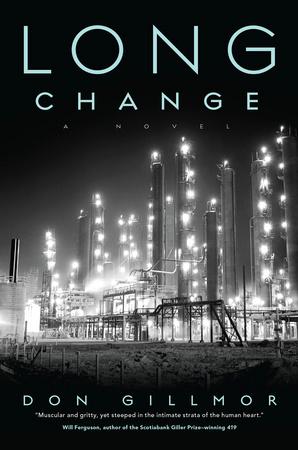
“Ritt needed the North. It not only defined him, it gave the world the illusion he was still a player. His future hinged on selling the North,” Gillmor tells us.
Gillmor harshly criticizes the destruction caused by oil companies, especially the dirty practices in the field and the immoral behaviour of oil executives, referring to the industry at one point as “A history of blood and heroic exploration and energy and exploitation and corruption and death.”

In contrast, he spends surprisingly little time criticizing environmental damage, though he lands a few good punches, such as Ritt’s reaction on first seeing the Nigerian oil patches:
“A few oil fires burned, black smoke rising in dense balls that dissipated. There were patches of stagnant water, lifeless tree trunks… the greys and blacks of the ruined colonial city laid out with the optimism and scale that came from Europeans who had misread their future.”
Bleak as the novel is, Gillmor infuses his story with a faint hope for redemption, both for the main character and the industry itself. Hopefully, the right people will be moved by his work.
Winnipeg writer Kathryne Cardwell works at The Winnipeg Foundation.
History
Updated on Saturday, August 22, 2015 7:53 AM CDT: Formatting.