The Buck stops here
CBC host, hip-hop artist's punchy prose blurs truth and fiction... with mixed results

Advertisement
Read this article for free:
or
Already have an account? Log in here »
To continue reading, please subscribe:

Digital Subscription
One year of digital access for only $205*
- Enjoy unlimited reading on winnipegfreepress.com
- Read the E-Edition, our digital replica newspaper
- Access News Break, our award-winning app
- Play interactive puzzles
*First annual payment billed as $205.00 + GST for one year. This annual subscription will automatically renew at $233.00 + GST every 52 weeks (10% off the regular annual price of $259.35). Offer available to new and qualified returning subscribers only. Cancel any time.
To continue reading, please subscribe:
Add Free Press access to your Brandon Sun subscription for only an additional
$1 for the first 4 weeks*
- Enjoy unlimited reading on winnipegfreepress.com
- Read the E-Edition, our digital replica newspaper
- Access News Break, our award-winning app
- Play interactive puzzles
*Your next Brandon Sun subscription payment will increase by $1.00 and you will be charged $17.95 plus GST for four weeks. After four weeks, your payment will increase to $24.95 plus GST every four weeks.
Read unlimited articles for free today:
or
Already have an account? Log in here »
Hey there, time traveller!
This article was published 22/08/2015 (3995 days ago), so information in it may no longer be current.
It has to be tough for a CBC Radio host to decide to publish a memoir these days.
First, there’s the looming spectre of that other, ignominious CBC Radio host, and the thoughts of his remaindered autobiography gathering dust in bargain bins across the country.
Then there’s the more subtle barrier: the knowledge that when people realize you’re a witty guy with a knack for tall tales, they might wonder why exactly your personality and passion have been so totally neutered for your gig with the Mother Corp.
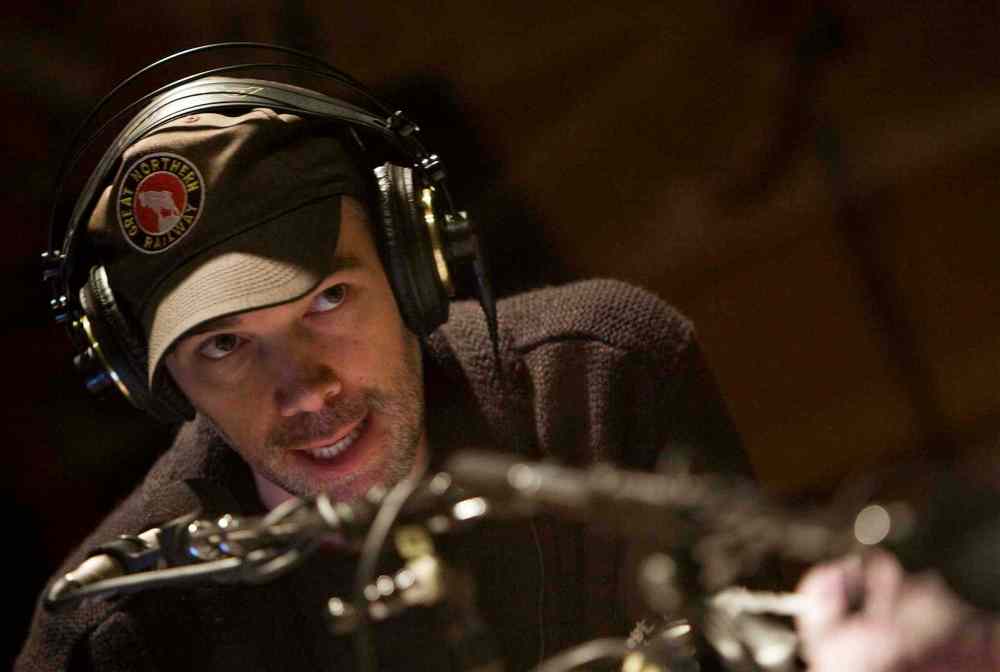
As the host of CBC’s Radio 2’s Drive, Rich Terfry seems hamstrung by a playlist that’s not of his choosing (why hire a hip-hop artist known for his wide musical influences to play the same middle-of-the-road CanCon tunes every day?) and a format that encourages tortured segues over anything that would allow him to impart his charisma or knowledge to the listener.
In Wicked and Weird, Terfry gets to let his freak flag fly with a rollicking recollection of growing up with big dreams in small-town Nova Scotia. It makes you think he could be an edgier Stuart McLean — or at least not reduced to reading Internet oddities in between spins of the latest Sarah Slean song.
It’s worth noting that the book claims to be the story of Buck 65 (Terfry’s hip-hop stage name) — an alert this is not a straight-up memoir, but a work of autofiction, the fictionalized story of the author’s alter ego.
It’s tough to tell the truth from the fabrications in Terfry’s tales, but it doesn’t really matter in the early pages, when he’s recalling his childhood in Mount Uniacke, N.S. A tiny, isolated community surround by woods, it “provided ideal cover for killers, deviants and motorcycle gangs.”
Writing in short, punchy sentences, Terfry describes the cast of characters who populate the town, miscreants and ne’er-do-wells with names like Lunk, Buzzy, Torque and Peach, and others on whom he cast an affectionate eye.
“Sherry was working the register. She was a real basket of oranges. I was in love with her and I knew she dreamed of leaving town. Her fancies carried her 20 minutes down the highway to Sackville, where there was a mall and a McDonald’s and black people.”
Describing his grandfather, a pugilistic, alcoholic lighthouse keeper, he says, “He smelled like a cocktail of hard liquor, cigarettes, Royal Pine Car-Freshener and sweat twice-filtered through the armpit of a polyester shirt.”
There’s real darkness here, too, despite the often riotously funny writing. Terfry documents suicides, abuse, drug use and depression, although how much is exaggerated is hard to know.
He also delves into his fraught relationship with his mother, a clinically depressed woman whom he loved and feared and who he claims hated him until the day she died.
A lonely boy who shied away from people, Terfry (or is it Buck?) was lucky to discover baseball and hip-hop, his true loves (in that order). He spent solitary hours throwing balls and practising batting, and climbed up a tree with a ghetto blaster to tape the rap music that was played once a week on CKDU, Halifax’s campus radio station.
But while Terfry is good with embellishing his childhood — the heightened sense of fear and wonder is exactly how a child remembers things — his more recent past is less successfully rendered.
The women in his life are smart, accomplished, artistic — oh, and unfailingly beautiful, of course — but only because he says so; they never do anything to convince us of their merits. (One allegedly has a shrine to Buck/baseball in her apartment that veers into Susan Sarandon-in-Bull Durham territory.) They leave his life as abruptly as they enter; only his mother seems to leave a mark.

And while the autofiction format is suited to Terfry’s wild imagination, it has its limits, holding the reader at arm’s length. It’s hard to take real pleasure in Buck’s tremendous successes, and when things start to go off the rails — and they do — it’s tough to feel sympathetic.
It’s especially problematic when you take into account a recent real-life Facebook post in which Terfry publicly apologized for being a lifelong liar, and his confession that the book’s central premise — he’s recalling his past from a Russian jail — is entirely fabricated.
By positioning himself as somewhere between a protagonist and a real person, Terfry loses both the awe that good literature can inspire and the wonder that truth can create when it’s stranger than fiction.
Jill Wilson is a Free Press copy editor.
Jill Wilson is the editor of the Arts & Life section. A born and bred Winnipegger, she graduated from the University of Winnipeg and worked at Stylus magazine, the Winnipeg Sun and Uptown before joining the Free Press in 2003. Read more about Jill.
Jill oversees the team that publishes news and analysis about art, entertainment and culture in Manitoba. It’s part of the Free Press‘s tradition, since 1872, of producing reliable independent journalism. Read more about Free Press’s history and mandate, and learn how our newsroom operates.
Our newsroom depends on a growing audience of readers to power our journalism. If you are not a paid reader, please consider becoming a subscriber.
Our newsroom depends on its audience of readers to power our journalism. Thank you for your support.
Book review
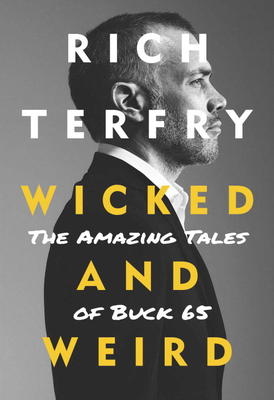
Wicked and Weird: The Amazing Tales of Buck 65
By Rich Terfry
Doubleday Canada, 129 pages, $30
Jill Wilson is the editor of the Arts & Life section. A born and bred Winnipegger, she graduated from the University of Winnipeg and worked at Stylus magazine, the Winnipeg Sun and Uptown before joining the Free Press in 2003. Read more about Jill.
Jill oversees the team that publishes news and analysis about art, entertainment and culture in Manitoba. It’s part of the Free Press‘s tradition, since 1872, of producing reliable independent journalism. Read more about Free Press’s history and mandate, and learn how our newsroom operates.
Our newsroom depends on a growing audience of readers to power our journalism. If you are not a paid reader, please consider becoming a subscriber.
Our newsroom depends on its audience of readers to power our journalism. Thank you for your support.
Advertisement Advertise With Us
Advertisement Advertise With Us
History
Updated on Saturday, August 22, 2015 7:32 AM CDT: Formatting.
Updated on Monday, August 24, 2015 11:28 AM CDT: Fixes typo