Wab Kinew melds memoir, confession and healing in powerful debut

Advertisement

Advertise with us

Alternating through the raw beat and pulse of its open heart, Wab Kinew's first book -- part confession, part memoir, part spiritual autobiography -- sings out the antiphonal rhythms of a son's progress toward integrating two forces in his life: his charged relationship with his father and his equally charged relationship with his indigenous and spiritual roots.

Read this article for free:

or

Already have an account? Log in here »

To continue reading, please subscribe:

Subscribe and receive a limited-edition Free Press branded hat or tote.

Digital Subscription

One year of digital access for only $205*

  • Enjoy unlimited reading on winnipegfreepress.com
  • Read the E-Edition, our digital replica newspaper
  • Access News Break, our award-winning app
  • Play interactive puzzles

*First annual payment billed as $205.00 + GST for one year. This annual subscription will automatically renew at $233.00 + GST every 52 weeks (10% off the regular annual price of $259.35). Offer available to new and qualified returning subscribers only. Cancel any time.

To continue reading, please subscribe:

Add Free Press access to your Brandon Sun subscription for only an additional

$1 for the first 4 weeks*

  • Enjoy unlimited reading on winnipegfreepress.com
  • Read the E-Edition, our digital replica newspaper
  • Access News Break, our award-winning app
  • Play interactive puzzles
Start now

*Your next Brandon Sun subscription payment will increase by $1.00 and you will be charged $17.95 plus GST for four weeks. After four weeks, your payment will increase to $24.95 plus GST every four weeks.

Hey there, time traveller!
This article was published 03/10/2015 (3940 days ago), so information in it may no longer be current.

Alternating through the raw beat and pulse of its open heart, Wab Kinew’s first book — part confession, part memoir, part spiritual autobiography — sings out the antiphonal rhythms of a son’s progress toward integrating two forces in his life: his charged relationship with his father and his equally charged relationship with his indigenous and spiritual roots.

This poignant version of the age-old drama of fathers and sons is distinctively inflected with the keenly felt story of encounters by Kinew’s family with racist Canadian culture as it has shadowed several generations’ local indigenous experience — be it in northwestern Ontario or on contemporary Winnipeg streets, schools, neighbourhoods and workplaces.

The Reason You Walk is organized into three chronological sections, each following a phase in the lives of the son and the father and each, fittingly, titled in Ojibwe, followed by a translation: Oshkaadizid (Youth); Kiizhewaadizid (Living a Life of Love, Kindness, Sharing and Respect); and Giiwekwaadizid (The End of Life).
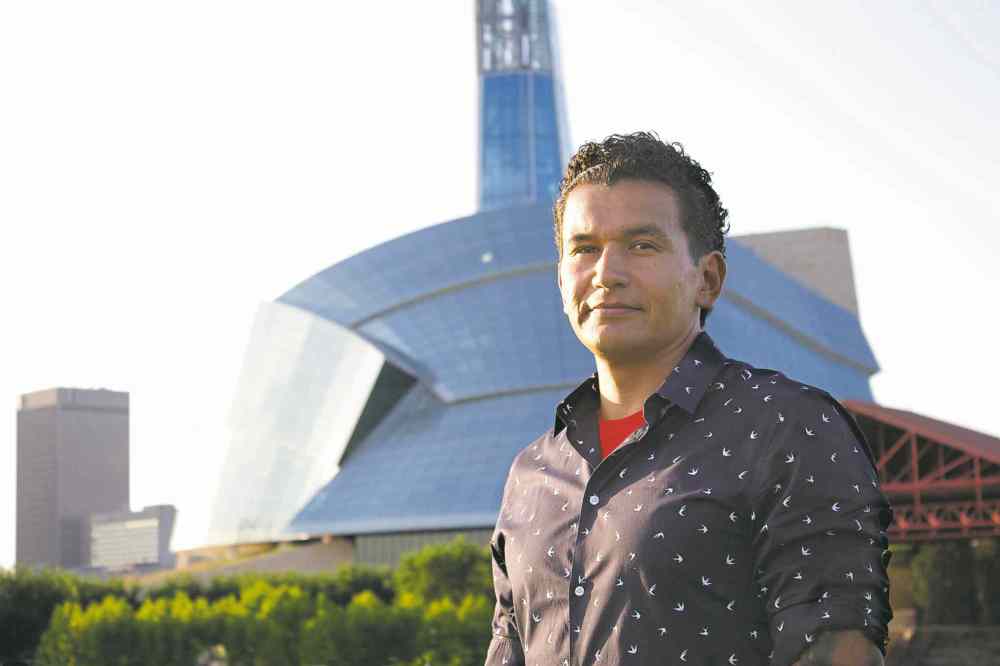
Graham Constant photo
Wab Kinew's journey saw him stray from the path of his indigenous and spiritual roots, only to find it once again in reconciliation with his father.
Graham Constant photo Wab Kinew's journey saw him stray from the path of his indigenous and spiritual roots, only to find it once again in reconciliation with his father.

Kinew’s attractively frank, first-person narration — although the voice can occasionally falter into discontinuity and naiveté — first takes his readers through his father’s scarring experience as a young boy in the residential-school system. Kinew makes that all-too-familiar story painfully real and vivid, and shows how deeply the experience affected his father, Tobasonakwut (which means “low-flying cloud” in Ojibwe), whose relationship with his family and with Wab was long marred by suppressed anger.

One long sinew in the book’s taut musculature follows the evolution of Kinew’s relationship with this iconic figure, Ndede (dad in Objibwe). As we follow the unpredictable steps and missteps along the son’s path toward their eventual reconciliation, the narration moves from the private sphere of family out into the wider public world, where father and son make their separate but increasingly significant entrances — Tobasonakwut as the influential educator and public figure, a spiritual seeker in search of ever-wider arcs of reconciliation among cultures, and Wab as the kid who at first abandons his roots for the hard-fisted, hip-hop party life of street brawls, drinking, and bleary-eyed one-night stands.

The other major narrative sinew is signalled by the book’s title. “The reason you walk” is the phrase uttered by the Creator in the traditional Anishinaabe travelling song Wab learned and has sung since he was a child. As Kinew returns to his family, and through them to his origins and to the spiritual traditions that have sustained indigenous culture for generations, he also re-enters the wise embrace of his father.

In some of the most moving passages in The Reason You Walk, Kinew invites his readers into the heart of the Sundance and its rituals, including pungent depictions of the ceremonial cuttings of participants’ flesh before they run, pulling increasingly heavy cargoes of buffalo skulls around the circle until the pegs embedded in their skin are sprung free.

A vital element in Kinew’s return to his origins — signalled everywhere in this memoir — is the return to language; both father and son perceive the preservation of Ojibwe and other indigenous languages as critical, and both teach the language and work hard to spread its uses in the community, beginning with their own wide family.

The moving spiritual element in Kinew’s confession widens and deepens as the narration brings father and son and their related indigenous life-work forward into the contemporary scene, buoyed on the swelling current of reconciliation and forgiveness. This leads to the possibility of love that increasingly attends Ndede’s mission, and that Wab learns from his father. Finally, Tobasonakwut’s long and defiant battle against the cancer that eventually claims him teaches his son an indelible lesson about persistence, endurance and grace.
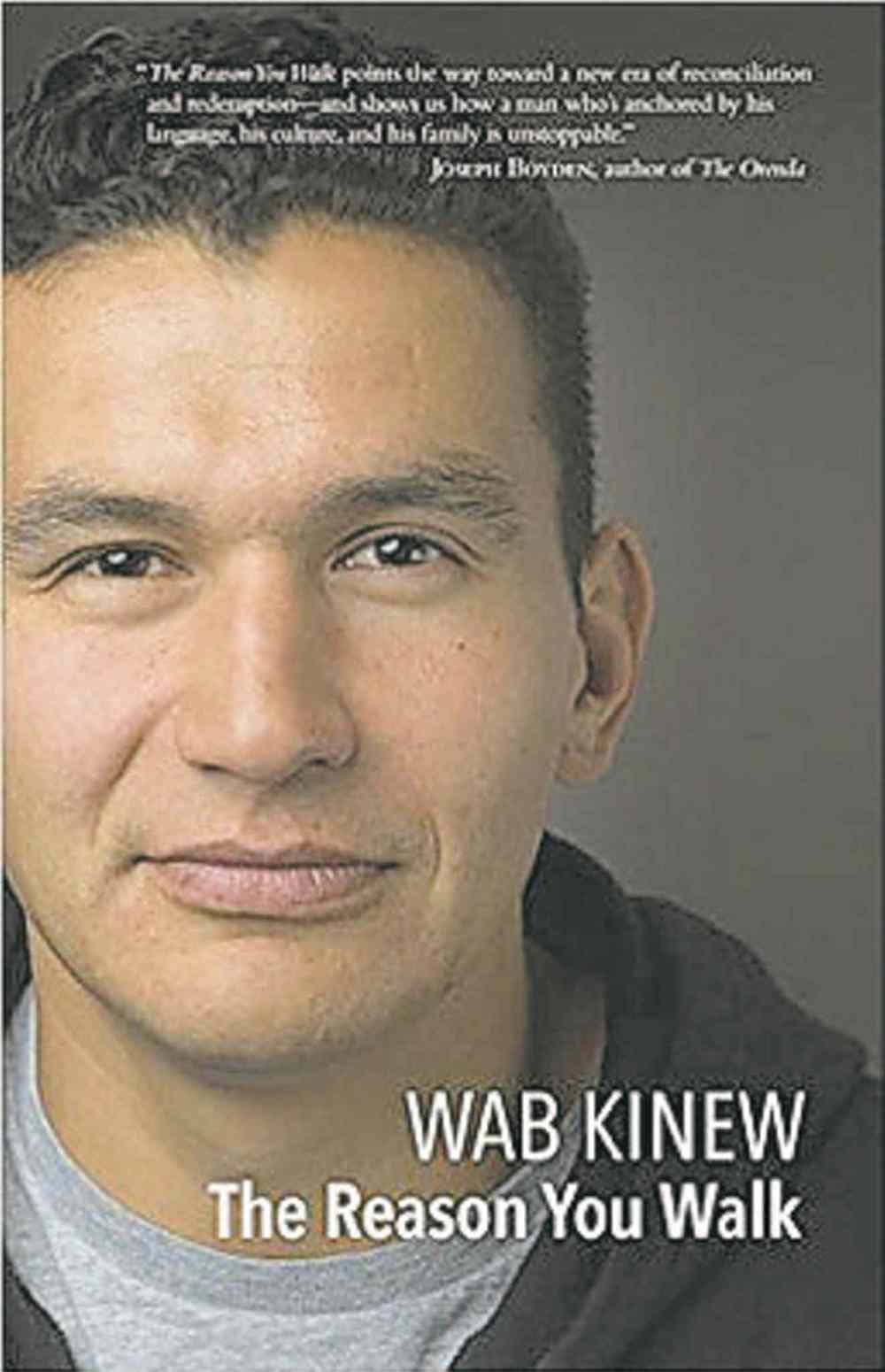
Readers might well hope that in time, The Reason You Walk will come to be apprehended as it should be — as the prophetic declaration of a new beginning, not only for Kinew and the family, culture and tradition he speaks for so eloquently, but for all Canadians.

Thanks to Wab Kinew and to this book, that’s becoming less of a dream than a simple, sweeping imperative.

Canadian literature scholar Neil Besner is provost and vice-president, academic at the University of Winnipeg.

History

Updated on Saturday, October 3, 2015 8:48 AM CDT: Formatting.

Report Error Submit a Tip

More Stories

Puzzles Palace

1 minute read Monday, Jul. 13, 2026

To solve our puzzles, please subscribe with this special offer: |

The next Duff’s Ditch must be medical

Rafiq Andani 5 minute read Preview

The next Duff’s Ditch must be medical

Rafiq Andani 5 minute read Yesterday at 2:00 AM CDT

A runaway rail trolley hurtles towards five people tied to the tracks. You stand at the switch lever. If you pull the lever, the trolley veers onto a sidetrack, where one person is tied down. Do nothing and five die. Pull the lever and one dies by your hand.

A health minister needs no introduction to the weight of that choice. Every budget season, governments confront this dilemma with one cruel modification — the lever switches between today and tomorrow. Down the near track sits this year’s emergency, a crowded emergency department, a surgical backlog, a crisis demanding a decision by Friday. Down the far track, in the distance, over the horizon, waits a geriatric demographic that has not arrived yet. Each year’s budget cannot simultaneously rescue both.

Philosophers treat the trolley scenario as a thought experiment. A health minister calls it Tuesday.

The actual choice is crueller, because both tracks hold real people. The stroke patient in today’s hallway deserves rescue, as do the patients down the line. Two scholars, Guido Calabresi and Philip Bobbitt, analyzed such allocations as tragic choices — scarcity forces a society to preserve one value by sacrificing another. Their darker observation concerned method. Societies rarely make these choices in the open. The lever keeps directing traffic away from the immediate noise, toward the far track.

Read
Yesterday at 2:00 AM CDT

PCs cleared of election violation for ‘intimacy coach’ invoice

Tyler Searle 4 minute read Preview

PCs cleared of election violation for ‘intimacy coach’ invoice

Tyler Searle 4 minute read Updated: Yesterday at 4:54 PM CDT

Manitoba’s elections commissioner has cleared the Progressive Conservatives of wrongdoing after a $3,800 expense for a car rental appeared on an invoice from a company offering “intimacy coach” services.

The findings from the commissioner bring an end to a complaint raised by the NDP in October 2024, when it was alleged the PCs violated the Election Financing Act by forging financial documents related to the previous year’s election campaign.

“I am satisfied that the expense was indeed for a car rental, as the invoice described,” Bill Bowles wrote in a letter addressed to both parties Wednesday.

Concerns over the invoice to Lucid Vitality were first raised by a former PC staffer, whose internal emails with party officials were published in the Winnipeg Sun.

Read
Updated: Yesterday at 4:54 PM CDT

Sweatier summers may call for fresh approach

Maureen Scurfield 4 minute read Yesterday at 2:00 AM CDT

DEAR MISS LONELYHEARTS: I come from a hot country where we showered a lot — we don’t like being sweaty. We’ll sometimes hit the shower three times on a hot day. We usually have a quick shower every morning, another after work, and a final one when getting ready for bed. We’ll even have a fourth after sex.

It’s only takes a minute or two each time. We don’t end up using much more water than our longtime Canadian friends who tell us they only shower once a day or bathe twice a week, but they seem do it for a much longer duration.

One Canadian guy told me he only showers on Saturday nights before he goes out with friends. Tell me he’s joking. How can people stand their own smell if they don’t bathe or shower every day? What do you think?

— Clean and Cool, Fort Richmond

Wheat City wants Brier back in town for 2028

Alex Lambert 4 minute read Preview

Wheat City wants Brier back in town for 2028

Alex Lambert 4 minute read 2:01 AM CDT

BRANDON — Seven years after hosting Canada’s top men’s curling tournament, the City of Brandon has made a bid to bring the Brier back in 2028.

Curling Canada will announce the host for the tournament, which will be held from Feb. 25 to March 5, in the fall.

“I like to think that we’ve put in the best bid we possibly can, and that we stand a very good chance,” said Jennifer Watson, executive director of Brandon First, a non-profit organization that promotes Brandon as a host city for events.

Bidding for the popular 18-team event closed at the end of May, and the winning city is expected to be notified confidentially by Sept. 30.

Read
2:01 AM CDT

No more trashing paper coffee cups

Malak Abas 6 minute read Preview

No more trashing paper coffee cups

Malak Abas 6 minute read Wednesday, Jul. 15, 2026

Mahalia Lepage and Joshua Bassman know their way around a recycling bin.

They try to take reusable cups when they go to their local coffee shop, and even volunteered with Folk Fest’s “enviro crew” last weekend. A large part of that job, they said, was informing guests about which items were recyclable.

The one item that stood out was paper coffee cups.

They weren’t considered recyclable until Wednesday — when Winnipeg recycling organizations announced paper cups can be thrown into blue bins around the province, effective immediately.

Read
Wednesday, Jul. 15, 2026