French pianist’s past mysteries make for an enthralling tune
Advertisement
Read this article for free:
or
Already have an account? Log in here »
To continue reading, please subscribe:

Digital Subscription
One year of digital access for only $205*
- Enjoy unlimited reading on winnipegfreepress.com
- Read the E-Edition, our digital replica newspaper
- Access News Break, our award-winning app
- Play interactive puzzles
*First annual payment billed as $205.00 + GST for one year. This annual subscription will automatically renew at $233.00 + GST every 52 weeks (10% off the regular annual price of $259.35). Offer available to new and qualified returning subscribers only. Cancel any time.
To continue reading, please subscribe:
Add Free Press access to your Brandon Sun subscription for only an additional
$1 for the first 4 weeks*
- Enjoy unlimited reading on winnipegfreepress.com
- Read the E-Edition, our digital replica newspaper
- Access News Break, our award-winning app
- Play interactive puzzles
*Your next Brandon Sun subscription payment will increase by $1.00 and you will be charged $17.95 plus GST for four weeks. After four weeks, your payment will increase to $24.95 plus GST every four weeks.
Read unlimited articles for free today:
or
Already have an account? Log in here »
Hey there, time traveller!
This article was published 16/01/2016 (3901 days ago), so information in it may no longer be current.
When prim and proper Helene Giroux arrives on the church doorstep in the small town of St. Homais in rural Nova Scotia, it is immediately clear that she is a woman intent on fleeing her past. Why else would such an elegant and seemingly worldly woman suddenly appear alone in the small French-Canadian town determined to make it her new home?
This is the question that propels The Piano Maker forward — and it is the question that will keep readers engaged and enthralled.
The Piano Maker is Austrian-born Canadian author Kurt Palka’s sixth novel. Palka is best known as the author of the historical novel Clara, originally published as Patient Number 7.
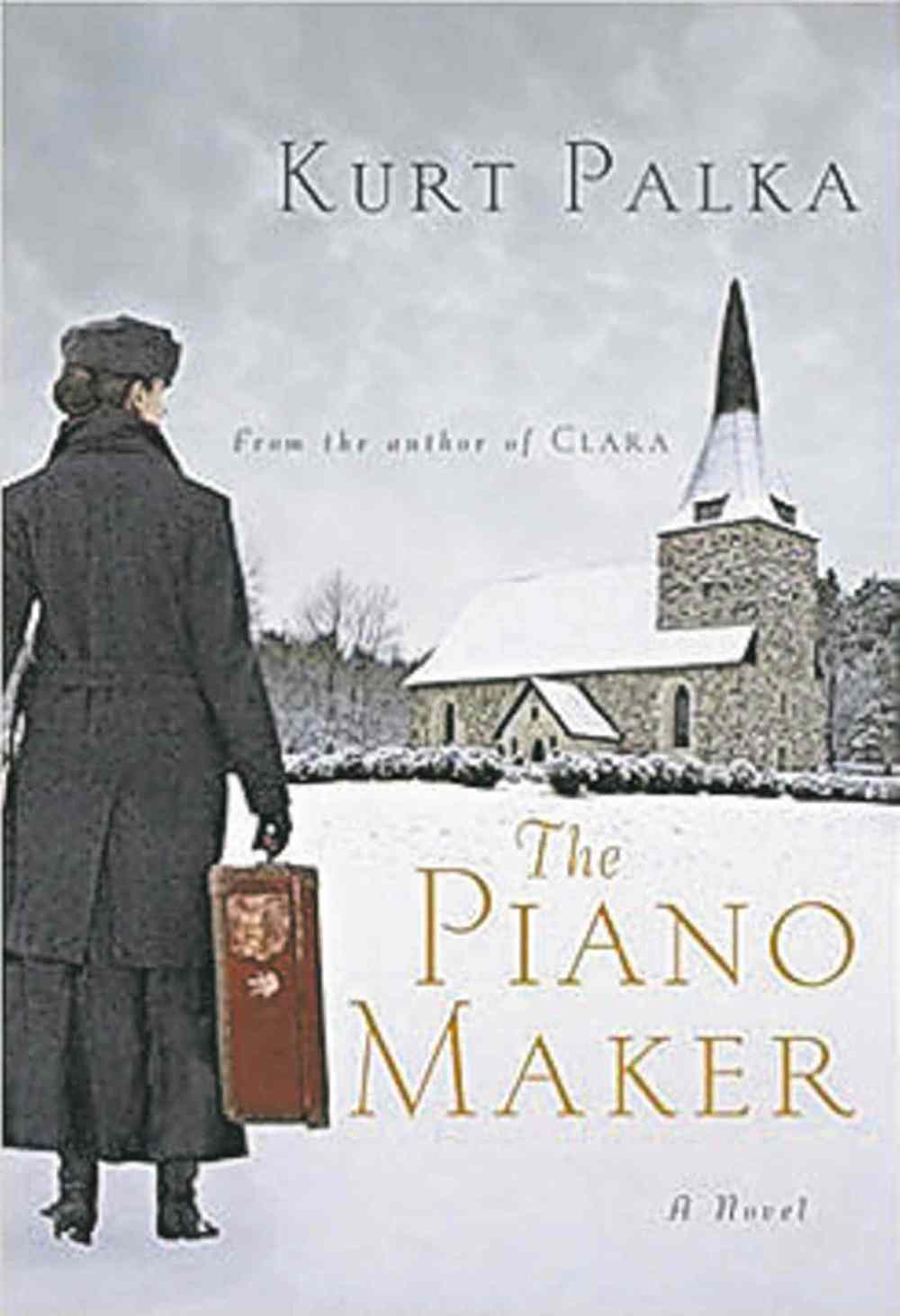
Like the title character in Clara, Palka’s newest heroine Helene has a European sensibility. Born and raised in France, Helene is a gifted pianist who comes from a family of distinguished piano makers. Her stable and idyllic life, however, is disrupted by the advent of the Great War, and the loss of both her husband and mother.
At war’s end, homeless and penniless, Helene is invited to become the pianist for a Canadian embassy entourage travelling Europe to promote Canada to potential immigrants.
It is during this tour that Helene observes “a civil servant at a podium assigned 160-acre plots of land on survey maps for less money than she had paid for their second-hand clothes.”
Like thousands of other would-be immigrants, Helene buys into the promise of the “vast and empty” land of Canada, and as soon as her piano gig ends, she makes arrangements to move to Montreal with her young daughter.
As Helene struggles to settle into her new life in a still young country, she reacquaints herself with Nathan Homewood, a former family friend, suitor and not-completely-to-be-trusted business partner. Although his motives remain unclear, Homewood offers Helene the opportunity to earn a livelihood that will give her and her daughter the independence and stability she so craves.
It is this opportunity, however, that eventually turns to disaster, and ultimately brings Helene to the steps of the church.
There she initially finds a measure of comfort and acceptance. Townsfolk are so enthralled by her elegance and gift for music that, at first, they do not ask too many questions about who she is and what she might be running from. But as small details about her gradually become known, Helene realizes she must face up to her past and, if necessary, face the consequences of one single, terrible deed.
In telling this story about Helene, her past and her present, the novel jumps back and forth in time and place, from the pre-First World War years to the 1930s, from France, to England, to Canada and into the Canadian North.
Throughout these years, locations and adventures, Helene remains stoic, strong and resilient. The narrative is very much the same.
While it does fall prey to the occasional false note, the writing as a whole, like Helene herself, remains tightly in control. To Palka’s credit, both Helene’s and the novel’s appeal lie in the fact that they are not overly emotional and do not give too much away.
Sharon Chisvin is a Winnipeg writer.