The summer of ’69
The unexpected launch of a political career
Advertisement
Read this article for free:
or
Already have an account? Log in here »
To continue reading, please subscribe:

Digital Subscription
One year of digital access for only $205*
- Enjoy unlimited reading on winnipegfreepress.com
- Read the E-Edition, our digital replica newspaper
- Access News Break, our award-winning app
- Play interactive puzzles
*First annual payment billed as $205.00 + GST for one year. This annual subscription will automatically renew at $233.00 + GST every 52 weeks (10% off the regular annual price of $259.35). Offer available to new and qualified returning subscribers only. Cancel any time.
To continue reading, please subscribe:
Add Free Press access to your Brandon Sun subscription for only an additional
$1 for the first 4 weeks*
- Enjoy unlimited reading on winnipegfreepress.com
- Read the E-Edition, our digital replica newspaper
- Access News Break, our award-winning app
- Play interactive puzzles
*Your next Brandon Sun subscription payment will increase by $1.00 and you will be charged $17.95 plus GST for four weeks. After four weeks, your payment will increase to $24.95 plus GST every four weeks.
Read unlimited articles for free today:
or
Already have an account? Log in here »
Hey there, time traveller!
This article was published 30/01/2016 (3878 days ago), so information in it may no longer be current.
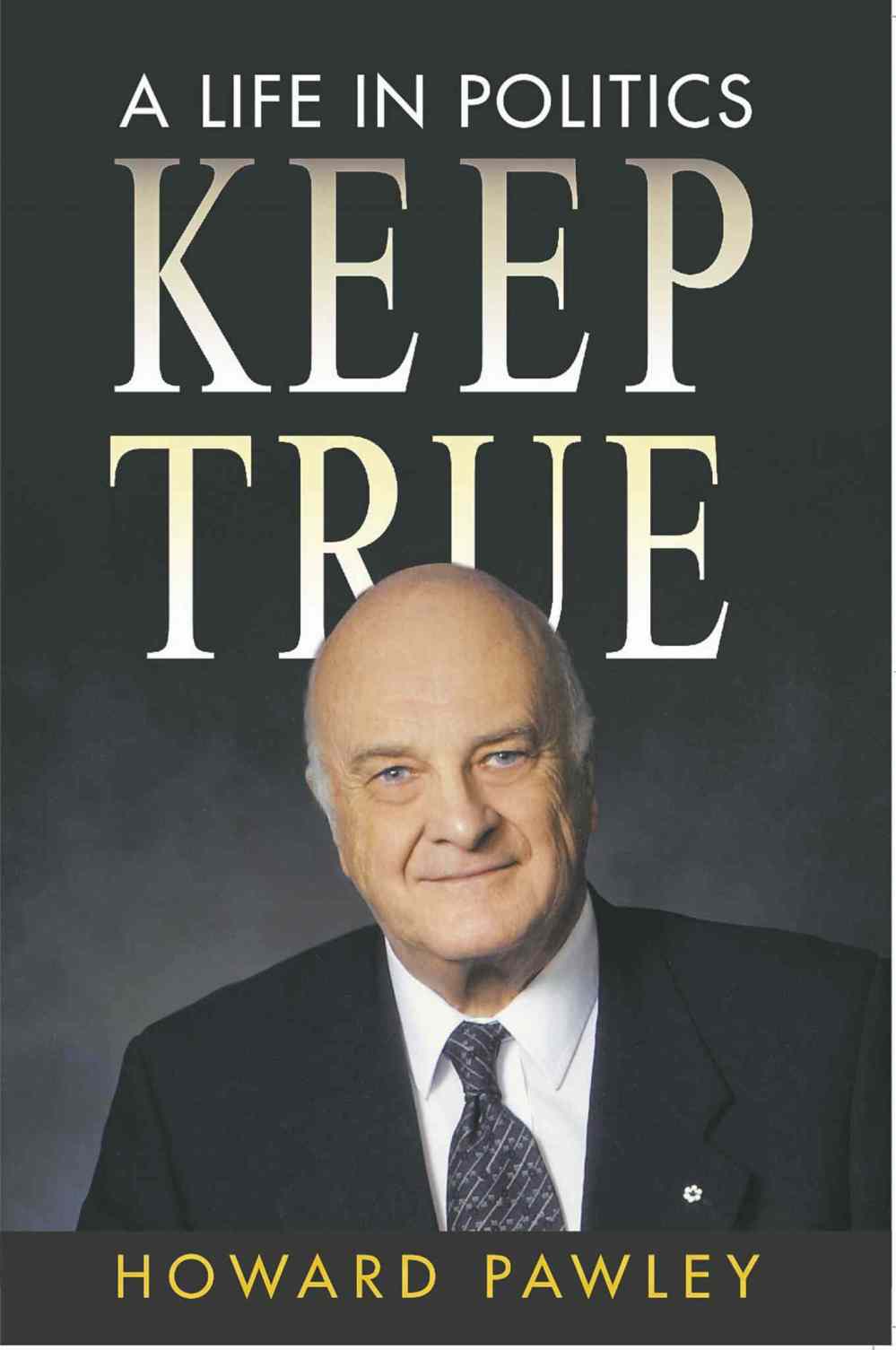
Excerpted from Keep True: A Life in Politics by Howard Pawley (University of Manitoba Press, 2011). Pawley, who served as Manitoba’s premier from 1981 to 1988, died Dec. 30.
In May 1969, while Adele and I were driving with our children to Winnipeg from Selkirk, we were struck in the rear by another auto. During the accident, I suffered injury to my vertebrae and was confined to a bed in the Selkirk General Hospital. The newly elected provincial leader of the NDP, Ed Schreyer, visited me and told me that a candidate for the Selkirk riding was urgently required for the June 25 provincial election. He asked me to at least permit my name to appear on the ballot, since not much time remained before the official nomination day when a candidate’s papers had to be filed. Apparently, other efforts to recruit a candidate had been fruitless. Ed had previously worked with me politically, and as a member of Parliament he regularly used my law office for his constituency purposes. When I warned him that, incapacitated as I was, I would be unable to do much campaigning, he retorted that the NDP was unlikely to win the Selkirk riding anyway. Provincially, the riding had never gone NDP or CCF, nor had it ever come close to winning. Still, he believed my running would help generate visibility for me if I should decide later to seek the federal Selkirk riding seat he had vacated.
Ed Schreyer had good reason for doubt about any possible win. For over 40 years, only two MLAs had represented Selkirk. The first had been James McLenaghan, a Progressive Conservative and a former Manitoba attorney general; the second, Selkirk lawyer Tommy Hillhouse, a popular and respected Liberal, first elected in 1953. It was widely believed that Tommy had been passed over for a cabinet post by former premier D.L. Campbell because of his liberal social views. During all these years, neither CCF nor NDP candidates had ever saved their deposits; indeed in 1962, no CCF candidate had run for election in the constituency.
I was enjoying the challenge of the courtroom in 1969, including my pro-bono work for those without resources. It was for this reason that the Interlake Crown prosecutor Jack Montgomery — later the province’s director of criminal prosecutions — nicknamed me “the Abe Lincoln of the Interlake.” Moreover, I had no intention of saying goodbye to my law office, which was emerging as an increasingly lucrative practice. But for all that, my major reason for entering law had been to make possible a switch into politics at a future time of my choosing. It had always been my intention to pursue a political career, especially at the federal level. So, I half-heartedly agreed to run in the provincial election.
Adele spoke on my behalf to a handful of people — eight, as I recall — who were present at the riding nomination meeting a few days later. The speech contained the following words: “I make the same pledge to you as I shall make to every citizen in the Selkirk riding, namely that I will devote my experience, my enthusiasm and my heart to building a better way of life in this area. This is not an empty political promise. I make it sincerely, believing that I can be of genuine service to the citizens of this riding and to our province.” I then added, “It has been a difficult decision. A recent automobile accident has kept me on my back for the past two weeks… my doctor has indicated that I should be able to return to full activity by July 1.”
Adele attended to the business of the law office during the day and then visited me in the late afternoon at the hospital, bringing correspondence and sharing whatever questions had arisen during the day at the office. It was Adele who went door to door canvassing on my behalf. It was she who would find an increasingly sympathetic electorate at the doorsteps. Later, I playfully suggested if it had been left to me to go door to door I would not have won.
I needed Adele’s determined support, coupled with the efficiency displayed by Eugene Laye, my campaign manager, and dozens of volunteers, including Doug and Leona Hacking, Lorna Morriseau, Amy Clemons, Al Scramstad and his parents, Mr. and Mrs. Nick Penner and their son Kurt, Nick and Marie Yusark, Tom Kopp, and many others.
In Selkirk, the PCs had nominated a strong candidate in Bud Oliver, later to become Selkirk’s respected mayor. However, a local schism would hurt this party when Tom Norquay, president of the Selkirk Progressive Conservative Association, decided to run as an independent. He argued that the Selkirk PC nomination meeting was unconstitutional because some who voted at the meeting were not residents of their constituency, and because of this and other alleged irregularities, he attempted to declare the meeting invalid. As an independent candidate, Norquay would muster only 57 votes on election day. Nonetheless, the Progressive Conservatives were not helped by such friendly fire, as some called it. Moreover, George Sigurdson, the Liberal candidate, failed to garner the previous Liberal party support, polling only 835 votes. Hillhouse’s decision not to seek re-election, coupled with the last-moment nomination of his replacement, proved to be a severe blow to Liberal fortunes in the riding. Most of their traditional support shifted over to us. Lying on my hospital bed, I was flabbergasted by the faltering campaigns of my opponents.
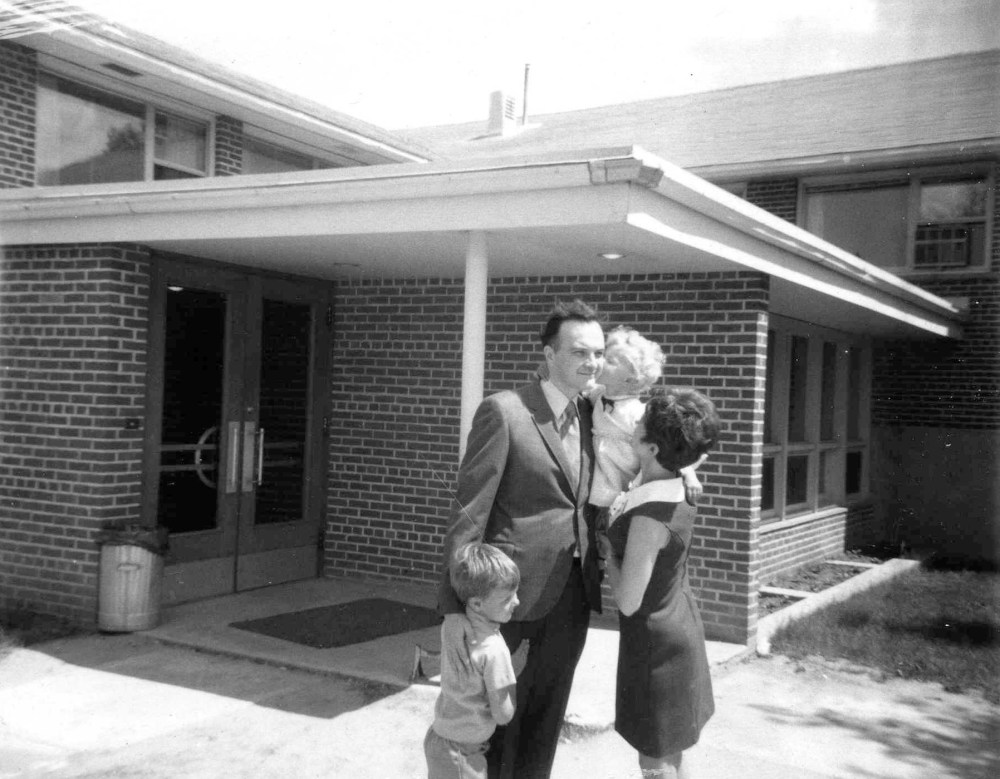
I was released from the hospital shortly before the election. It didn’t hurt that my departure from the hospital would be prominently featured in a front-page picture in the local weekly; it showed me being greeted by my loving wife and being hugged by our two children, ages five and three. I have always considered the timing and positioning of this photo amazing. The Selkirk Journal was not known to be sympathetic to the NDP, but on this occasion, politics was apparently outweighed by sympathy for my injury. On June 25, 1969, the election produced an upset victory for the NDP, not just in Selkirk but also provincially. My elected political career was launched.
The party claimed 28 of the 57 constituencies in Manitoba. Premier Walter Weir had greatly miscalculated the electorate, assuming that a well-publicized national confrontation at a recent federal-provincial conference with Canada’s new prime minister, Pierre Elliott Trudeau, had enhanced his popularity. Although he had disputed the use of the federal government’s spending power to implement a national health-care program, he failed to recognize the commotion that would result from the imposition of health insurance premiums, even going so far as to mail the billings to taxpayers during the election campaign.
Premier Weir also mishandled the mounting anger over the auto insurance issue, at a time when debate raged about the deplorable state of the auto insurance system in Manitoba. This issue was to play a very important role throughout my political career in Manitoba. Indeed, since my departure from public life, it has followed me into my private life, as I have been called upon to campaign in other provinces in Canada for publicly owned auto insurance.
Another campaign issue in some parts of the province was the flooding of South Indian Lake by Manitoba Hydro, which angered environmentalists and aboriginal people. The aboriginal population accused the government of interfering with their opportunities for fishing and hunting. The environmentalists objected to the damage that resulted from the flooding.
Added to these issues was a residual anger at the failure of a former premier, Duff Roblin, to honour a 1966 election campaign promise not to introduce a provincial sales tax, which he did implement before seeking the leadership of his national party. There were also mounting suspicions about the Manitoba Development Fund’s financial support of millions of dollars (although the full extent of the payout was not fully known at the time) to Churchill Forest Industries, a private company in The Pas. This, too, was to play a role in my future.
By 1969, the collapse of the Liberal party under its right-wing leader, Bobby Bend, had left a void in the centre-left of the province’s political spectrum. The electorate had no alternative but to elect Ed Schreyer if they wished to avoid a right-wing Progressive Conservative administration. That was exactly what happened. At the time, the result was surprising; although it was a minority government, few had expected the NDP to win at all. With 28 seats out of 57, the newly elected Manitoba government was one seat short of a legislative working majority.
Majority was finally achieved when the maverick St. Boniface Liberal Larry Desjardins, attracted by the youthful and charismatic premier-elect Ed Schreyer, joined the NDP caucus after first designating himself in the legislature as a Liberal-Democrat. The premier rewarded him by appointing him as his legislative assistant. The popular vote for the NDP, at 38 per cent, led the opposition and the business community to challenge the new government’s mandate. The modest levels of popular support for the NDP became a refrain that was echoed repeatedly by the powerful insurance industry in its unrelenting campaign to derail the new government’s public automobile insurance initiative.
With this background, I was understandably awed when, a few days after the 1969 election, I was invited by the premier-elect to serve in the cabinet as his municipal affairs minister, commissioner of northern affairs and government affairs minister and also was assigned the responsibility of dealing with the red-hot auto insurance issue. At the time, I was rather surprised to receive this responsibility, as I had no previous legislative experience. Perhaps my past experience in the party and my legal experience were the persuasive factors. After accepting the Schreyer telephone request, I thought long and hard about what I had just agreed to undertake. Did it make sense that a person without legislative experience could deal with the most important and contentious issue in the first term of the new and minority government? Should I have declined this part of my cabinet responsibility? I immediately realized that this challenge would either make or break my future political career. A good performance would undoubtedly enhance my stock, while an inept one would ruin it.
To this day, I remember my embarrassment upon arriving to assume my ministerial responsibilities — and nervously asking a legislative security officer for the directions to Room 333, the office of the municipal affairs minister.