Building nations
Laxer's look at North American history connects events, movements and peoples
Advertisement
Read this article for free:
or
Already have an account? Log in here »
To continue reading, please subscribe:
Monthly Digital Subscription
$0 for the first 4 weeks*
- Enjoy unlimited reading on winnipegfreepress.com
- Read the E-Edition, our digital replica newspaper
- Access News Break, our award-winning app
- Play interactive puzzles
*No charge for 4 weeks then price increases to the regular rate of $19.00 plus GST every four weeks. Offer available to new and qualified returning subscribers only. Cancel any time.
Monthly Digital Subscription
$4.75/week*
- Enjoy unlimited reading on winnipegfreepress.com
- Read the E-Edition, our digital replica newspaper
- Access News Break, our award-winning app
- Play interactive puzzles
*Billed as $19 plus GST every four weeks. Cancel any time.
To continue reading, please subscribe:
Add Free Press access to your Brandon Sun subscription for only an additional
$1 for the first 4 weeks*
*Your next subscription payment will increase by $1.00 and you will be charged $16.99 plus GST for four weeks. After four weeks, your payment will increase to $23.99 plus GST every four weeks.
Read unlimited articles for free today:
or
Already have an account? Log in here »
Hey there, time traveller!
This article was published 02/07/2016 (3465 days ago), so information in it may no longer be current.
The notion of the nation state project comes into full force in James Laxer’s second contribution to his trilogy on North American history. Laxer, the former candidate for the NDP leadership who surprised the likes of David Lewis and who is a renowned York University scholar, investigates in Staking Claim to a Continent the idea that three white-settler nation-state projects erupted in the mid-19th century and how these projects were intimately connected.
For many, the histories of the nation-state projects of North America have been taught and learned in specific silos. In Manitoba we teach the history of Canada, the United States, and the history of First Nations in very different contexts. (We also tend to leave out Mexico as a nation-state project altogether.) We also tend to teach these histories outside the context of global affairs, rendering these narratives to simplified and isolated timelines of random events and movements.
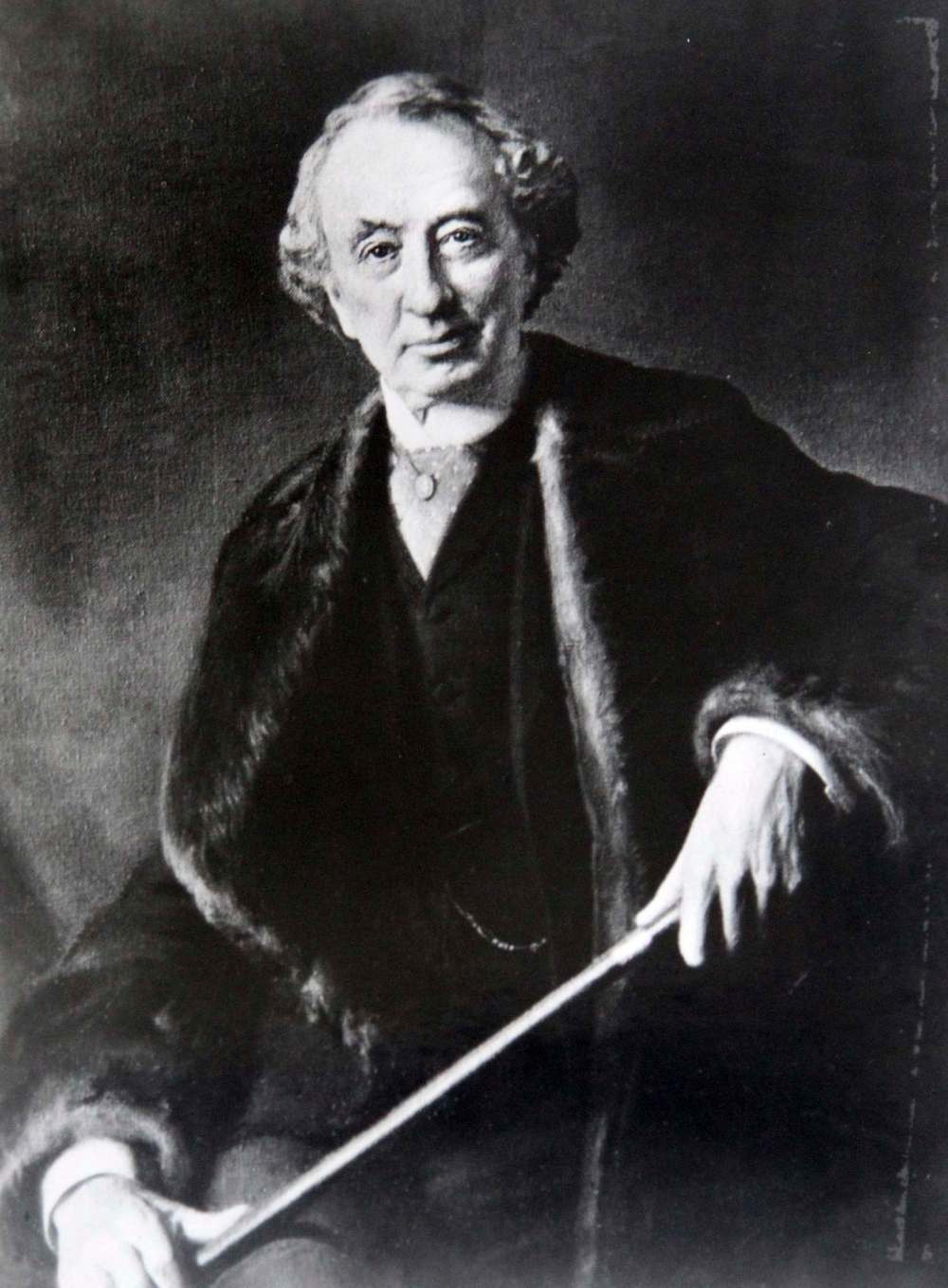
Laxer attempts to provide a deeper and more complex understanding of North American history through the lens of three leaders: Sir John A. Macdonald, Abraham Lincoln and Jefferson Davis. As such, he makes the claim that the history of North America, at least in the colonial sense, was based on the mid-19th century experiments of the United States of America, the Confederate States of America, and a bizarre federation of British colonies to the north. He also tips his hat to the other solitude in British North America, that of the nation-state project of Quebec. (While Laxer firmly acknowledges First Nations, there is a gap in the emphasis he places on them as nation state projects themselves.)
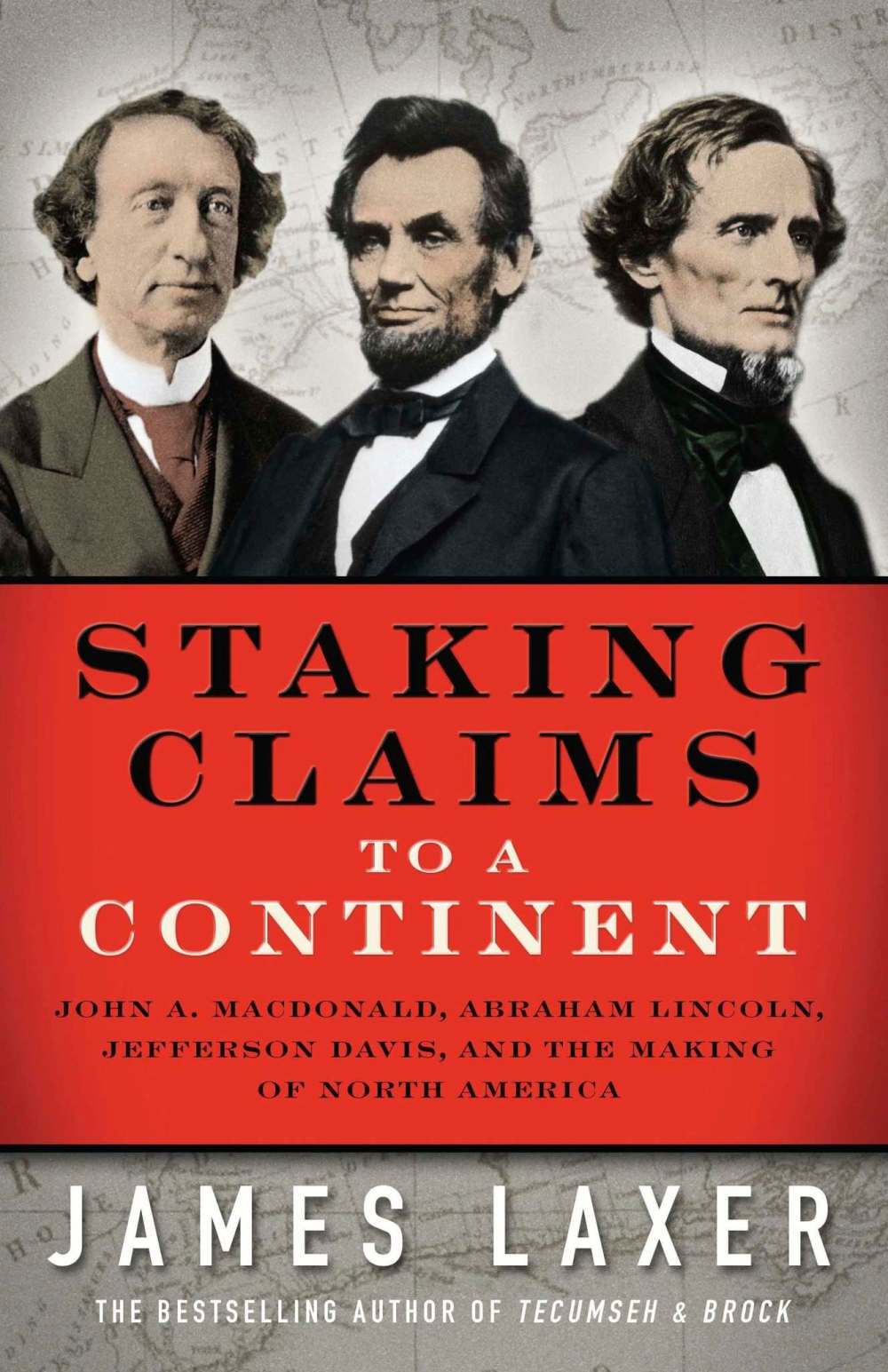
Laxer argues throughout that these individuals, who were products of their time and firmly rooted in bigoted attitudes, were key drivers in the successes or failures of their nation state projects. Coupled with this, he makes critical connections between American imperialism, capitalism, slavery, and the domination of the United States on the continent. He also makes key insights into the cause and consequence of the Civil War in terms of the evolution of Confederation and the complex relationship Canada has had with its indigenous peoples, with Great Britain, and with French Canadians.
As Laxer suggests, “Quebec was to be a powerful sub-national state and the launch pad for future attempts to establish it as a sovereign national state separate from Canada.” He is able to make tight and provocative connections about how all these nation-state projects were almost symbiotic experiments, with some succeeding and several failing. Laxer, as an historian, is able to argue the “big picture,” an art lost in the minutiae of micro-history these days, and is fully able to create an important argument about the consequences of white settlers on this continent.
This connectivity of events, movements, and peoples is the central theme of this history and is an interesting method for students of history to analyze. For example, Laxer posits that Macdonald’s speech supporting Cartier’s desire to resist representation by population in the Legislative Assembly “came exactly one week after the Confederates assaulted Fort Sumter on April 12, 1861, in the opening shots of the Civil War. The conflict would prove decisive in shifting the parameters of the Canadian debate.” By this, Staking Claim to a Continent is an investigation into the energetics of history in the 19th century.
From Manifest Destiny, slavery, Confederation and the Red River Resistance to the political personalities of these nation-state projects, Laxer offers an introduction to North American history for those who are new to the subject, and a catalyst for deep arguments amongst serious thinkers. For educators, this history is a brilliant example of how historians use these historical thinking concepts, and is an avenue for young historians to cut their teeth on the art of doing history.
Matt Henderson is a teacher at St. John’s-Ravenscourt School.