

Becoming Bobby
RFK's path to from conservative to Democratic icon rife with complexity, contradictions
Advertisement
Read this article for free:
or
Already have an account? Log in here »
To continue reading, please subscribe:
Monthly Digital Subscription
$1 per week for 24 weeks*
- Enjoy unlimited reading on winnipegfreepress.com
- Read the E-Edition, our digital replica newspaper
- Access News Break, our award-winning app
- Play interactive puzzles
*Billed as $4.00 plus GST every four weeks. After 24 weeks, price increases to the regular rate of $19.95 plus GST every four weeks. Offer available to new and qualified returning subscribers only. Cancel any time.
Monthly Digital Subscription
$4.99/week*
- Enjoy unlimited reading on winnipegfreepress.com
- Read the E-Edition, our digital replica newspaper
- Access News Break, our award-winning app
- Play interactive puzzles
*Billed as $19.95 plus GST every four weeks. Cancel any time.
To continue reading, please subscribe:
Add Free Press access to your Brandon Sun subscription for only an additional
$1 for the first 4 weeks*
*Your next subscription payment will increase by $1.00 and you will be charged $16.99 plus GST for four weeks. After four weeks, your payment will increase to $23.99 plus GST every four weeks.
Read unlimited articles for free today:
or
Already have an account? Log in here »
Hey there, time traveller!
This article was published 06/08/2016 (3558 days ago), so information in it may no longer be current.
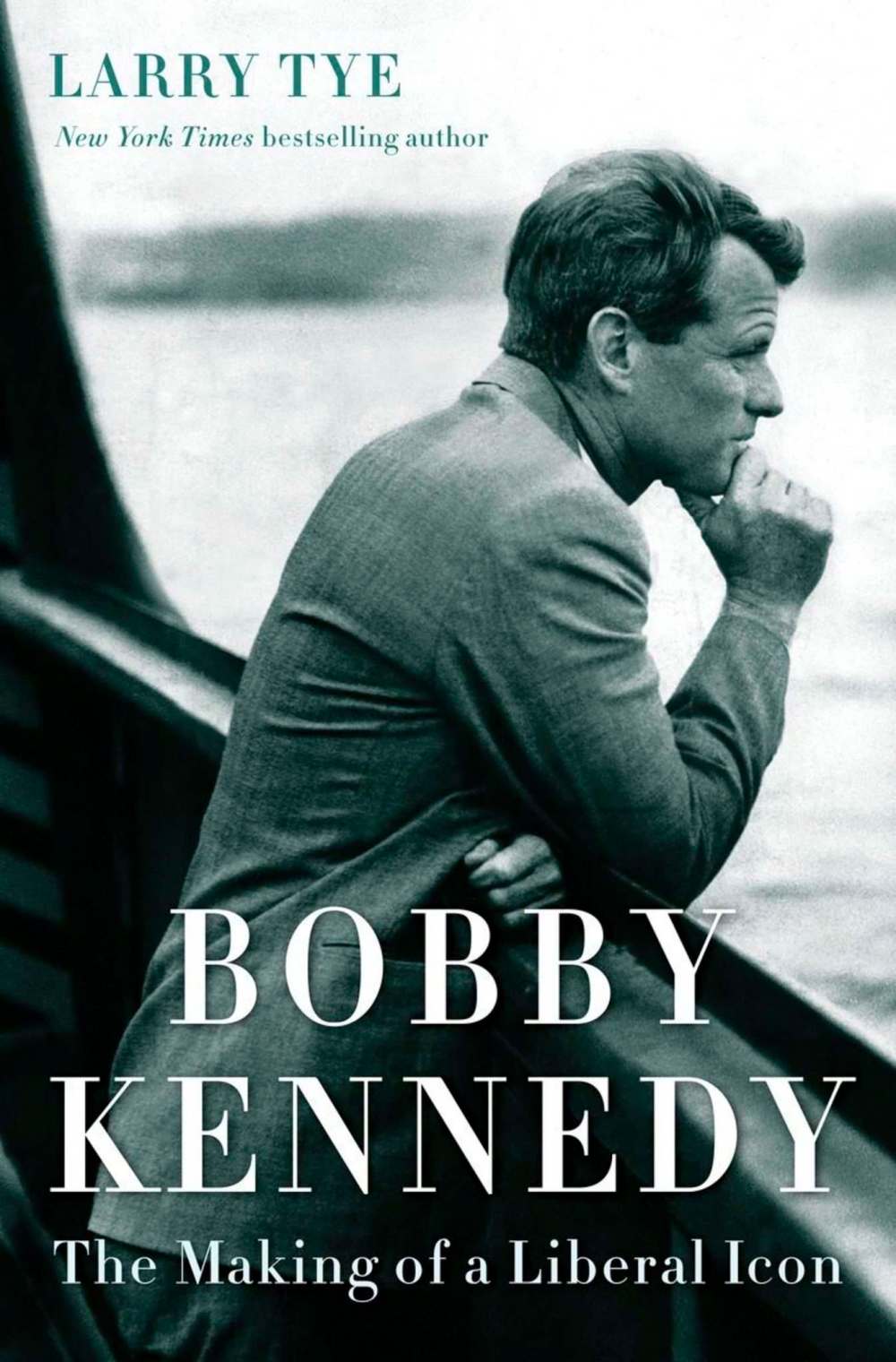
Bestselling author and award-winning journalist Larry Tye has written the definitive biography of slain U.S. senator Robert Francis Kennedy.
Meticulously researched and beautifully written, the book grips the reader from its first page. Rather than duplicating some biographies, which have focused on the sensationalistic aspects of the personal life of the brother of former U.S. president John F. Kennedy, Massachusetts-based Tye explores RFK’s ideological shift from political right winger to U.S. Democratic presidential candidate and hero of the left.
Tye, who has been a Boston Globe journalist and a Harvard University fellow, writes perceptively, passionately and powerfully about his subject. He had access to unpublished memoirs, unreleased government files and close to 60 boxes of never-before-seen papers that had “been under lock and key for the past 40 years.” He also conducted more than 400 interviews for his unique tome with RFK intimates, including with Robert’s widow, Ethel Kennedy, who has rarely spoken on the record, as well as RFK’s only surviving sibling, Jean Smith.
This biography is timed exceedingly well, what with the Democratic National Convention having just confirmed Hillary Clinton as the first ever female Democratic presidential nominee in U.S. history.
Tye details Bobby Kennedy’s evolution from counsel to Communist hunter (and hater) Sen. Joseph McCarthy to a “fiery liberal” who tried to unite “working-class whites” with indigent African-Americans and Latinos.
As a result of his eloquence, his research and the unprecedented access he had while writing the biography, Tye’s perspective is fresh and interesting. For example, he states that RFK’s father, Joseph P. Kennedy, saw Robert, his third son of his nine children, as “the runt of the litter of nine — the lamest athlete, the most tongue-tied speaker, the least likely to matter to the world.”
His parents’ low expectations drove RFK to “achieve at any cost.” He became a formidable attorney general in his brother’s presidency.
According to Tye’s hypothesis of Bobby Kennedy’s political transformation, his father’s stroke, followed by his brother’s assassination in 1963, led to a year of “undiagnosed and unacknowledged depression, convinced that his meaningful life, along with his career, had died in Dallas” along with JFK. Once Bobby emerged from the gloom, his compassion helped shape his own political career, first as a senator and then, briefly before his 1968 murder at the age of 42, as a presidential candidate.
Tye’s research demonstrates that the “earliest, hardest-edged” and conservative part of Bobby Kennedy’s career has been downplayed in countless books as well as by the Kennedy public-relations machine. Kennedy disliked civil rights leader Martin Luther King Jr. and homosexuals.
Tye observes that “instead of following a straight line from conservative to liberal, he (RFK) had skipped straight to revolutionary.” He quotes cartoonist Jules Feiffer as saying Bobby was so riddled with contradictions that he was “the Bobby Twins: Good Bobby and Bad Bobby. The Good Bobby is a fervent civil libertarian. The Bad Bobby is a fervent wire tapper.”

Kennedy was a senator like no other, Tye writes: “It wasn’t just his money, fame and power, although each elevated him beyond any other freshman in memory. So did his apparently permanent title as attorney general and the knowledge that he’d been the martyred president’s most trusted lieutenant.”
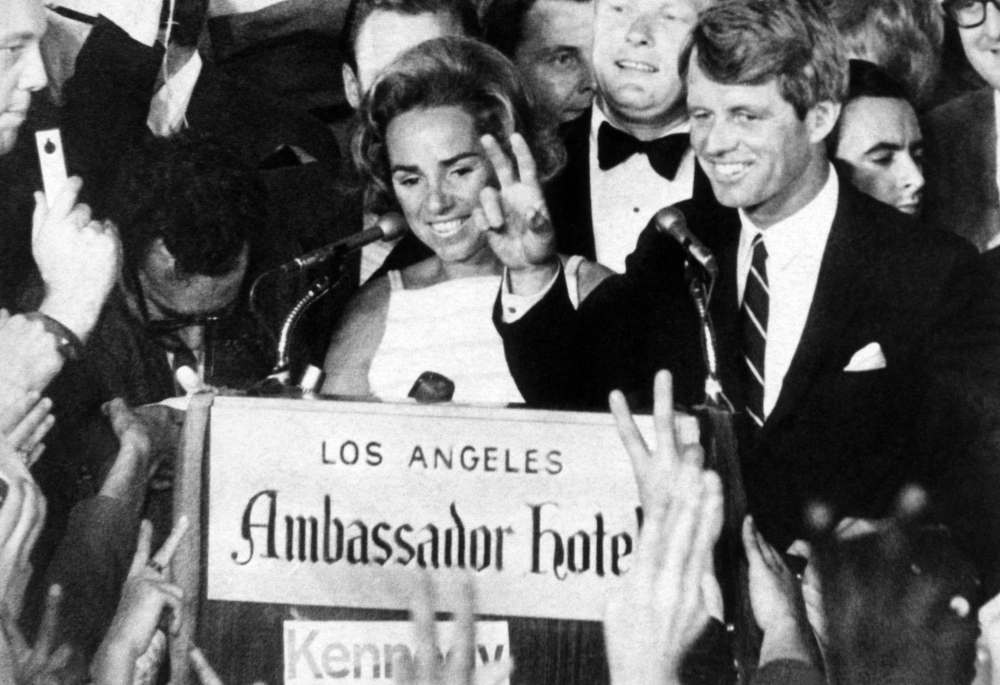
Tye also admires the fact that Kennedy, a father of 11, was “generous to people who didn’t matter.” Kennedy would do good deeds and then insist that they be kept secret rather than be used for public-relations purposes.
The author correctly and controversially concludes, “(I)n a way, it didn’t matter that Bobby Kennedy has never assumed the throne (as U.S. president) and now never would. Millions of Americans already believed in his majesty.”
In this excellent biography, Kennedy’s extraordinary life receives the royal treatment it deserves.
Brenlee Carrington, a Winnipeg lawyer and mediator, is the Law Society of Manitoba’s equity ombudsperson.