Liu’s sci-fi trilogy a modern-day classic

Advertisement

Advertise with us

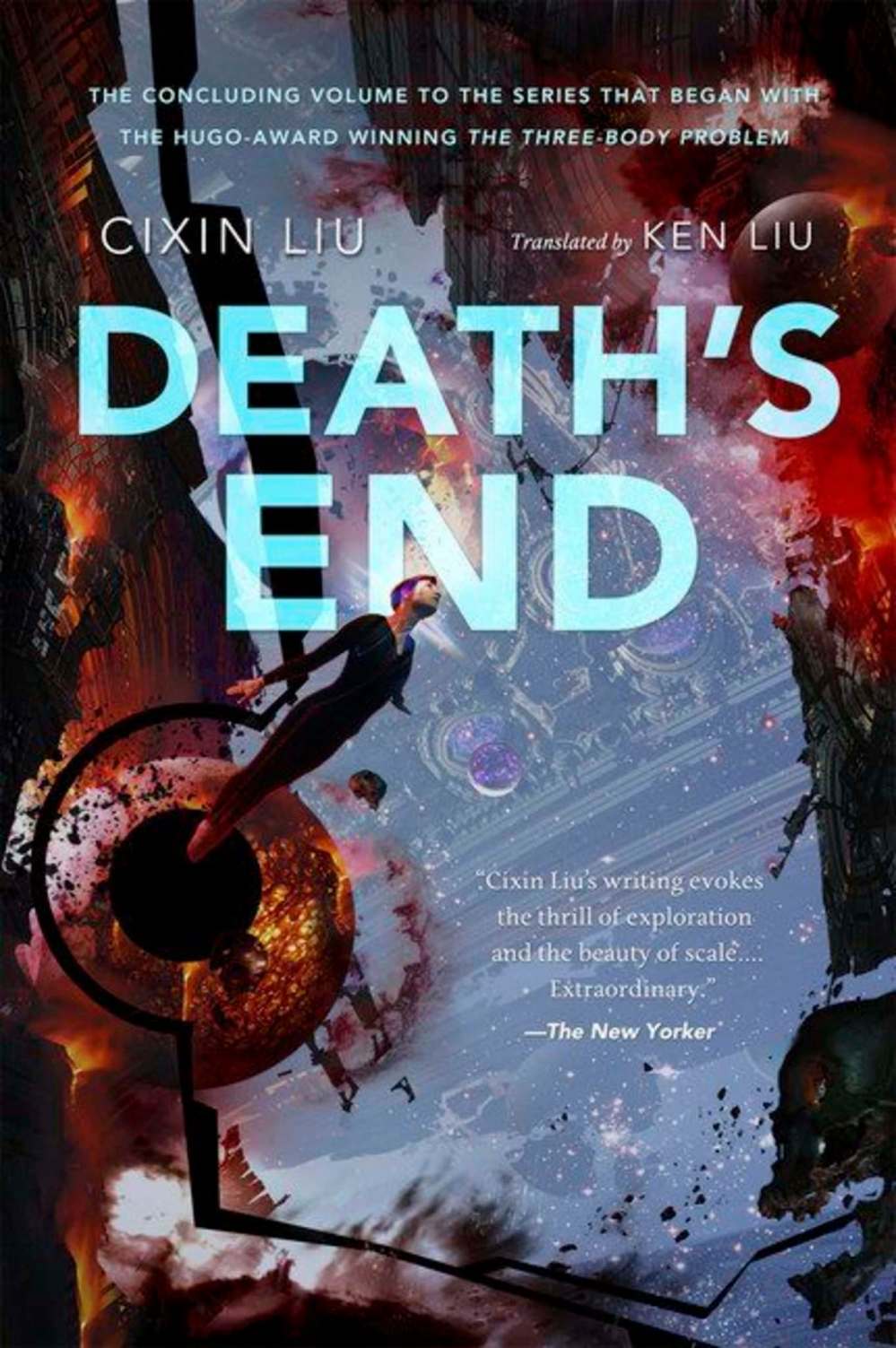
Chinese literary star Cixin Liu has, in the scant two years since his first in-translation release, won or been nominated for most of the major English science-fiction awards, opened the gates for additional English-language releases of China’s authors, and provided a springboard for an ongoing discussion of non-Western perspectives in the literature of ideas. With this final volume of his trilogy, he’s also stuck the landing and validated the loyalty of his new Western readers.

Read this article for free:


or

Already have an account? Log in here »

To continue reading, please subscribe:

Subscribe and receive a limited-edition Free Press branded hat or tote.

Digital Subscription

One year of digital access for only $205*

  • Enjoy unlimited reading on winnipegfreepress.com
  • Read the E-Edition, our digital replica newspaper
  • Access News Break, our award-winning app
  • Play interactive puzzles

*First annual payment billed as $205.00 + GST for one year. This annual subscription will automatically renew at $233.00 + GST every 52 weeks (10% off the regular annual price of $259.35). Offer available to new and qualified returning subscribers only. Cancel any time.

To continue reading, please subscribe:

Add Free Press access to your Brandon Sun subscription for only an additional

$1 for the first 4 weeks*

  • Enjoy unlimited reading on winnipegfreepress.com
  • Read the E-Edition, our digital replica newspaper
  • Access News Break, our award-winning app
  • Play interactive puzzles
Start now

*Your next Brandon Sun subscription payment will increase by $1.00 and you will be charged $17.95 plus GST for four weeks. After four weeks, your payment will increase to $24.95 plus GST every four weeks.

Hey there, time traveller!
This article was published 15/10/2016 (3584 days ago), so information in it may no longer be current.

Chinese literary star Cixin Liu has, in the scant two years since his first in-translation release, won or been nominated for most of the major English science-fiction awards, opened the gates for additional English-language releases of China’s authors, and provided a springboard for an ongoing discussion of non-Western perspectives in the literature of ideas. With this final volume of his trilogy, he’s also stuck the landing and validated the loyalty of his new Western readers.

The trilogy (featuring The Three-Body Problem, The Dark Forest and Death’s End) was first published in China a decade ago. As a series it is largely considered his greatest work. Thoroughly modern in some ways (some have even described aspects of Liu’s writing as Murakami-like, referring to the international sensation out of Kyoto, Japan), there’s a definite classicism to this story, similar in flavour to old-school, hard science-fiction masterpieces such as Arthur C. Clarke’s 2001: A Space Odyssey (most famous for its highly acclaimed Kubrick-directed film version), or Isaac Asimov’s Foundation series (never yet filmed, though perpetually in development).

It’s not just a matter of the epic scope or existential queries being posed that invite such comparisons. The view of the universe Liu poses is, arguably, quite dark. In a post-contact universe humankind, no longer alone, is fighting for its very survival against an almost overwhelmingly superior alien race: one threat, it turns out, of many. Many of the human characters tasked with preserving the species are at best morally ambiguous, and at worst pragmatic monsters.
Liu still seems to believe goodness can and does exist. A happy ending may not be a foregone conclusion — on the scale of individual lives, species, or the universe as a whole — but hope springs eternal. That hard-nosed realist bent, girded with an undercurrent of restrained optimism, is a hallmark of those old universe- and eternity-spanning tales written by the old masters.

The story of humanity and its interstellar neighbours-cum-would-be-conquerors, the Trisolarans, spans centuries. The Three-Body Problem, the first entry in this series, jumps back and forth between the turbulent Cultural Revolution of 1960s China and the present day. It ends with humanity at large realizing what a select few have known for decades: we are not alone, and neither are we safe.

The second volume, The Dark Forest, starts again in the present day, focusing on an almost entirely different set of characters. Through advances in cryonic-freezing techniques, this narrative followed their exploits centuries into the future, waking up at intervals as the multi-generational project to defend against the invading fleet continued apace. The book ends with the invading fleet still en route, but apparently thwarted by one man’s epiphany in strategy.

This final novel takes us back one more time to the present day, focusing on yet another group of characters working on an entirely different long-term defense project. It catches up to the point in future history where the second book left off and continues well beyond. All the while, it focuses on one unassuming young Chinese woman, Cheng Xin, a gifted engineer whose decisions will, again and again, shape the future of humanity.

Critically, this final protagonist is compassionate, courageous and honourable. Liu has presented flawed heroes before, and Cheng Xin too makes her share of errors. But she justifies the narrative assumption that ours is a species that deserves to continue on, and the emotional and intellectual investment readers have made to see humanity through to its final fate.

In the final analysis, this is a near-perfect story told over three books, destined to be an enduring classic.

Joel Boyce is a Winnipeg writer and educator.
Report Error Submit a Tip

More Stories

Gilbert Plains Country Club closes for remainder of season due to flood damage

Ken Wiebe 6 minute read Preview

Gilbert Plains Country Club closes for remainder of season due to flood damage

Ken Wiebe 6 minute read Thursday, Aug. 6, 2026

Scott McCallum has made the trek to the Gilbert Plains Country Club clubhouse countless times.

But this was the first time the golf professional and general manager of the course required hip waders to get to his office.

Walking hand in hand with his wife Lindsay, McCallum didn’t need much time to see the devastation caused by the flash flooding in the Parkland region in late June.

“We’re on a river and it’s a beautiful golf course, but anytime you’re on a body of water you know that you’re taking a chance of events like this happening,” McCallum said in a telephone interview. “To this magnitude, we’ve never seen anything like it before. So, this is new to us.

Read
Thursday, Aug. 6, 2026

Liu’s sci-fi trilogy a modern-day classic

Reviewed by Joel Boyce 4 minute read Preview

Liu’s sci-fi trilogy a modern-day classic

Reviewed by Joel Boyce 4 minute read Saturday, Oct. 15, 2016

Chinese literary star Cixin Liu has, in the scant two years since his first in-translation release, won or been nominated for most of the major English science-fiction awards, opened the gates for additional English-language releases of China’s authors, and provided a springboard for an ongoing discussion of non-Western perspectives in the literature of ideas. With this final volume of his trilogy, he’s also stuck the landing and validated the loyalty of his new Western readers.

The trilogy (featuring The Three-Body Problem, The Dark Forest and Death’s End) was first published in China a decade ago. As a series it is largely considered his greatest work. Thoroughly modern in some ways (some have even described aspects of Liu’s writing as Murakami-like, referring to the international sensation out of Kyoto, Japan), there’s a definite classicism to this story, similar in flavour to old-school, hard science-fiction masterpieces such as Arthur C. Clarke’s 2001: A Space Odyssey (most famous for its highly acclaimed Kubrick-directed film version), or Isaac Asimov’s Foundation series (never yet filmed, though perpetually in development).

It’s not just a matter of the epic scope or existential queries being posed that invite such comparisons. The view of the universe Liu poses is, arguably, quite dark. In a post-contact universe humankind, no longer alone, is fighting for its very survival against an almost overwhelmingly superior alien race: one threat, it turns out, of many. Many of the human characters tasked with preserving the species are at best morally ambiguous, and at worst pragmatic monsters.

Liu still seems to believe goodness can and does exist. A happy ending may not be a foregone conclusion — on the scale of individual lives, species, or the universe as a whole — but hope springs eternal. That hard-nosed realist bent, girded with an undercurrent of restrained optimism, is a hallmark of those old universe- and eternity-spanning tales written by the old masters.

Read
Saturday, Oct. 15, 2016

$60M, six-storey Harbourview Terrace due to open in June 2028

Aaron Epp 3 minute read Preview

$60M, six-storey Harbourview Terrace due to open in June 2028

Aaron Epp 3 minute read Yesterday at 7:24 PM CDT

They donned high-vis vests and brandished shovels with gold-coloured blades Friday morning at the ceremonial groundbreaking for a multi-family residential development in northeast Winnipeg.

Concord Projects has started construction of Harbourview Terrace, the inaugural development by two-year-old real estate company Foxhill Properties. Located in North Kildonan at 1820 De Vries Ave., the $60-million, six-storey apartment building will contain 179 units.

Founder and president Frank Koch-Schulte, who runs the company with his wife Alisha, said Foxhill wants to develop and manage properties with integrity.

“This is kind of like my opportunity to try to do things our way, which I feel is a way that keeps tenants in mind,” Koch-Schulte said. “We live in this neighbourhood. We’re very much invested in seeing quality housing go here.”

Read
Yesterday at 7:24 PM CDT

Venezuela: unfinished business for the U.S.

Gwynne Dyer 5 minute read 2:01 AM CDT

Experienced imperialists understand that you can’t just take over a country and expect it to run itself. It takes time and work to turn it into an obedient and profitable colony and two months is not enough. Donald Trump moved on to his next target too soon and given how Iran’s been working out for him, he probably hasn’t thought of Venezuela in months.

U.S. Secretary of State Marco Rubio, who acts as Trump’s viceroy for Venezuela, hasn’t been there since the U.S. kidnapped President Nicolás Maduro and his wife in January. (In fact, he may never have been there at all — I can find no evidence of it.) But he does think about Venezuela. In fact, he controls the country very tightly from his Washington office.

He and Trump’s choice for interim president, Delcy Rodríguez, talk online every day, we are told. (She was the vice-president under Maduro, so she was the obvious choice if Trump wanted a local collaborator with supporters in the army and the secret police.) Rubio collects the government’s income and he tells her what she can spend her share on.

It’s an awkward arrangement, because the cabinet is still the core Chavista leaders, minus only Maduro himself. Trump thinks Rodríguez is a “terrific person” and doesn’t worry about elections: Venezuelans “wouldn’t even know how to have an election right now.” But Rubio understands that they really do expect an election to be part of the “transition.”

Israel: the new political divide?

David McLaughlin 5 minute read Preview

Israel: the new political divide?

David McLaughlin 5 minute read 2:01 AM CDT

Abdul won and Avi is thrilled.

Federal NDP Leader Avi Lewis emerged from electoral hiding to tell us how it is “exhilarating to witness” a “wave of progressive populism” in the United States. He was referring to the upset winner of Tuesday’s heavily-watched Michigan Senate primary race, Abdul El-Sayed, who barely prevailed over his establishment opponent for the Democratic nomination.

Premier Wab Kinew’s favourite New Democrat (after himself) steadfastly hesitates to take a risk and run for a House of Commons seat in a byelection to kickstart Canada’s version of progressive populism. No hesitation, though, in Lewis immediately basking in the reflected glory of those international comrades and fellow travellers who do.

Writing about the state of Canada’s New Democrats feels like a hate crime — you hate wasting your time — and this is no exception. A better story is what’s driving this modest but undeniable political movement in U.S. politics and whether it might gain traction here in Canada.

Read
2:01 AM CDT

Livestreamed mental-health meltdown underscores medium’s disturbing decline

Melissa Martin 7 minute read Preview

Livestreamed mental-health meltdown underscores medium’s disturbing decline

Melissa Martin 7 minute read Updated: Yesterday at 4:42 PM CDT

On Tuesday evening, a well-known celebrity blogger, best known by the nom de plume Perez Hilton, opened up his TikTok account and began a livestream from his Miami home. What unfolded over the next 30 minutes horrified all who witnessed it — and should force the rest of us to take a very sober look at the ways social media can harm.

Read
Updated: Yesterday at 4:42 PM CDT