

The ‘invincible’ man
Canada's most decorated indigenous soldier had exceptional courage, instinct for avoiding danger
Advertisement
Read this article for free:
or
Already have an account? Log in here »
To continue reading, please subscribe:
Digital Subscription
One year of digital access for only $1.44 a week*
- Enjoy unlimited reading on winnipegfreepress.com
- Read the E-Edition, our digital replica newspaper
- Access News Break, our award-winning app
- Play interactive puzzles
*Billed as $5.77 plus GST every four weeks. After 52 weeks, price increases to the regular rate of $19.95 plus GST every four weeks. Offer available to new and qualified returning subscribers only. Cancel any time.
To continue reading, please subscribe:
Add Free Press access to your Brandon Sun subscription for only an additional
$1 for the first 4 weeks*
- Enjoy unlimited reading on winnipegfreepress.com
- Read the E-Edition, our digital replica newspaper
- Access News Break, our award-winning app
- Play interactive puzzles
*Your next Brandon Sun subscription payment will increase by $1.00 and you will be charged $17.95 plus GST for four weeks. After four weeks, your payment will increase to $24.95 plus GST every four weeks.
Read unlimited articles for free today:
or
Already have an account? Log in here »
Hey there, time traveller!
This article was published 12/11/2016 (3486 days ago), so information in it may no longer be current.
An excerpt from Sounding Thunder: The Stories of Francis Pegahmagabow
(University of Manitoba Press).
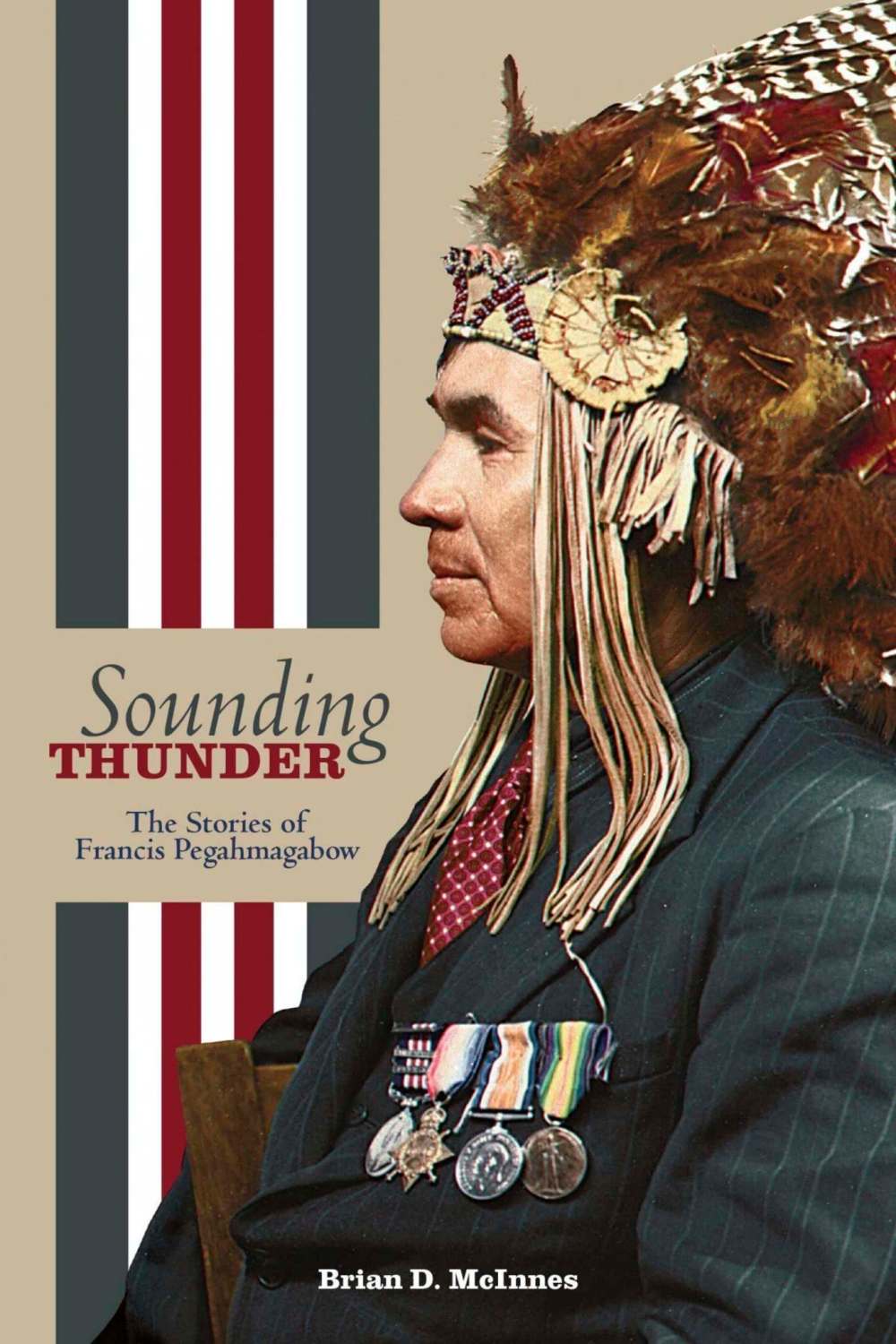
Francis Pegahmagabow (1889–1952), a member of the Ojibwa nation, was born in Shawanaga, Ont. Enlisting at the onset of the First World War, he became the most decorated Canadian indigenous soldier for bravery and the most accomplished sniper in North American military history. After the war, Pegahmagabow settled in Wasauksing, Ont. He served his community as both chief and councillor and belonged to the Brotherhood of Canadian Indians, an early national indigenous political organization. Francis proudly served a term as supreme chief of the National Indian Government, retiring from office in 1950.
•••
One of the defining characteristics of Francis Pegahmagabow was his unfaltering ambition and will to make life better for himself and his people. The experience of growing up as an orphan with very few resources made him that much more determined to leave a mark on the world. He challenged himself as a young man by enrolling in high school to learn how to better speak, read, and write the English language. His efforts earned the commendations of the local Indian agent’s office and the Euro-Canadian population of Parry Sound. While Francis resisted the control of Indian Affairs over his Anishinabe people, he did not hold a grudge against non-native peoples. He was well-known by both local townspeople and his fellow soldiers for his bright smile and pleasant disposition. Duncan Pegahmagabow thought his father was always looking for a better way for all peoples to live and work together. His Anishinabe people should not, he would say, “have to give up everything” for this to work.
Francis viewed participation in the war as an opportunity to both fight alongside his fellow countrymen and make a distinct accomplishment for his own people. Native people were not initially recruited or conscripted for war service; it was feared their presence might somehow deny the “privileges of civilized warfare” to the battalions to which they belonged. Francis somehow managed to pass through any such restrictions and became one of the first aboriginal soldiers to enlist for service in the Great War. While always proud of his Ojibwa heritage, he struggled with the lower expectations he thought others had for him. The war presented a rare opportunity for native soldiers to be perceived as equals with their non-native countrymen for perhaps the first time in their lives. It was a fleeting equality, however, that so many paid for with their lives. Francis was determined not to become an Indian casualty no matter how dangerous the situations he was placed in.
Life in a military battalion inspired mutual respect and camaraderie. Francis never claimed to have any special Indian powers, but his fellow soldiers recognized him in a unique way. He had exceptional courage and instinct for avoiding danger that the men trusted. His skill with a rifle was also admired. These special abilities would earn him roles of both scout and sniper. Francis told his children it was often his responsibility to lead his fellow soldiers on the field. Helping to ensure a clear path was a responsibility he took seriously. To avoid confusion and not compromise their position, Francis devised a set of hand signals to communicate when it was safe to advance, retreat or take cover. There was no room for error with so many lives in the balance.
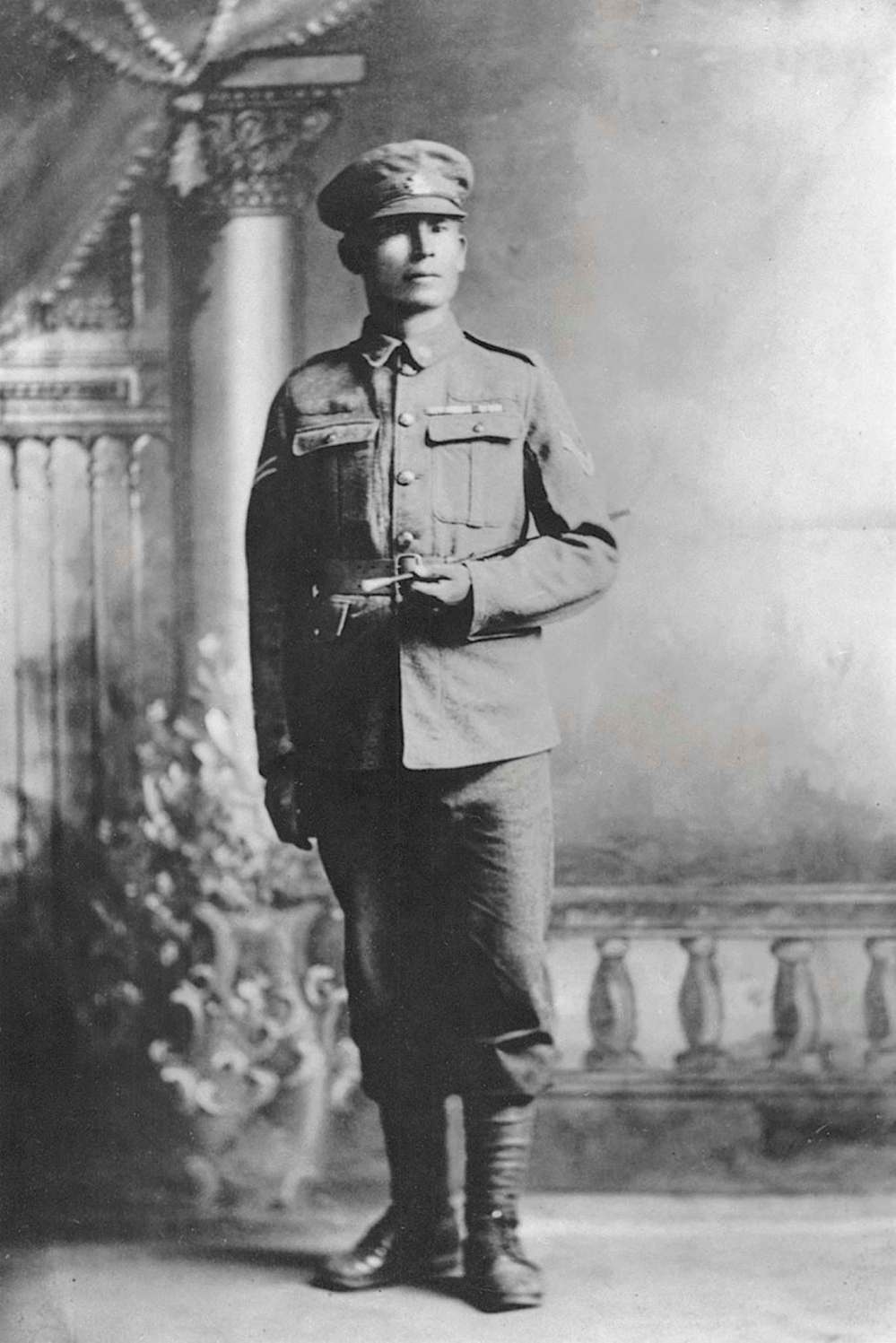
Francis suffered numerous injuries in the war. None was as traumatizing as the loss of a friend and fellow soldier killed by enemy fire. Francis was leading a sniper expedition early in his military service when they were suddenly ambushed by the enemy. The men attempted to drop to the ground as the shots hit the overhead earth ridge. Francis recalled the terrifying sound of the bullets hitting the ground and the feeling of dirt falling on his back. However, it was a dull thud that most captured his attention. He looked back to see that his friend had been decapitated by enemy fire. He remembered hearing his name called out but only after hearing the sound of his friend hitting the earth. It was a memory that would haunt Francis long after the war, and it was no surprise he preferred to work alone after this incident.
The early loss of a friend and fellow soldier prompted the solitary work missions for which Francis became famous. As a scout, he was able to travel far ahead and always returned with valuable information about enemy positions, resources and strategies. The detailed correspondence puzzled his superior officers since it appeared he had actually been inside enemy encampments on occasions. Francis carried out his work with a unique confidence his fellow soldiers struggled to find; not only did he want to work alone, but also few others seemed to be willing to accompany him on his missions. Adrian Hayes, author of Pegamagabow: Life-Long Warrior (2009), a biography of Francis Pegahmagabow, has commented on the “invincibility” that Francis seemed to believe he had throughout the war, a fact corroborated by the stories he told his family and community. The protections he had received from his boyhood fasts and Anishinabe medicine people seemed to sustain him through even the most harrowing and dangerous situations. He attributed the injuries he sustained in war to lost faith — however momentary — in the protections he had been given. He regretted these occasions but admitted it was hard to always maintain belief in conditions that so devalued life and often obscured the presence of any higher power.
As an Ojibwa who grew up in the spirit-rich world of Georgian Bay, Francis found the world overseas foreign in many regards. He explained to his children that it felt “old” but also “forgotten” in a way he could not quite understand. It was certainly not a godless place, even in the culture of death and destruction that pervaded it. Although he was not a smoker, Francis took advantage of the abundance of tobacco that flowed through the ranks. He was true to the Anishinabe use of tobacco for sacred prayer and tried to offer a little each day. He would always place tobacco on the earth before dangerous missions and told his daughter Marie had he not done so, these operations surely would have failed. The presence of the Spirit seemed to be similar, particularly in the skies, trees and earth. Francis struggled to make plant medicine work since everything felt different. Although he did not understand why then, he thought his Ojibwa language was recognized and understood whenever he used it in prayer. It wasn’t until much later in his study of Latin in the Roman Catholic Church that Francis came to understand that spiritual languages would always be understood wherever and whenever they were spoken. Even in the midst of a war that defied everything good in the world, it was still possible to reach the Spirit.
While he engaged in some playful jesting with battalion-mates about his “Indian powers,” he was modest and generally concealed his actual spiritual practice. He enjoyed much of the discourse and never minded being called “chief” around camp or on the field. Francis even decorated his bell tent with Indian symbols that lightened the mood for his compatriots. He told his children not all of the symbols he had drawn were for fun; some were actually protective images he had learned from medicine people before the war. During one particularly difficult mission, when the men found themselves immobilized by rain and mud, a fellow officer gave him tobacco and asked him if he could do anything about the conditions. Francis took the tobacco, quietly invoked the sky spirits for pity and within moments, the rain seemed to pass and the sky brightened. After a short period to allow things to dry a little, the men were again able to journey safely back to their base camp.
Brian D. McInnes is a faculty member in the department of education at the University of Minnesota Duluth. A member of the Wasauksing First Nation, Brian is a great-grandson of Francis Pegahmagabow.