In Conversation with Julie Salverson

Advertisement

Advertise with us

Kingston-based essayist and playwright Julie Salverson was an anti-nuclear activist for most of her adult life.

Read this article for free:


or

Already have an account? Log in here »

To continue reading, please subscribe:

Subscribe and receive a limited-edition Free Press branded hat or tote.

Digital Subscription

One year of digital access for only $205*

  • Enjoy unlimited reading on winnipegfreepress.com
  • Read the E-Edition, our digital replica newspaper
  • Access News Break, our award-winning app
  • Play interactive puzzles

*First annual payment billed as $205.00 + GST for one year. This annual subscription will automatically renew at $233.00 + GST every 52 weeks (10% off the regular annual price of $259.35). Offer available to new and qualified returning subscribers only. Cancel any time.

To continue reading, please subscribe:

Add Free Press access to your Brandon Sun subscription for only an additional

$1 for the first 4 weeks*

  • Enjoy unlimited reading on winnipegfreepress.com
  • Read the E-Edition, our digital replica newspaper
  • Access News Break, our award-winning app
  • Play interactive puzzles
Start now

*Your next Brandon Sun subscription payment will increase by $1.00 and you will be charged $17.95 plus GST for four weeks. After four weeks, your payment will increase to $24.95 plus GST every four weeks.

Hey there, time traveller!
This article was published 28/01/2017 (3491 days ago), so information in it may no longer be current.

Kingston-based essayist and playwright Julie Salverson was an anti-nuclear activist for most of her adult life.

In her 40s, she was starting to lose faith in activism when she got a call from a colleague, academic Peter C. van Wyck. He suggested they collaborate on a project that traced the uranium used in the bombs dropped on Horoshima and Nagasaki back to a Dene community in northern Canada.

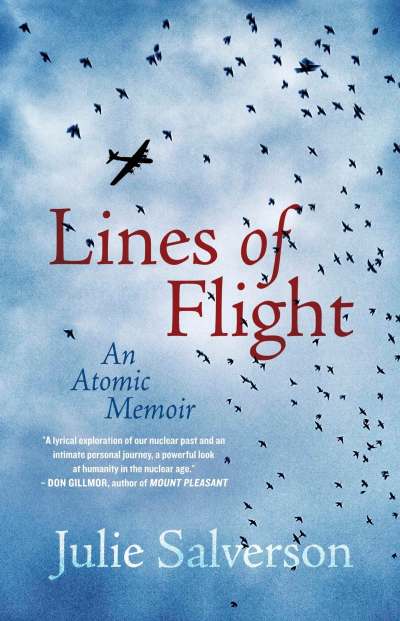
The project took Salverson and van Wyck from the shores of the Great Bear Lake to New Mexico and then Japan and resulted in Salverson’s memoir, Lines of Flight: An Atomic Memoir.

Salverson will be in Winnipeg on Feb. 2, reading from Lines of Flight at McNally Robinson.

No XMP or IPTC Header Found

FP: What do you want people to know about Lines of Flight?

JULIE SALVERSON: Readers tell me they can’t put the book down, until they keep putting it down — they want to absorb and think about it. This makes happy! I wanted the hugeness of life to be experienced on the page. It’s a kind of everyperson story of being a witness to the world: how do we respond to what’s difficult and cherish what’s beautiful? Stay awake without going to Disneyland or buying a gun. With the Trump’s talk about nuclear weapons and the deep divisions over how to live, the book tries to imagine a future that acknowledges the past but isn’t shackled to it.

FP: You call Lines of Flight “an atomic memoir.” Can you explain what that means?

JS: There are two storylines. One is me following the path of Canadian uranium, the other my experience growing up with alcoholic parents, navigating the explosions in my childhood, becoming a peace activist trying to save the world and hitting a wall. The book starts when I stumble on a secret corner of atomic history I’m not sure I have the right to tell. In 1998, the Sahtúgot’ine Bear Lake people, North West Territories, sent a delegation to Hiroshima to apologize to the survivors of the atomic bomb. Until then, this community didn’t realize the uranium ore mined on their land was used in the research for, and the deployment of, the first atomic weapons. I took up this story because I needed to show my respect and to understand what it meant for these people — also victims — to go beyond the call of duty and take on that level of responsibility and reconciliation. I also needed to find my own voice and connection to an event not evidently mine. My journey of discovery took 10 years and made me face the inescapable half-life of my childhood secrets.

FP: Tell me about your Winnipeg granny, the writer Laura Goodman Salverson. She was the first woman to win the GG and she did it twice, for a novel in 1937 and a memoir in 1939. What did she teach you?

JS: When I visited my grandparents on weekends, LG (as she was called) would sit me on her knee and show me photographs from all over the world. She taught me curiosity and showed me there was a big world out there. I was eventually forbidden to visit them. This was a terrible loss.

FP: Tell me about your collaboration with Peter C. van Wyck. Is your Lines of Flight a fraternal twin to his The Highway of the Atom?

JS: Yes, that’s a great way of putting it. Peter is the person who first told me about the Dene apology and the uranium — he had seen Peter Blow’s documentary Village of Widows… We (Peter Virgil and I) went into the dark woods together and found light. We went to Fukushima last year, and we often read publicly together, a kind of oral duet. Peter describes what we do with a phrase I love: friendship as methodology.

FP: What are you reading right now? What are you writing right now?

JS: I just finished Wallace Stegner’s gorgeous novel Angle of Repose, a perspective on settlers in the 1870s that is complex and valuable to read at this moment, as we respond to the Truth and Reconciliation Commission. I’m writing a book connected to my father, George Salverson, who was a CBC radio and television writer. In 1962, he flew around the world shooting a documentary on world hunger. I’m following his path, with a mix of fiction and non-fiction. Wish me luck!


Ariel Gordon is a Winnipeg writer. Her mother, Karin Gordon, was a radiation safety officer.
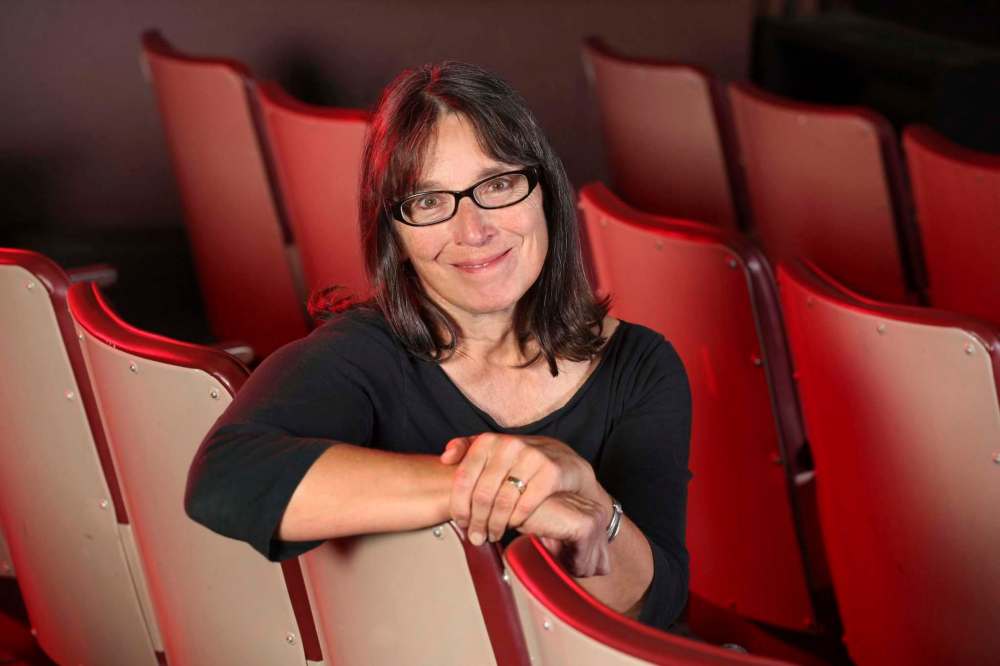
Bernard Clark photo
Bernard Clark photo
Report Error Submit a Tip

More Stories

Letters, Aug. 20

7 minute read Preview

Letters, Aug. 20

7 minute read Updated: 9:00 AM CDT

I scrolled through the comment section of the online news story, my eyes darting through differing opinions until I landed on one that caught my attention. I felt my shoulders tense and my breath quicken as I read the fiery thoughts of a stranger. Surely, there must be a better way to read the news?

Read
Updated: 9:00 AM CDT

‘Frustrated’ Selkirk nurses plead for help

Morgan Modjeski 3 minute read Preview

‘Frustrated’ Selkirk nurses plead for help

Morgan Modjeski 3 minute read Yesterday at 5:21 PM CDT

The province must take immediate action to increase low staffing levels that are putting Selkirk emergency room nurses at risk, a letter sent to the premier and health minister says.

The letter, sent by the Manitoba Nurses Union and signed by 35 ER nurses, detailed multiple recent incidents at the Selkirk Regional Health Centre. In one case, a nurse was stabbed with a pen by a patient who had been waiting 24 hours for care. In another case, a nurse was bitten by a patient.

“Nurses in that emergency department are extremely frustrated,” said Manitoba Nurses Union president Darlene Jackson. “This is not something that happened in the last month — or overnight — these are problems that have been growing.”

The five-page letter was sent Tuesday to Premier Wab Kinew, Health Minister Uzoma Asagwara and leaders of the Interlake-Eastern Regional Health Authority. It contained 10 requests to improve safety inside the emergency department, including establishing safer nurse-to-patient staffing levels, eliminating the practice of “single physician coverage” in the emergency department and implementing an institutional safety officer around the clock.

Read
Yesterday at 5:21 PM CDT

Carney asks provinces to return U.S. alcohol to stores

Catherine Morrison, The Canadian Press 6 minute read Preview

Carney asks provinces to return U.S. alcohol to stores

Catherine Morrison, The Canadian Press 6 minute read Updated: Yesterday at 8:41 PM CDT

OTTAWA - Nova Scotia Premier Tim Houston says Prime Minister Mark Carney has asked provinces to restock American alcohol on their shelves as Canada finalizes a trade deal with the U.S. 

U.S. President Donald Trump announced Tuesday he would put a three-day pause on 50 per cent tariffs that would have hit an array of Canadian goods just after midnight Wednesday.

The two governments are now finalizing the language of the deal.

Carney, who briefed cabinet ministers and premiers about the draft plan Wednesday, said the deal it builds on Canada's existing trade advantages with the U.S.

Read
Updated: Yesterday at 8:41 PM CDT

Build the resources to help children with speech

Britney Morrish and Bonnie Bricker 6 minute read 2:00 AM CDT

Imagine your daughter says her first word later than her friends do. You wait, hoping she will catch up. By age three, she still is not putting words together the way other kids her age are. Your doctor refers you to a speech-language pathologist. You expect a call within a few weeks.

Instead, you wait. Six months. A year. Two years.

By the time your daughter is finally seen, she is heading into kindergarten. She still struggles to tell her teacher she needs the bathroom. She still cannot explain when something hurts. She still cannot join in the games her classmates play, because those games need more words than she has.

As a parent, your anxiety grows, the frustration leading to sleepless nights worrying about how your child’s life will be impacted by this lack of support. The rest of your family and circle of friends is deeply affected by this potential crisis, they can see you struggling, you feel the stain of stigma attaching itself to your precious daughter. Where can you turn to help your child?

ATV, generator stolen from Manitoba cottage

1 minute read Yesterday at 9:53 AM CDT

RCMP are seeking the public’s help to identify a person of interest after an all-terrain vehicle and other belongings were stolen from a cottage in southern Manitoba.

The theft happened near near Provincial Road 440 in the Rural Municipality of Louise, about 150 kilometres southwest of Winnipeg, on Aug. 11.

Police said surveillance video showed a man walking onto the property at about 2:30 p.m. while covering his face and holding power tools.

A grinder was used to open a locked shipping container, where a 1982 Honda ATC200 all-terrain vehicle, a Honda EU2000i generator and a Stihl FS90 trimmer were among the items stolen, RCMP said. One of two Spypoint trail cameras was also reported stolen.

In Conversation with Julie Salverson

Ariel Gordon  4 minute read Preview

In Conversation with Julie Salverson

Ariel Gordon  4 minute read Saturday, Jan. 28, 2017

Kingston-based essayist and playwright Julie Salverson was an anti-nuclear activist for most of her adult life.

In her 40s, she was starting to lose faith in activism when she got a call from a colleague, academic Peter C. van Wyck. He suggested they collaborate on a project that traced the uranium used in the bombs dropped on Horoshima and Nagasaki back to a Dene community in northern Canada.

The project took Salverson and van Wyck from the shores of the Great Bear Lake to New Mexico and then Japan and resulted in Salverson’s memoir, Lines of Flight: An Atomic Memoir.

Salverson will be in Winnipeg on Feb. 2, reading from Lines of Flight at McNally Robinson.

Read
Saturday, Jan. 28, 2017