Dangerous waters
Pulitzer winner finds cold, hard truths about doomed Franklin expedition
Advertisement
Read this article for free:
or
Already have an account? Log in here »
To continue reading, please subscribe:

Digital Subscription
One year of digital access for only $205*
- Enjoy unlimited reading on winnipegfreepress.com
- Read the E-Edition, our digital replica newspaper
- Access News Break, our award-winning app
- Play interactive puzzles
*First annual payment billed as $205.00 + GST for one year. This annual subscription will automatically renew at $233.00 + GST every 52 weeks (10% off the regular annual price of $259.35). Offer available to new and qualified returning subscribers only. Cancel any time.
To continue reading, please subscribe:
Add Free Press access to your Brandon Sun subscription for only an additional
$1 for the first 4 weeks*
- Enjoy unlimited reading on winnipegfreepress.com
- Read the E-Edition, our digital replica newspaper
- Access News Break, our award-winning app
- Play interactive puzzles
*Your next Brandon Sun subscription payment will increase by $1.00 and you will be charged $17.95 plus GST for four weeks. After four weeks, your payment will increase to $24.95 plus GST every four weeks.
Read unlimited articles for free today:
or
Already have an account? Log in here »
Hey there, time traveller!
This article was published 25/03/2017 (3459 days ago), so information in it may no longer be current.
Inuit hunters in Canada’s Arctic — with skills handed down since the age of the pyramids and with one eye looking out for predators — look for walrus and seal in a fragile and complex web of existence only they can endure. And there is in this place an alarming quiet of human emptiness reminding them to tiptoe with reverence and care. For here, all the way to the North Pole, is a contradictory land of idyllic beauty that can rise up and kill as impartially as a minefield.
Ontario journalist Paul Watson’s book Ice Ghosts does a wonderful job of describing the terrible things the Arctic did to the arrogant, ignorant explorers from Europe who were willing to challenge this wild, hardly known and confounding labyrinth of rock, ice, wind and water in which, in the dangerous and dark cold of winter, the sun goes away, it seems, forever.
Watson, who won a 1994 Pulitzer for spot news photography, reported on the Arctic as a multimedia reporter for the Toronto Star. He writes lucidly of the lethal reality of one of the world’s most horrific failures in exploration — the disappearance of the Franklin expedition’s two sailing ships in the High Arctic while searching for the elusive western exit of the fabled Northwest Passage to the Orient more than 170 years ago, and the subsequent barrage of expeditions over 12 years by other Brits on foot and by ship to find both them and the sea route.
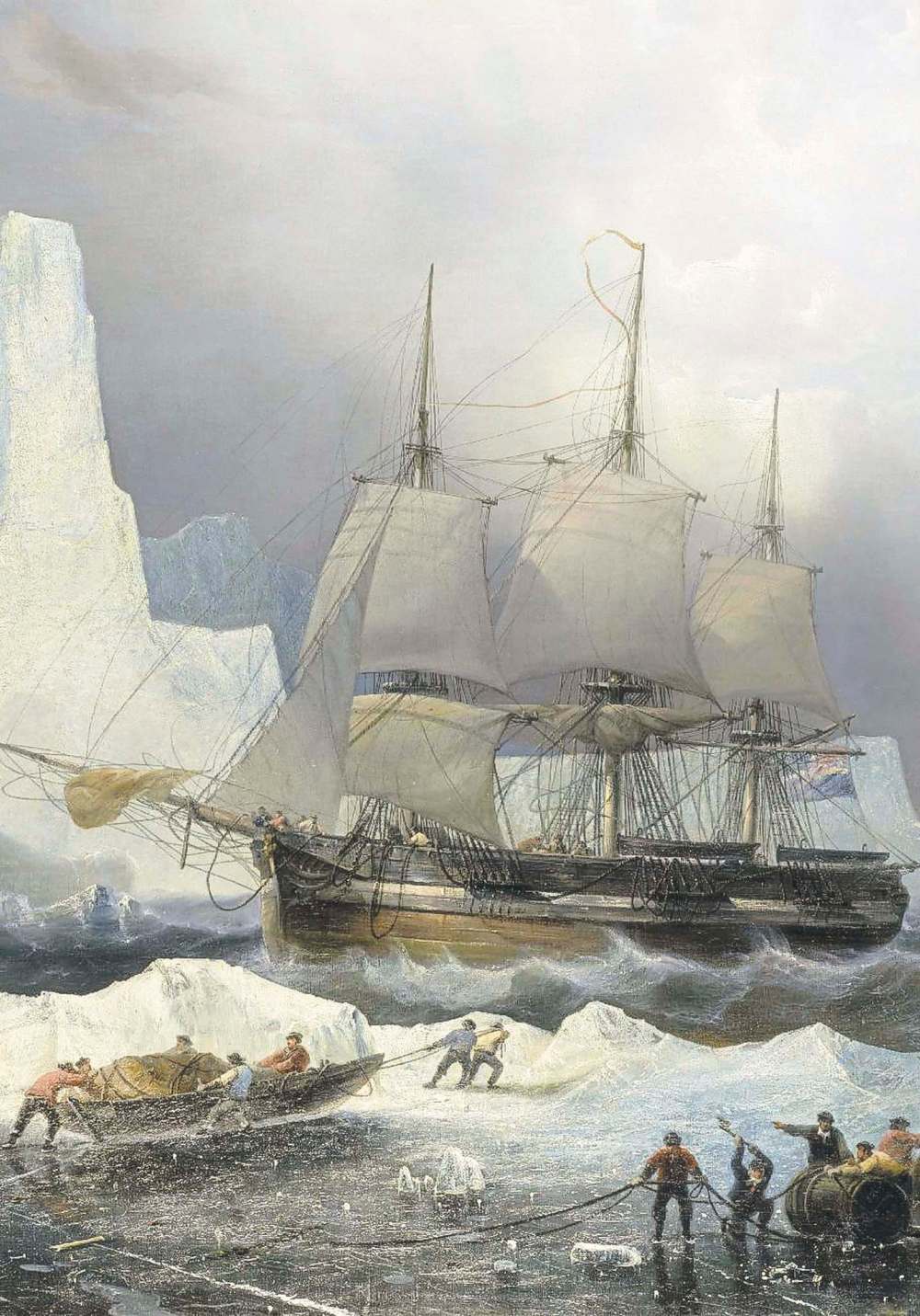
Ice Ghosts is a comprehensive telling by a first-class reporter of the two greatest nautical questions in Arctic history (Where are the Franklin ships? How to conquer the passage?), the nightmarish searches for the answers, the repeated failures to complete the passage, and — as a crowning achievement — the marriage of Canadian marine science and Inuit oral history that led to the very recent discovery of Franklin’s sunken flagship HMS Erebus, which sailed into the Arctic before Canada was even a country. Franklin’s body has never been found.
The book is no feel-good Disney narrative of man taming exotic lands with the ease of romantic vigour; rather, the fate of Franklin and his 128 sailors looking for the passage is an indictment of their vanity and racial conceit.
Watson explains that because the sailors who came were not only ineptly dressed in wool and broadcloth for the cold, wet and misery of water, rock and ice, but also seemed in their shivering superiority not to even take notice that the Inuit dressed much more effectively in sealskin and fur, as they had forever. Watson says maybe it was because the Europeans saw the Inuit as “ignorant savages” in need of civilizing, while to the Inuit the white men might as well have come from outer space (which some thought they had).
And their European ships were useless — wooden square-riggers that had defeated the French at Trafalgar but were totally unfit for the High Arctic and its multi-year polar ice that can, like giant pincers, trap, crush and grind up anything in its way as if it were wet bread. Even today, specialized ships with steel hulls and powerful engines can’t defeat it sometimes.
Between 1847 and 1859 an unbelievable 63 expeditions (which included resupply ships) were involved in sailing 8,000 kilometres round-trip from Britain to the North and back. It took months to get across the ocean. To the Brits, Franklin and his men were akin to today’s astronauts — the rock stars of their day — and the British were obsessed with their disappearance.
In Ice Ghosts, there is nothing glorious about your toes turning black in the cold and, in the nadir of your suffering, lying among ravenous companions waiting for you to die so they can eat you. Watson’s straightforward description of the repugnant diet of the few Franklin sailors who were the last to die suggests he believes writing about this cannibalism with candor is a virtue and concealment a mistake. His openness is his credibility.
As well, Watson’s acceptance matter-of-factly of the oral evidence supplied by Inuit that cannibalism did occur is in sharp contrast to British history’s repeated denials that Brits could have been responsible for what they felt was such morally reprehensible conduct. The Brits simply decided that the Inuit must have murdered Franklin et al.
Until not that long ago, the white man was openly skeptical of Inuit oral history and considered it to be much less reliable than their own evidentiary findings. In fact, it was simply ignored as irrelevant. However, as astute people began to pay more attention to it and studied Inuit customs and spirituality, some grew more respectful of its value. But what really sealed its efficacy was the finding of the Erebus in 2014. It was located exactly where Inuit had been saying for generations that a large ship had sank.
In 2016, an Inuk on the search vessel looking for the HMS Terror suddenly decided to disclose an astonishing experience. Sammy Kogvik matter-of-factly explained that six to eight years earlier, he had come across the top portion of a mast sticking up through the ice in a bay much farther north than where they were looking. Kogvik took the marine archeologists there and, sure enough, with some help from modern technology Franklin’s second ship was located.
Both the Canadian government (Parks Canada’s marine people) and financial support from private enterprise went a long way to finding the ships. Meanwhile, Louie Kamookak’s research of his people’s oral history helped the searchers for Erebus, and Inuk Sammy Kogvik’s sudden disclosure — with help from underwater tracking and expertise — cracked the mystery of the Terror.
Inexplicably, in his 416 pages Watson devotes but 18 words to the ice-strengthened supertanker SS Manhattan. In 1969 she became the first commercial vessel in history to successfully navigate the Northwest Passage. Such brevity is puzzling; it is this very conquest that all the fuss was about from the very beginning of this search some 1,000 years ago by the Vikings.
Ice Ghosts is well worth reading. But you may wish to sit next to a warming fireplace when you do.
Retired journalist Barry Craig lived in and travelled the Far North for 12 years and was on the historic voyage of the SS Manhattan.

By Paul Watson
Penguin Random House, 416 pages, $34
Related Articles
Replica of Franklin's doomed ship sails into museum
Advertisement Advertise With Us
Advertisement Advertise With Us